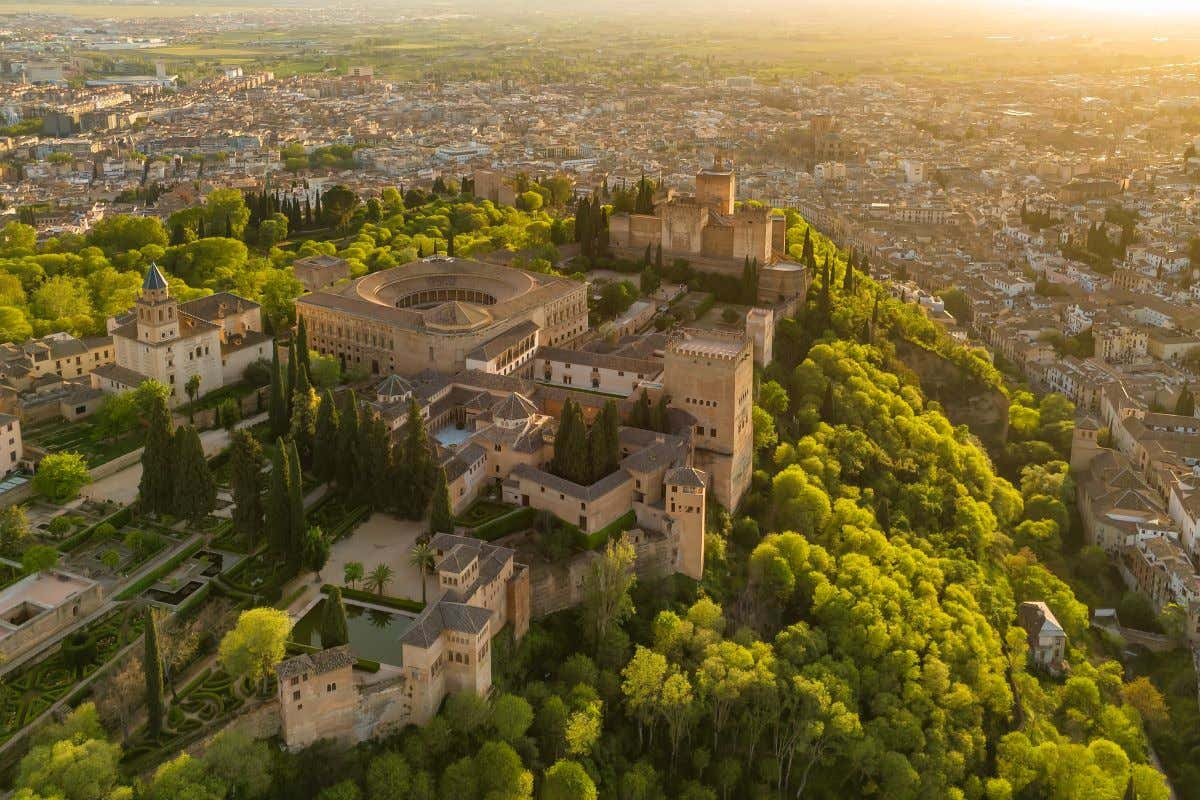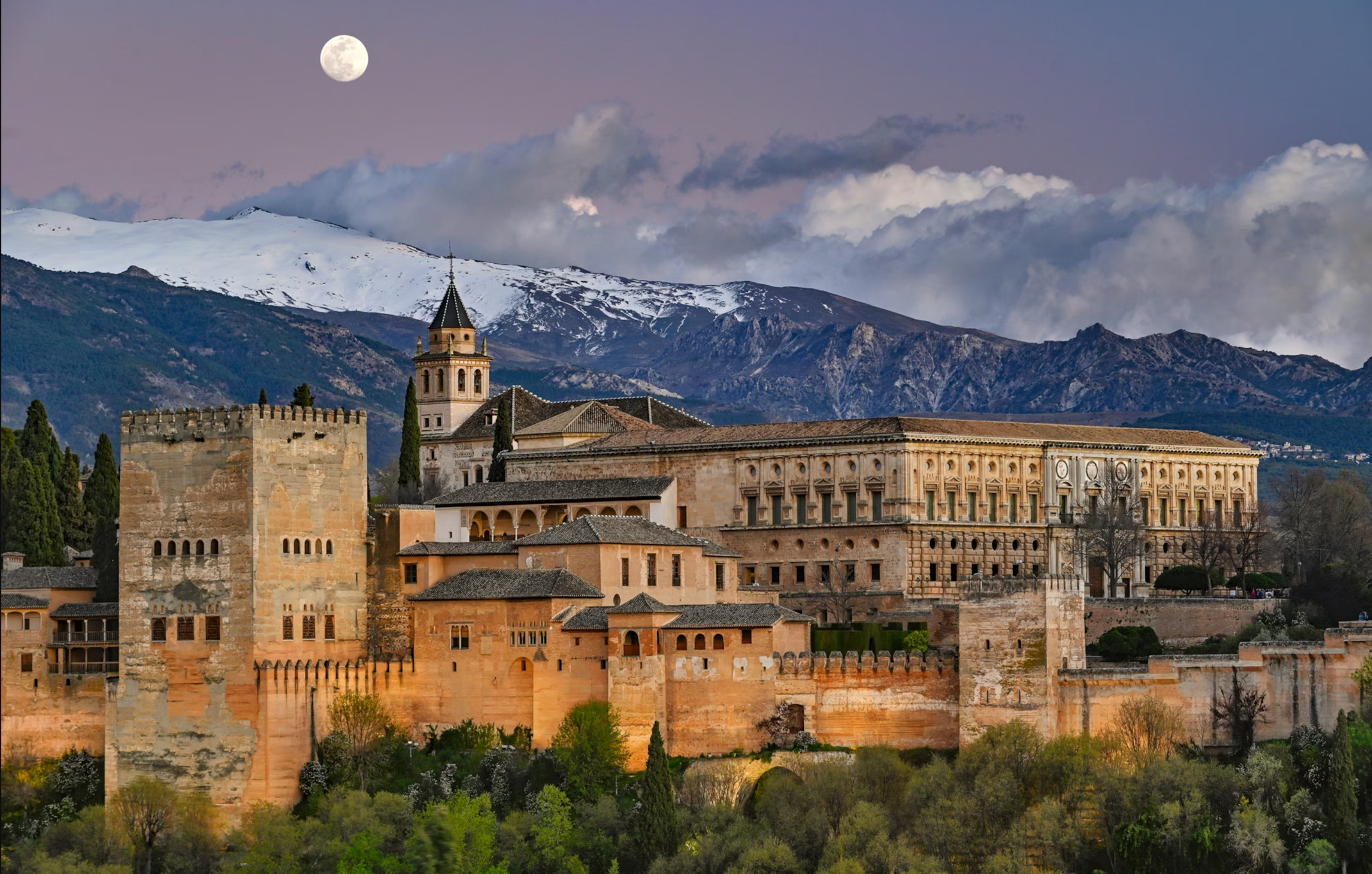
The Alhambra occupies a narrow, elevated promontory known as Sabika Hill, overlooking the city of Granada and the fertile plain, or Vega, that stretches beyond it in southern Spain's Andalusia region. Its name derives from Arabic, generally translated as the red one, a reference to the reddish clay and iron oxide used in constructing much of the complex's outer walls, which glow a warm ochre-red in the low light of sunrise and sunset against the backdrop of the snow-capped Sierra Nevada mountains visible from the site on clear days. Rather than a single building, the Alhambra is a sprawling fortified palace complex spanning roughly 142,000 square meters, combining a military fortress, several distinct royal palaces built in different periods, formal gardens, and later Christian additions into a single walled hilltop compound that developed in stages across several centuries of shifting political control.
Construction of the Alhambra as it exists today began in 1238 under Muhammad I ibn al-Ahmar, founder of the Nasrid dynasty, the last Muslim ruling dynasty in the Iberian Peninsula, who established Granada as the capital of a shrinking but culturally sophisticated emirate that would persist as the final independent Muslim state in Spain for two and a half more centuries. The complex expanded substantially during the fourteenth century under the reigns of Yusuf I and Muhammad V, a period widely regarded as the high point of Nasrid artistic and architectural achievement, during which the palace's most celebrated spaces, including the Court of the Lions, were constructed. This building program unfolded even as the broader Christian Reconquista steadily reduced Muslim territory across the Iberian Peninsula around Granada, giving the Alhambra's most refined architecture an almost defiant quality, produced by a dynasty whose political position was increasingly precarious even as its artistic ambitions reached their peak.
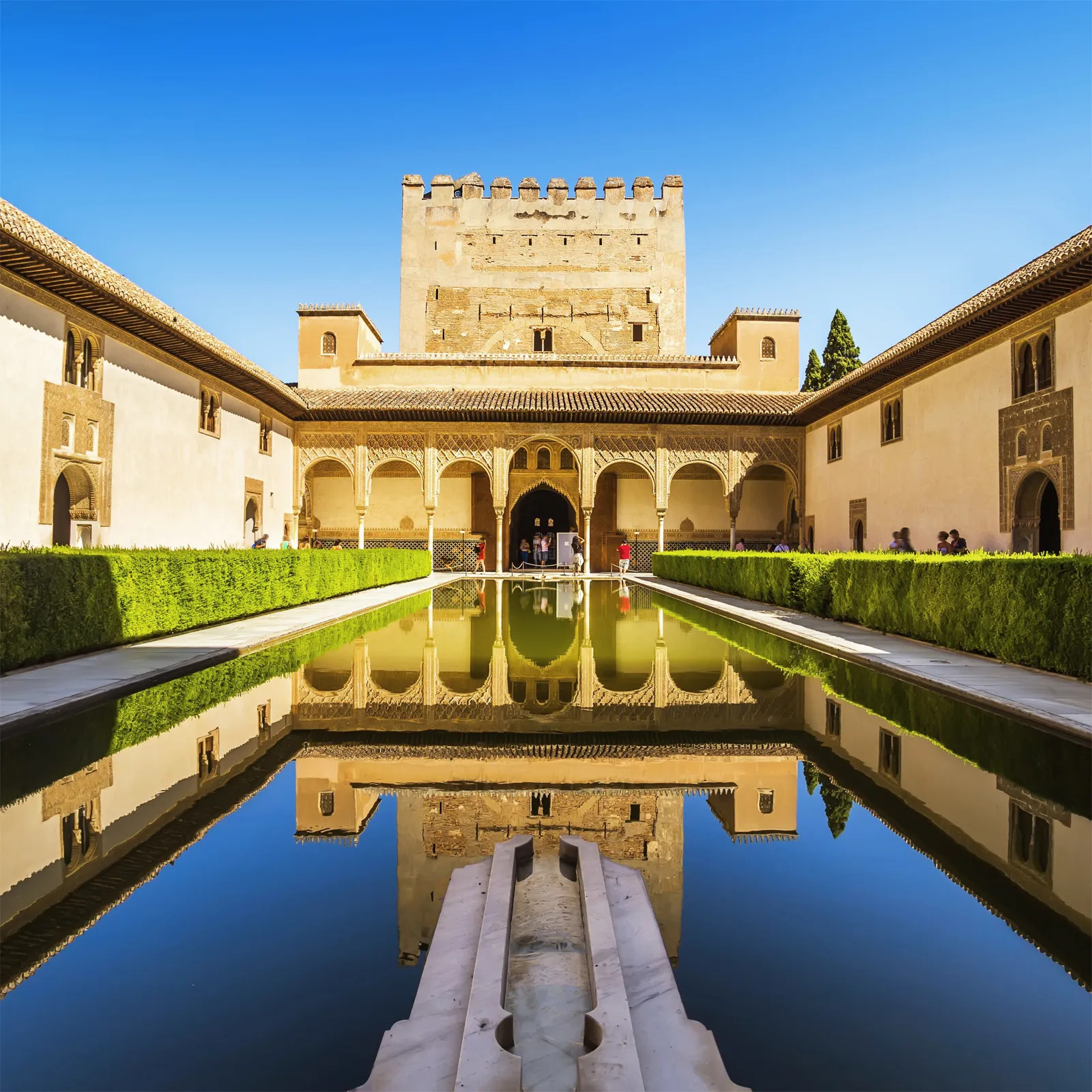
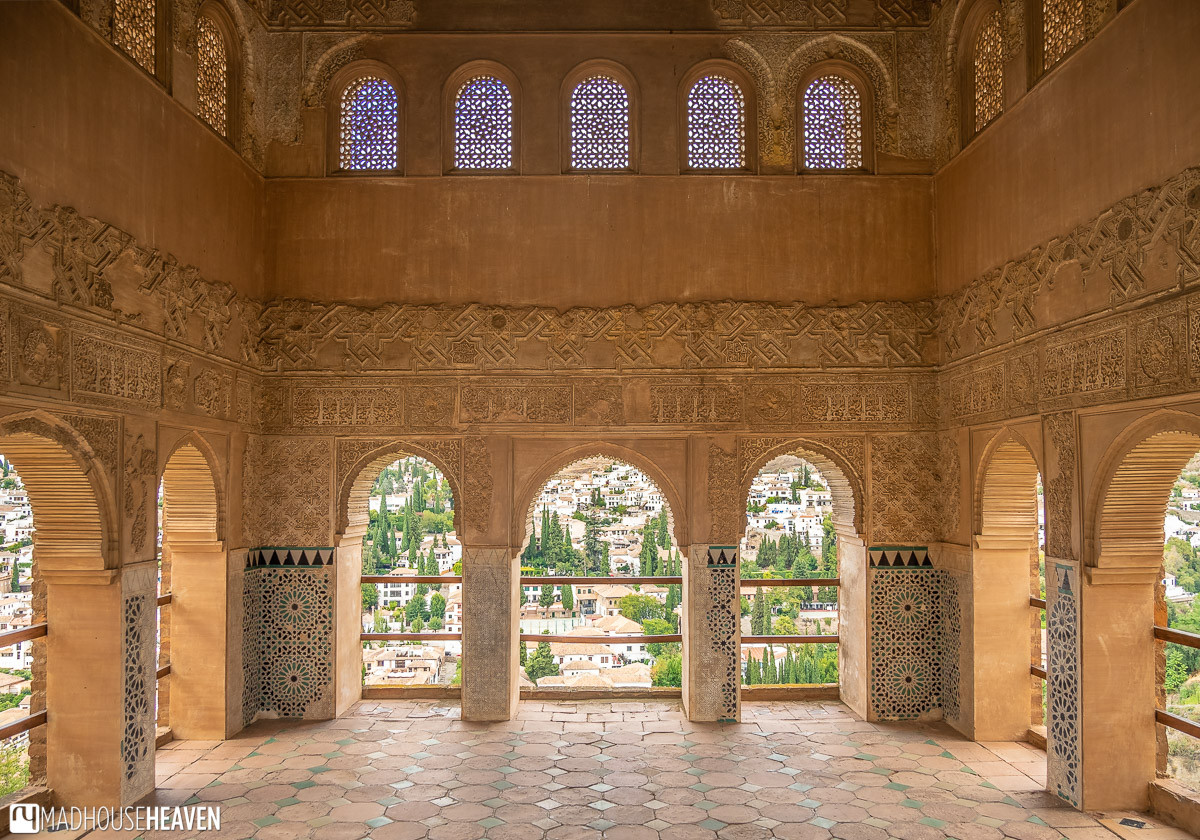
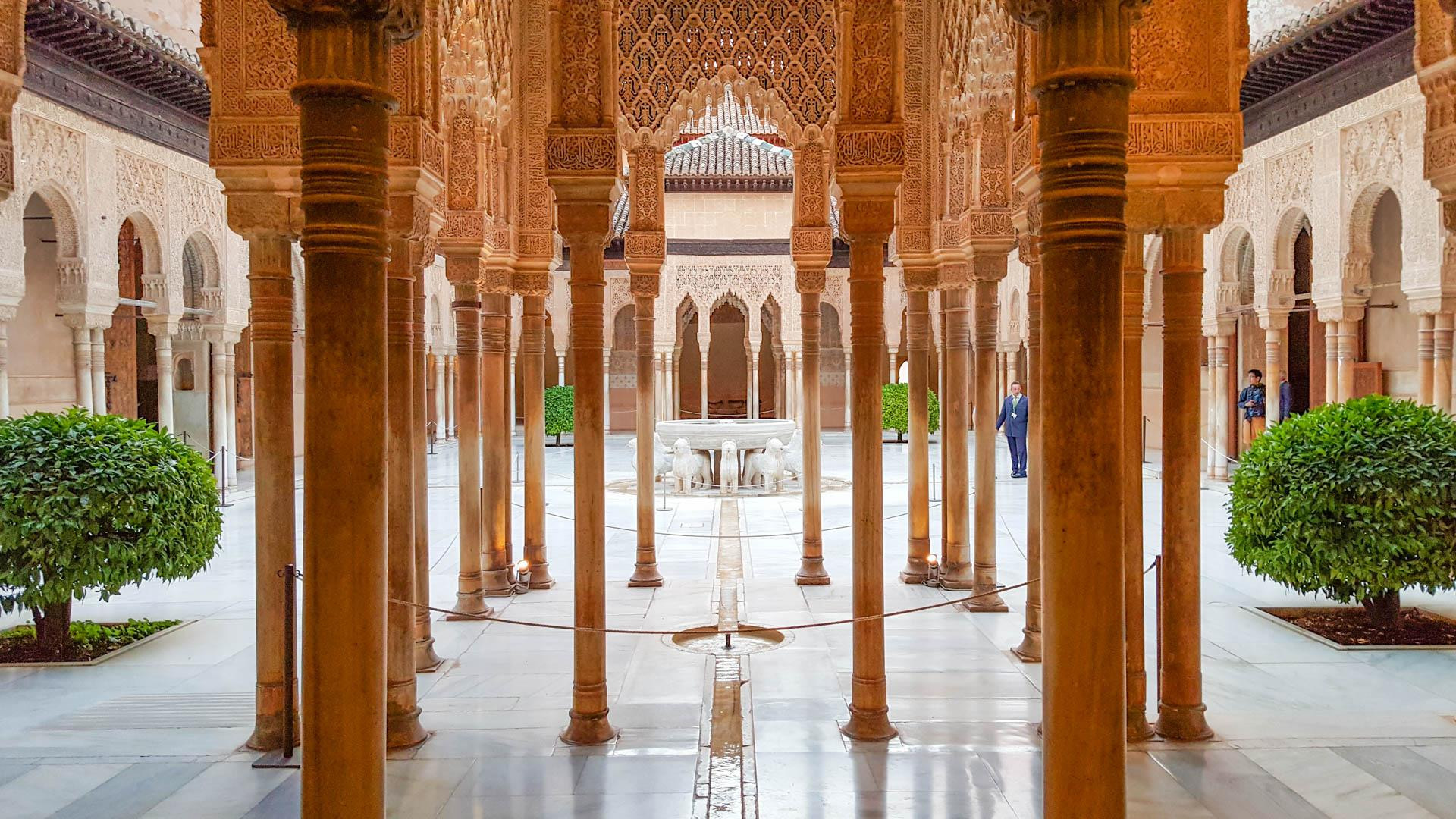
Built under Muhammad V, the Court of the Lions stands as the most celebrated single space within the Alhambra, an elegant rectangular courtyard surrounded by 124 slender marble columns supporting delicate arcades, centered on a fountain resting atop twelve carved marble lion sculptures whose water channels once fed a sophisticated hydraulic system distributing water throughout the surrounding palace rooms. Widely considered the pinnacle of Nasrid architectural achievement, the courtyard exemplifies the broader Alhambra aesthetic of intricate carved stucco, elaborate tile mosaics arranged in complex geometric patterns, and flowing Arabic calligraphy incorporated directly into the architectural decoration, a visual style that deliberately avoided figurative representation in keeping with Islamic artistic tradition while achieving a level of ornamental complexity that has drawn comparisons to few other surviving examples of medieval Islamic palace architecture anywhere in the world. Nearby, the Court of the Myrtles, centered on a long reflective pool flanked by manicured myrtle hedges, offers a calmer, more austere counterpoint to the Court of the Lions' dense ornamentation.
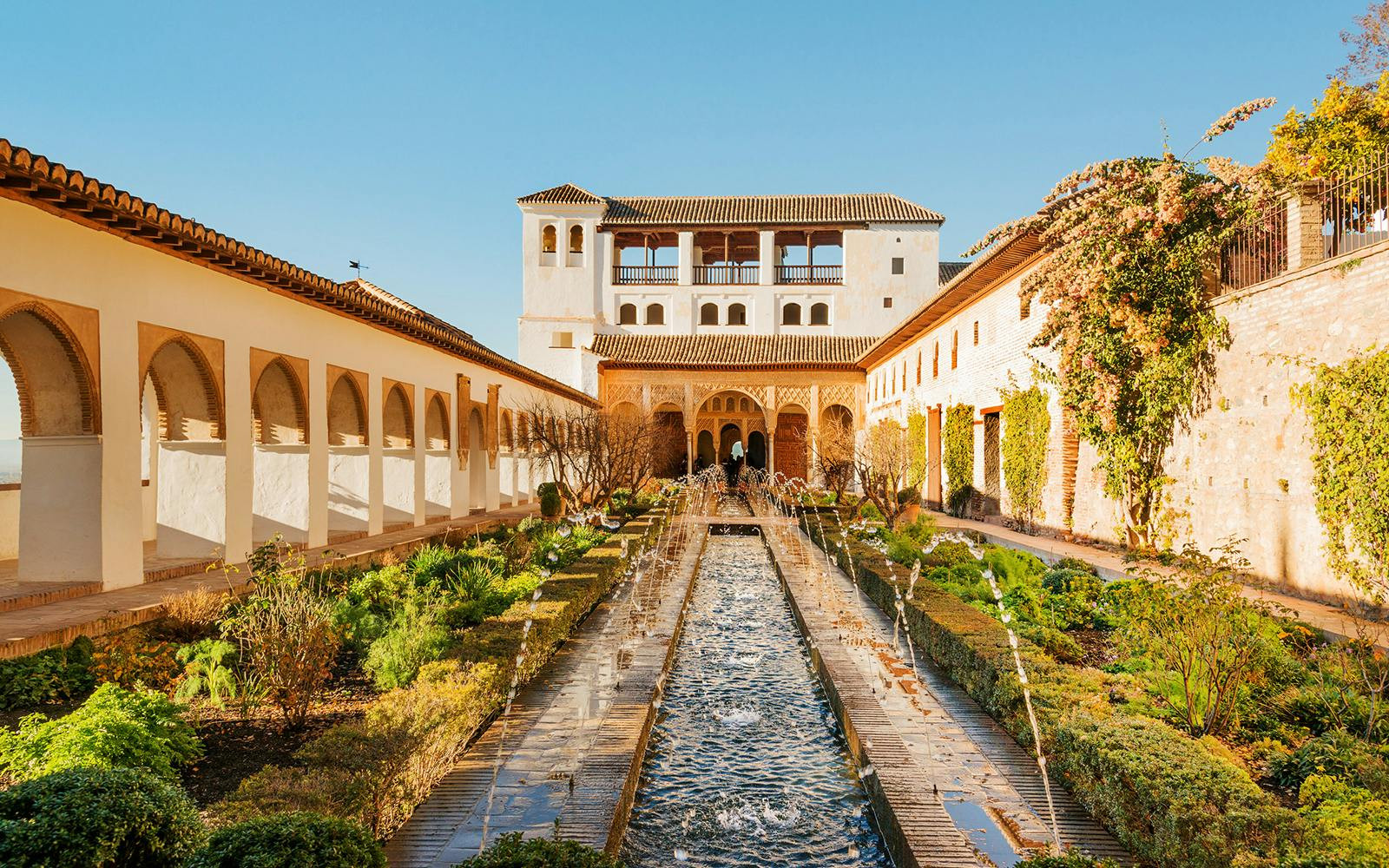
A short distance from the main palace complex, the Generalife gardens, built as a summer retreat for Nasrid rulers seeking respite from official palace life, combine geometric planting beds, fountains, and channeled water features across a series of terraced courtyards connected by covered walkways, offering views back toward the main Alhambra complex across a small valley. The gardens' design reflects a broader Islamic garden tradition emphasizing water as both a practical cooling element and a symbolic representation of paradise, with the sound of moving water present throughout the Generalife's courtyards in a way that was understood by its original designers as integral to the spiritual and sensory experience of the space rather than merely decorative. This combination of formal garden design and hydraulic engineering, built centuries before modern plumbing, represents one of the more technically sophisticated aspects of Nasrid architecture, requiring careful water management systems channeling mountain runoff from the Sierra Nevada down through the Alhambra complex and its associated gardens.
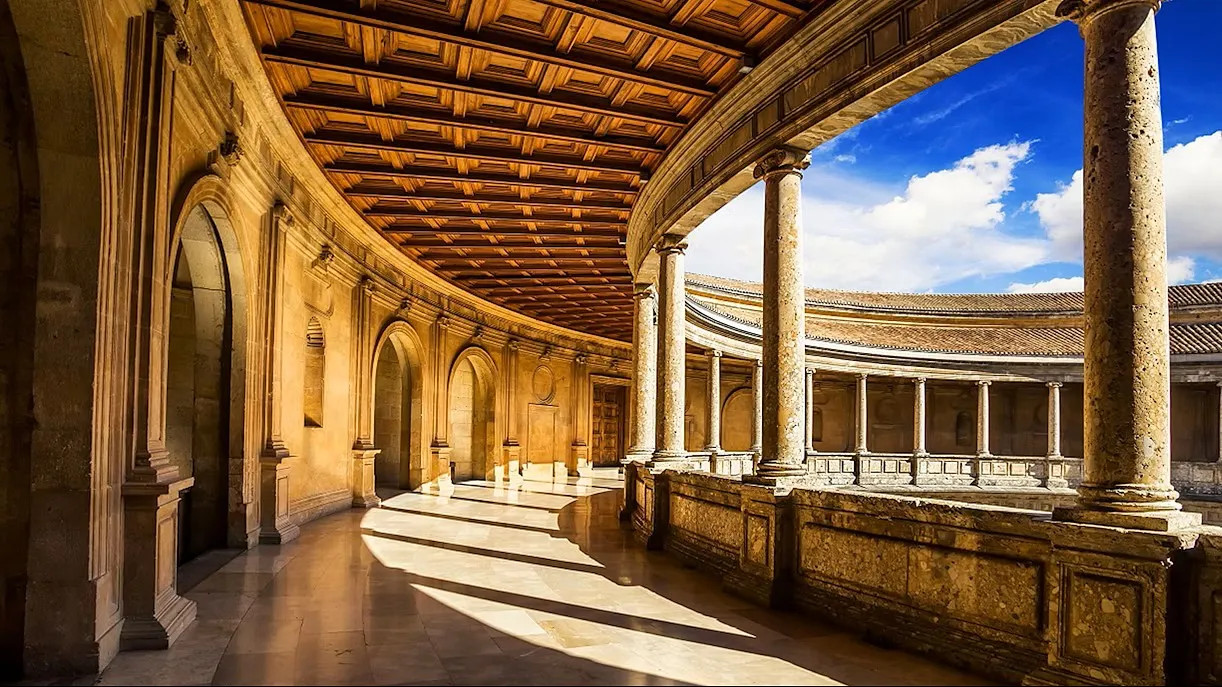
In January 1492, Boabdil, the last Nasrid ruler of Granada, surrendered the city and the Alhambra to the Catholic Monarchs Ferdinand II of Aragon and Isabella I of Castile, marking the end of nearly eight centuries of Muslim political presence in the Iberian Peninsula and a pivotal moment in Spanish history that unfolded in the same year as Columbus's first voyage to the Americas. Rather than demolishing the complex, Spain's new Christian rulers largely preserved the Nasrid palaces, adapting portions of the site for their own use, and in 1526 Holy Roman Emperor Charles V commissioned an entirely new Renaissance-style palace built directly adjacent to the older Islamic structures, a stylistically jarring but historically revealing juxtaposition that visitors can still walk between today, moving from intricate Nasrid stucco work into the comparatively austere classical symmetry of Charles V's circular courtyard within the space of a few steps.
The Alhambra's fortunes declined considerably in the centuries following the Reconquista, suffering neglect, unauthorized alterations, and, during the Napoleonic occupation of Spain, deliberate damage from French troops during the Peninsular War in 1812, when retreating forces destroyed several towers before being prevented from demolishing the complex entirely. International interest in the site revived substantially following the 1832 publication of Washington Irving's Tales of the Alhambra, a collection of stories and observations written during the American author's extended stay at the site, which helped introduce the Alhambra to a broad international readership at a moment when European Romantic interest in Islamic and Moorish architecture was gaining momentum. This renewed attention contributed to a long program of restoration and conservation that continued through the nineteenth and twentieth centuries and persists today, with the site formally recognized as a UNESCO World Heritage Site in 1984, an official acknowledgment of a preservation effort that had already been underway in various forms for over a century.
The Alhambra ranks among Spain's most visited monuments, and daily visitor numbers are strictly capped to protect the site's delicate stucco and tile work, meaning advance ticket booking, often weeks ahead during peak season, is essential rather than optional for most visitors hoping to see the Nasrid Palaces specifically, since general admission to other parts of the complex does not automatically include timed entry to these most sought-after rooms. Granada's airport offers limited direct international connections, and many visitors instead fly into Málaga on Spain's southern coast before continuing by car, bus, or train, a journey of roughly two hours that has made the Alhambra a common addition to broader Andalusian itineraries covering Seville, Córdoba, and Granada's other Islamic-era heritage sites in a single regional trip.
Modern Spain has come to treat the Alhambra as a source of national and regional pride that transcends the specific religious and political dynasty that built it, presenting the complex as a shared heritage monument representing the country's layered Islamic, Jewish, and Christian past rather than the legacy of any single tradition alone. This framing has not been without tension, and debates continue among historians and within Spanish public discourse over how directly the Alhambra's Islamic origins should be foregrounded in official interpretation, discussions that echo broader conversations happening at other former Islamic monuments across Spain and the wider Mediterranean about how post-conquest societies present architecture built under a religion and political order that their own ancestors ultimately displaced. For many international visitors, the Alhambra offers a rare, tangible encounter with the sophistication of Andalusian Islamic civilization at its artistic peak, a perspective on medieval Iberian history that stands in useful contrast to narratives focused primarily on the Reconquista's Christian victors, and continues to draw scholars of Islamic art and architecture alongside the millions of general tourists who visit each year primarily for the site's undeniable visual splendor.
No reviews yet. Be the first to share your experience!
Share your experience and help other travelers