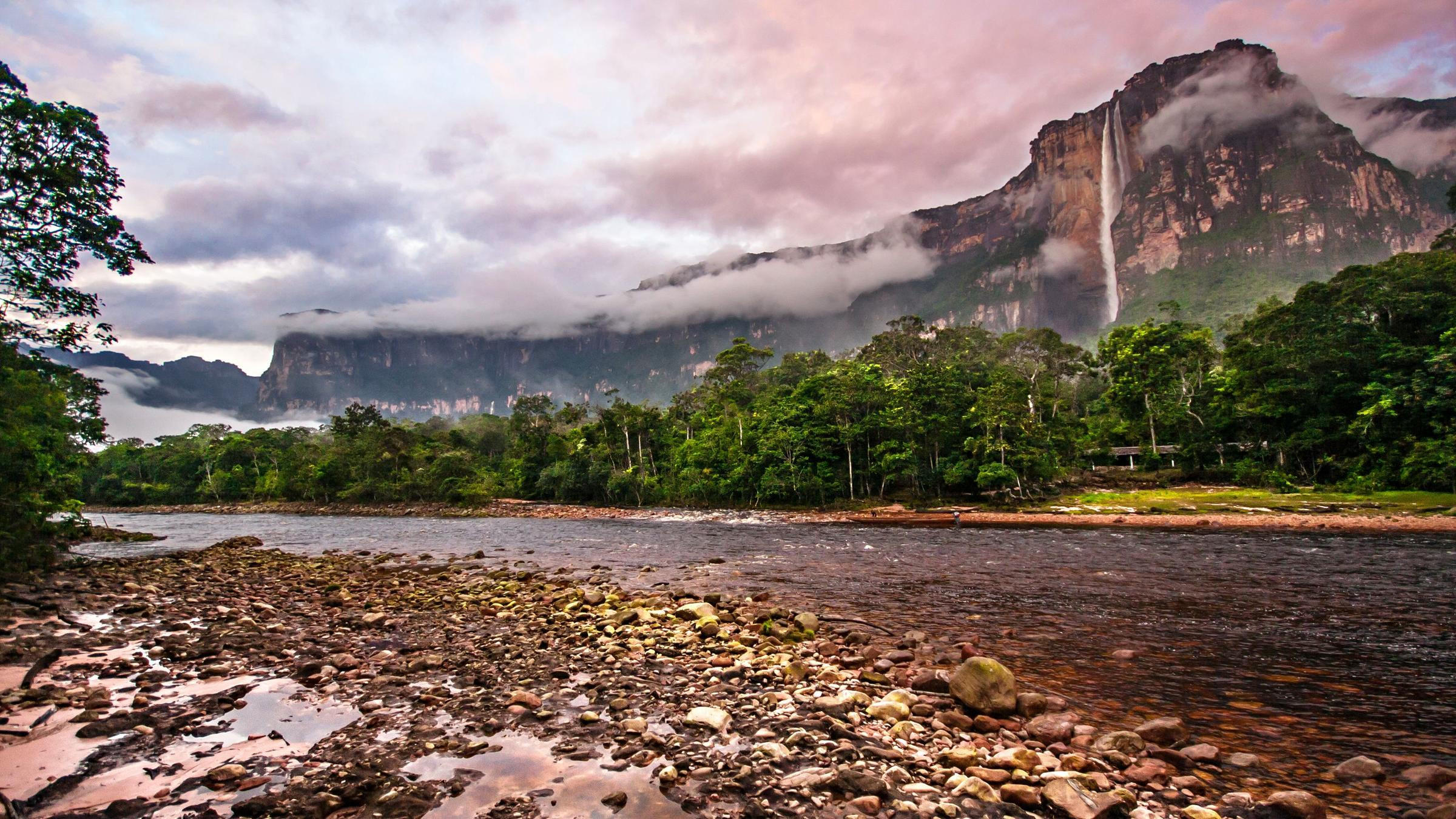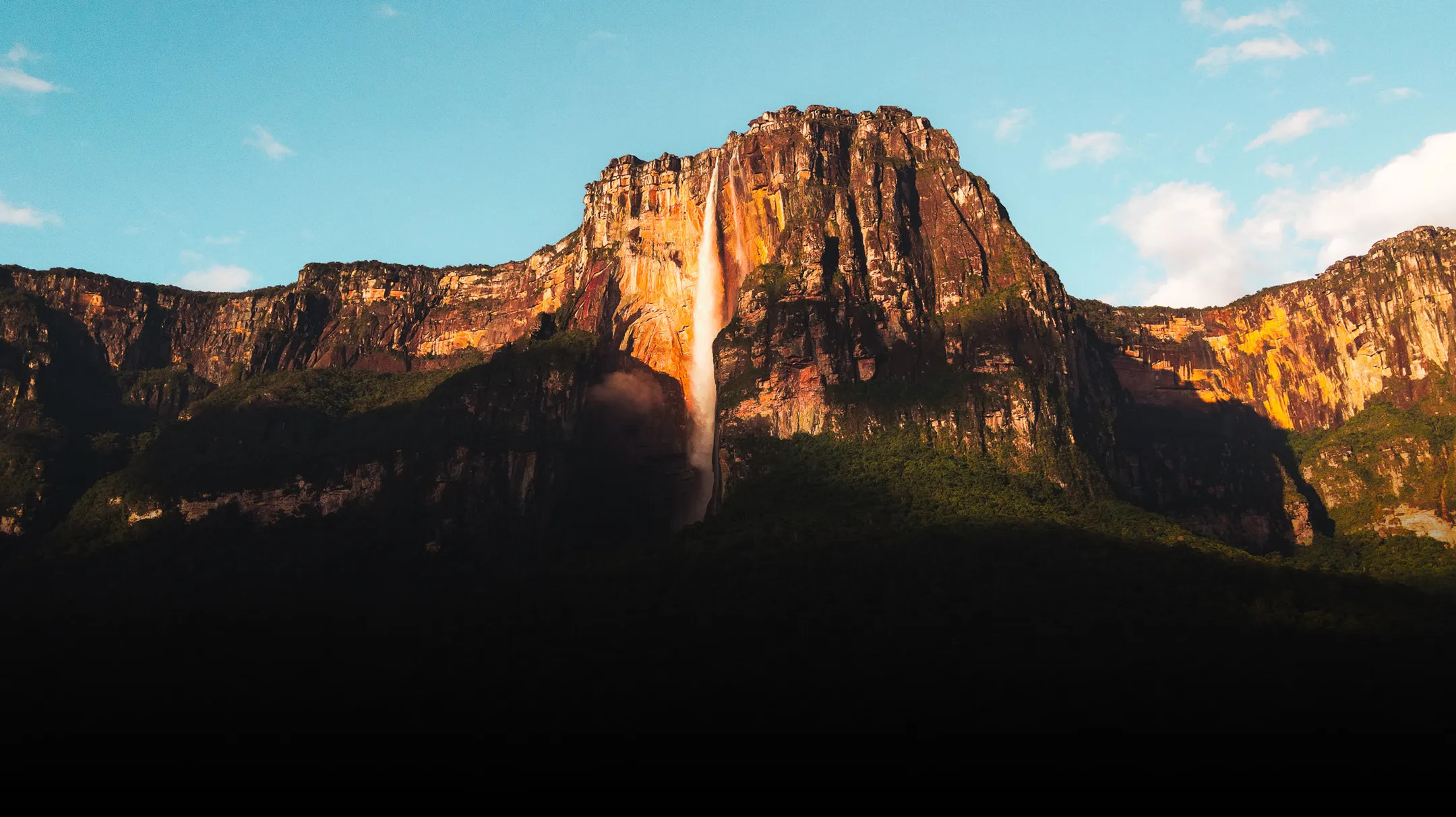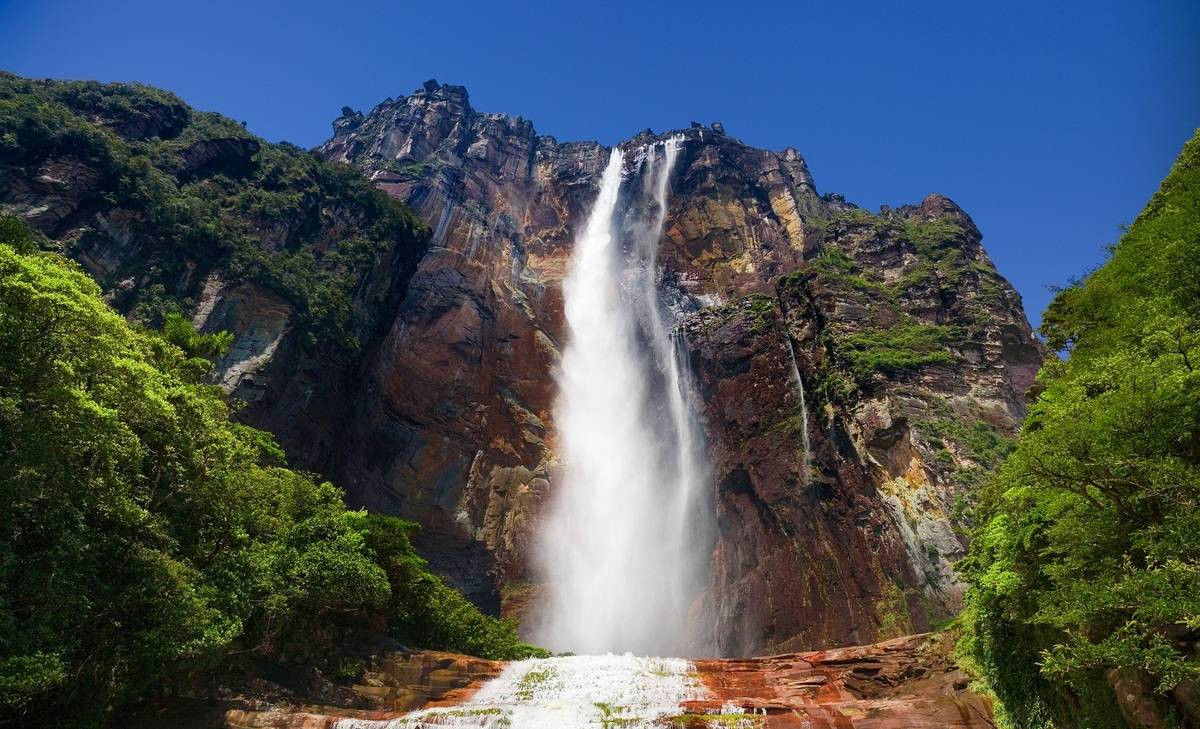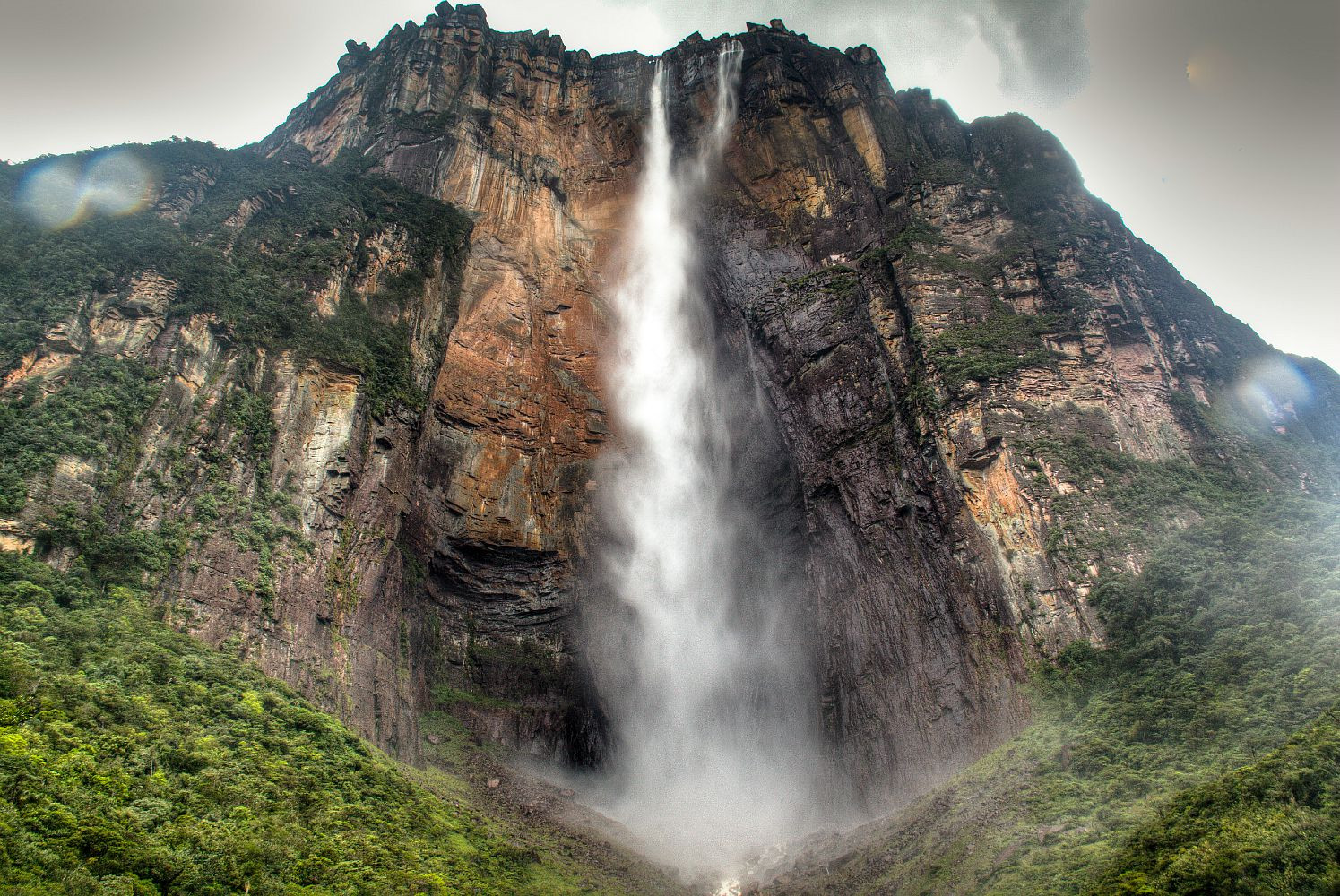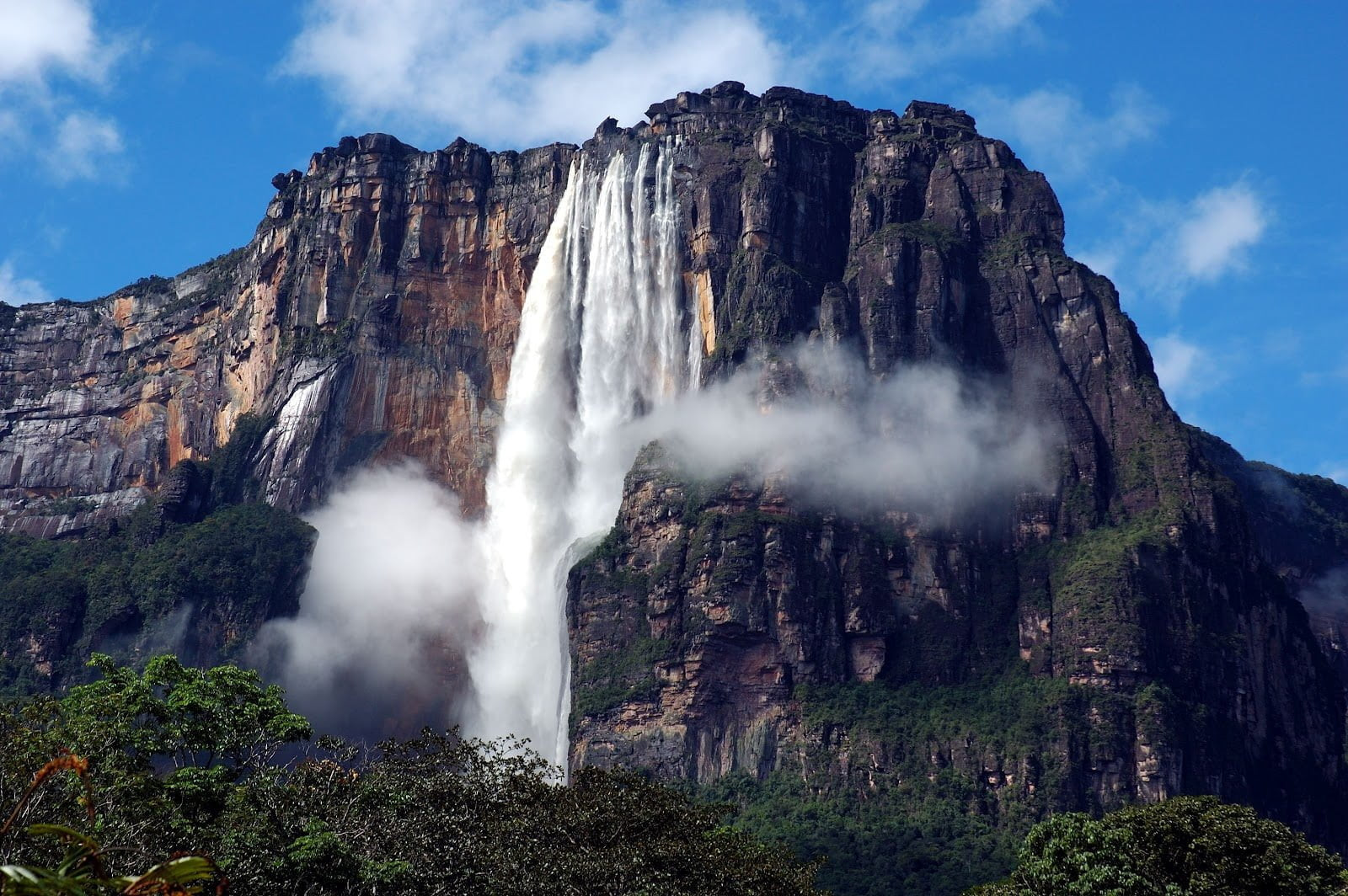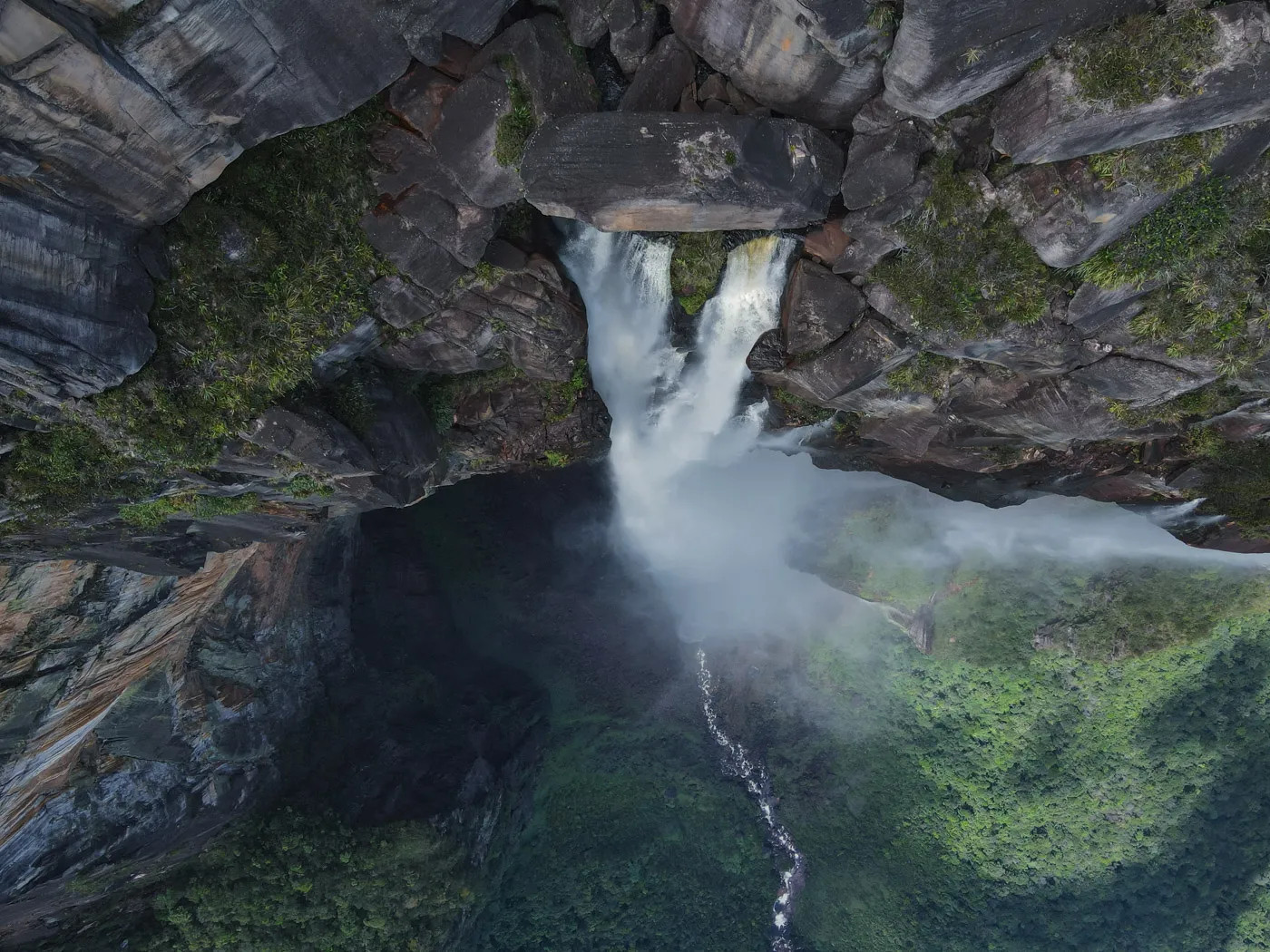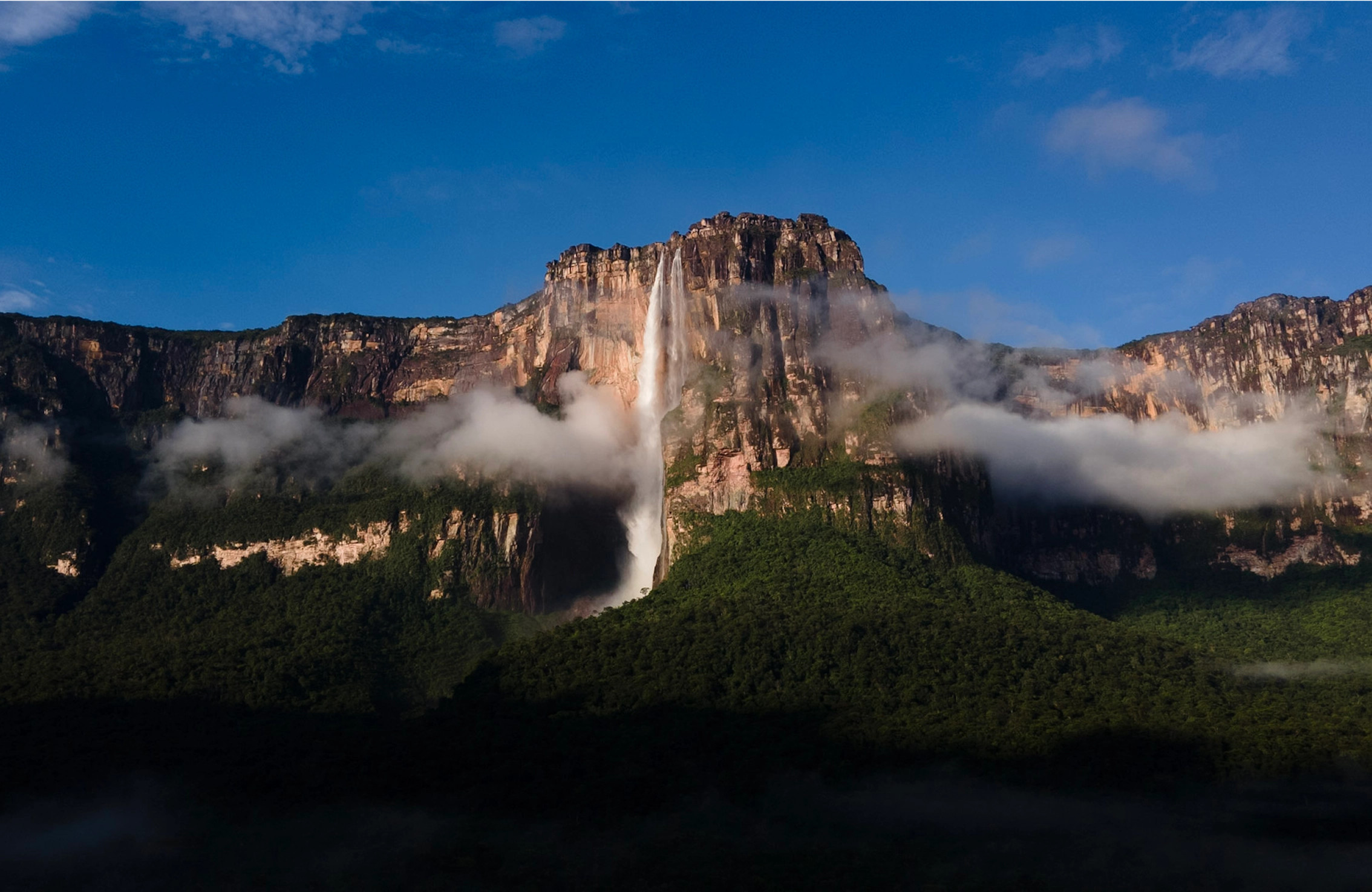
Angel Falls plunges from the edge of Auyantepui, a massive flat-topped tabletop mountain deep in Venezuela's remote Canaima National Park, dropping an uninterrupted 979 meters, roughly 15 times the height of Niagara Falls, making it the tallest uninterrupted waterfall anywhere on Earth. The water falls with such force from such a height that much of it atomizes into fine mist long before reaching the pool below, meaning that during drier months the falls can appear to partially evaporate mid-air, arriving at the base as little more than a light rain rather than a continuous stream.
Local Pemon indigenous people call the falls Kerepakupai Vena, meaning "waterfall of the deepest place," a name that predates any Western documentation by generations and reflects the site's long-standing spiritual and geographic significance to the region's original inhabitants long before international recognition arrived.
The falls' internationally used English name comes from Jimmie Angel, an American aviator and gold prospector who, while searching for a rumored gold-bearing riverbed in 1933, spotted the falls from the air and returned in 1937 to attempt a landing atop Auyantepui itself. His plane became stuck in the marshy tabletop terrain, forcing Angel and his companions to hike out through dense jungle for eleven days to reach civilization, an ordeal that generated significant press attention and cemented his name to the falls internationally, even though local communities had known the site for centuries prior.
Angel's plane remained stranded atop the tepui for over three decades before eventually being recovered and restored; a replica now stands in the nearby town of Ciudad Bolivar as a monument to the expedition that brought the falls to global attention.
Auyantepui belongs to a distinctive geological formation found almost exclusively in this corner of South America: tepuis, flat-topped sandstone plateaus rising sharply from surrounding lowland jungle, remnants of an ancient sandstone layer that has eroded away almost everywhere except these isolated, cliff-ringed summits. Because their sheer cliffs have isolated tepui summits from surrounding ecosystems for millions of years, many host plant and animal species found nowhere else on Earth, giving the region enormous scientific significance well beyond the waterfall itself.
These tepuis directly inspired Sir Arthur Conan Doyle's 1912 novel "The Lost World," imagining prehistoric creatures surviving in isolation atop such plateaus, a fictional premise that still shapes popular imagination about the region today, including its most famous modern echo in the animated film "Up," whose floating house sequence was directly inspired by Angel Falls and its surrounding tepui landscape.
Unlike many famous waterfalls accessible by road, Angel Falls sits deep within roadless rainforest, reachable only by a combination of small aircraft to Canaima village, traditional dugout canoe travel up the Carrao and Churun rivers, and a final jungle trek to reach viewing points near the base. This remoteness, while limiting visitor numbers considerably compared to more accessible natural wonders, has also helped preserve Canaima National Park's rainforest largely intact.
River access is only reliably possible during Venezuela's wet season, roughly June through December, when water levels in the Carrao and Churun rivers rise enough for boats to navigate safely; during the dry season, low water often makes the river route impassable entirely, effectively closing off ground access to the falls for months at a time.
Canaima National Park spans roughly three million hectares, making it one of the largest national parks in the world and larger than several small countries, protecting not just Angel Falls but dozens of other tepuis, waterfalls, and an extraordinary range of rainforest and savanna ecosystems across the wider Guiana Highlands region. UNESCO inscribed the park as a World Heritage Site in 1994, citing both its exceptional natural beauty and its geological uniqueness among the world's remaining pristine wilderness areas.
Indigenous Pemon communities continue living within and around the park today, and many work directly in tourism as boat pilots, guides, and camp operators, giving visitors direct contact with communities whose relationship to this landscape predates any national park designation by centuries.
Angel Falls tourism has suffered considerably over the past two decades alongside Venezuela's broader political and economic instability, with international visitor numbers dropping sharply since the early 2010s due to safety concerns, currency instability, and reduced international flight connectivity to the country overall. Where the falls once drew a steadier stream of international adventure travelers, current visits require considerably more logistical planning and typically go through specialized tour operators experienced in navigating the country's ongoing challenges.
This decline has hit Pemon guiding communities particularly hard economically, even as the falls and surrounding park themselves have remained physically untouched by the country's broader political and economic difficulties.
Most visitors view Angel Falls from Mirador Laime or a similar viewpoint reached after a jungle hike from riverside camps, offering a full view of the falls' extraordinary drop when weather cooperates, since cloud cover frequently obscures the upper sections, particularly during wetter months. Scenic overflights from Canaima also offer an aerial alternative for travelers unable or unwilling to undertake the multi-day river and jungle route to ground-level viewpoints.
Because of the mist and frequent light rain at the base, especially during wet season, waterproof gear and protection for cameras and electronics are essential for anyone planning the full boat-and-hike approach to close-range viewpoints.
No other waterfall on Earth combines comparable height, an origin story tied to a specific aviator's accidental discovery, and a setting this genuinely remote and geologically strange, flat-topped tepuis rising from unbroken rainforest like something imagined rather than real. Angel Falls rewards travelers willing to accept real logistical difficulty and political complexity in exchange for a landscape that has changed remarkably little since long before it carried any international name at all.
Auyantepui's summit plateau, roughly 700 square kilometers of exposed sandstone, shallow bogs, and stunted vegetation, has drawn biologists for decades precisely because its near-total isolation from surrounding lowland rainforest has allowed unique plant communities to evolve largely undisturbed by outside species. Researchers have documented carnivorous plants, unusual orchid species, and other flora found only on this and a handful of neighboring tepui summits, reinforcing the "lost world" framing that has followed the region since Conan Doyle's novel first popularized the idea over a century ago.
Access to the summit itself remains extremely limited, typically restricted to scientific expeditions or specialized adventure trekking groups given the difficulty of the terrain, meaning most visitors experience Auyantepui only from below or from the air rather than ever setting foot on the plateau that produces the falls itself.
No reviews yet. Be the first to share your experience!
Share your experience and help other travelers