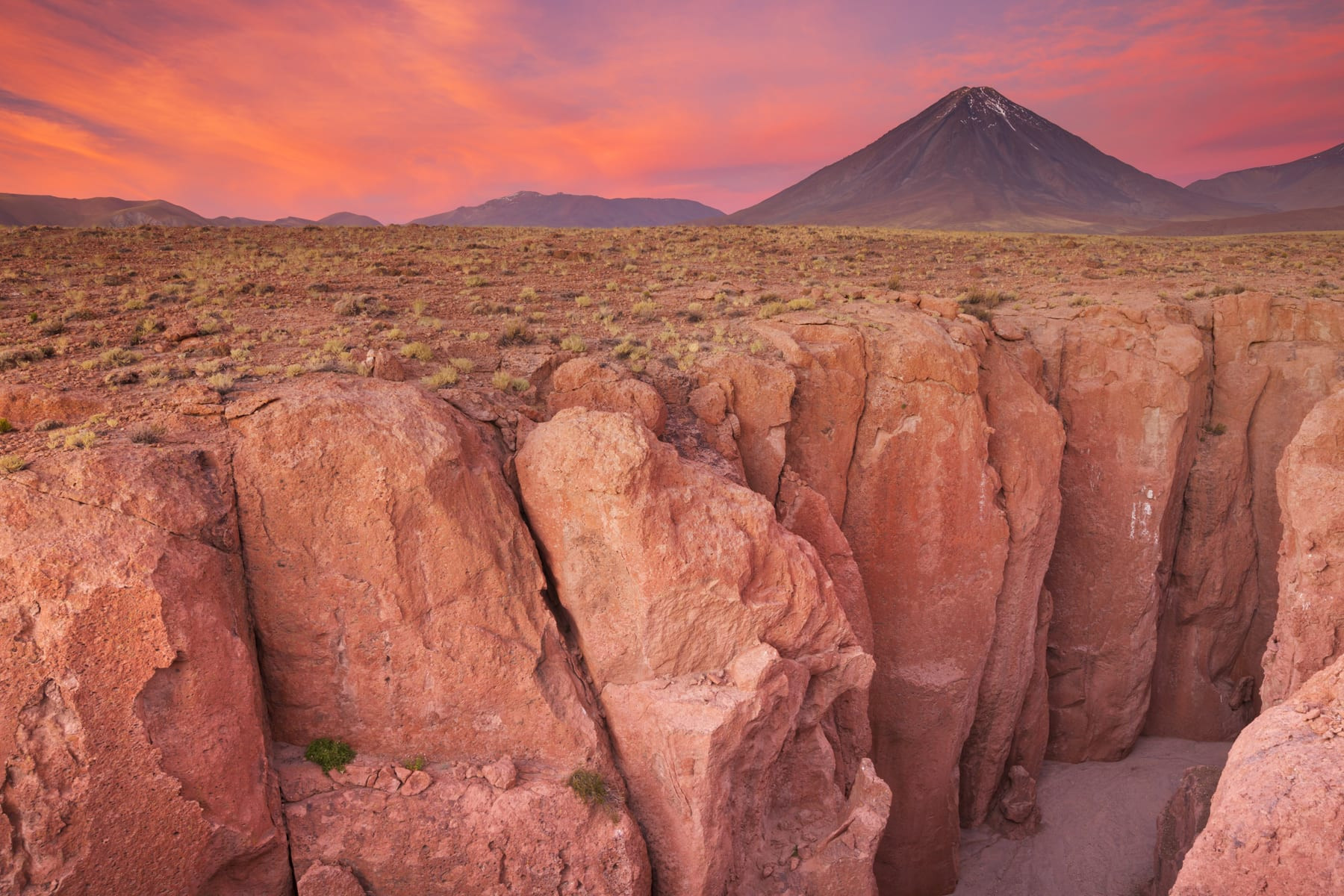
The Atacama Desert stretches roughly 1,000 kilometers along Chile's northern Pacific coast, wedged between the Andes and the sea, and holds the distinction of being the driest non-polar desert on the planet. Some weather stations within it have never recorded a drop of rain in the history of measurement, and parts of the desert's interior are believed to have gone without significant rainfall for centuries at a stretch. The result is a landscape so alien that NASA has used sections of it to test Mars rover equipment, and so visually dramatic that it draws photographers, astronomers, and geologists in equal measure.
Unlike the rolling dune fields many people picture when they hear "desert," much of the Atacama is a stark plateau of salt flats, volcanic rock, and reddish soil, punctuated by snow-capped volcanoes along its eastern edge. The extreme aridity comes from a rare combination of factors: the cold Humboldt Current suppressing coastal rainfall, the Andes blocking moisture from the Amazon basin to the east, and a persistent high-pressure system overhead that keeps storm systems away almost entirely.
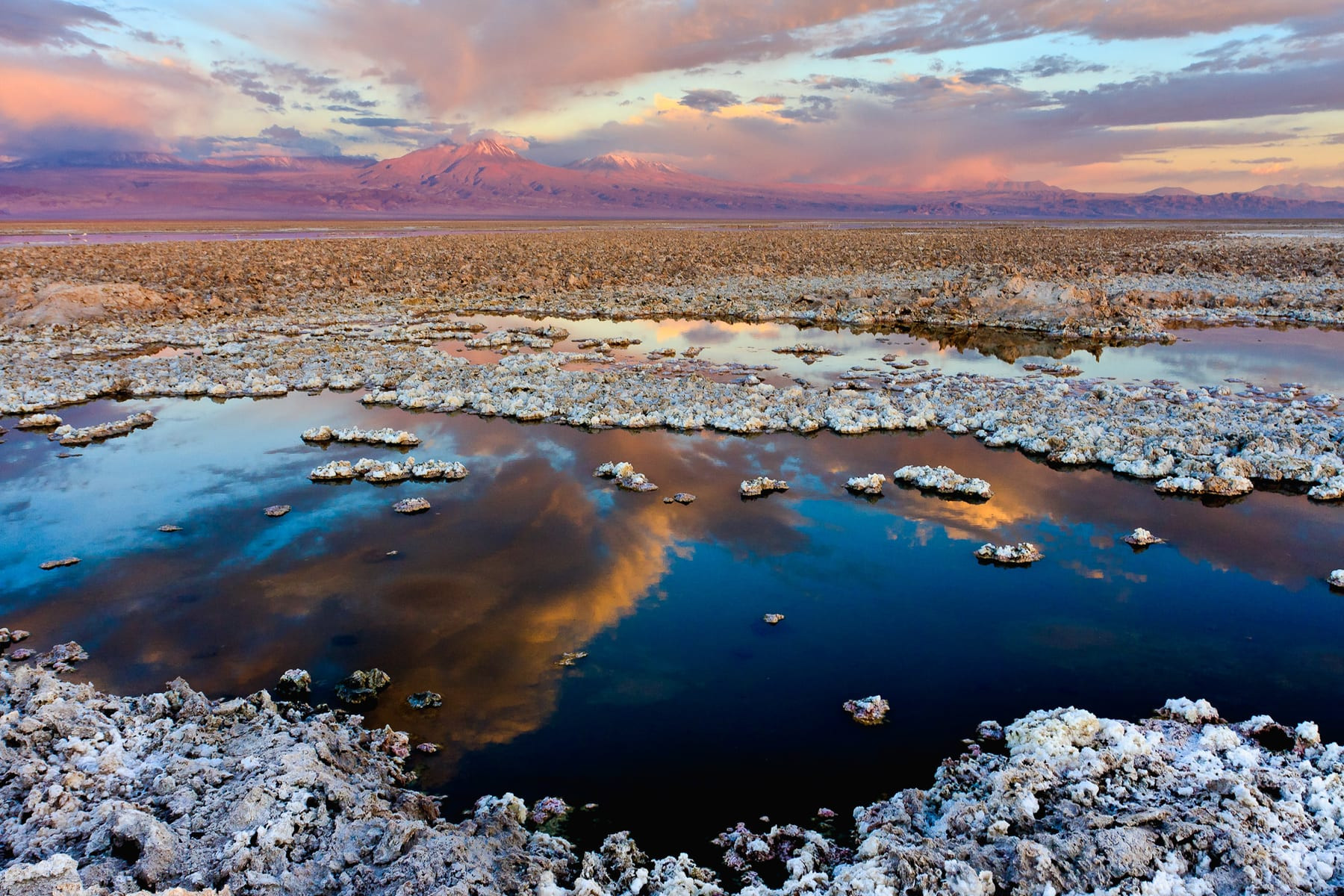
Where most deserts are carved slowly by occasional flash floods, the Atacama's terrain has been shaped mainly by wind, ancient volcanic activity, and mineral deposits left behind as prehistoric lakes evaporated entirely. The Salar de Atacama, Chile's largest salt flat, sits in the desert's heart, its crusted white surface concealing one of the world's largest lithium reserves beneath, a resource now central to global battery production.
Further north, the Valle de la Luna, or Moon Valley, earns its name from wind-eroded rock formations, dry riverbeds, and salt-crusted ridges that genuinely resemble a lunar surface under certain light, especially at sunset when the eroded ridgelines glow deep red and purple. Geologists consider the Atacama one of the best places on Earth to study extremely long-term erosion processes precisely because so little water has interfered with them.
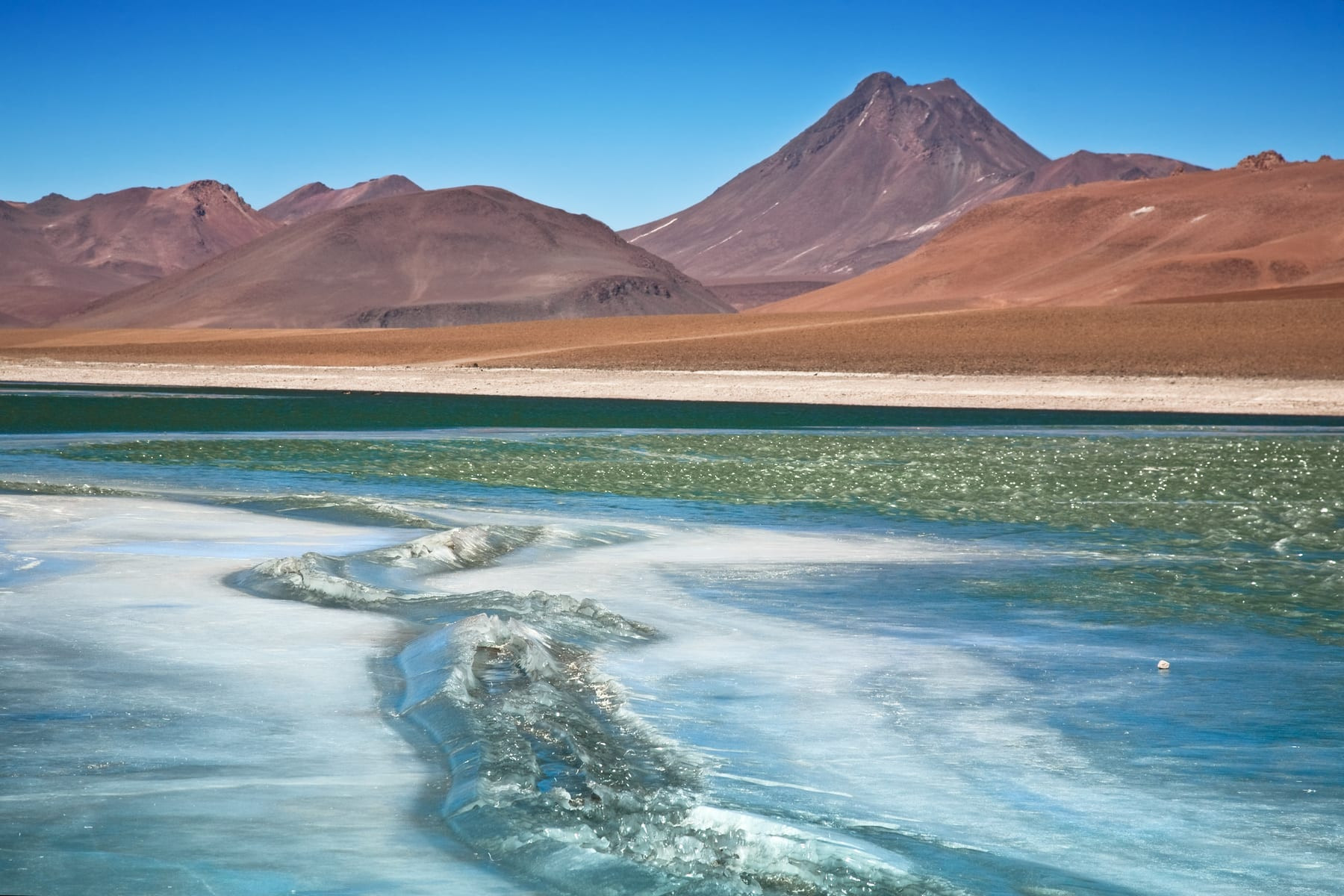
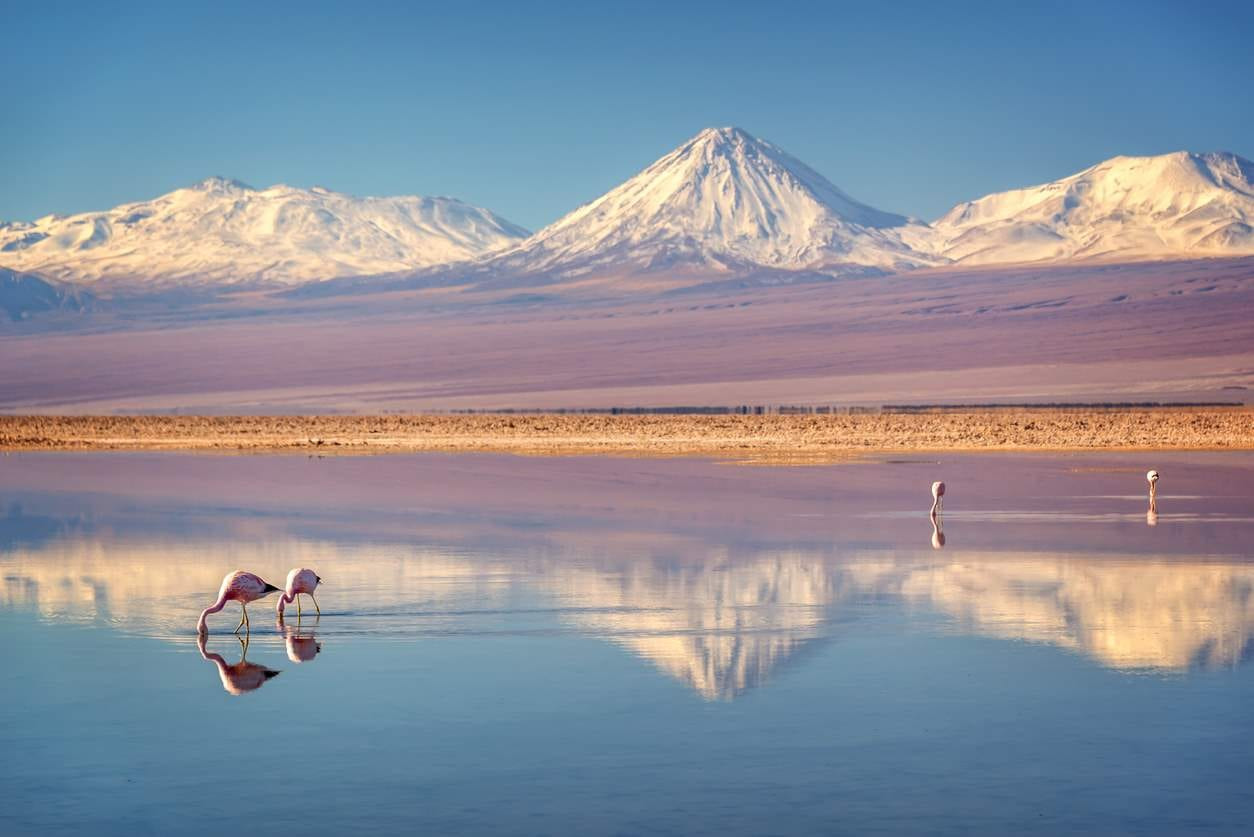
Despite conditions that seem to rule out life entirely, the Atacama supports specialized ecosystems wherever the smallest amount of moisture becomes available. Coastal fog, locally called camanchaca, rolls in from the Pacific and sustains unique fog-oasis vegetation and lichen fields that exist nowhere else. Flamingos gather at high-altitude salt lakes near San Pedro de Atacama, feeding on the brine shrimp that somehow thrive in mineral-saturated water.
Scientists studying the search for life on Mars have paid particular attention to the Atacama's most extreme zones, where microbial life has been found surviving inside rocks and just beneath the soil surface, adapted to radiation levels and dryness that would be lethal to most organisms elsewhere on Earth. This overlap between astrobiology and tourism has made the desert an unusual hybrid destination, part scenic getaway, part active research zone.
The Atacameno people have inhabited this desert's oases and river valleys for thousands of years, developing irrigation and terraced farming techniques suited to almost no rainfall, relying instead on meltwater channeled down from the Andes. Their descendants still live around San Pedro de Atacama today, and archaeological sites nearby, including mummified remains preserved naturally by the extreme dryness, have given researchers an unusually complete record of pre-Columbian Andean life.
Spanish colonization and, later, a 19th-century nitrate mining boom reshaped the desert's economy, leaving behind ghost towns like Humberstone, now a UNESCO World Heritage Site, where entire mining communities were abandoned once synthetic nitrate production made natural extraction unprofitable. Those abandoned settlements sit alongside still-active copper and lithium operations, making the Atacama simultaneously a monument to a past industry and a critical hub for a very current one.
The same dryness and lack of cloud cover that make the Atacama forbidding for life make it exceptional for astronomy, and the desert now hosts some of the most advanced observatories on Earth, including ALMA, a massive radio telescope array, and the Paranal Observatory. Combined with minimal light pollution and high elevation, conditions here rival anywhere else on the planet for stargazing, and several tour operators in San Pedro de Atacama run dedicated astro-tourism excursions with portable telescopes most nights of the year.
Beyond scientific-grade telescopes, ordinary travelers regularly describe Atacama night skies as the most vivid they have ever seen with the naked eye, with the Milky Way's core visible as a distinct band across the sky rather than a faint smudge, a sight increasingly rare almost everywhere else due to global light pollution.
At more than 4,300 meters above sea level, the El Tatio geyser field is one of the highest concentrations of geysers on Earth, best visited at sunrise when steam columns are most dramatic against the cold morning air, with ground and air temperature contrasts driving the eruptions to their visual peak. Visitors typically arrive before dawn specifically to catch this window, since the geysers become far less visually striking once the sun warms the surrounding air later in the morning.
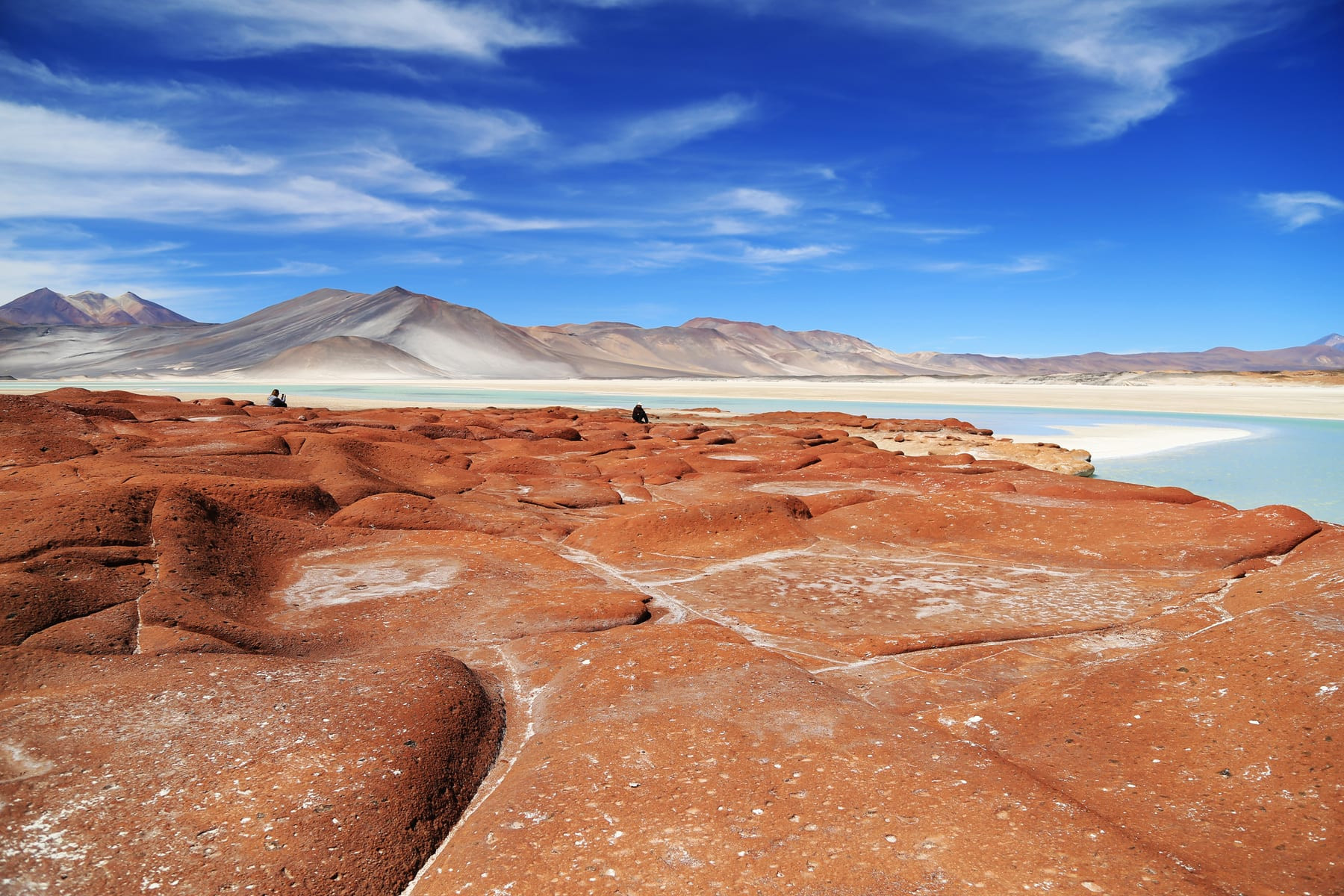
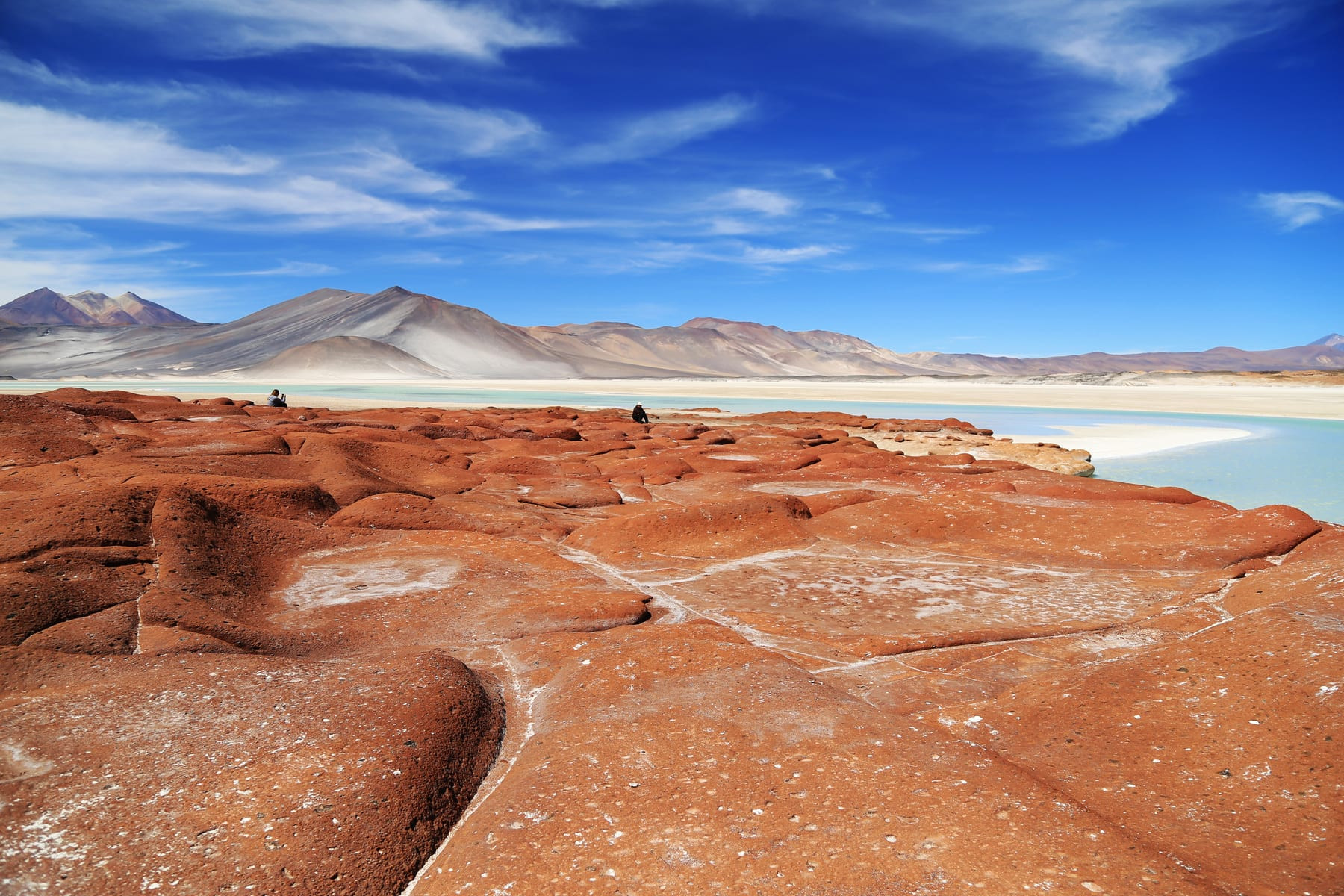
Nearby, the Salar de Atacama and its associated lagoons, along with the Piedras Rojas red-rock salt lake further into the highlands, round out a loop of extreme, high-altitude landscapes that few other deserts on Earth can match within such a compact travel radius from a single base town.
San Pedro de Atacama, a small adobe-built town, functions as the practical base for nearly all desert exploration, offering everything from budget hostels to high-end eco-lodges, plus guided tours into Valle de la Luna, the salt flats, El Tatio, and the high-altitude lagoons near the Bolivian border. Because of the desert's extreme elevation changes, from roughly 2,400 meters in town to over 4,300 meters at some geyser and lagoon sites, altitude acclimatization is a genuine consideration most visitors underestimate before arriving.
The dry climate also means enormous daily temperature swings, scorching midday sun giving way to near-freezing desert nights, so layering is less a suggestion than a practical necessity for anyone spending real time outside camp or town.
What sets the Atacama apart from other great deserts is less any single landmark and more the accumulation of extremes stacked on top of each other: driest air, clearest skies, oldest exposed geology, and some of the most Mars-like terrain accessible anywhere on Earth without a spacesuit. It rewards visitors willing to embrace discomfort, altitude, dryness, cold nights, in exchange for landscapes and night skies that genuinely have few, if any, equals elsewhere on the planet.
Copper mining has shaped the Atacama's economy for well over a century, with some of the world's largest open-pit mines operating in the region around Calama, but it is lithium extracted from beneath the Salar de Atacama that has drawn the most attention in recent years as global demand for batteries has surged. Chile holds one of the largest known lithium reserves on Earth almost entirely within this desert, and the brine-pumping operations extracting it now sit in direct tension with indigenous communities and conservationists worried about the impact on already scarce water resources feeding desert wetlands and flamingo habitats nearby.
That tension between economic opportunity and ecological fragility runs through much of the modern Atacama story, a desert simultaneously marketed as a pristine, otherworldly travel destination and mined intensively for resources the rest of the world increasingly depends on.
No reviews yet. Be the first to share your experience!
Share your experience and help other travelers