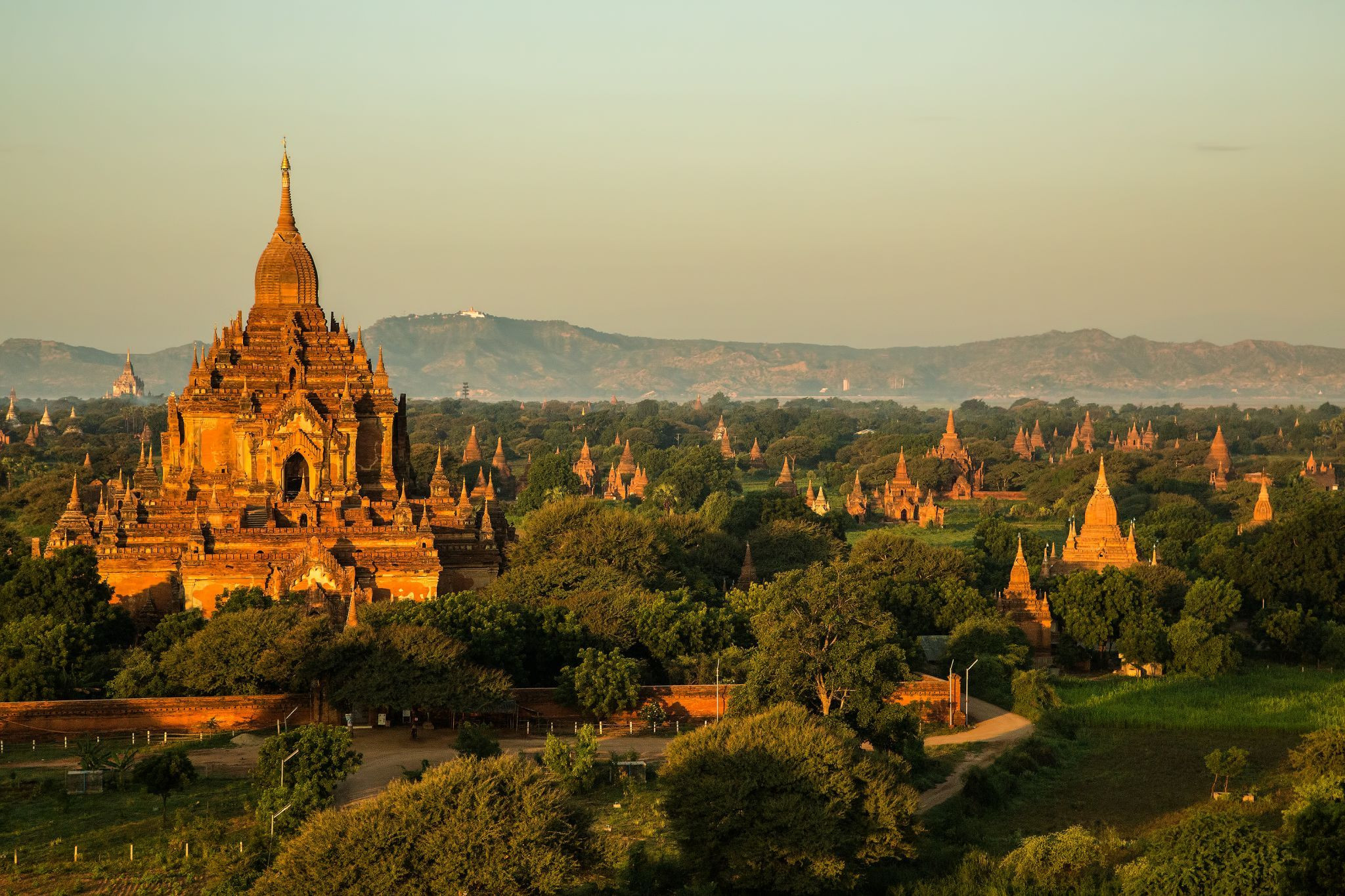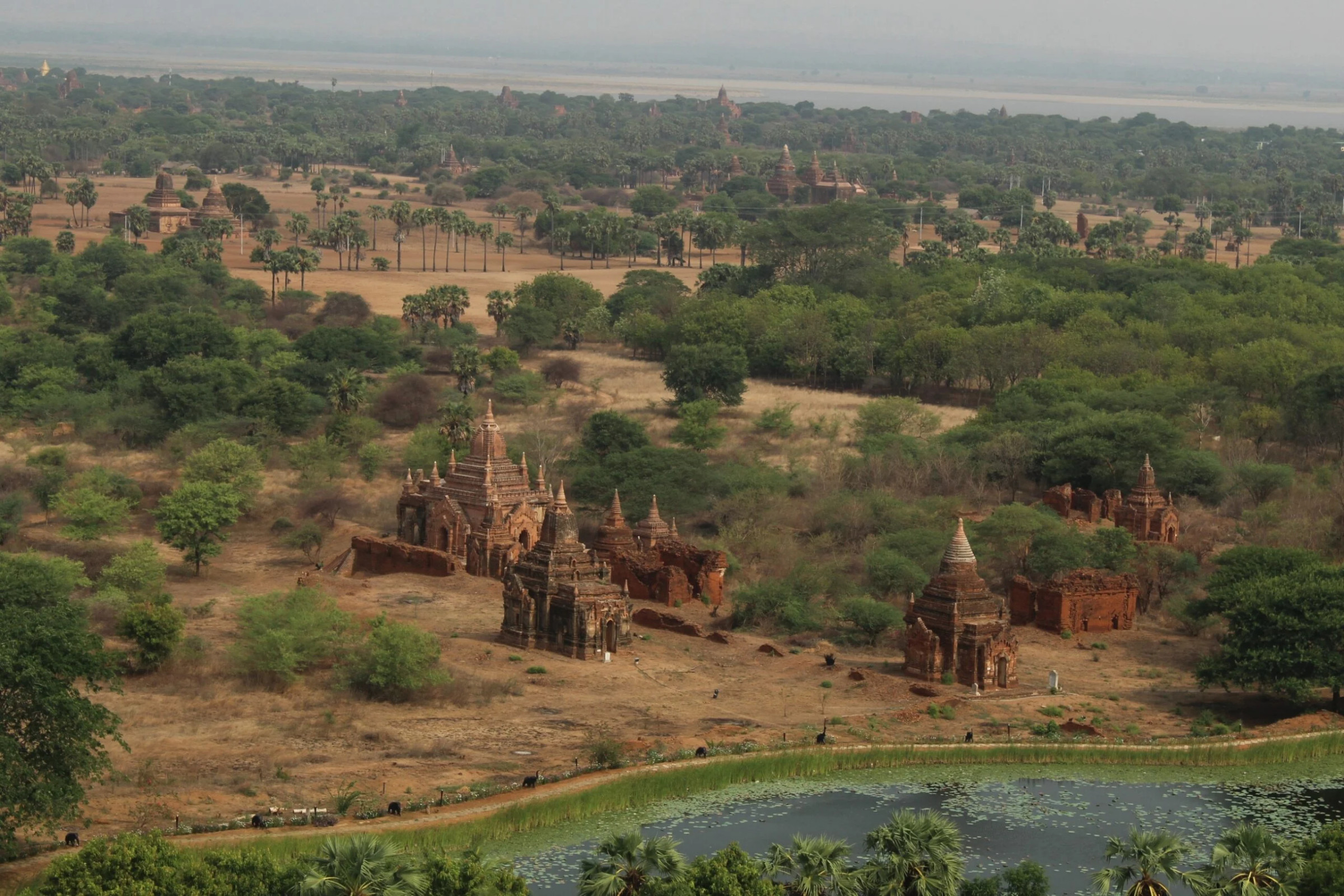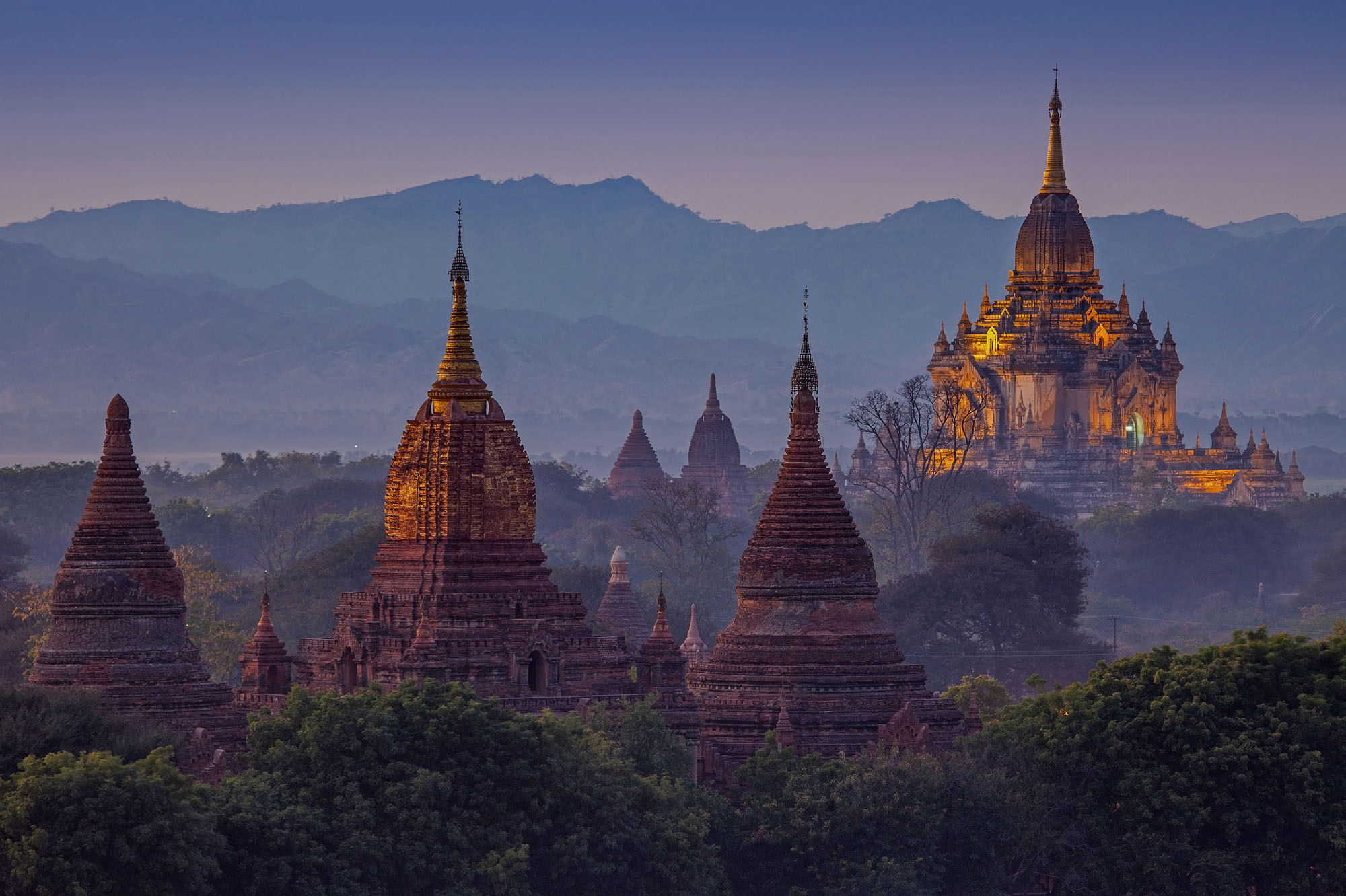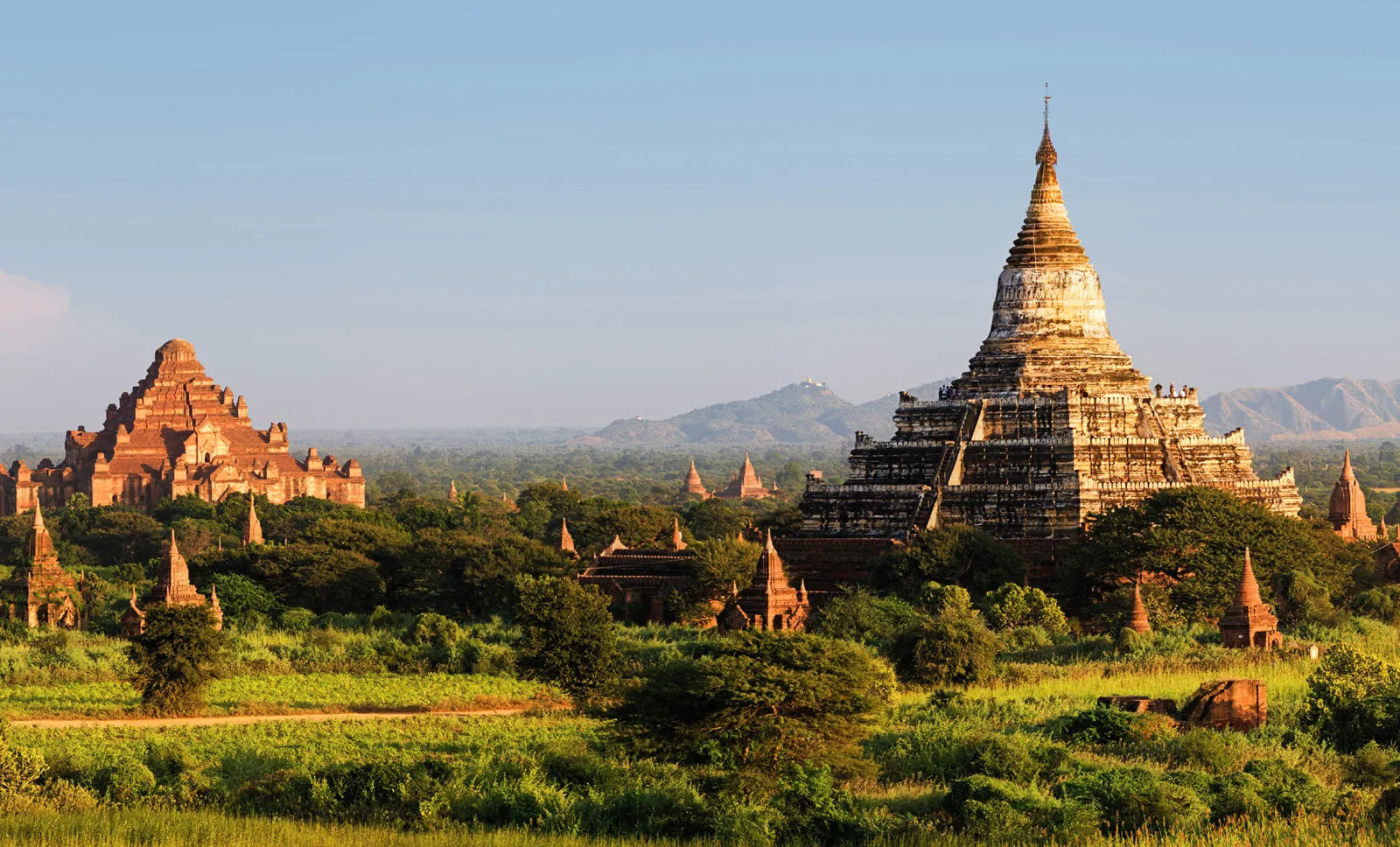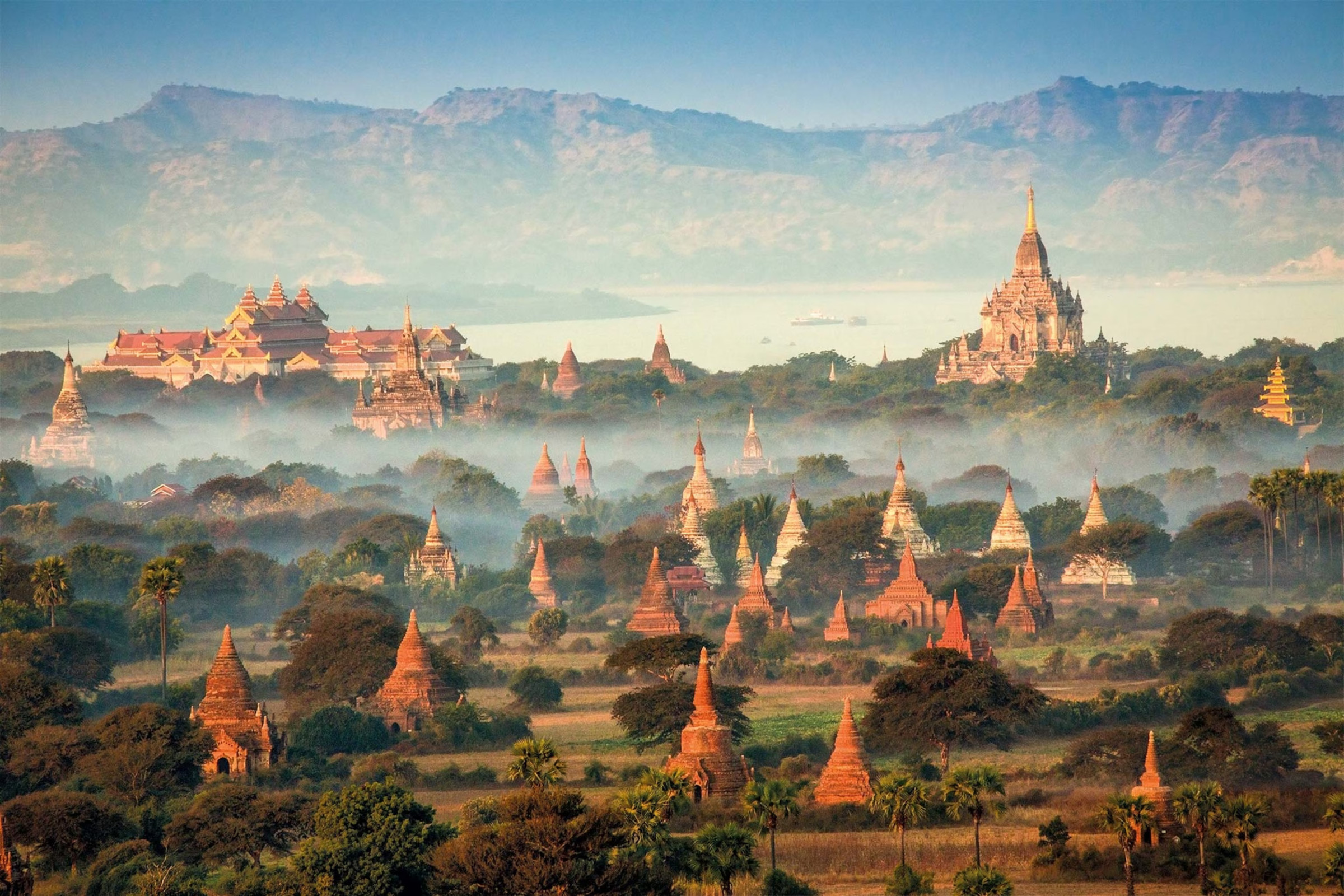
Bagan spreads across a dry, dusty plain along the Ayeyarwady River in central Myanmar, home to the remains of more than 2,000 Buddhist temples, pagodas, and monasteries built between the 9th and 13th centuries, when Bagan served as the capital of the first Burmese kingdom to unify the region. At its historical peak, the city is believed to have contained over 10,000 religious structures within an area of roughly 100 square kilometers, making it one of the greatest concentrations of Buddhist architecture ever assembled in one place, a scale that still overwhelms first-time visitors today.
Unlike more centralized ancient capitals, Bagan was never a densely populated city in the conventional sense, its temples were built as religious merit-making projects by kings, nobles, and wealthy citizens scattered across open farmland, a pattern that gives the plain today its distinctive appearance: brick and stucco spires rising directly out of dry fields, palm groves, and open plain rather than a single dense urban core.
Bagan's temple-building boom coincided with King Anawrahta's 11th-century conversion of the Bagan Empire to Theravada Buddhism, a shift that launched centuries of continuous religious construction as successive rulers and wealthy patrons competed to fund ever more elaborate temples as acts of religious devotion and merit accumulation. This religious motivation, rather than centralized urban planning, explains the sheer density and variety of architectural styles found across the plain, ranging from massive gilded stupas to modest brick shrines built by individual families.
The kingdom's power and temple-building capacity declined sharply following Mongol invasions in the late 13th century under Kublai Khan's forces, after which Bagan's political significance faded, though religious pilgrimage and small-scale temple maintenance continued in the region across the centuries that followed, keeping many structures at least partially preserved despite the loss of centralized royal patronage.
Among Bagan's most significant structures, the Ananda Temple, completed around 1105 AD, stands out for its near-perfect symmetry and four standing Buddha images facing each cardinal direction, while the Shwezigon Pagoda, believed to enshrine genuine relics, established an architectural template that influenced later Burmese stupa design across the country for centuries. The Thatbyinnyu Temple, Bagan's tallest structure at around 61 meters, and the massive, if less architecturally refined, Dhammayangyi Temple round out the plain's most visited landmarks.
Beyond these headline sites, thousands of smaller, unrestored temples scattered across the plain offer a very different experience, often entirely unattended and open to quiet exploration, giving visitors willing to wander beyond the main tourist circuit a much more intimate, undisturbed sense of the site's genuine scale and age.
Bagan's daily sunrise, when hundreds of temple spires emerge from morning mist as the sun rises behind them, has become one of the most photographed scenes in Southeast Asia, drawing visitors to designated viewing platforms and, increasingly, hot air balloon flights that drift silently over the plain during the cooler dry season months. These balloon flights offer a genuinely unique aerial perspective on the site's scale, though they operate only seasonally due to wind and weather conditions.
Climbing temples for sunrise and sunset views was once widely permitted but has been significantly restricted in recent years following conservation concerns and a major 2016 earthquake that damaged numerous structures, meaning most visitors today view sunrise from designated ground-level platforms or specific temples still permitted for limited elevated access.
A magnitude 6.8 earthquake struck the Bagan region in August 2016, damaging or partially collapsing several hundred temples across the plain, prompting a significant restoration effort that has continued for years since. Restoration work at Bagan has also drawn international criticism at points, particularly regarding earlier 20th-century reconstruction efforts that used modern materials and design choices not always faithful to original construction methods, complications that factored into UNESCO's evaluation of the site for years before its eventual inscription.
Bagan was finally added to the UNESCO World Heritage List in 2019, decades after Myanmar first sought recognition, with the delayed listing reflecting both the restoration controversy and broader diplomatic complications tied to Myanmar's political situation over recent decades.
Myanmar's tourism industry, including visits to Bagan, has been significantly affected by the country's political instability, particularly following the 2021 military coup and subsequent unrest, which sharply reduced international visitor numbers compared to the tourism boom Bagan experienced during Myanmar's period of political opening in the early 2010s. Travel advisories from many governments have urged caution regarding travel to Myanmar in recent years, and logistics for international visitors have become considerably more complicated as a result.
Despite this instability, Bagan itself, geographically somewhat removed from areas of the most intense conflict, has continued receiving visitors, though at significantly reduced numbers compared to its pre-2021 tourism peak, with the local economy around the plain remaining heavily dependent on whatever international travel does continue.
Most visitors base themselves in Nyaung-U or New Bagan, exploring the temple plain by e-bike, horse cart, or organized taxi, since the sheer distances between temples across the roughly 100-square-kilometer site make walking between all major landmarks impractical for most travelers. A typical visit spans two to three days, balancing well-known landmark temples with quieter exploration of smaller, less-visited structures scattered across the surrounding farmland.
Because of Bagan's dry, dusty climate and largely unshaded temple grounds, sun protection and hydration are practical necessities for anyone spending a full day moving between sites, particularly during the hotter months outside the main cooler season.
Few archaeological sites anywhere combine Bagan's sheer numerical density of religious architecture with a landscape this open and accessible for genuine wandering exploration, rather than confinement to a single fenced monument or narrow visitor path. Despite earthquakes, contested restoration decisions, and years of political turbulence surrounding Myanmar more broadly, Bagan's temple plain remains one of the most extraordinary concentrations of ancient religious architecture anywhere on Earth.
Beyond their sheer number, Bagan's temples showcase a remarkable range of construction techniques and decorative styles developed over roughly four centuries of continuous building, from early Mon-influenced designs to later distinctly Burmese architectural forms featuring elaborate terraced roofs and ornate stucco relief work depicting Jataka tales from the Buddha's previous lives. Many interior murals, though faded and in some cases damaged by centuries of exposure and periodic looting, still preserve rare visual records of medieval Burmese religious life, clothing, and artistic conventions found nowhere else in comparable detail.
Local and international conservation teams continue documenting and stabilizing these murals and structural elements, a slow, painstaking effort complicated by limited funding, Myanmar's political instability, and the sheer scale of the site, meaning many of Bagan's smaller temples likely will not receive dedicated restoration attention for years or decades to come.
No reviews yet. Be the first to share your experience!
Share your experience and help other travelers