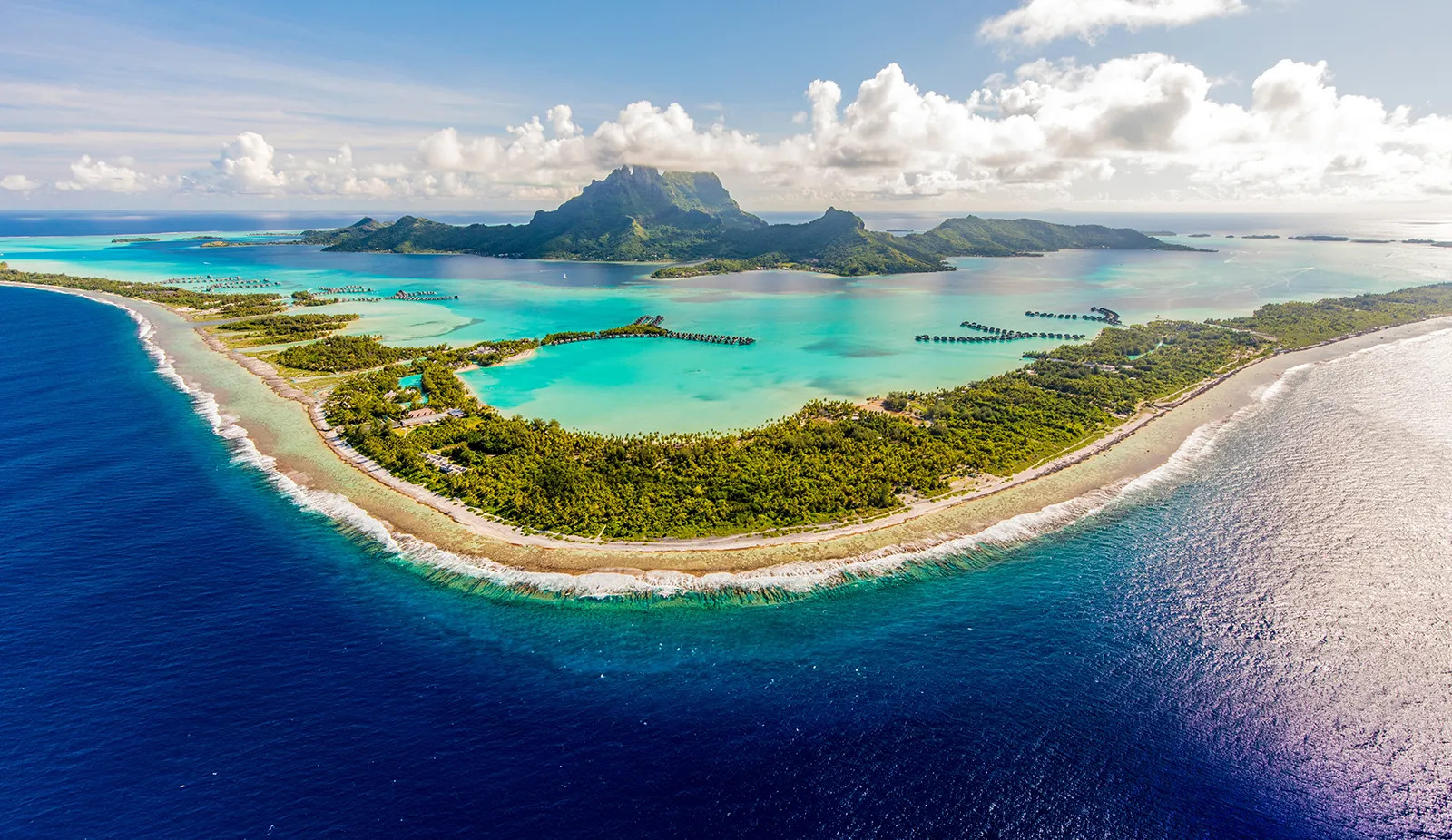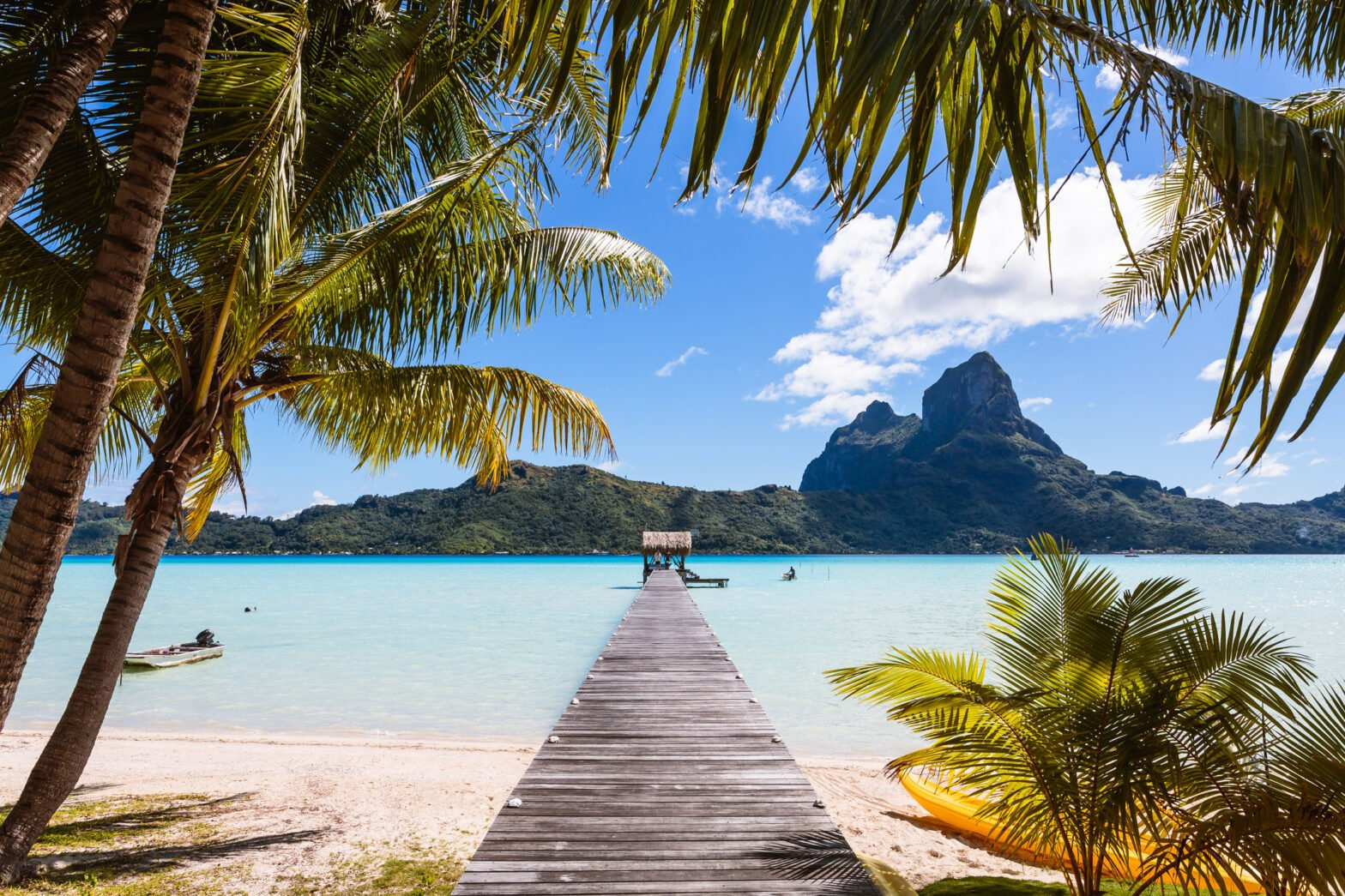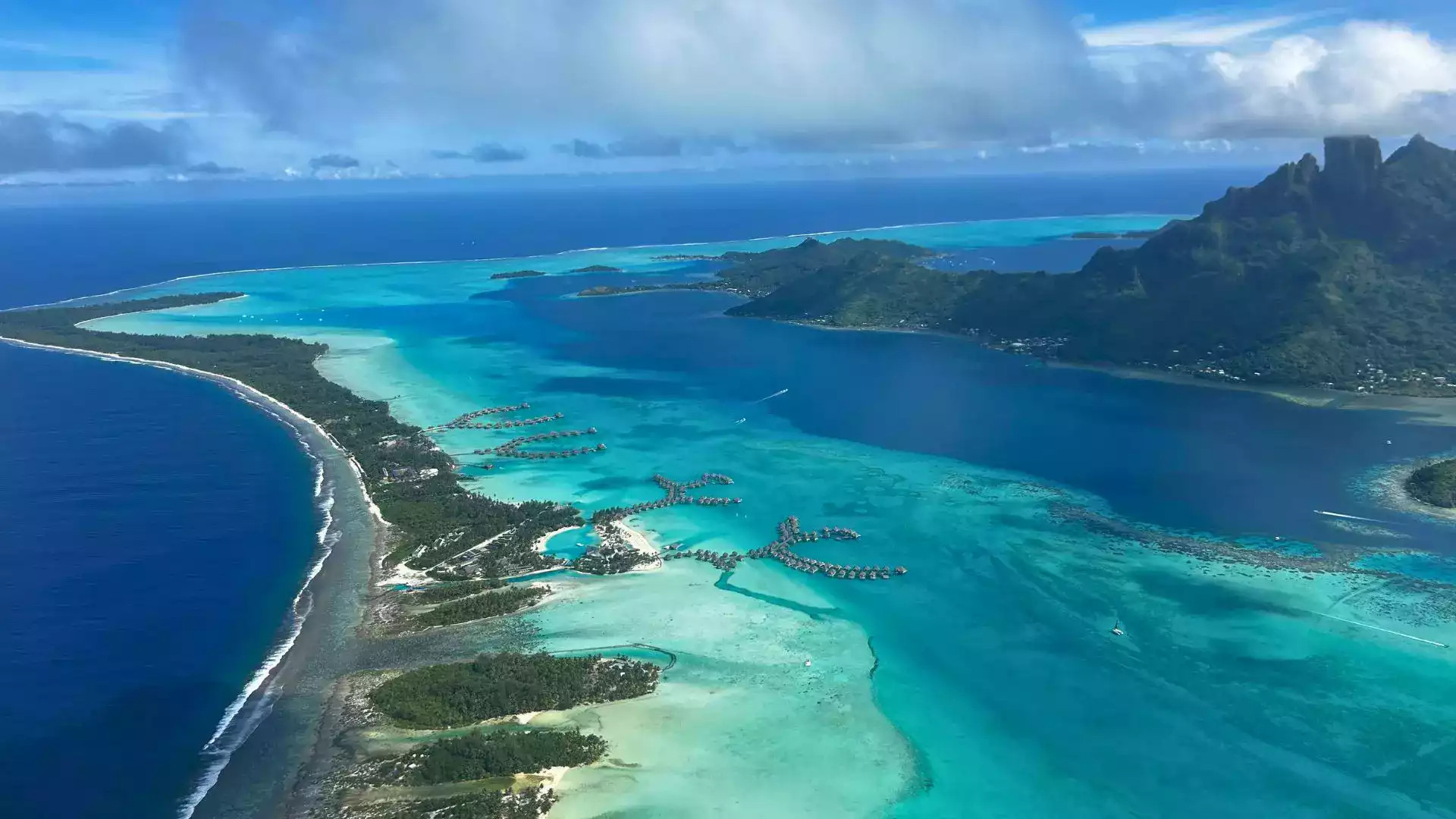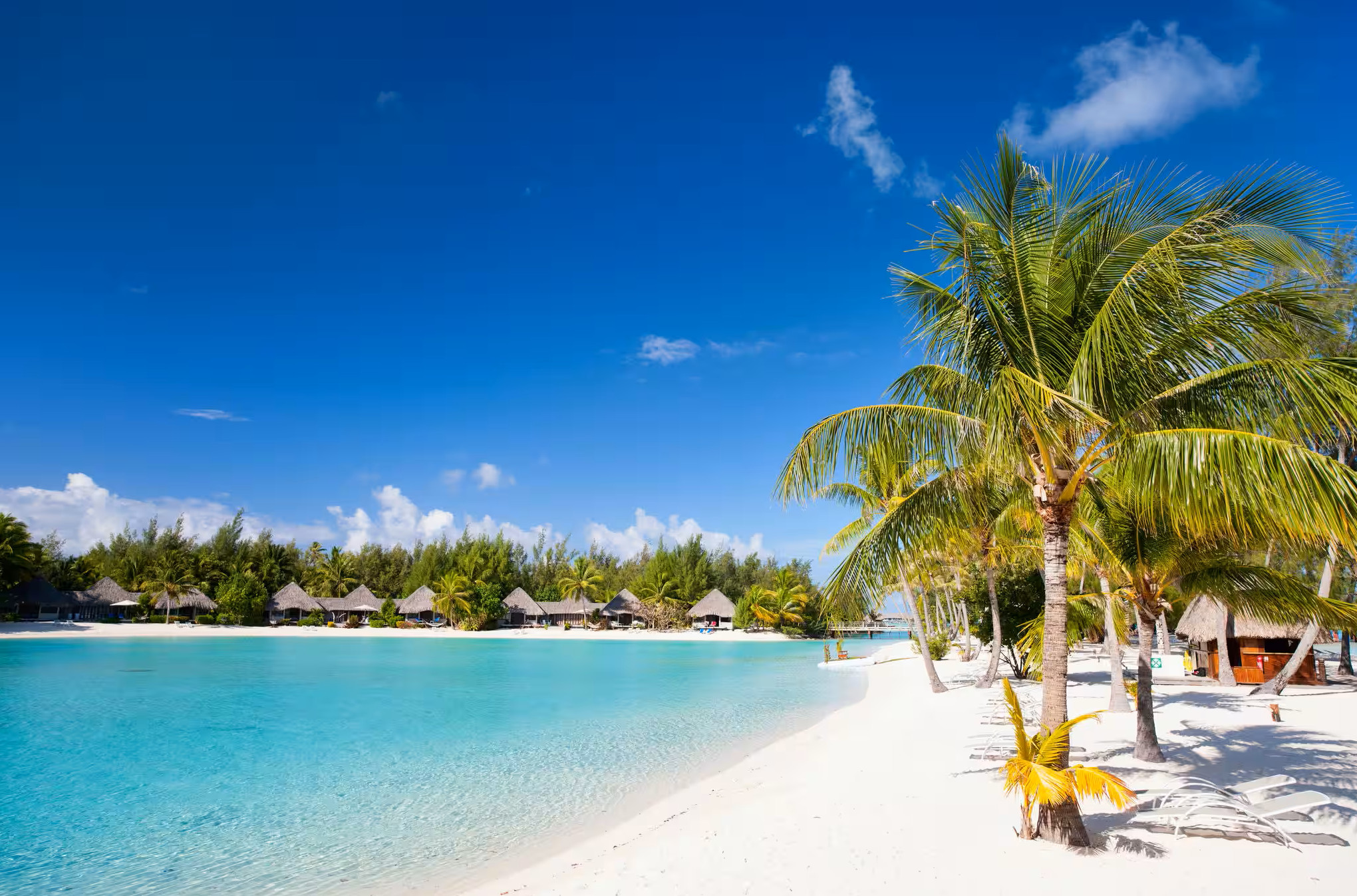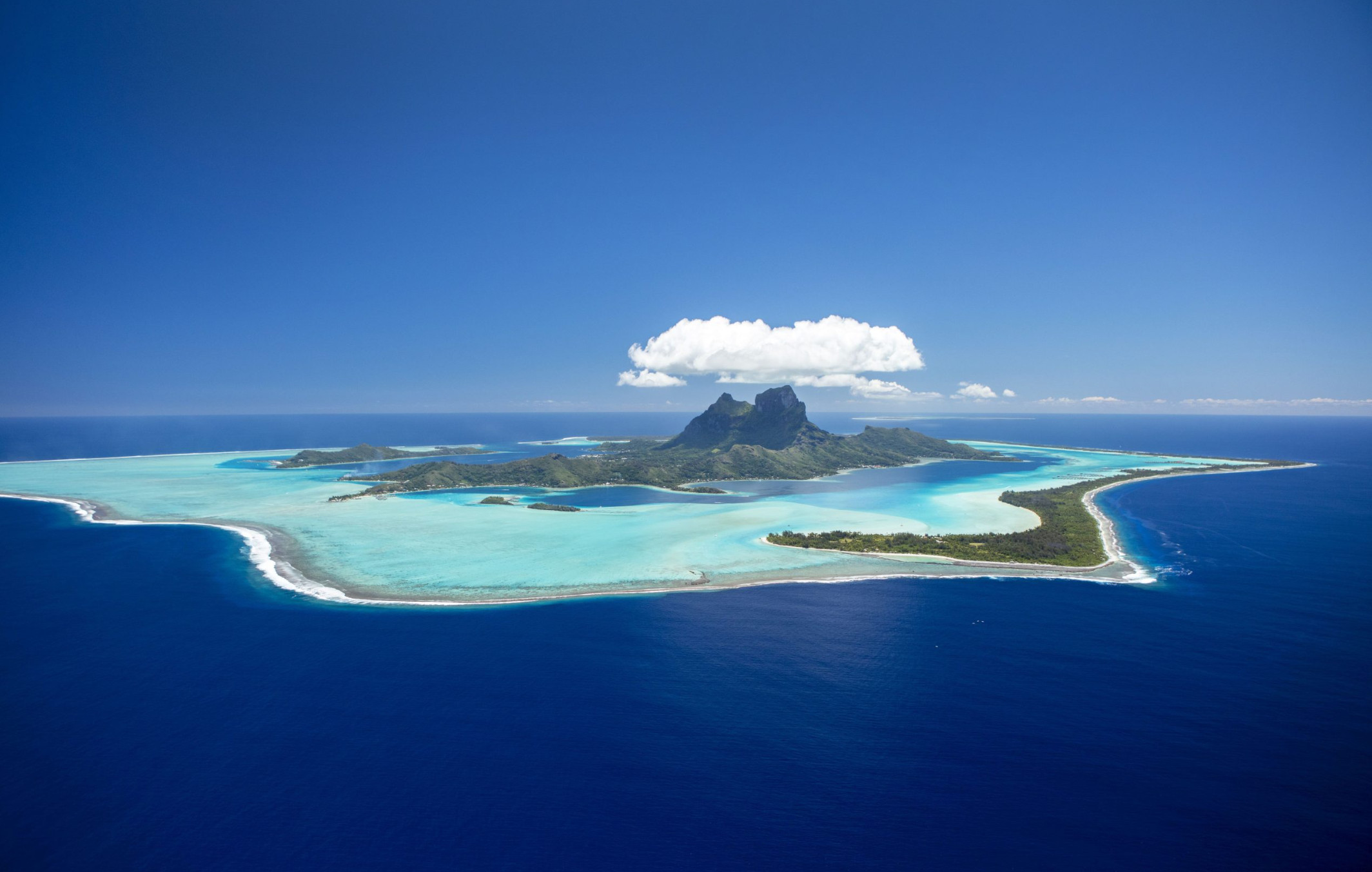
Bora Bora rises from the South Pacific roughly 230 kilometers northwest of Papeete, a small island in French Polynesia's Society Islands whose silhouette is instantly recognizable: a jagged, jungle-covered volcanic peak surrounded by a wide, pale-turquoise lagoon and, further out, an unbroken ring of coral barrier reef. The island itself is the eroded remnant of an extinct volcano, its two main summits, Mount Pahia and the taller Mount Otemanu at 727 meters, all that remains of a much larger cone that has slowly subsided and eroded over millions of years, a process that in geological time will eventually leave only the surrounding reef and lagoon behind, following the same pattern that has already produced the low coral atolls scattered across much of the wider Pacific. For now, though, Bora Bora sits at a particularly photogenic midpoint in that process, tall enough for dramatic green peaks, but already ringed by the shallow, warm, brilliantly colored lagoon that has made it one of the most photographed stretches of ocean on Earth.
Polynesian voyagers are believed to have settled Bora Bora around the third century CE, part of the broader wave of migration that populated the Society Islands and much of the eastern Pacific over the centuries that followed. Long before European contact, the island supported a structured Polynesian society with its own chiefly lineages, religious sites, and oral traditions, and place names and cultural practices from this era persist in the island's Tahitian-language place names and in ceremonial traditions still performed for visitors today. European contact came relatively late to Bora Bora compared to some other Pacific islands, and the island came under French colonial control in 1888 when France formally annexed it, incorporating it into what would become French Polynesia, a status that, with later constitutional changes, evolved into today's arrangement as a French overseas collectivity with a significant degree of local autonomy.
Bora Bora's modern history took an unexpected turn during the Second World War, when the United States selected the island as the site for a major South Pacific supply base under the codename Operation Bobcat, beginning in 1942. American forces built an airstrip, a fuel depot, and deep-water port facilities capable of supporting the Allied war effort across the Pacific theater, even though the island itself never saw combat and Japanese forces never came close to attacking it directly. The wartime airstrip, built on the motu of Motu Mute at the edge of the lagoon, remains in use today as Bora Bora's only airport, an enduring piece of infrastructure whose origins in military logistics are largely invisible to the tourists who now fly in for entirely different reasons. Traces of wartime gun emplacements and bunkers can still be found on the island's hillsides, quiet reminders of a period when this remote lagoon briefly became a strategically important military outpost.
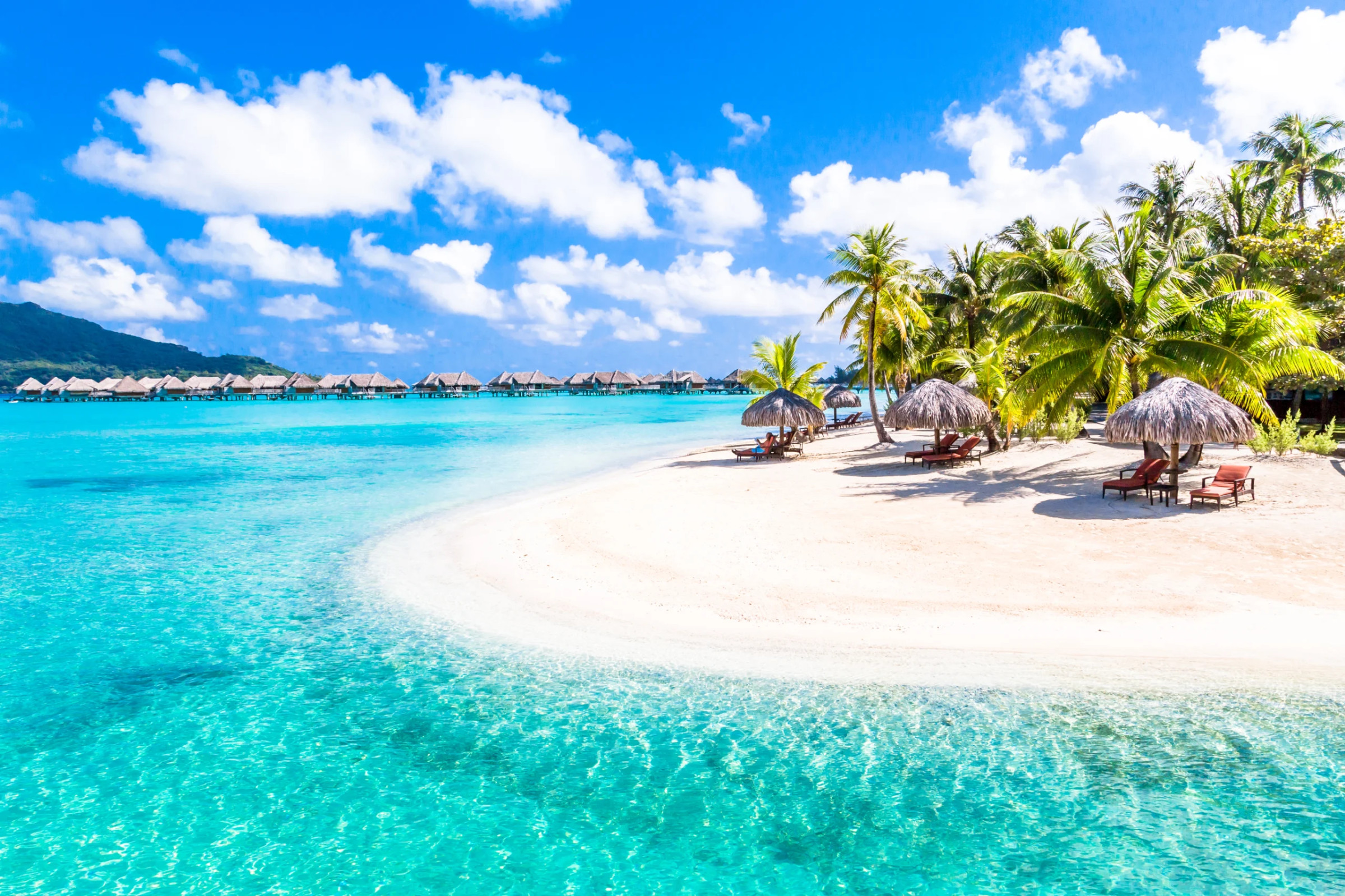
Vaitape, on the island's western shore, serves as Bora Bora's main town and was founded in 1824 by the British missionary John Muggridge Orsmond, whose arrival marked the beginning of sustained European religious and cultural influence on the island. For much of the following century, Bora Bora remained a quiet, largely self-sufficient community built around fishing, coconut cultivation, and small-scale agriculture, its remoteness limiting outside contact even as neighboring Tahiti developed more extensive trade and tourism links. That changed decisively in 1961, when the Hotel Bora Bora opened on the island, and especially in 1970, when the same property introduced what are widely credited as the first overwater bungalows on stilts above the lagoon, a design innovation that would eventually define an entire category of luxury tropical tourism replicated at resorts across the Pacific, Indian Ocean, and Caribbean.
Bora Bora's lagoon, protected from open ocean swell by the surrounding barrier reef, offers calm, shallow, exceptionally clear water that supports a dense population of reef fish, rays, and reef sharks, drawing snorkelers and divers to sites just a short boat ride from the main island. Guided excursions to feed and observe stingrays and blacktip reef sharks in shallow lagoon water have become a signature Bora Bora activity, offering close encounters with marine life considered safe enough for casual tourists despite involving animals that, in other contexts, inspire considerably more caution. Beyond the water itself, small uninhabited motu, the coral islets scattered around the lagoon's outer rim, are popular destinations for day trips, picnics, and private beach excursions, their fine white sand and shallow approach making them a frequent backdrop for the resort photography that has made Bora Bora synonymous with a particular vision of tropical luxury.
Bora Bora Airport, built on the reclaimed wartime airstrip on Motu Mute, receives regular domestic flights from Faaa International Airport near Papeete on the main island of Tahiti, itself connected to international destinations including Los Angeles, Paris, and Auckland, making Bora Bora typically a two-flight journey for most international visitors. Because the airport sits on a separate motu from the main island, arriving guests generally continue their journey by boat, and many resorts operate their own private lagoon transfers directly from the airport dock to the property, an arrangement that for overwater bungalow resorts means visitors can go from airplane to seaplane-style boat to their room without ever setting foot on the main island at all. On the island itself, a single road circles the coastline, used by rental cars, scooters, and local buses, while boat transport remains the primary way to reach the outer motu and the best snorkeling sites around the barrier reef.
Bora Bora's climate divides into a drier season from roughly June through October, bringing warmer, more reliably sunny weather and slightly cooler, more comfortable temperatures overall, and a wetter season from November through April, when humidity and rainfall increase alongside the risk of tropical storms, though even this wetter period typically includes substantial stretches of sunny weather rather than continuous rain. Underwater visibility in the lagoon tends to be most consistent during the drier months, making June through October the preferred window for snorkeling and diving-focused visits, while the wetter season, despite its reputation, still draws visitors willing to trade slightly less predictable weather for typically lower prices and thinner crowds at what remains, regardless of season, one of the most consistently warm and temperate destinations in the Pacific.
Bora Bora's fame has come with side effects familiar to many small islands built around high-end tourism: land and resort development concentrated along the lagoon shore has put pressure on coastal ecosystems, and reef researchers monitor coral health here alongside the broader concerns facing reef systems worldwide as ocean temperatures rise. Several resorts and local organizations have taken an active role in this monitoring, running coral restoration and lagoon conservation programs that guests can sometimes visit or participate in, framing the lagoon's health as inseparable from the island's long-term tourism appeal rather than a separate environmental issue. For French Polynesia more broadly, Bora Bora functions as both an economic anchor, generating substantial tourism revenue relative to its tiny land area, and a kind of visual ambassador, its lagoon appearing in tourism marketing for the wider territory far more often than its actual size within French Polynesia's roughly 120 islands would suggest, a reputation built almost entirely on the accident of geology that left this particular volcanic remnant surrounded by such strikingly clear water.
No reviews yet. Be the first to share your experience!
Share your experience and help other travelers