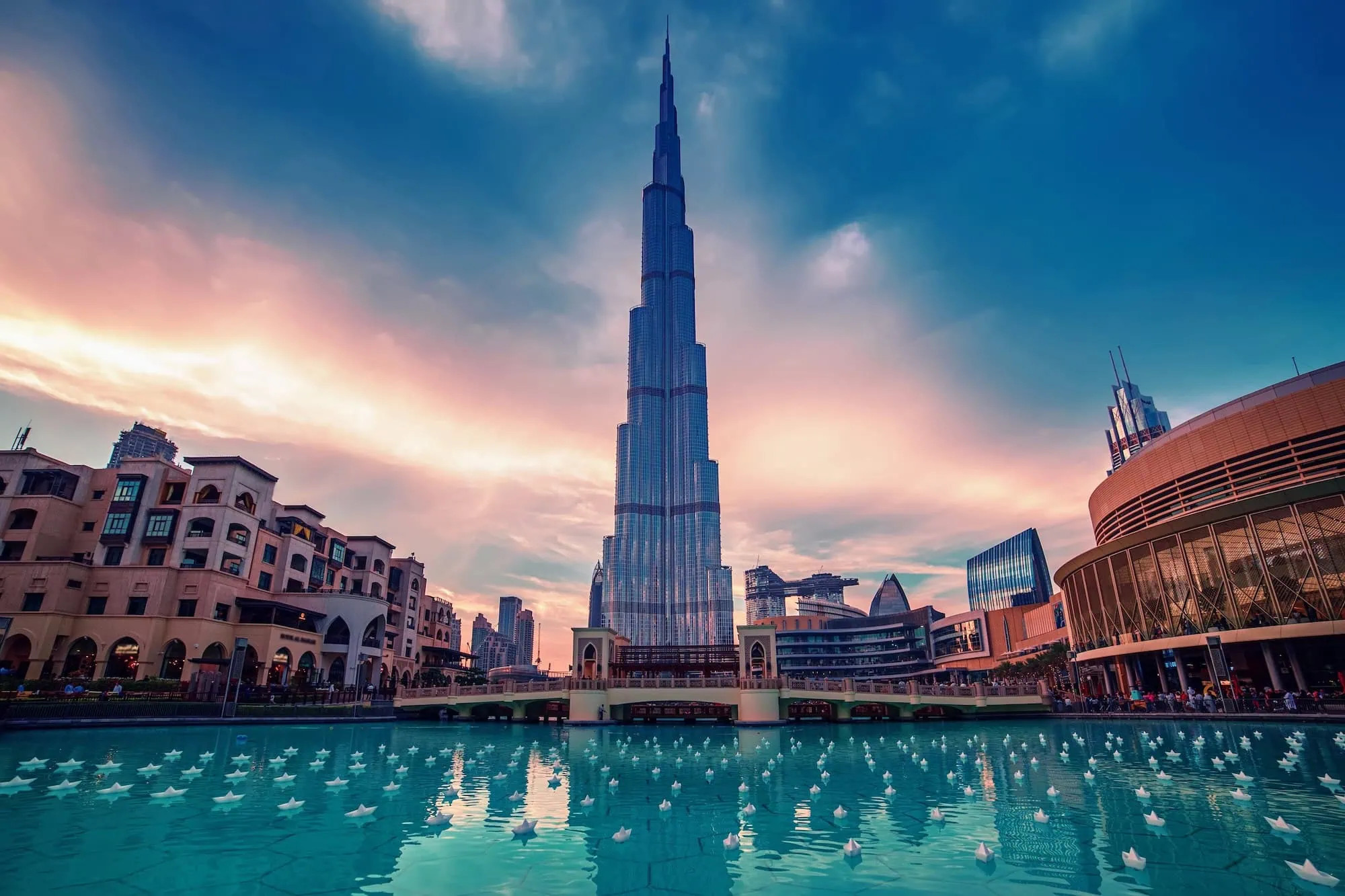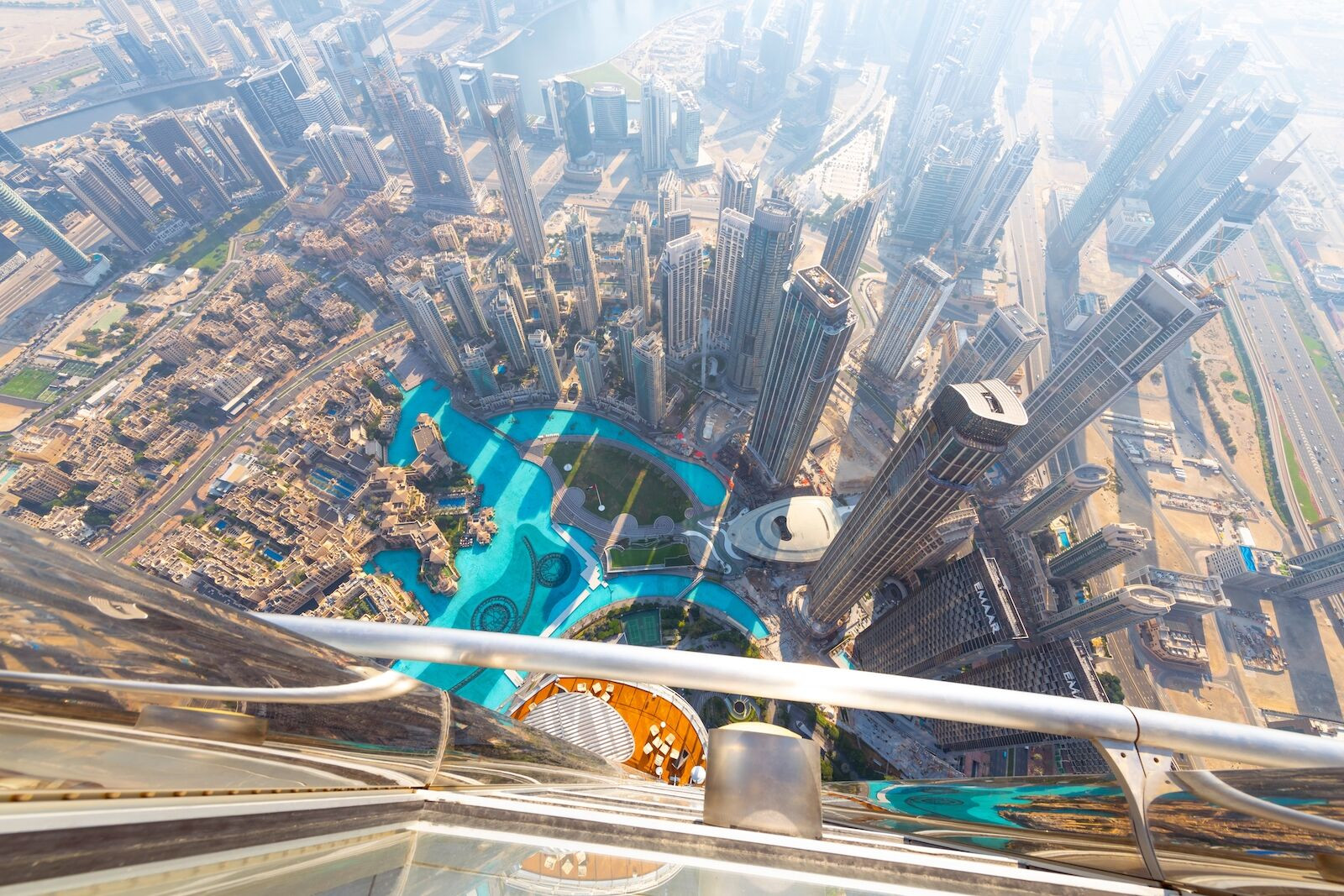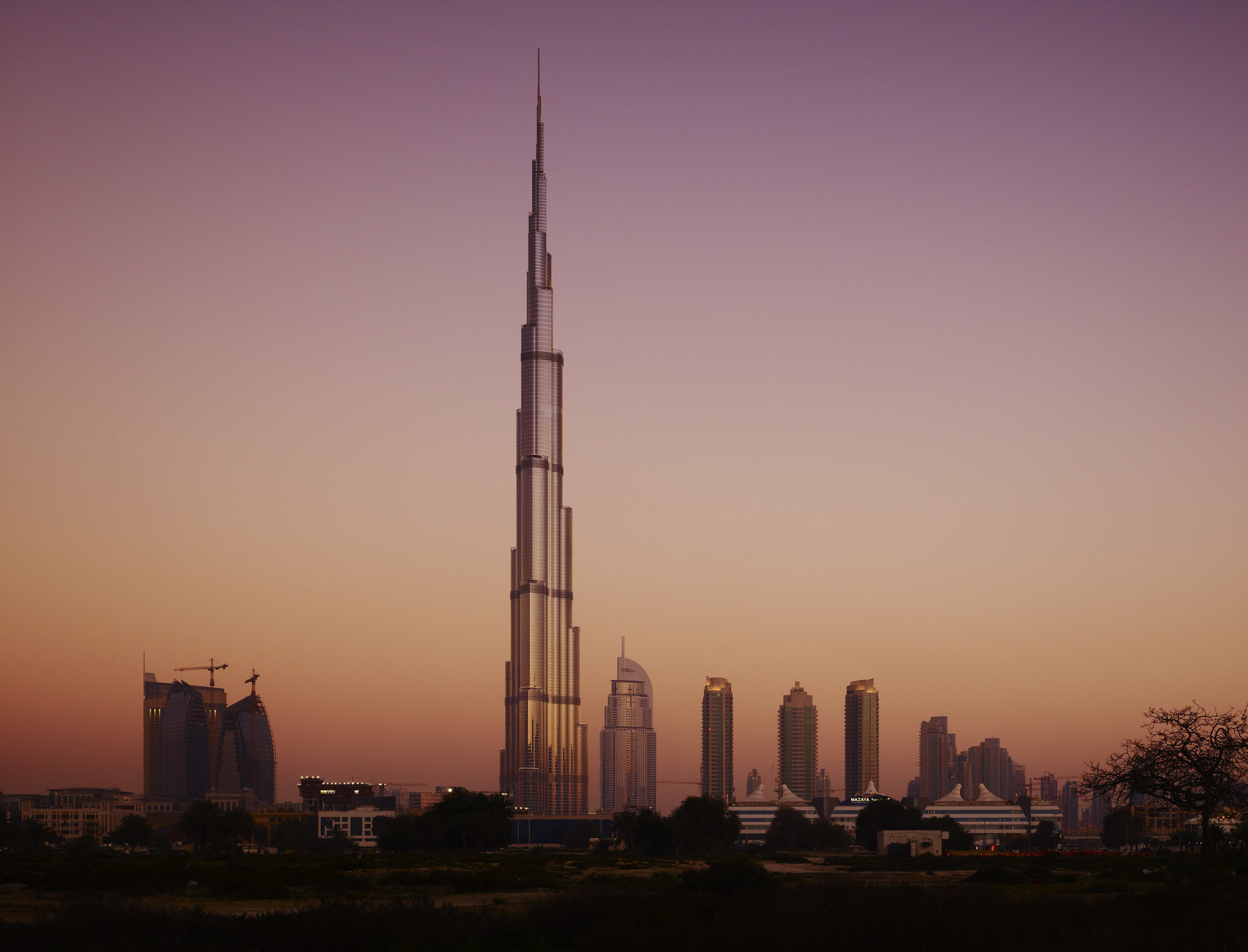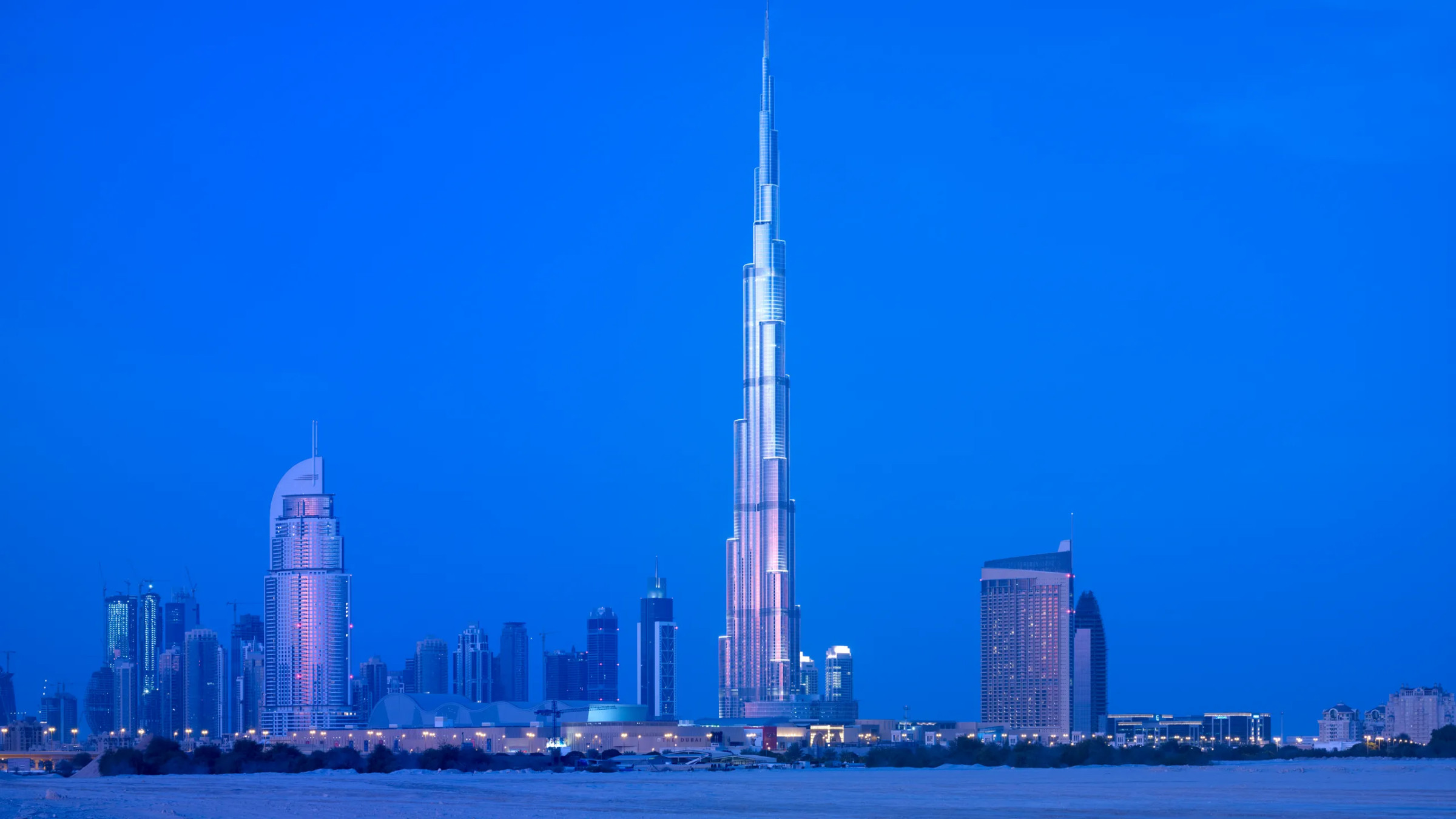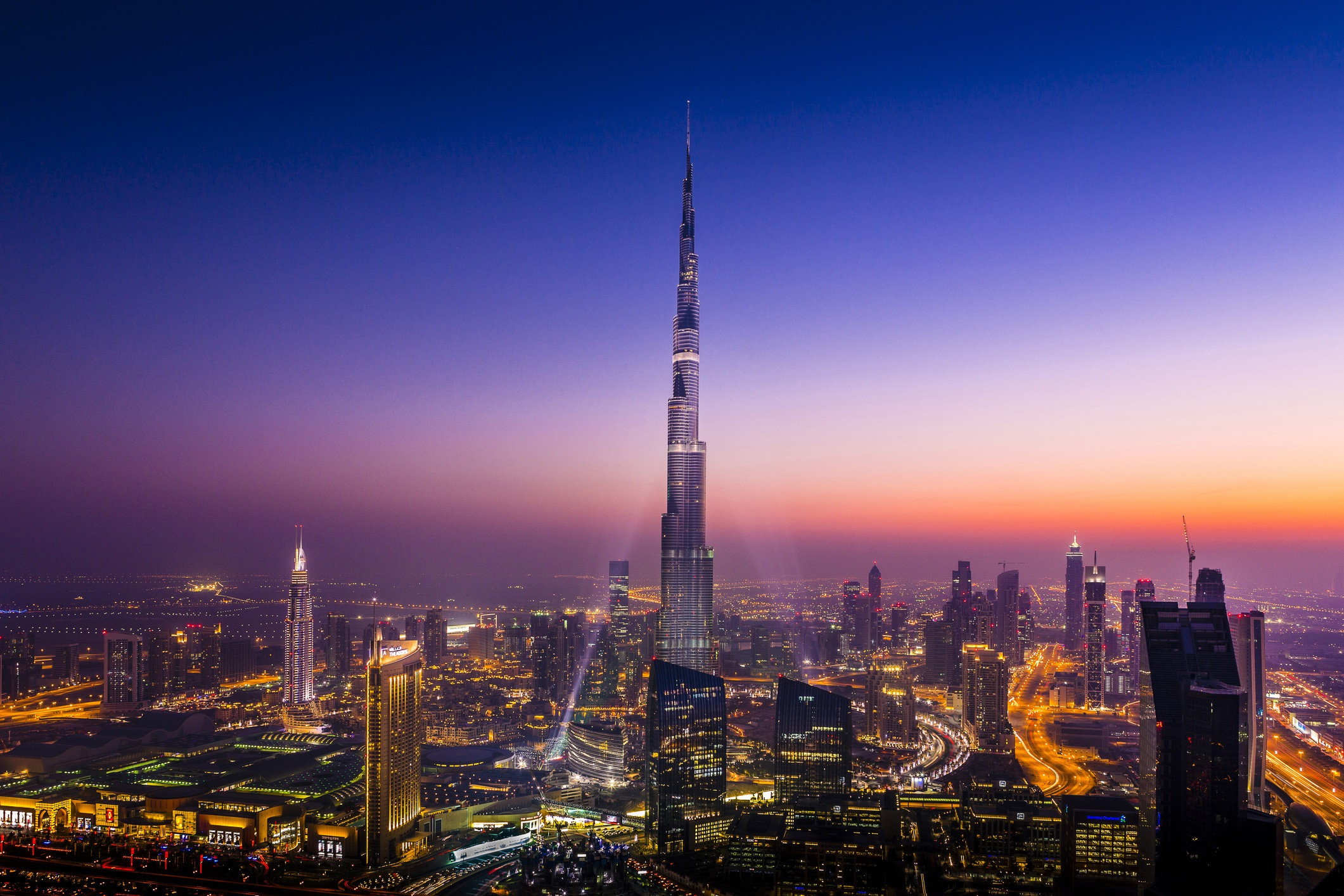
Burj Khalifa rises 829.8 meters above Downtown Dubai, a height that includes its distinctive spire and makes it, by a considerable margin, the tallest structure ever built by human beings, a record it has held continuously since its completion and one that no other building has come close to challenging in the years since. Excluding the spire, the building's roof reaches 828 meters, itself still well beyond any rival structure, and the tower contains 163 usable floors, more than any other building in the world, a combination of raw height and floor count that places Burj Khalifa in a category of its own even among the small handful of supertall skyscrapers built globally in the decades since its completion. The scale is difficult to grasp from ground level alone: the tower is tall enough that its upper floors experience sunset several minutes later than street level during Ramadan, a detail Dubai authorities have had to factor into official guidance for when residents in different parts of the building should break their daily fast.
Construction began on January 12, 2004, with the building's distinctive exterior reaching completion in October 2009 after nearly six years of continuous work, and the tower officially opened to the public on January 4, 2010, a construction timeline that, given the scale of the engineering challenge involved, moved at a genuinely rapid pace by the standards of comparable supertall building projects worldwide. The project required innovations across nearly every aspect of skyscraper engineering, from a specially formulated high-performance concrete mix designed to withstand the Arabian Gulf's extreme summer heat during pouring, to a foundation system driving piles nearly 50 meters into the ground to anchor the enormous structure against wind loads and the region's sandy, less-than-ideal soil conditions. Thousands of workers, many of them migrant laborers from South Asia, worked on the site across the construction period, a workforce whose conditions drew significant international scrutiny and criticism during and after the project, part of a broader ongoing conversation about labor practices on major construction projects across the Gulf region.
The architectural firm Skidmore, Owings and Merrill designed Burj Khalifa, with Adrian Smith serving as chief architect and Bill Baker as chief structural engineer, and the building's distinctive Y-shaped floor plan draws direct inspiration from the geometric patterns found in the Great Mosque of Samarra in Iraq, a design reference that grounds the ultra-modern tower's form in a much older regional architectural tradition rather than treating the building as a purely contemporary, context-free engineering exercise. This Y-shaped plan serves a crucial structural function as well as an aesthetic one, allowing the tower to progressively taper as it rises through a series of 27 spiral setbacks, each reducing the building's cross-section and helping to disrupt the wind vortices that would otherwise place enormous, potentially destabilizing lateral loads on a structure of this extreme height, an engineering solution that turned an aesthetic reference into one of the building's most important structural safety features.
Burj Khalifa's height is only the most obvious of the numerous world records it holds: the building contains the world's highest restaurant, At.mosphere, on its 122nd floor, along with the longest single elevator travel distance of any building anywhere, at 504 meters, and the highest observation decks on the planet, including the Lounge observatory on a floor at 585 meters, which opened in February 2019 and currently ranks as the highest observation deck in the world. These records collectively reflect a building designed from the outset not simply to be tall, but to comprehensively showcase what supertall skyscraper engineering could achieve across every functional category, from vertical transportation to public observation space to food service at altitudes that would have been considered essentially unbuildable for restaurant or public access purposes only a few decades before Burj Khalifa's construction began.
Burj Khalifa opened as the centerpiece of Downtown Dubai, a large mixed-use development including The Dubai Mall, one of the world's largest shopping centers by total area, and the Dubai Fountain, a large choreographed fountain performing regularly scheduled water and light shows on the artificial lake at the tower's base, together forming a tourism and commercial district built explicitly around the skyscraper as its visual and symbolic anchor. The building was originally slated to be named Burj Dubai during construction but was renamed Burj Khalifa shortly before its opening in honor of Khalifa bin Zayed Al Nahyan, president of the United Arab Emirates, a renaming that came shortly after Abu Dhabi provided crucial financial support to Dubai during the depths of the 2009 global financial crisis, when Dubai's rapid, debt-fueled development boom faced a severe liquidity crisis that briefly threatened to derail major projects across the emirate, Burj Khalifa included.
Visitors access Burj Khalifa's public observation decks through a dedicated entrance within The Dubai Mall, riding high-speed elevators capable of covering the vertical distance to the upper floors in well under a minute, a speed that itself forms part of the visitor experience given how disorienting the rapid ascent can feel on a first visit. Tickets are typically sold in tiers corresponding to different observation levels, with the higher 148th floor SKY level and the Lounge observatory commanding a substantial premium over standard 124th and 125th floor access, and advance booking is strongly recommended given the consistently high visitor demand, particularly around sunset time slots when the combination of daytime and nighttime city views in a single visit makes for the most sought-after tickets. Dubai International Airport, one of the world's busiest, sits a short distance from Downtown Dubai, making Burj Khalifa an easily reachable stop for the large volume of international transit passengers who extend a layover specifically to see the tower.
Since its completion, Burj Khalifa has functioned as something close to a permanent benchmark against which every subsequent supertall building project worldwide is measured, its 828-meter roof height remaining unmatched more than a decade after opening despite ambitious proposed projects elsewhere, including a planned mile-high tower in Saudi Arabia that has faced repeated delays and design revisions. This enduring record reflects both the sheer technical difficulty of exceeding Burj Khalifa's height and the particular combination of political will, financing, and engineering expertise that came together in Dubai during the specific window when the tower was conceived and built, a combination that has proven difficult for other cities and developers to replicate at quite the same scale in the years since, even as skyscraper construction has continued to accelerate across the Gulf region, East Asia, and elsewhere.
Unlike most of the world's historically famous landmarks, Burj Khalifa carries no centuries of accumulated myth or ancient religious significance, having existed for barely over a decade, yet it has still managed to establish itself as an instantly recognizable global symbol on par with far older structures, appearing in countless films, New Year's Eve firework broadcasts watched by hundreds of millions of viewers worldwide, and tourism marketing not just for Dubai but for the wider United Arab Emirates. This rapid rise to iconic status reflects Dubai's broader strategy over the past several decades of using architecturally ambitious, record-setting construction projects as a deliberate tool of national branding and economic diversification, moving the emirate's international image away from its historical role in the regional pearl and later oil trade toward a newer identity built around tourism, finance, and world-class engineering spectacle. Whether or not any future structure eventually surpasses its height record, Burj Khalifa's early and thorough establishment as the definitive symbol of modern Dubai gives it a cultural staying power that may well outlast the purely technical superlative that first made it famous.
No reviews yet. Be the first to share your experience!
Share your experience and help other travelers