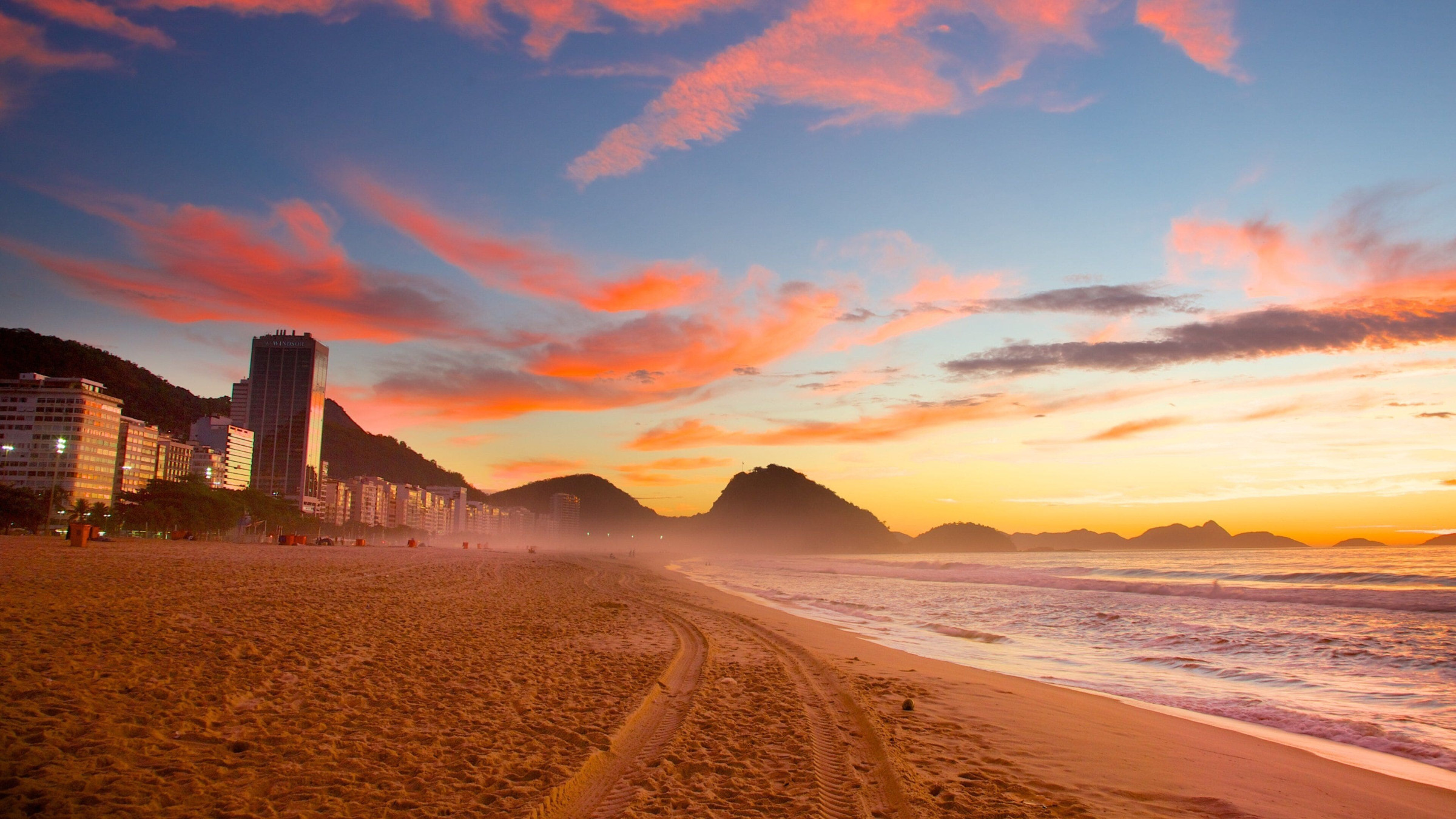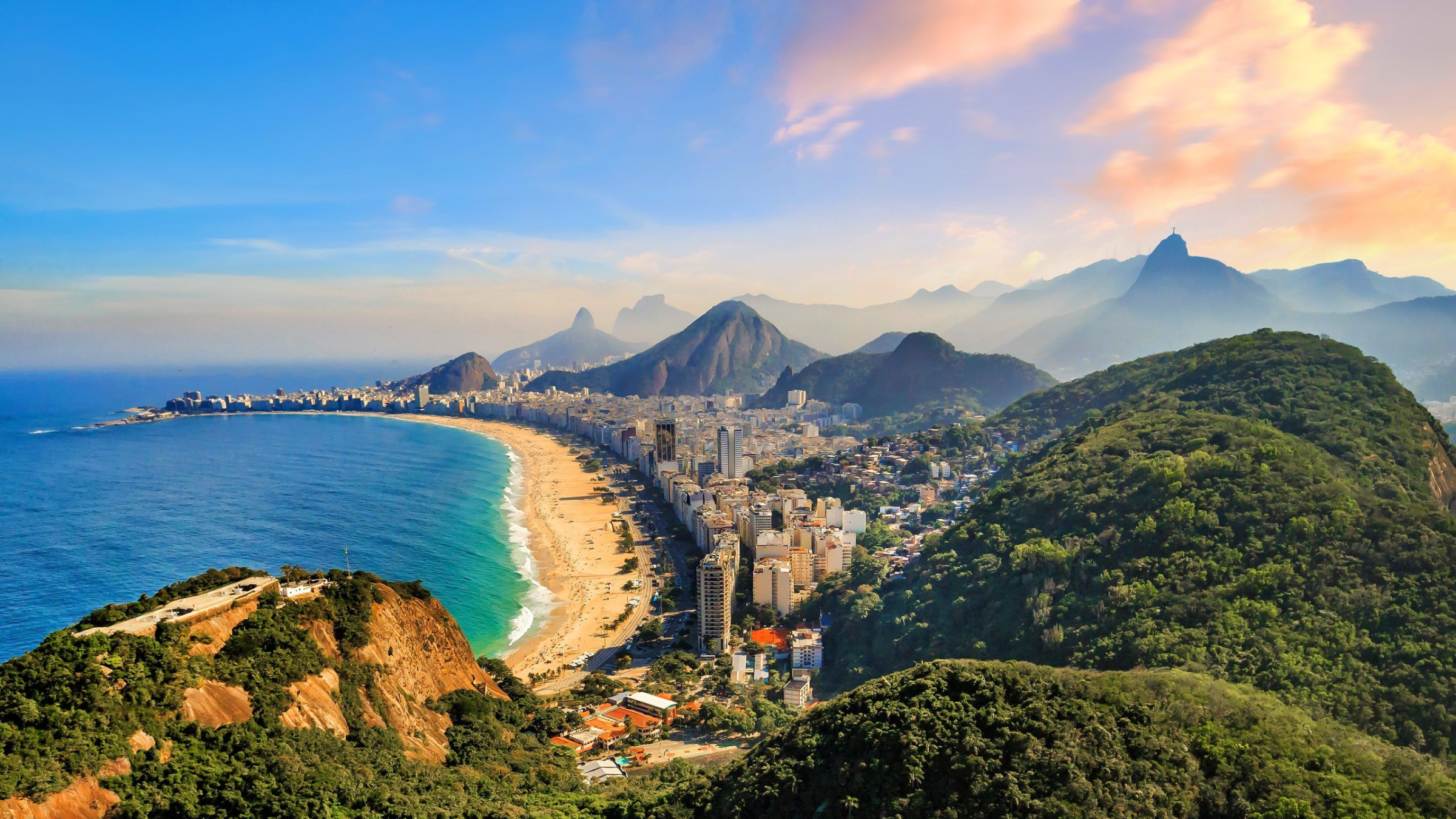
Before it was Rio de Janeiro's most famous beach, the four-kilometer curve of sand facing the open Atlantic went by a very different name. Local Tupi people called it Sacopenapã — roughly "the way of the socós," referring to a species of heron that once frequented the area's marshy edges. That name held until the mid-18th century, when a small chapel was built on the sands to house a replica of Our Lady of Copacabana, a devotional statue whose original, in Bolivia, was itself named after a town on Lake Titicaca. The chapel's name eventually displaced the neighborhood's original Tupi name entirely, and Copacabana — a word with roots on the other side of the continent, in the Andes — became permanently attached to a beach thousands of kilometers away.
For much of the 19th century, the area remained a remote, sparsely populated stretch of coastline, cut off from central Rio by a mountain ridge and reachable mainly by boat or a difficult overland route. That isolation ended with the construction of a tunnel connecting Copacabana to the rest of the city in the early 20th century, which triggered rapid urban development and transformed a fishing hamlet into one of the most densely built neighborhoods in South America within a few decades.
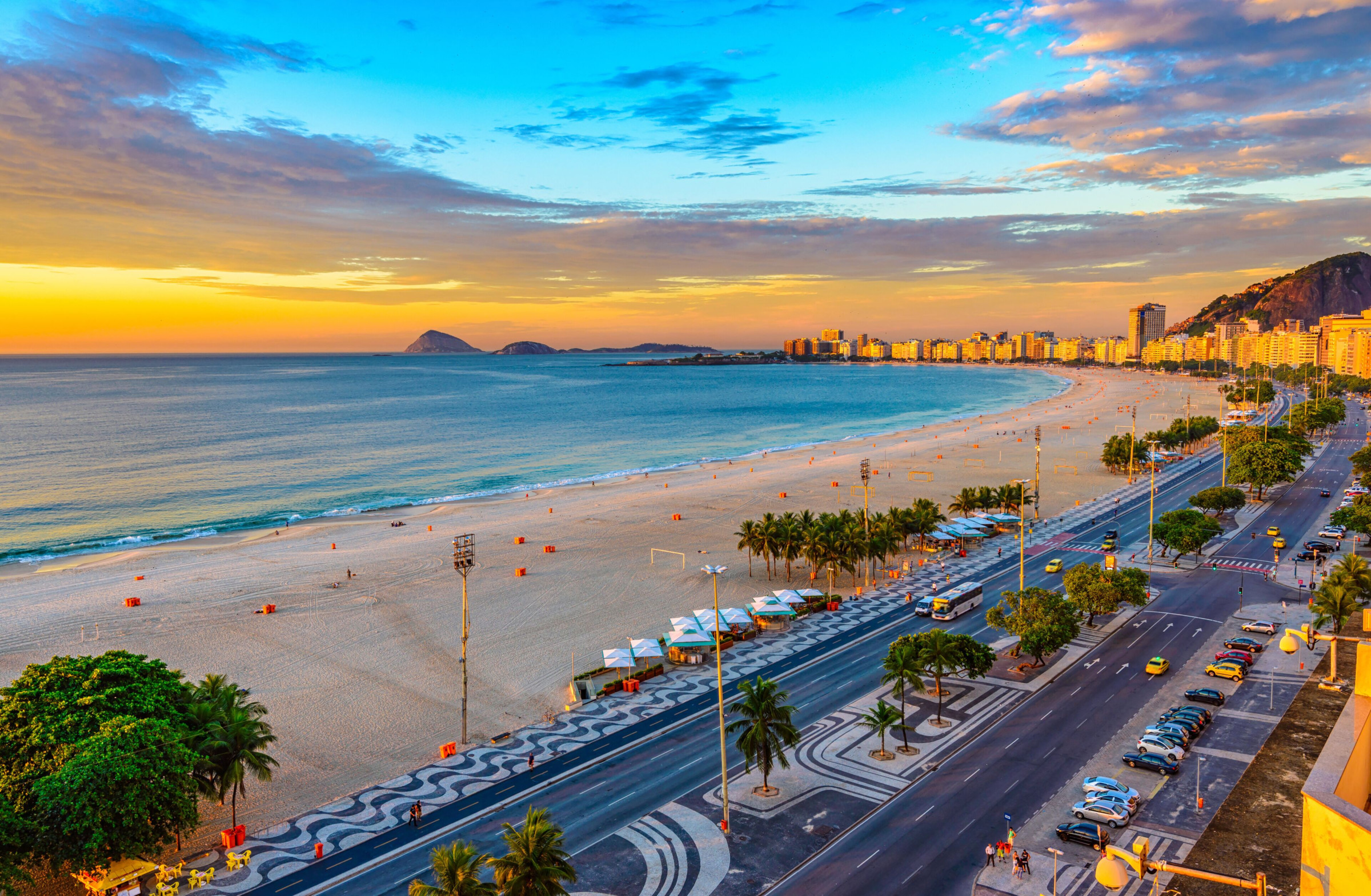
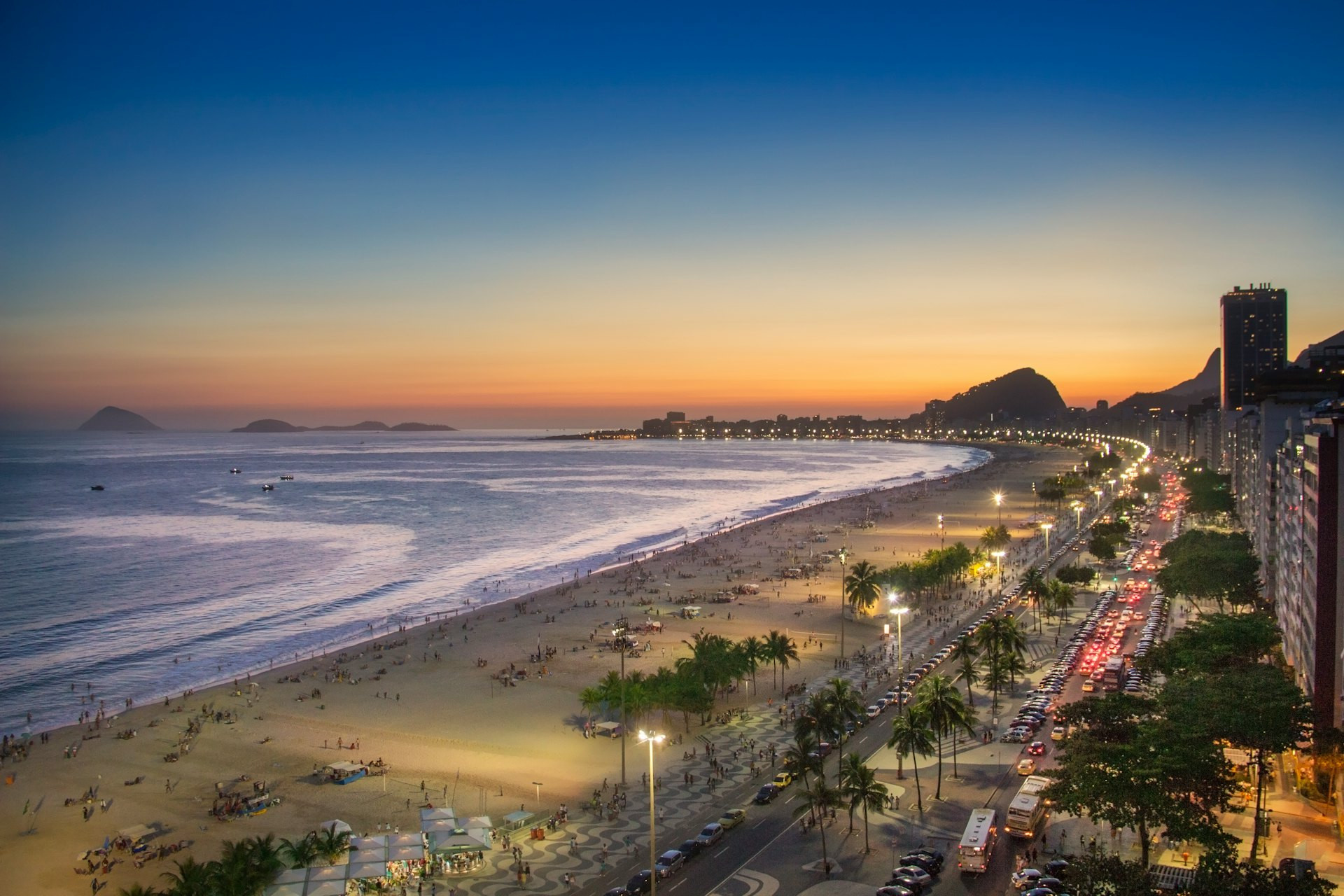
Copacabana's beachfront promenade is almost as recognizable as the beach itself: a black-and-white mosaic pavement laid out in sweeping, wave-like geometric patterns that echo the ocean it faces. The design dates to the 1930s, part of a broader wave of Portuguese-style stone pavement (calçada portuguesa) construction across Rio during that period, and it was substantially redesigned and rebuilt in 1970 by Roberto Burle Marx, the Brazilian landscape architect whose bold, modernist approach to public space shaped much of Rio's most recognizable urban landscaping.
The 4-kilometer promenade runs the full length of the beach, and its distinctive pattern has become so closely associated with Rio itself that similar Portuguese pavement designs — sometimes directly imitating Copacabana's wave motif — have been installed in cities around the world specifically to evoke the same tropical, beachfront identity.
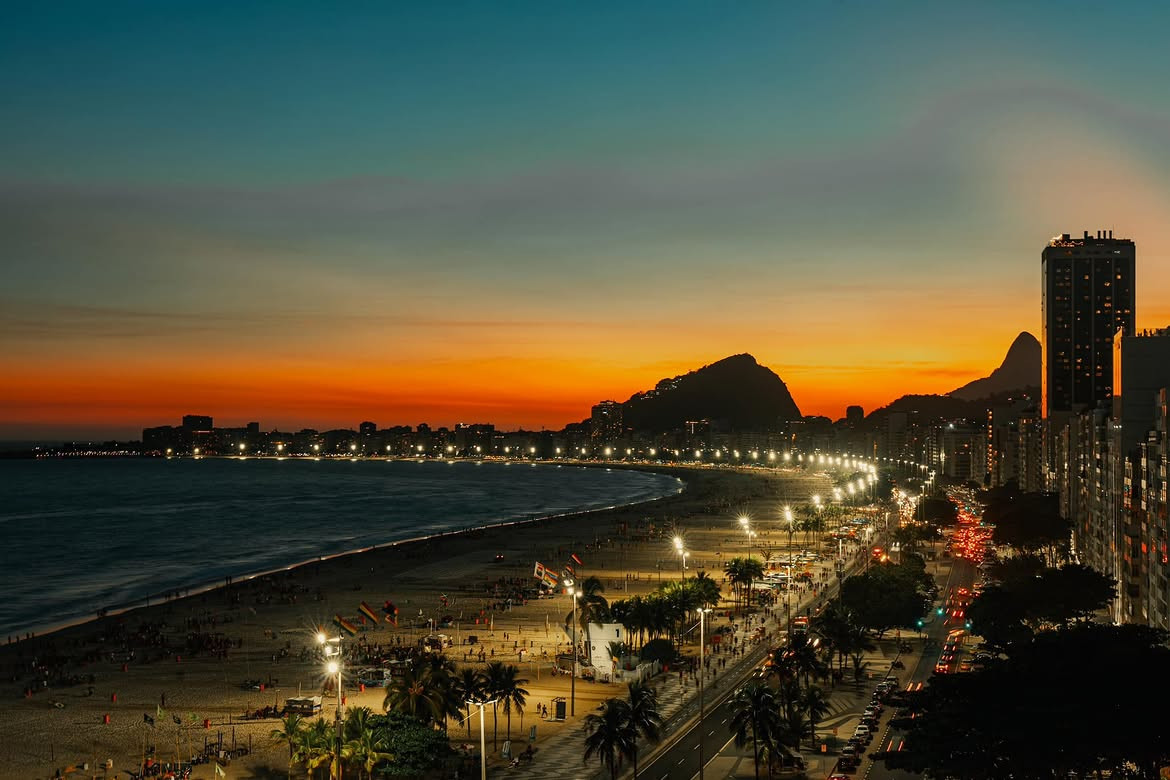
Copacabana packs an extraordinary number of people into a relatively small footprint: roughly 160,000 residents live within about 5.2 square kilometers, a population density among the highest of any urban neighborhood in the Americas. The built environment reflects that density directly — the neighborhood is defined by tall, narrow residential towers, typically eleven to thirteen stories, built shoulder to shoulder along the beachfront and the streets running back from it, a pattern that developed rapidly through the mid-20th century as Copacabana became one of Rio's most desirable addresses.
That density includes a notably older population than many beach destinations might suggest — roughly 27.5 percent of residents, about 44,000 people, are 60 or older, making Copacabana as much a long-term residential neighborhood, with generations of families who've lived there for decades, as it is a beach that tourists associate with youth and nightlife.
Since the 1950s, Copacabana has hosted one of the largest New Year's Eve celebrations on Earth, an event that grew organically from local gatherings into a coordinated, internationally broadcast spectacle. The first organized fireworks display over the beach took place in 1976, and the celebration — known in Portuguese as Réveillon — has since expanded into a roughly 2,000-minute program of music and pyrotechnics, drawing an estimated two million people to the beach and promenade each year and broadcast live across major Brazilian networks including TV Globo.
Traditionally, celebrants dress in white for the occasion, a custom rooted in Afro-Brazilian religious practices honoring Iemanjá, the orixá associated with the sea in Candomblé and Umbanda traditions, and many participants wade into the surf at midnight to make offerings or simply mark the new year at the water's edge — a blend of religious ritual and mass secular celebration that's fairly unique to Rio's version of the holiday.
Copacabana's sheer scale and flat, open beachfront have made it a preferred venue for some of the largest single-event concerts ever staged. Madonna's free concert on the beach in May 2024 drew an estimated 1.6 million people, a record that Lady Gaga's own free Copacabana show broke just a year later in May 2025, with crowd estimates reaching roughly 2.5 million — numbers that would be logistically impossible at almost any conventional stadium or arena anywhere in the world, and that depend entirely on the beach's unusual capacity to absorb a dense crowd along its full four-kilometer length.
Copacabana's global fame has always coexisted with Rio's broader and more complicated reputation around urban safety, and the beach itself is no exception — petty theft, particularly of phones and valuables left unattended on the sand, is a well-documented concern that most visitor guides address directly rather than downplay. The beach's mix of dense residential towers, heavy tourist traffic, and open public space creates a different safety profile than a resort-style beach elsewhere, one that rewards the same commonsense precautions — traveling light, staying aware in crowds, avoiding empty stretches after dark — that apply to dense urban beachfronts generally.
The beach sits within easy reach of central Rio via the city's metro system, with several stations feeding directly into the neighborhood, making it one of the more straightforward tourist sites in the city to reach without a car or taxi. Rio's Galeão International Airport handles most long-haul international arrivals, roughly 40 minutes from Copacabana depending on traffic, while the smaller Santos Dumont Airport closer to downtown handles primarily domestic flights.
The beach is busiest, and safest in terms of crowd presence, during daylight hours and on weekends when locals turn out in large numbers for football, volleyball, and swimming; like most of Rio, temperatures stay warm nearly year-round, though the Southern Hemisphere summer (December–March) brings the heaviest heat, the biggest crowds, and the run-up to both New Year's Eve and Carnival, Rio's other headline event.
No reviews yet. Be the first to share your experience!
Share your experience and help other travelers