The Gobi Desert spans roughly 1.3 million square kilometers across southern Mongolia and northern China, making it one of the largest deserts on Earth, yet it defies almost every stereotype attached to the word "desert." Rather than endless dunes, most of the Gobi is a cold, rocky steppe of gravel plains, sparse grassland, and eroded rock formations, shaped as much by brutal winter temperatures as by summer heat. Winters here regularly plunge below -30C while summer days can exceed 40C, giving the Gobi one of the widest temperature ranges of any desert region on the planet.
This extremity comes from the Gobi's position deep in the Asian interior, shielded from ocean moisture by the Himalayas and Tibetan Plateau to the south, and exposed directly to the freezing air masses that sweep down from Siberia in winter. The result is a landscape that feels closer to a windswept tundra than a sandy desert for much of the year, with dune fields like Khongoryn Els existing as dramatic exceptions rather than the rule.
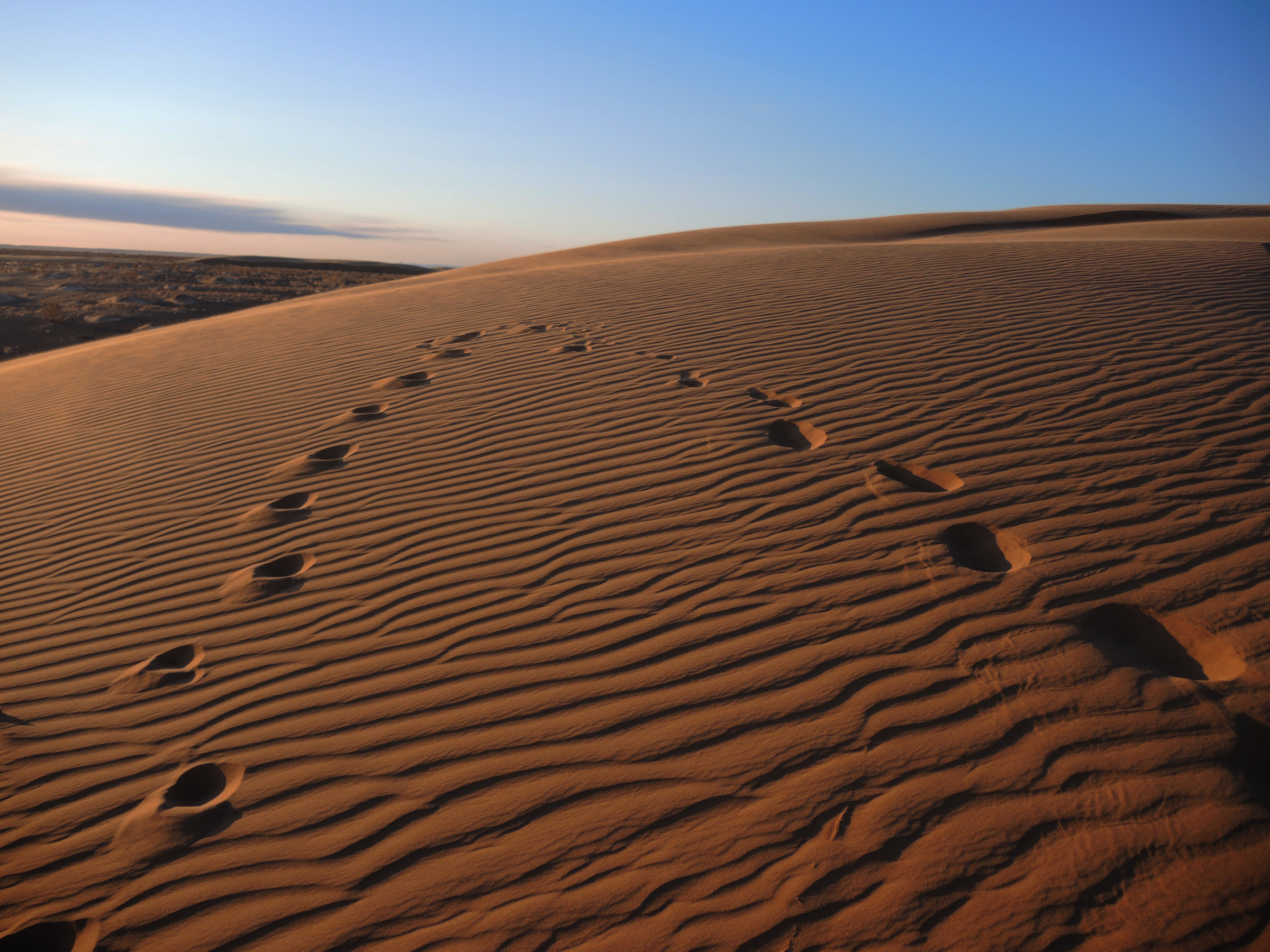
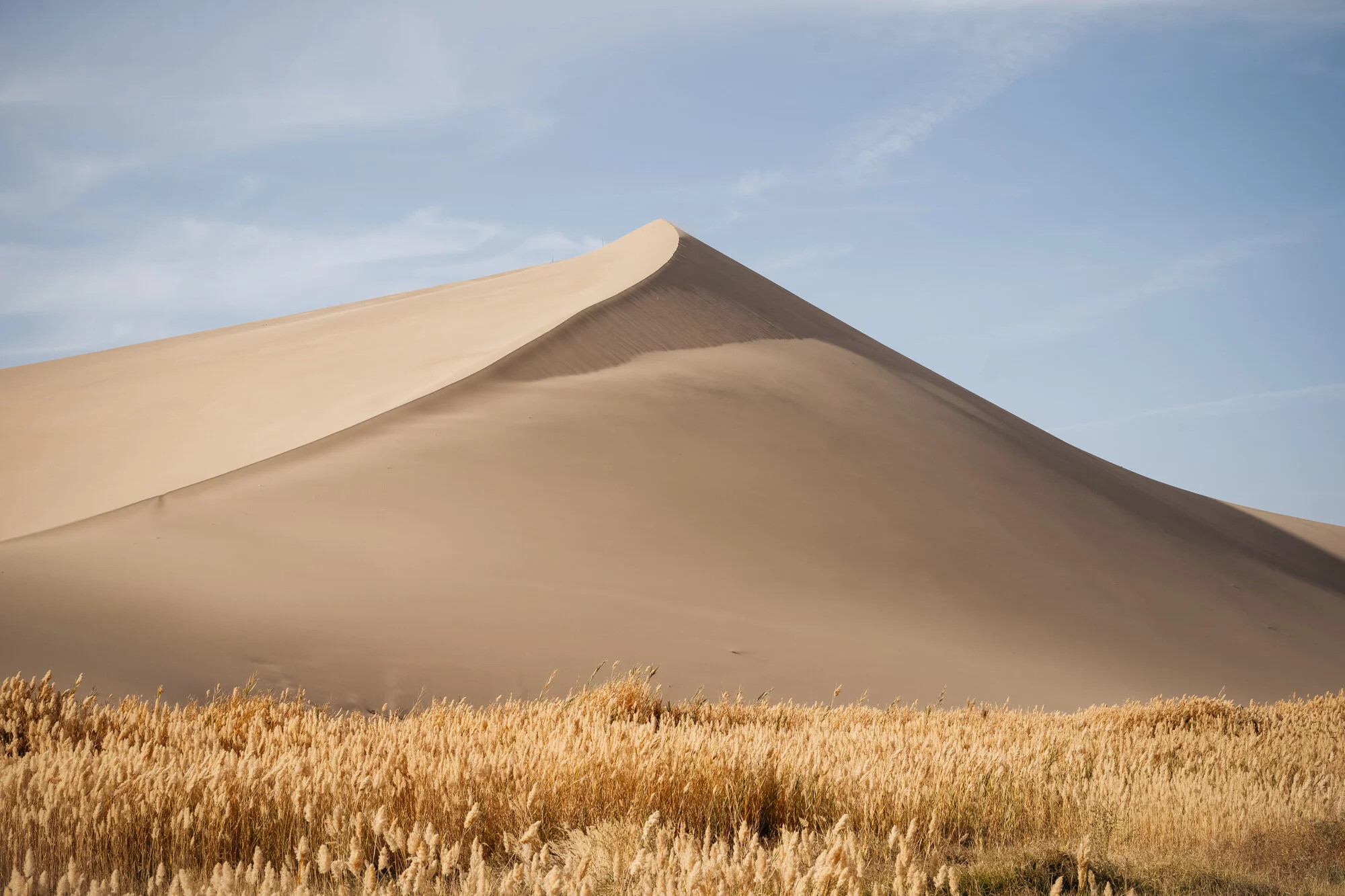
Khongoryn Els, often called the Singing Dunes, rises up to 300 meters from the surrounding gravel plain and stretches over 100 kilometers long, producing a low humming sound when wind or footsteps disturb sand on its steep slopes, a phenomenon caused by friction between grains that has never been fully explained by science and has fascinated travelers for centuries. Climbing to the crest at sunset remains one of the most popular single activities for visitors crossing the Gobi.
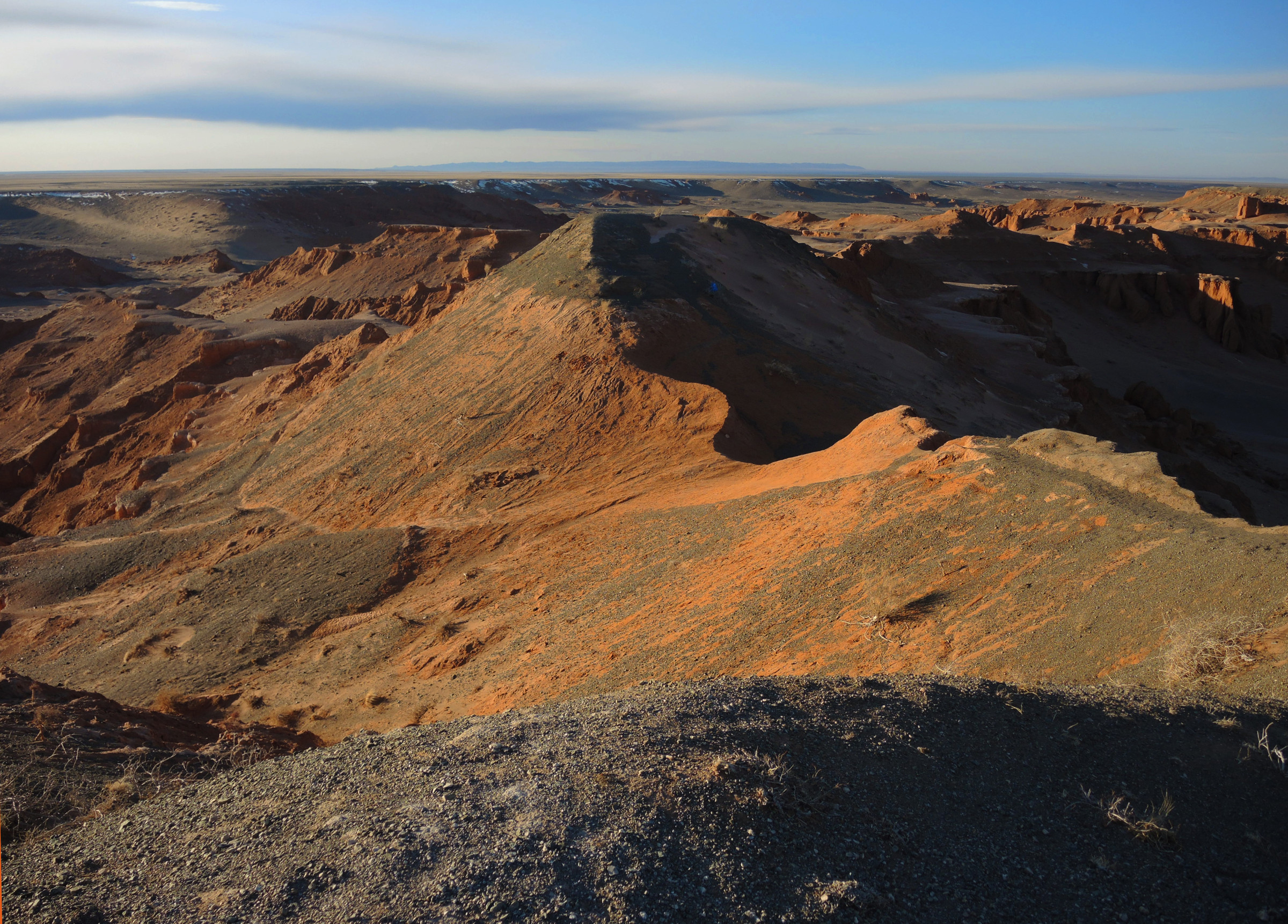
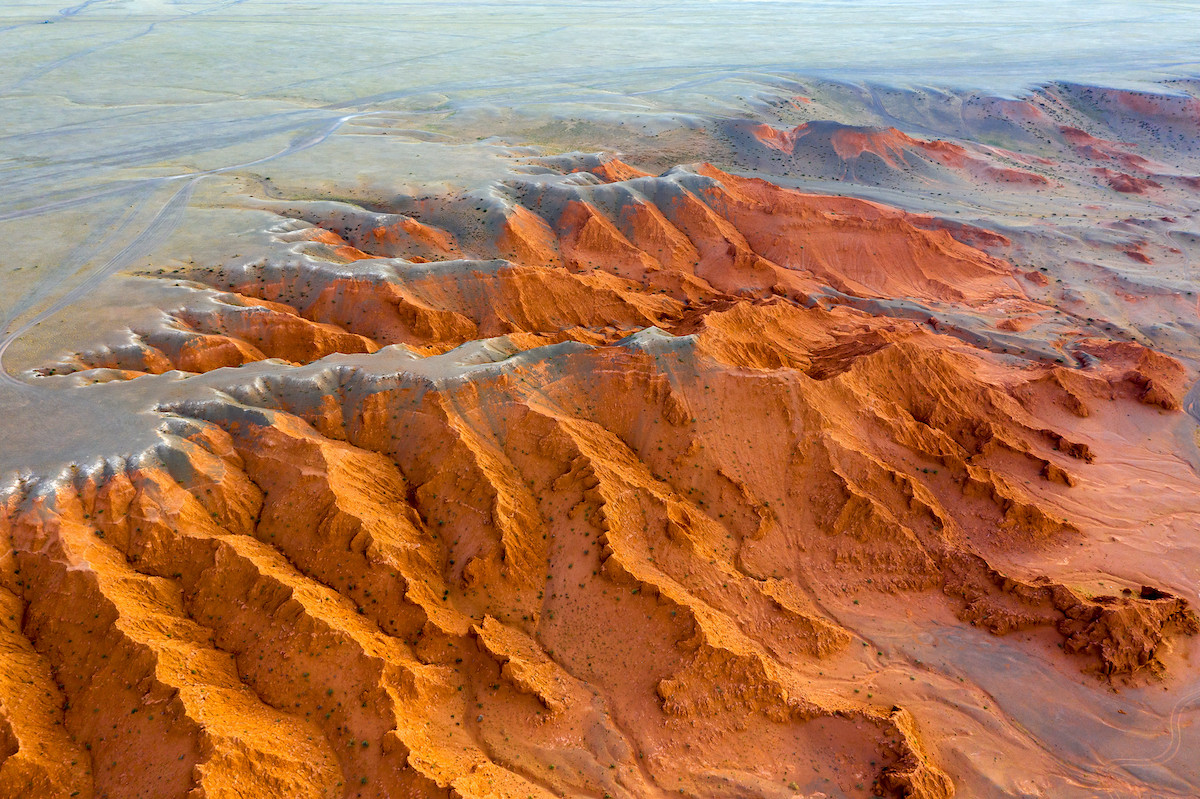
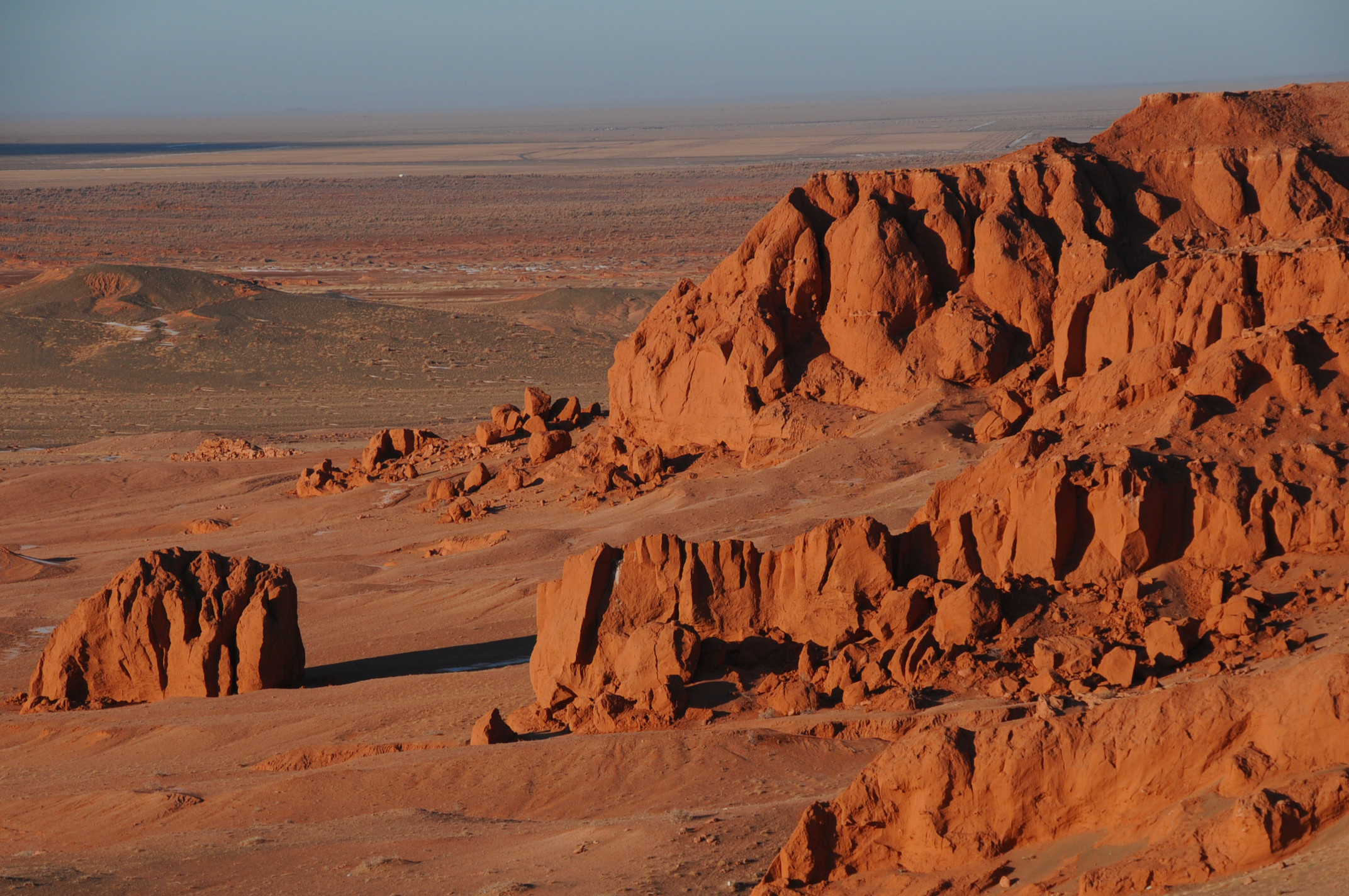
Further east, the Bayanzag cliffs, known globally as the Flaming Dinosaur Cliffs for their deep red-orange sandstone glowing at sunset, hold a different kind of fame: this is where American paleontologist Roy Chapman Andrews discovered the first confirmed dinosaur eggs in the 1920s, a find that reshaped scientific understanding of dinosaur reproduction and turned the Gobi into one of the most important fossil sites on Earth.
Beyond the famous 1920s discoveries, the Gobi has continued yielding extraordinary fossils for a century, including the famous "fighting dinosaurs" specimen, a Velociraptor and Protoceratops locked in combat and preserved together, likely buried alive by a collapsing sand dune roughly 74 million years ago. The desert's dry climate and stable sediment layers preserve bone and even soft tissue impressions unusually well, making it one of the most productive dinosaur fossil regions anywhere in the world.
Ongoing joint expeditions between Mongolian, American, and other international paleontology teams continue to work Gobi sites each summer, and some fossil discovery areas remain accessible to tourists with proper guides, offering a rare chance to see excavation context firsthand rather than only finished museum specimens.
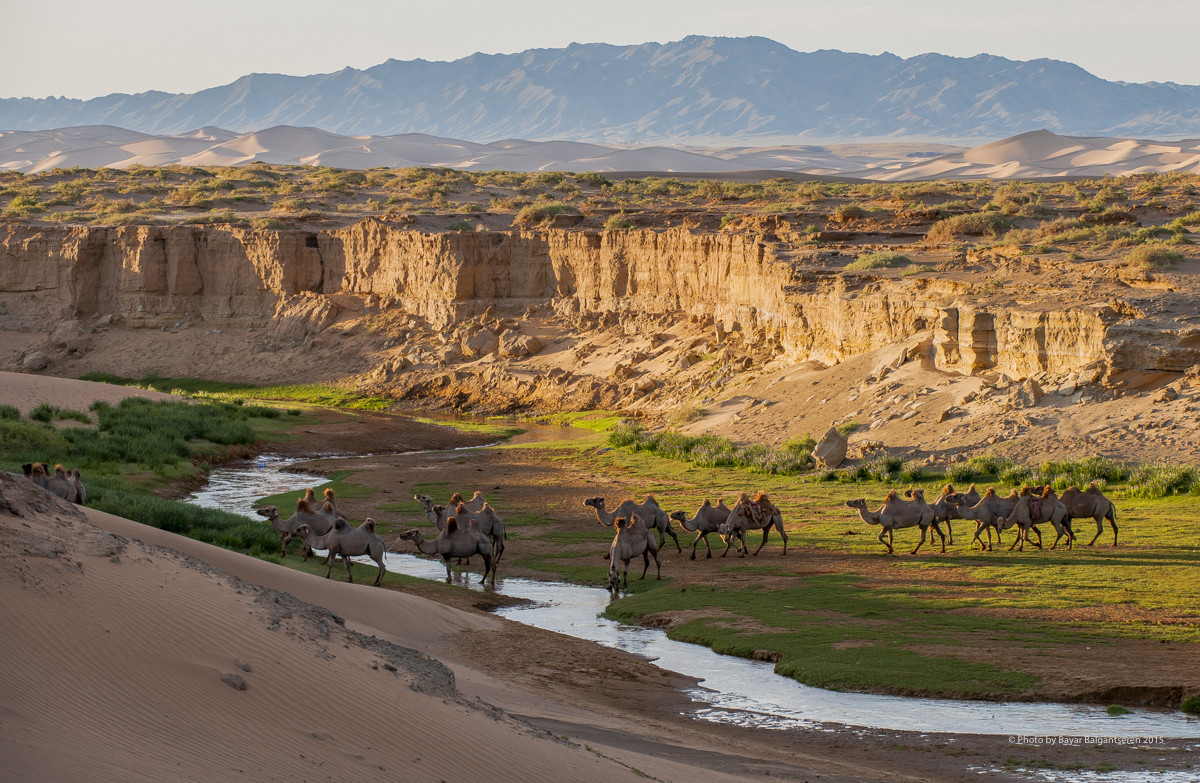
Mongolian nomadic herding culture extends deep into the Gobi's grazable margins, where families move seasonally with camels, goats, and sheep between limited water and pasture sources, living in round felt gers much as their ancestors did centuries ago, though now often paired with solar panels and motorbikes. Bactrian camels, the two-humped variety native to Central Asia, remain essential here both for transport and, increasingly, for tourism, carrying visitors across dune sections inaccessible by vehicle.
Homestays with nomadic families have become one of the most valued parts of a Gobi trip for many travelers, offering firsthand exposure to a way of life built entirely around mobility, self-sufficiency, and deep familiarity with an unforgiving landscape that would overwhelm most outsiders within days.
The Gobi has played a significant role in Mongolian and Chinese history for over two thousand years, serving as both a barrier and a corridor: sections of the ancient Silk Road skirted its edges, and the Great Wall of China was built in part specifically to guard against nomadic incursions from Gobi-adjacent steppe. Genghis Khan's 13th-century empire drew heavily on horsemen and logistics adapted to exactly this kind of harsh terrain, using intimate knowledge of desert and steppe survival as a military advantage against settled agricultural civilizations.
Later, during the 20th century, parts of the Gobi became a Cold War-era buffer zone between Soviet-aligned Mongolia and China, a period that left the desert relatively undeveloped and, inadvertently, well preserved compared to more accessible landscapes elsewhere in the region.
Despite brutal conditions, the Gobi supports a surprising range of specially adapted wildlife, including the critically endangered wild Bactrian camel, snow leopards in its mountainous fringes, and the Gobi bear, one of the rarest bear subspecies on Earth, with a population numbered only in the dozens confined to a small protected reserve. Przewalski's horses, the last truly wild horse species, were reintroduced to Mongolian steppe and Gobi-adjacent reserves after going extinct in the wild during the 20th century.
Conservation efforts across the Gobi increasingly focus on balancing mining development, Mongolia holds significant coal and copper reserves beneath the desert, with protecting these fragile, slow-recovering ecosystems, a tension that mirrors resource debates playing out in deserts elsewhere around the world.
Most Gobi trips begin in Ulaanbaatar and move south by 4x4 convoy over several days, since paved roads remain limited and distances between key sites, Khongoryn Els, Bayanzag, Yolyn Am canyon, are considerable across open terrain. Ger camps positioned near major sites provide the standard overnight accommodation, ranging from basic to increasingly tourist-oriented setups with private facilities.
Because of the extreme seasonal temperature swings, timing a Gobi trip correctly matters enormously; the desert is essentially split between a narrow comfortable travel window and months of conditions too harsh for casual tourism on either end of the calendar.
What makes the Gobi remarkable is precisely that it resists the postcard image most people associate with deserts: it is a landscape defined more by temperature extremes, ancient fossils, and nomadic resilience than by rolling dunes, even though its dune fields, when they do appear, rank among the most striking anywhere in Asia. Few destinations combine dinosaur paleontology, living nomadic culture, and genuinely wild landscapes as tightly as the Gobi does across a single overland route.
Mongolia's economy has grown increasingly dependent on Gobi mineral wealth over the past two decades, with massive coal and copper operations such as Oyu Tolgoi and Tavan Tolgoi now among the largest mining projects in the country, generating export revenue that funds much of the national budget. That development has brought paved roads, rail links, and jobs to a historically isolated region, but it has also raised concerns among herding communities about water table depletion and disrupted migration routes for wildlife and livestock alike.
Balancing this economic dependence against the Gobi's fragile ecology and its status as one of the last genuinely wild desert-steppe environments in Asia remains an unresolved tension, one that shapes ongoing conservation debates in Mongolia even as tourism to the desert's most scenic and scientifically significant sites continues to grow steadily each year. Few travel routes anywhere let visitors move between industrial-scale modern mining, million-year-old fossil beds, and living nomadic ger camps within the same short overland journey, and that layered contrast is a large part of what keeps the Gobi firmly on serious travelers\u2019 lists despite its remoteness and demanding conditions.
No reviews yet. Be the first to share your experience!
Share your experience and help other travelers