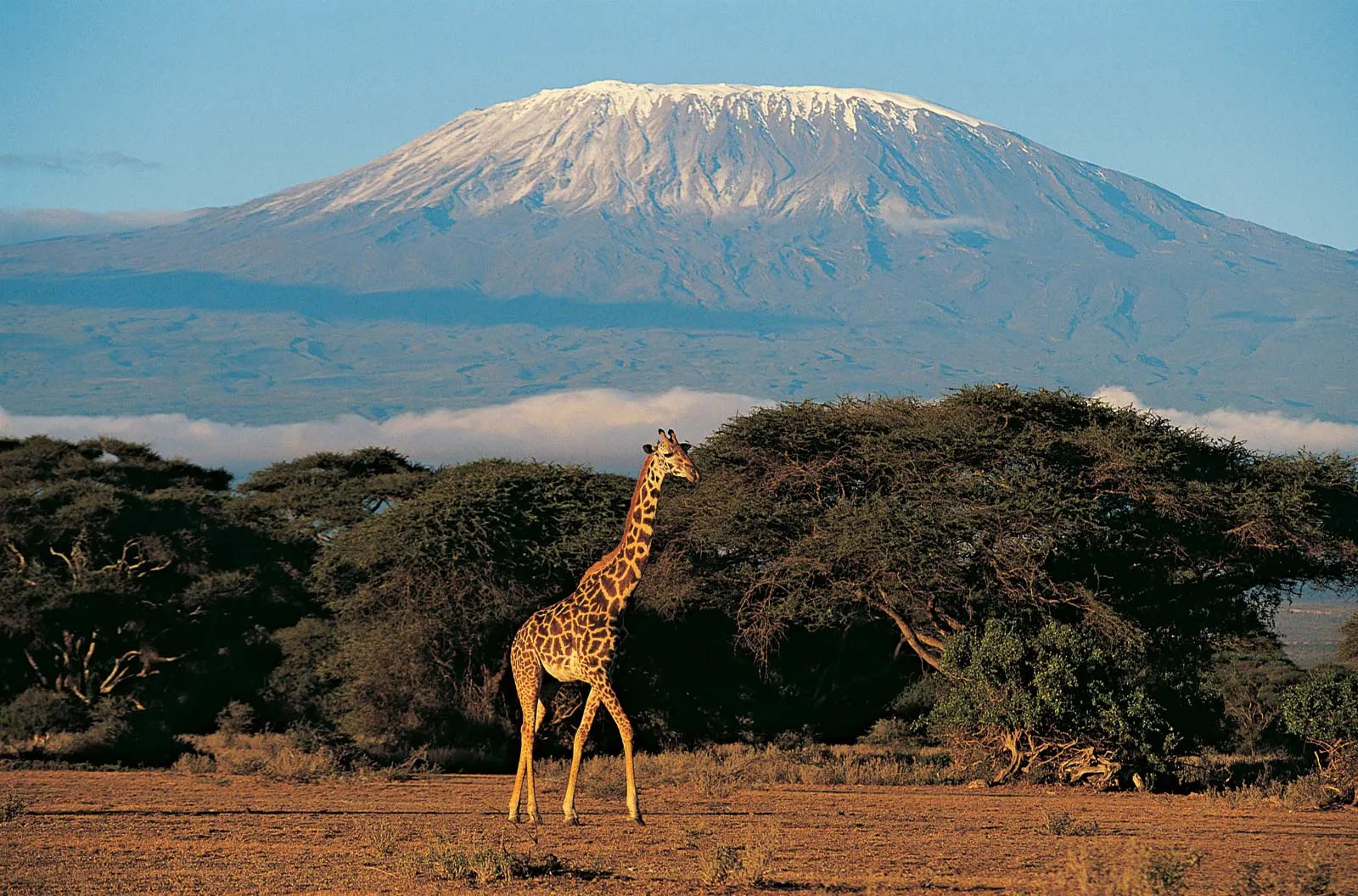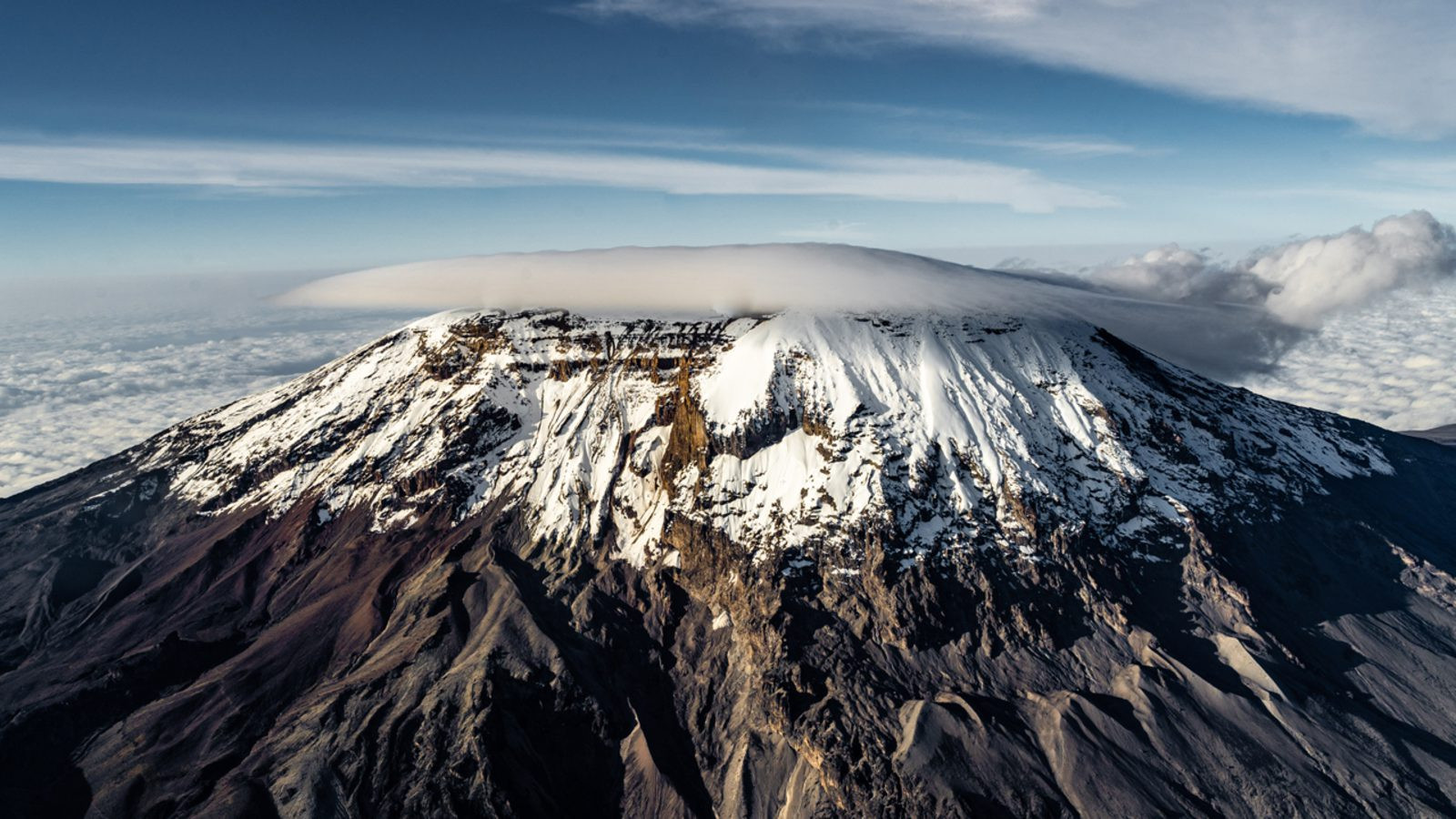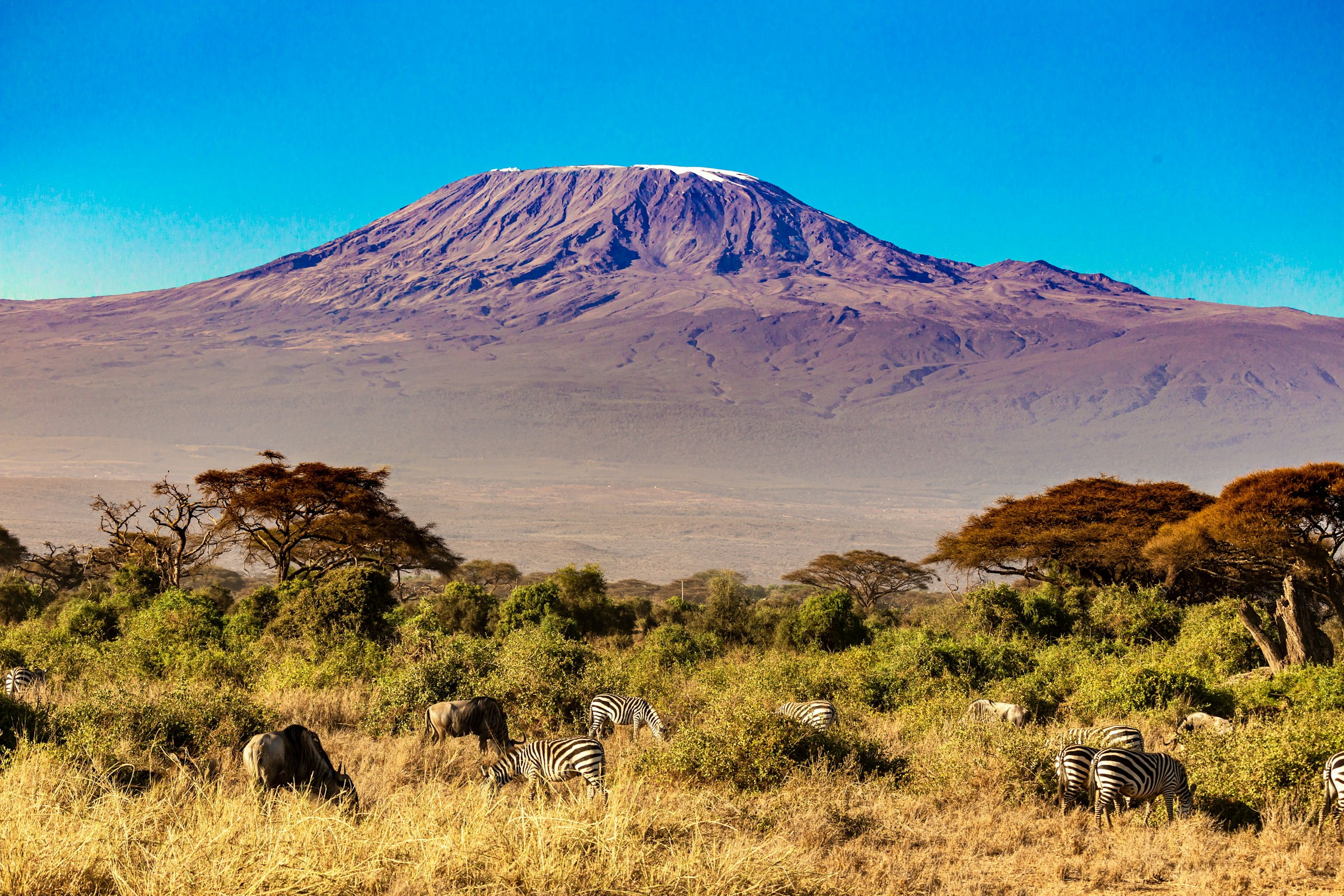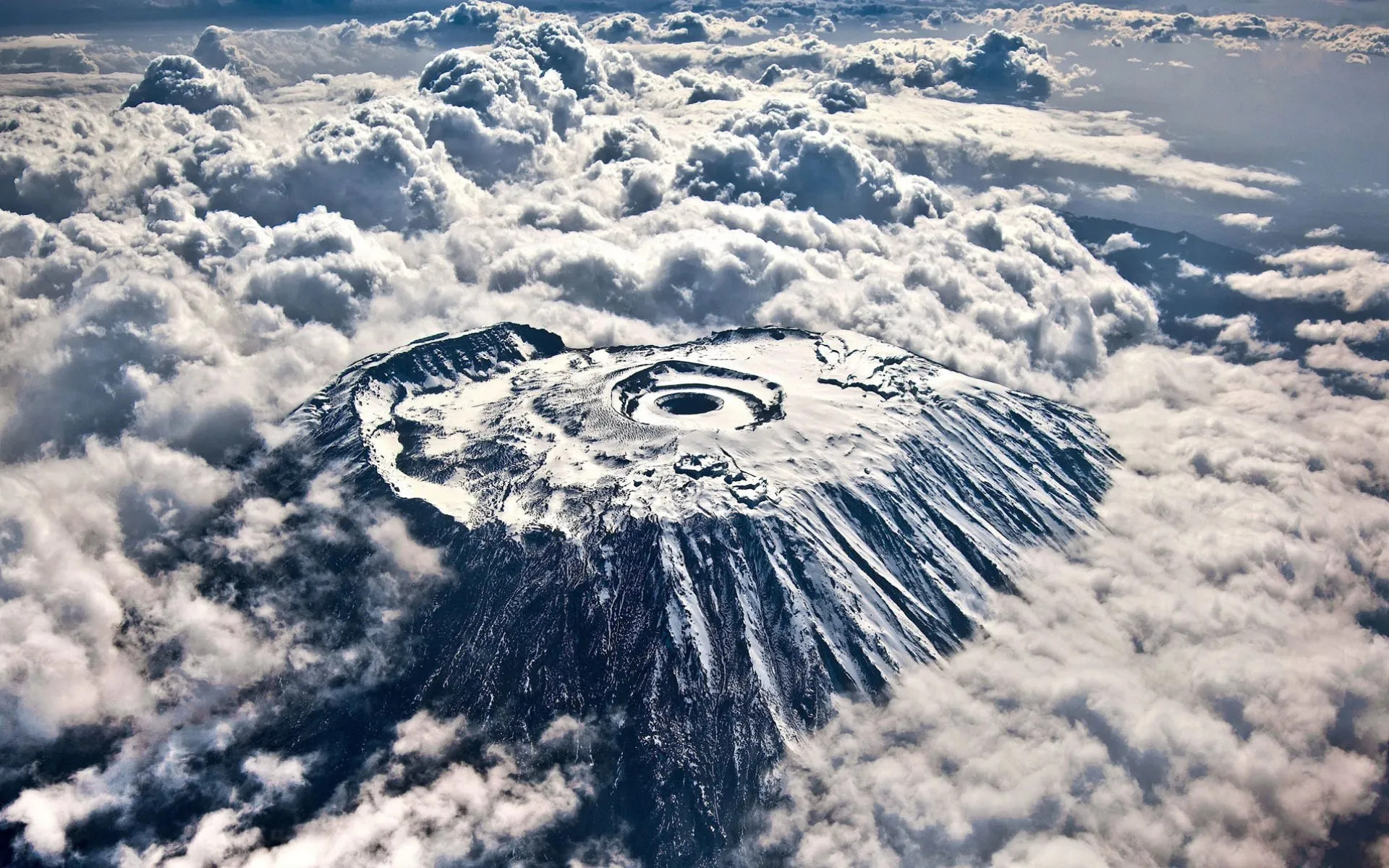
Kilimanjaro isn't a single peak so much as three volcanoes that happened to grow up next to each other. Shira started erupting first, around 2.4 million years ago, followed roughly a million years later by Mawenzi and Kibo, all three rising out of the East African Rift as tectonic forces pulled the continent apart. Shira and Mawenzi are extinct today — worn down, in Shira's case, into a broad caldera-like plateau — but Kibo, the tallest of the three at 5,895 meters, is only dormant. Its crater still vents sulfurous gas from fumaroles, a quiet reminder that the mountain isn't entirely finished with volcanic activity.
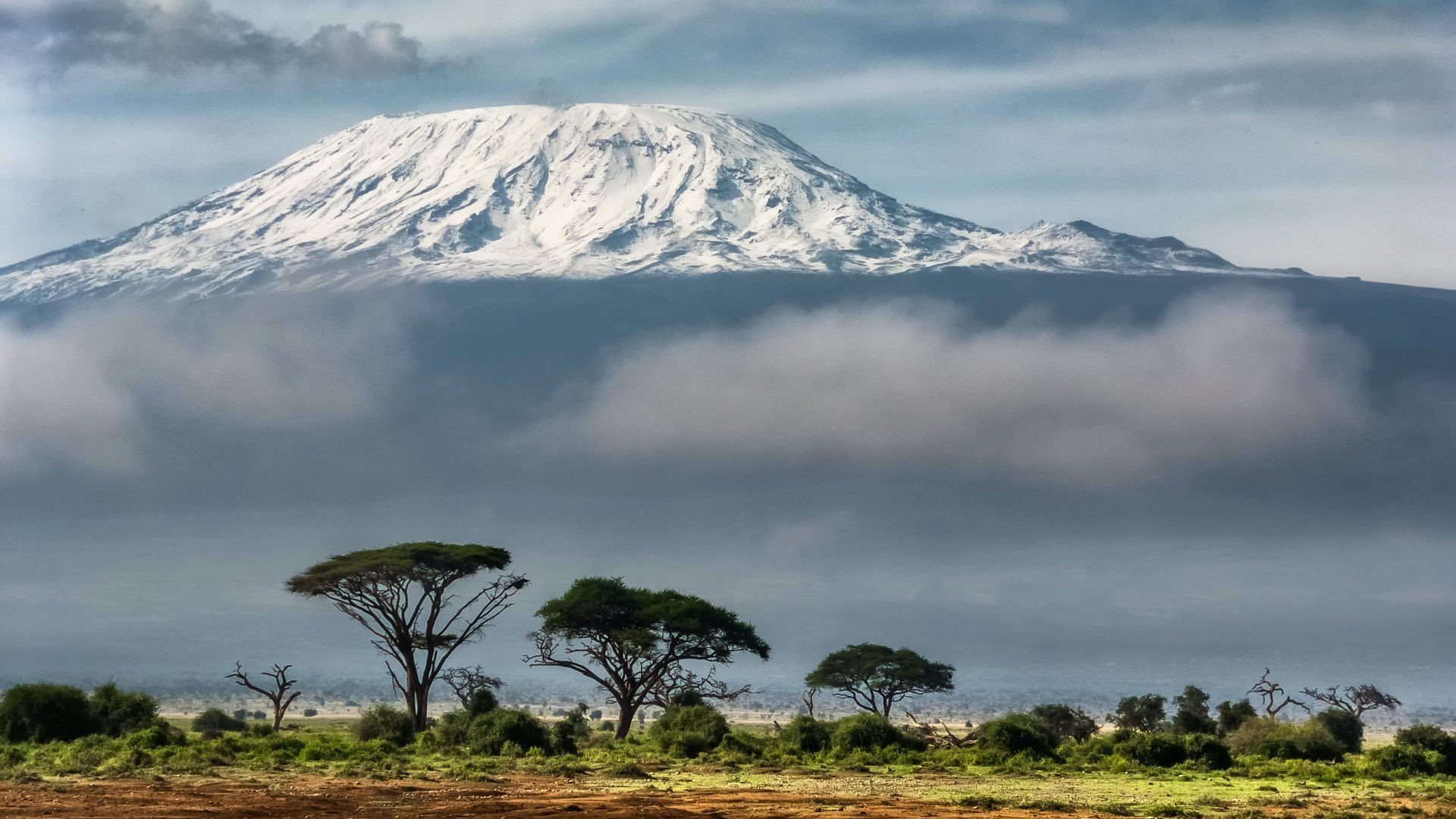
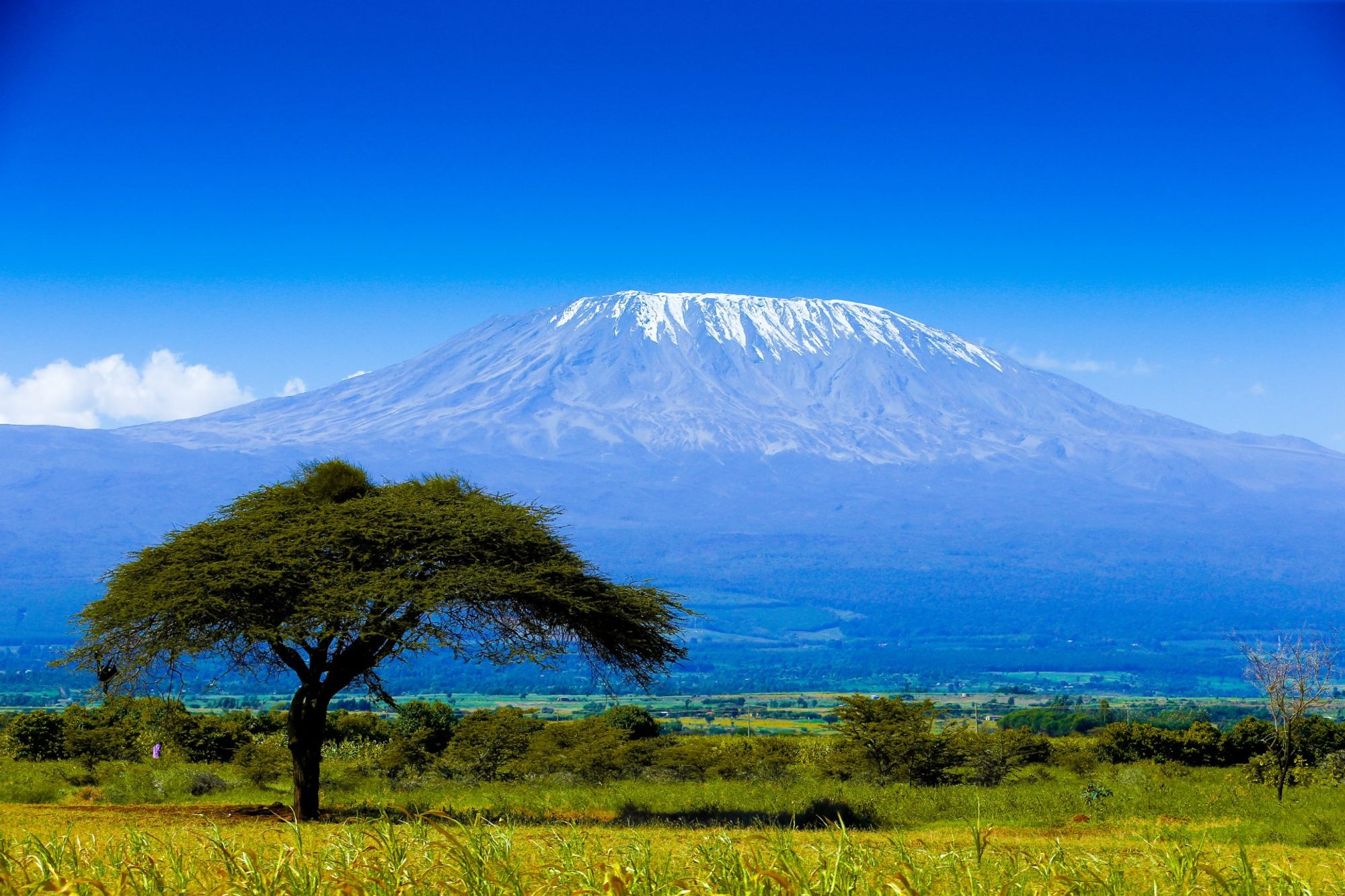
The result of all that geology is the tallest mountain in Africa and the tallest free-standing mountain on Earth — one that owes its full 4,900 meters of prominence above the surrounding plateau to nothing but its own volcanic bulk, with no connecting mountain range to share the credit.
For most of the 19th century, Kilimanjaro's snow-capped summit was treated with skepticism by Europeans who assumed equatorial Africa couldn't support permanent ice — a position that held until German geologist Hans Meyer and Austrian mountaineer Ludwig Purtscheller reached Kibo's summit in 1889, after several earlier attempts had failed. Their ascent did more than settle an argument about snow near the equator; it confirmed that Kibo's summit held an actual crater, evidence of the mountain's volcanic origin that couldn't be seen clearly from lower elevations.
The ice that convinced Meyer and Purtscheller of the mountain's identity is now disappearing. Kilimanjaro has lost roughly 85 percent of its ice cover between 1912 and 2011, and current projections suggest most of what remains could be gone by 2040, with real uncertainty about whether any ice will survive past 2060. The retreat is visible enough that it's become part of how the mountain is discussed — not just as Africa's highest point, but as a fairly direct, photographable measure of a warming climate, disappearing within the lifetime of people old enough to remember seeing it fuller.
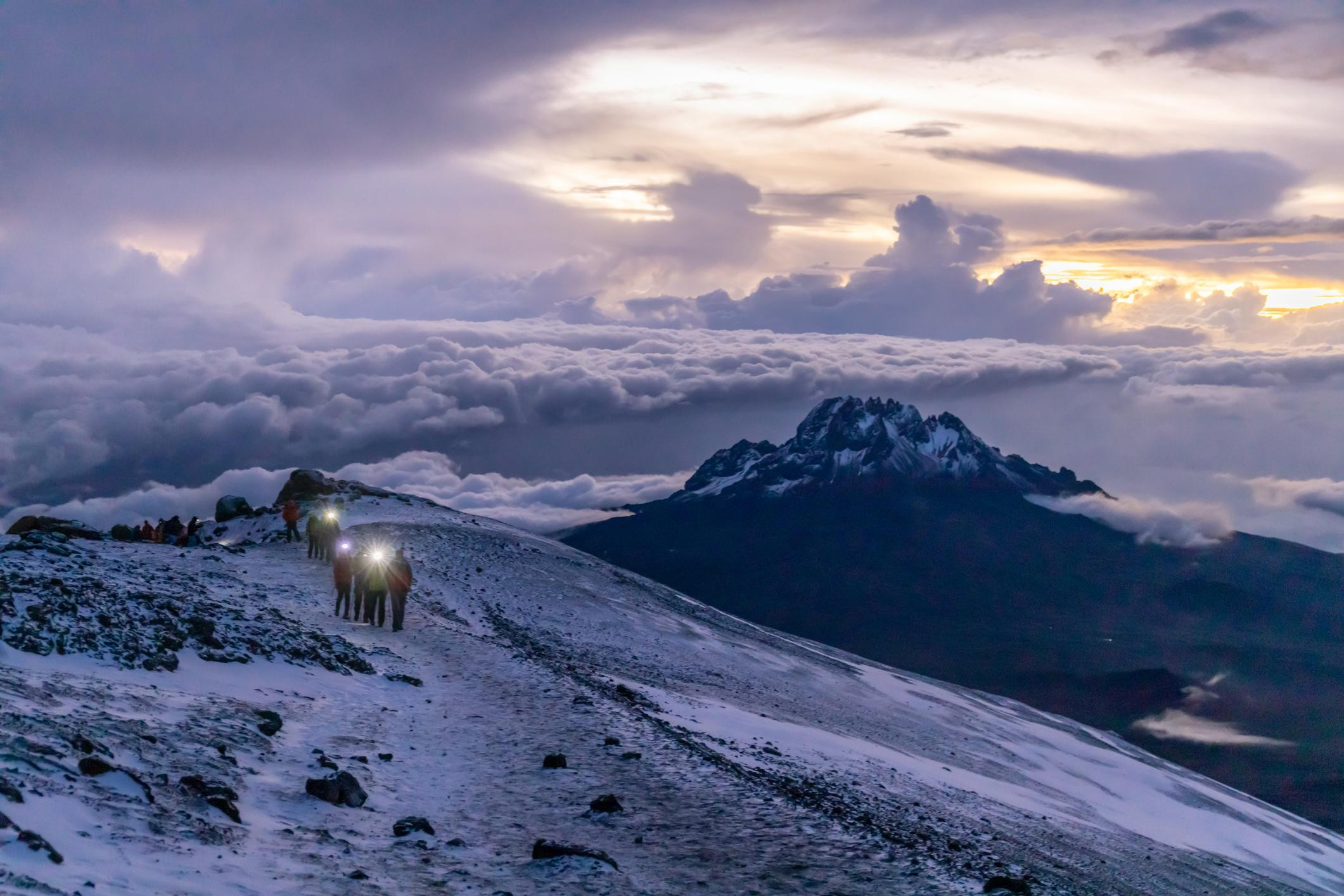
Unlike most mountains near its height, Kilimanjaro doesn't require technical climbing skills — no ropes, no ice axes for the standard routes — which is part of why it draws thousands of trekkers a year despite its altitude. What it does require is time and pacing: seven official routes exist, including Lemosho, Machame, Marangu, Rongai, and Umbwe, ranging from six to nine-plus days depending on how much acclimatization time is built in. Guides tend to repeat the same phrase to slow down over-eager climbers — "pole pole," Swahili for "slowly, slowly" — because altitude sickness, not physical fitness, is what turns back most people who don't reach the summit.
The climb itself moves through five distinct ecological zones stacked on top of each other: bushland giving way to rainforest, then heather and moorland, then alpine desert, and finally an arctic zone near the summit where almost nothing grows. Few mountains anywhere let a trekker pass through that much ecological range — savanna to arctic conditions — in the course of a single multi-day walk.
No reviews yet. Be the first to share your experience!
Share your experience and help other travelers