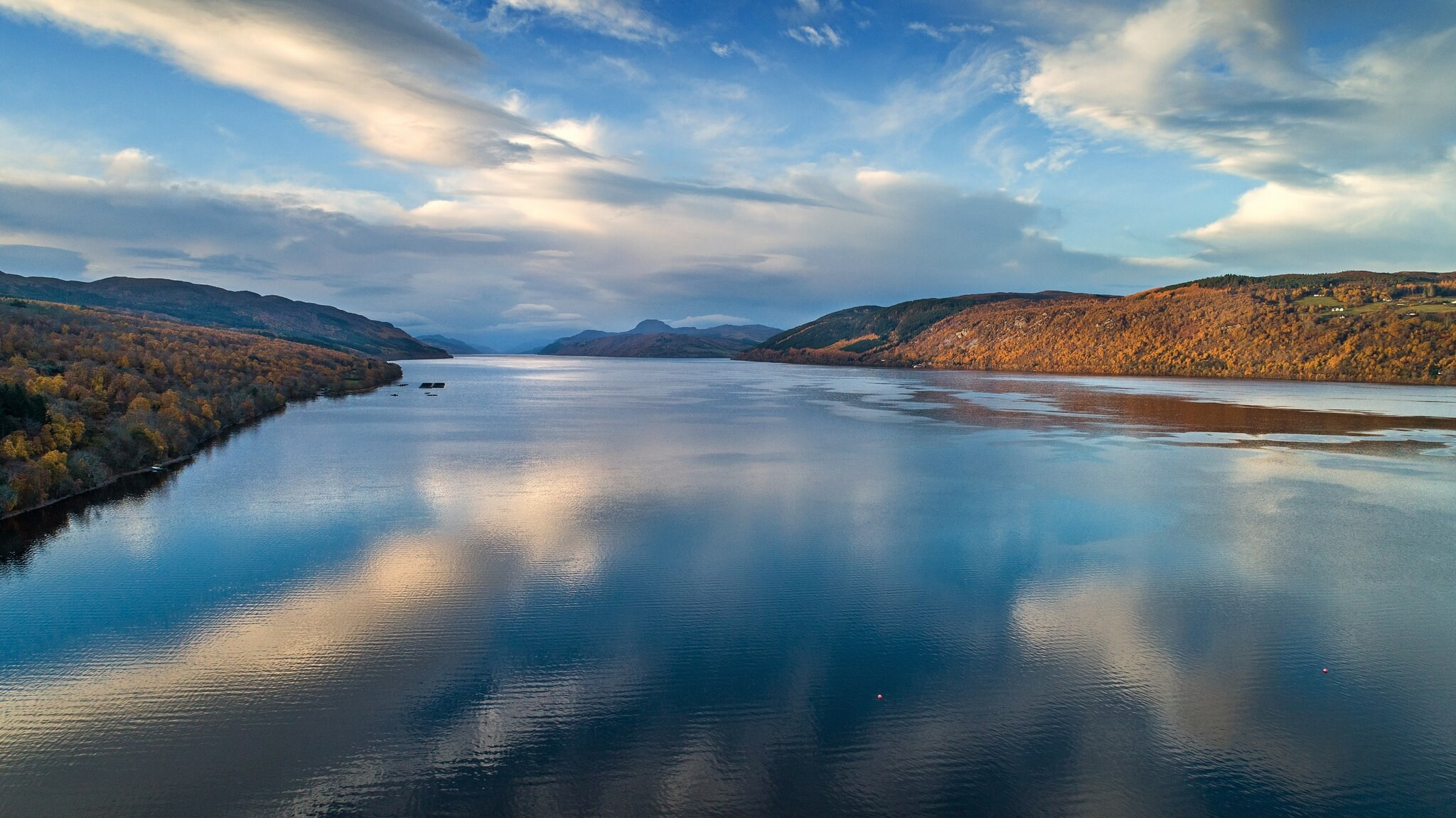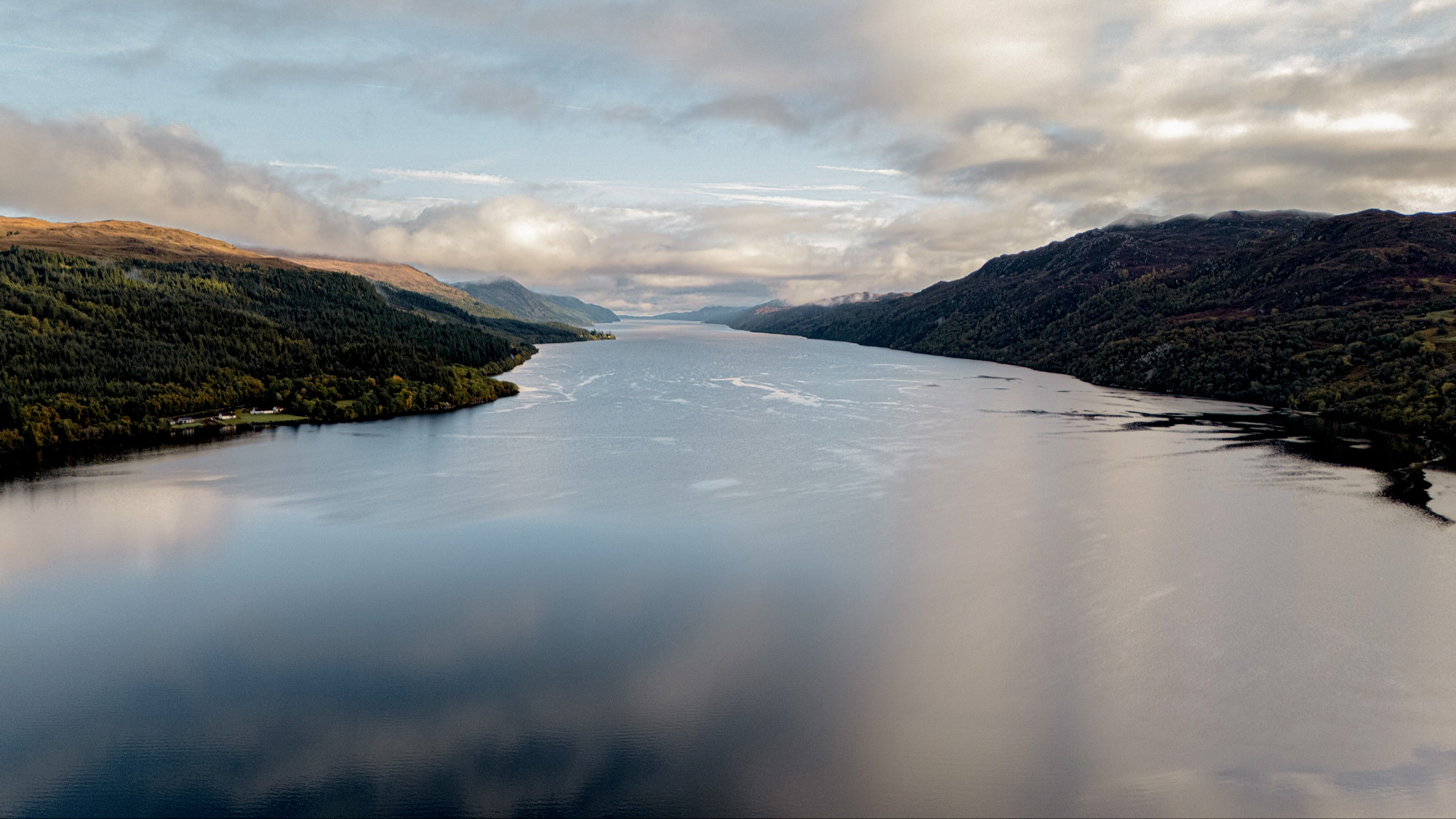
Loch Ness stretches 36 kilometers through the Great Glen, a long trench cut across the Scottish Highlands, running from Inverness in the northeast to Fort Augustus at its southwestern tip. Though only about 2.7 kilometers wide at most, the loch reaches a maximum depth of nearly 227 meters, making it the second-deepest loch in Scotland after Loch Morar, and its steep-sided, glacially carved basin gives it a volume of roughly 7.5 cubic kilometers of fresh water, more than every lake in England and Wales combined. That sheer volume, packed into a narrow ribbon of water rather than spread across a wide surface area, is part of what has made Loch Ness feel so mysterious to generations of visitors: a body of water deep and dark enough, its underwater visibility limited by suspended peat particles washed in from the surrounding hills, that its depths have never felt entirely knowable even to those who live along its shores.
The loch owes both its existence and its striking straight-line shape to the Great Glen Fault, a major geological fracture running diagonally across Scotland along which the land on either side has, over hundreds of millions of years, shifted horizontally past itself. This ancient zone of weakness was later carved and deepened by glaciers during the last Ice Age, which ground out the elongated basin that filled with water as the ice retreated, leaving behind the narrow, steep-walled loch seen today. The same fault system created a chain of other lochs along the Great Glen, and in the nineteenth century engineers took advantage of this natural corridor to build the Caledonian Canal, linking Loch Ness with Loch Oich and Loch Lochy and connecting Scotland's east and west coasts by water, a project that turned a geological accident into a functioning inland shipping route still used by leisure boats today.
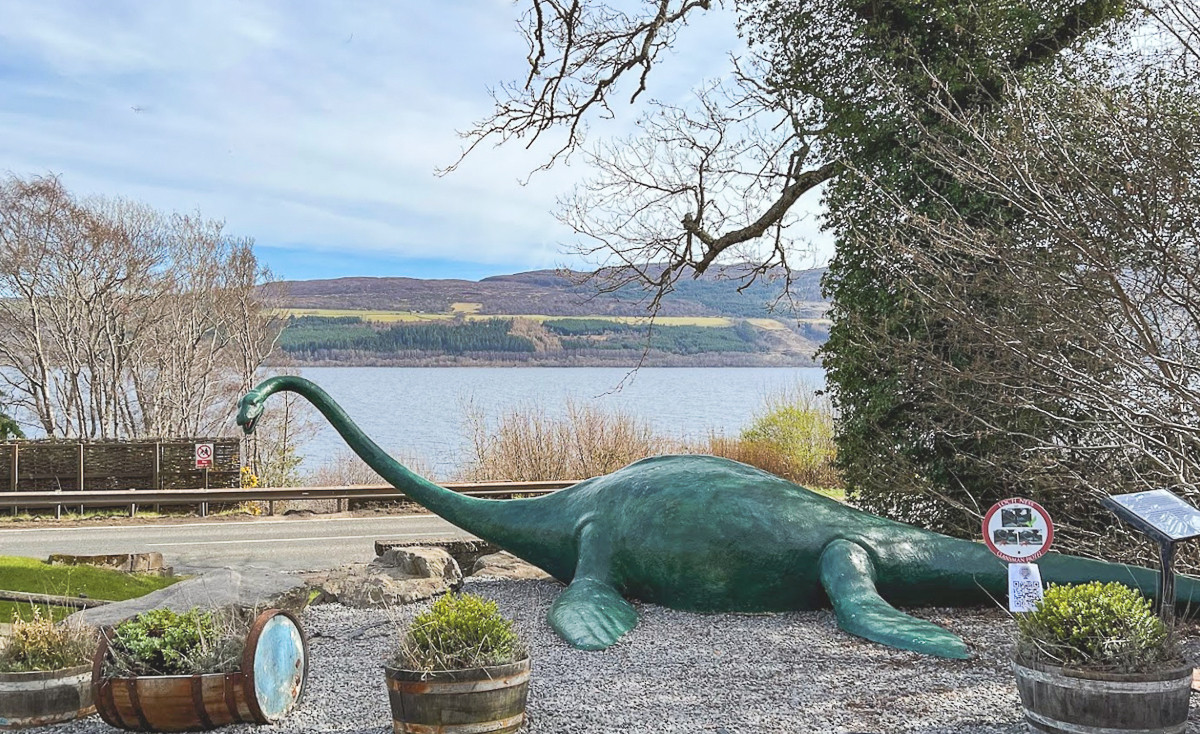
Loch Ness is known worldwide less for its geology than for Nessie, the Loch Ness Monster, a supposed creature inhabiting its depths whose modern fame traces back to a wave of reported sightings in 1933, when a new road built along the loch's shore gave far more travelers a clear view of the water than ever before. That year produced several widely reported accounts, followed in 1934 by the so-called Surgeon's Photograph, a grainy image later admitted by one of those involved to have been an elaborate hoax using a toy submarine, though the photograph had already cemented the monster's image in popular culture long before the confession surfaced decades later. Scientific expeditions using sonar, submersibles, and DNA sampling of the loch's waters have followed over the decades since, none producing evidence of an unknown large creature, though the legend has proven remarkably durable regardless, with new claimed sightings and blurry photographs still surfacing on a fairly regular basis even now.
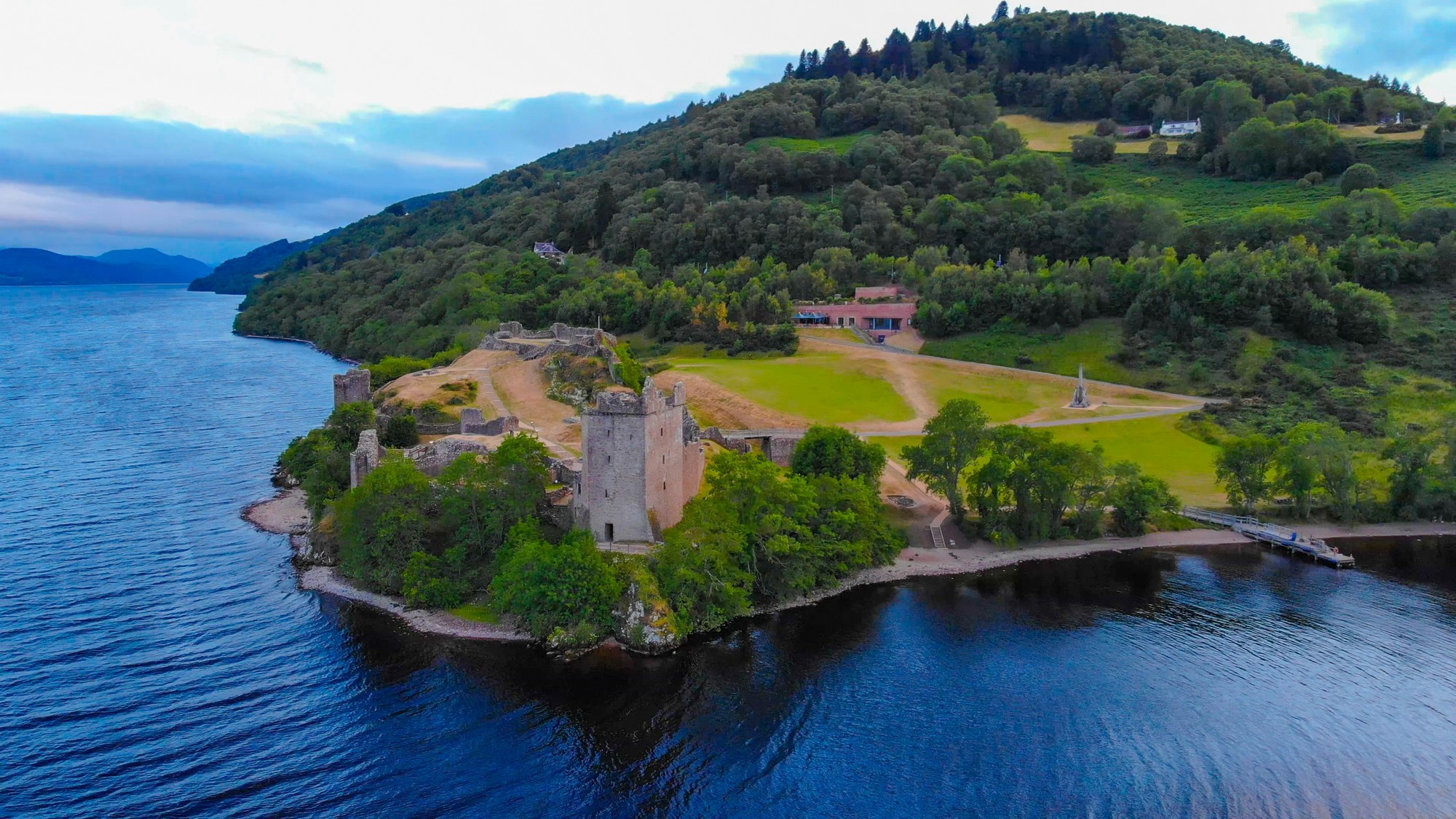
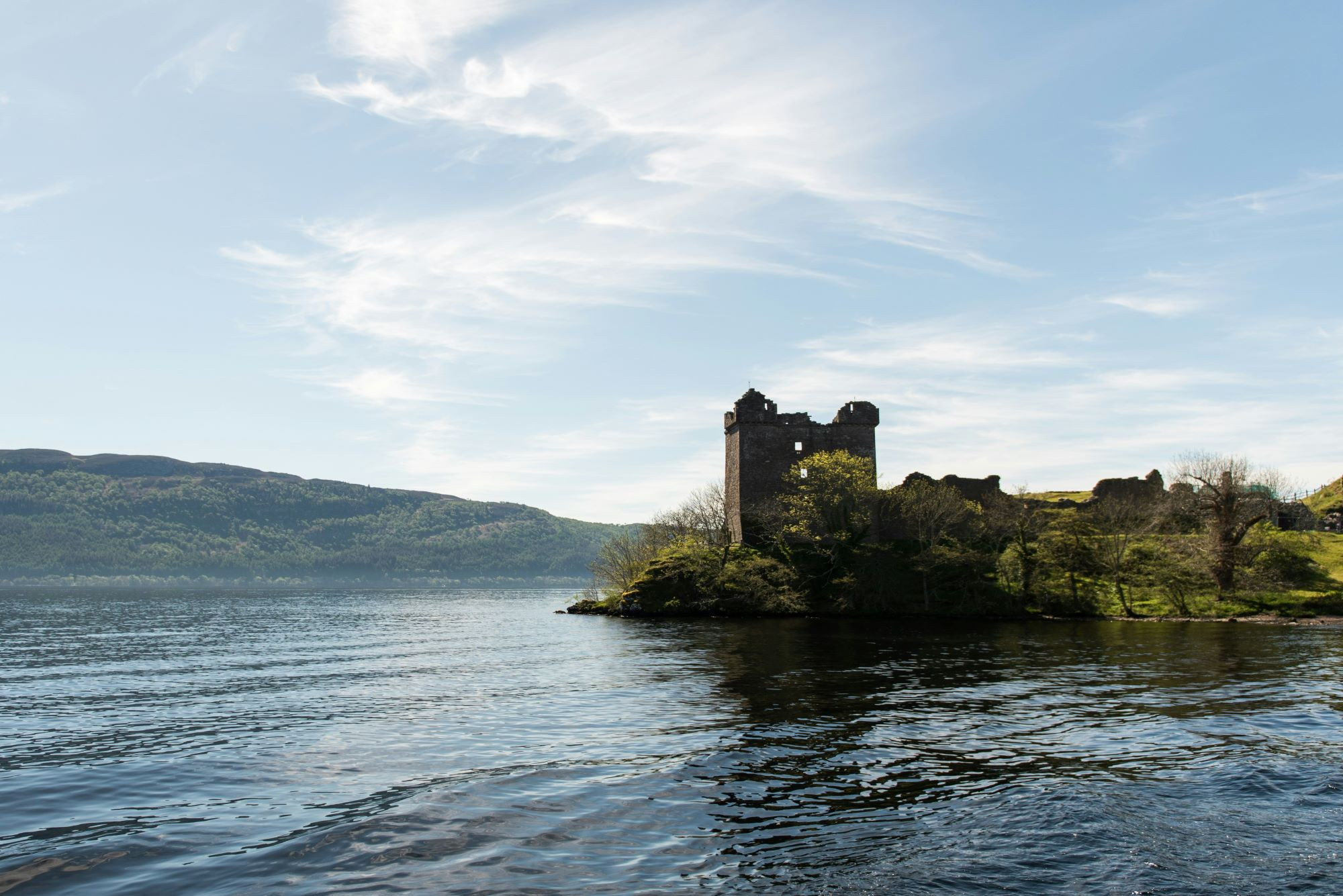
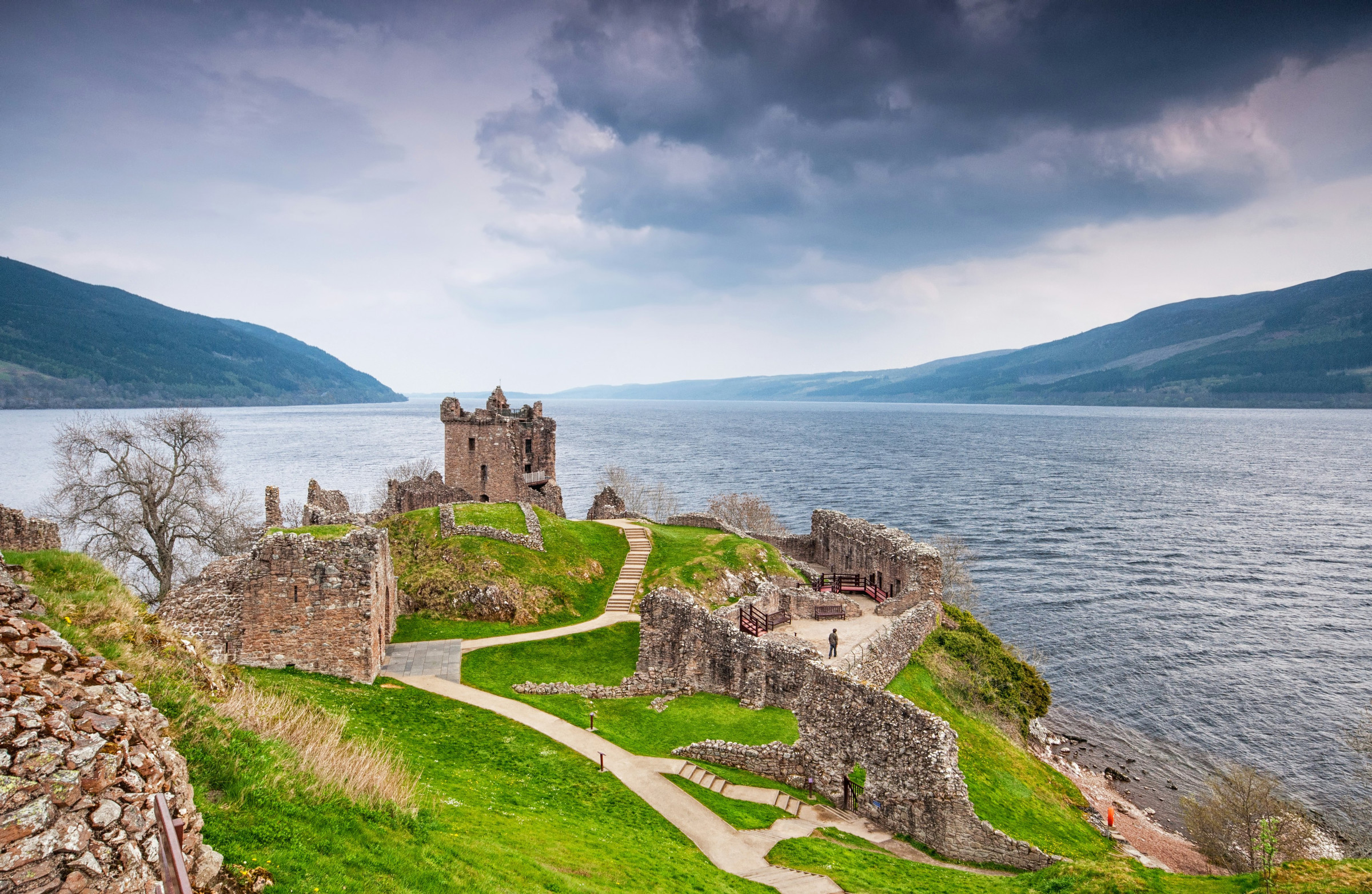
Overlooking the loch from a rocky headland on its western shore stand the ruins of Urquhart Castle, one of Scotland's largest castles by area and a site with a history stretching back to at least the thirteenth century, when it controlled this strategic stretch of the Great Glen. The castle changed hands repeatedly during the wars between Scotland and England and later during Jacobite uprisings, and it was deliberately blown up by its own defenders in 1692 to prevent Jacobite forces from using it, an act that left the dramatic ruin visible today. Its position directly on the loch shore has made it one of the most photographed viewpoints in the Highlands, doubling as a favored spot for monster-watchers scanning the water below and as a genuinely significant medieval archaeological site in its own right, now managed as a visitor attraction with an exhibition covering both the castle's turbulent history and the loch's natural history.
Nine villages sit along Loch Ness's shores, each shaped by a slightly different relationship to the water and the legend that surrounds it. Drumnadrochit, roughly at the loch's midpoint, has become the unofficial capital of Nessie tourism, home to the Loch Ness Centre and its exhibition tracing both the scientific investigations into the monster claims and the geological and human history of the loch itself. Fort Augustus, at the southern end where the Caledonian Canal meets the loch, offers a well-known set of canal locks that visitors can watch boats navigate, while the quieter village of Dores, closer to Inverness, is popular with those seeking a calmer lochside walk away from the busier tourist stops. Fishing, farming, and more recently tourism have long shaped daily life in these communities, and while Nessie draws the largest crowds, many villages retain a working Highland character that exists independently of the monster industry built up around the loch.
Inverness, often called the capital of the Highlands, sits just 10 kilometers from the loch's northern end and has its own airport with domestic UK connections and a growing number of seasonal international routes, making it the natural gateway for most visitors. The A82 road runs the full length of the loch's western shore, connecting Inverness to Fort William further south, and forms the backbone of most self-driven visits, while regular bus services and organized coach tours also cover the route for travelers without a car. Boat cruises, ranging from short sightseeing trips to longer excursions combining Urquhart Castle with a stretch of open water, depart from several points along the shore and remain the most popular way to actually get out onto the loch itself, with many operators equipping their boats with sonar displays that passengers can watch during the crossing, whether or not anyone seriously expects to spot anything unusual on the readout.
The Scottish Highlands see their mildest, driest weather and longest daylight hours between May and September, making this the most comfortable window for lochside walks, castle visits, and boat cruises, with June through August also bringing the largest crowds to the busier villages. Spring and autumn offer a quieter alternative with still-reasonable weather, and autumn in particular brings rich color to the hillsides surrounding the loch, though visitors should be prepared for Highland weather to shift quickly regardless of season, with rain and wind a real possibility even in midsummer. Winter transforms the loch into a starker, quieter place, with shorter days and colder conditions limiting some boat operations, but rewarding visitors willing to brave the weather with dramatically empty roads and viewpoints along a shoreline that, in peak season, rarely feels this uncrowded.
Long before sonar sweeps went looking for a monster, Loch Ness had already attracted serious scientific attention simply for its physical extremes: a body of water deep and voluminous enough that it barely ever freezes, since the sheer mass of water below the surface retains summer heat well into winter, keeping the loch's temperature relatively stable year-round compared to shallower lochs nearby. That thermal stability, combined with limited light penetration through the peat-darkened water, creates a distinctive underwater environment that has been studied for its own sake by limnologists interested in how such a deep, cold, low-visibility freshwater system supports life, quite apart from any cryptozoological questions. Modern research projects, including a widely publicized 2018 survey that sampled environmental DNA from across the loch to catalog every species of organism leaving genetic traces in the water, have used Nessie's fame as a hook to fund broader ecological studies of the loch, turning decades of monster-hunting infrastructure and public curiosity toward more conventional but still genuinely valuable scientific work on one of Britain's least understood large bodies of water.
No reviews yet. Be the first to share your experience!
Share your experience and help other travelers