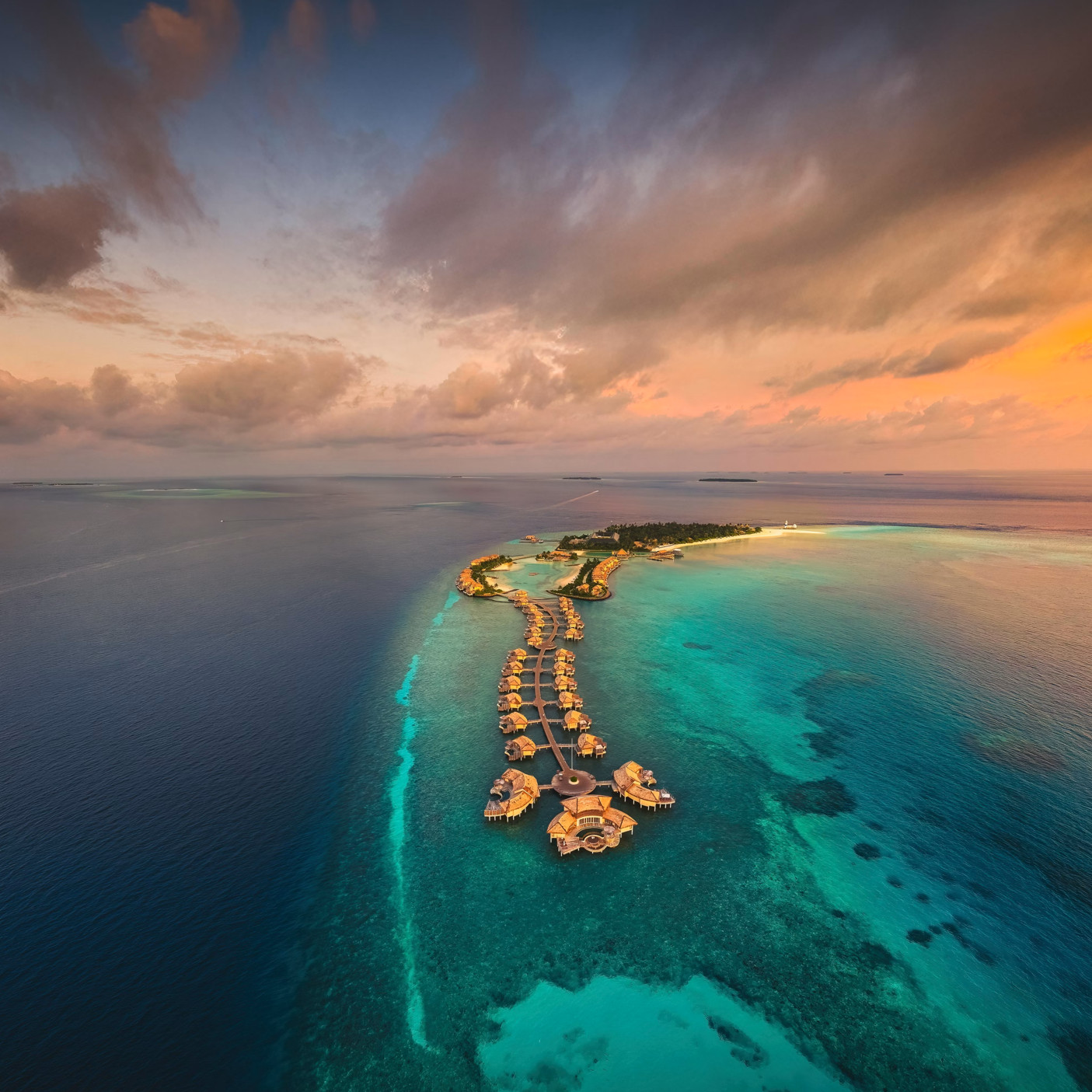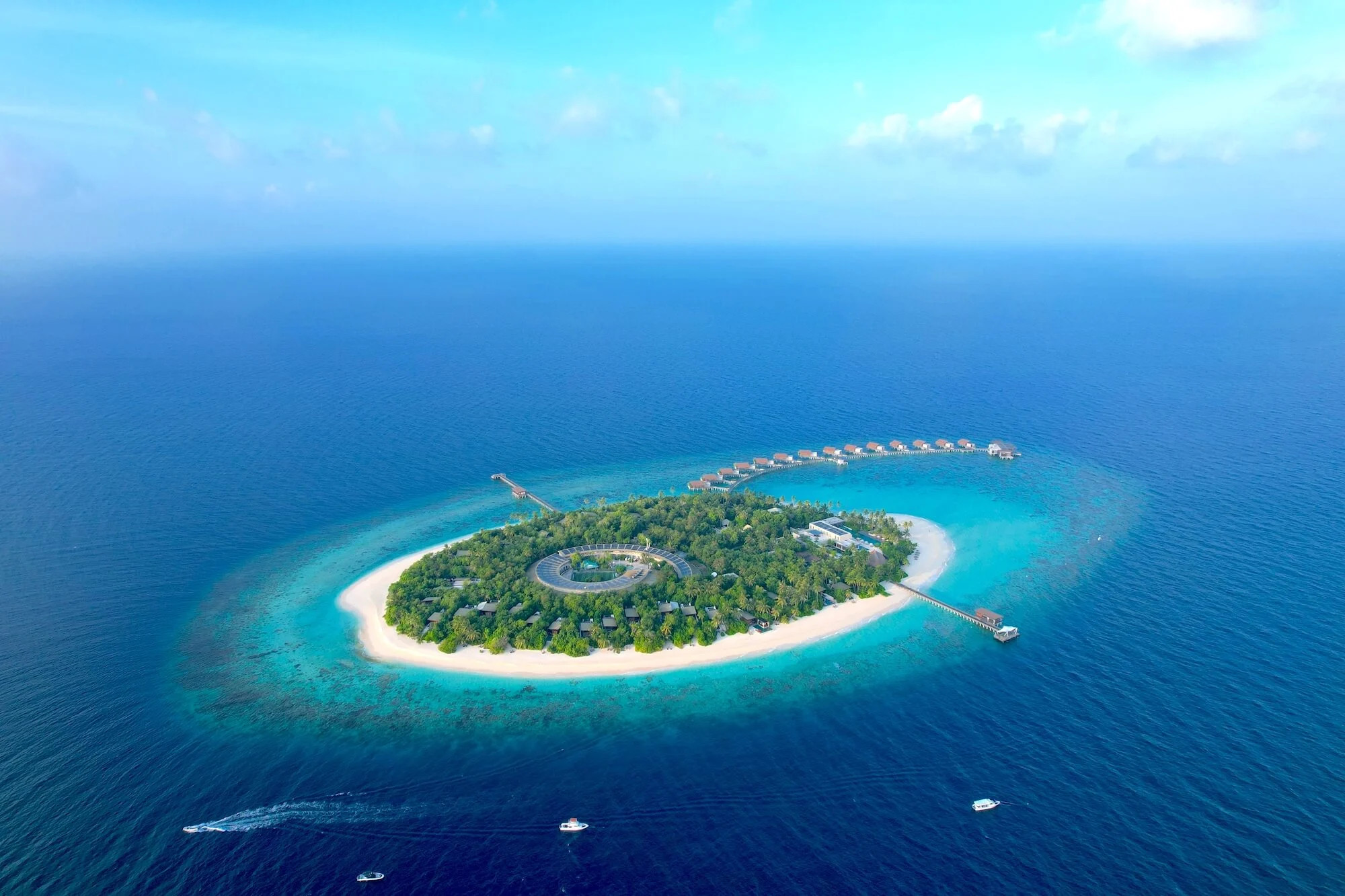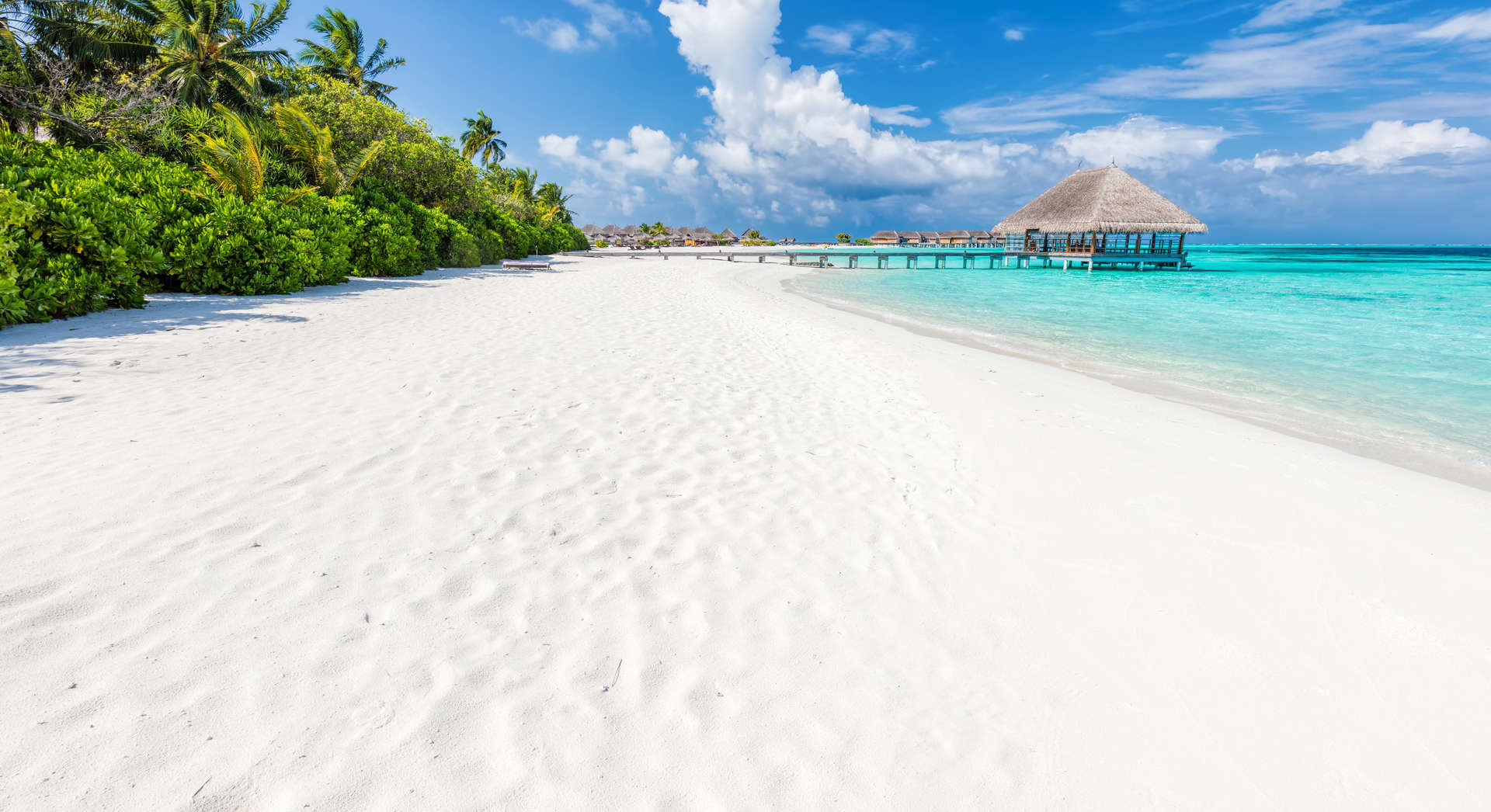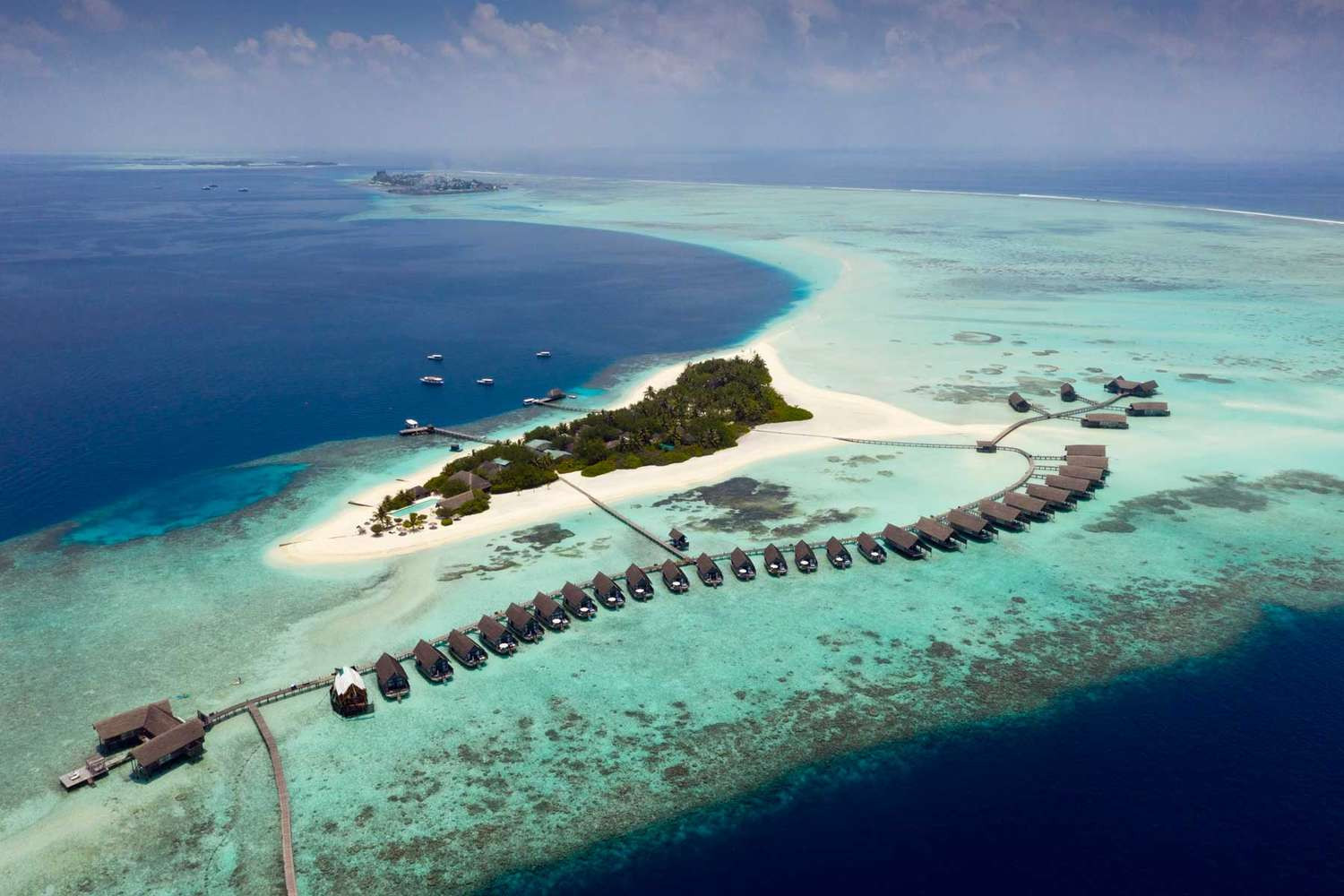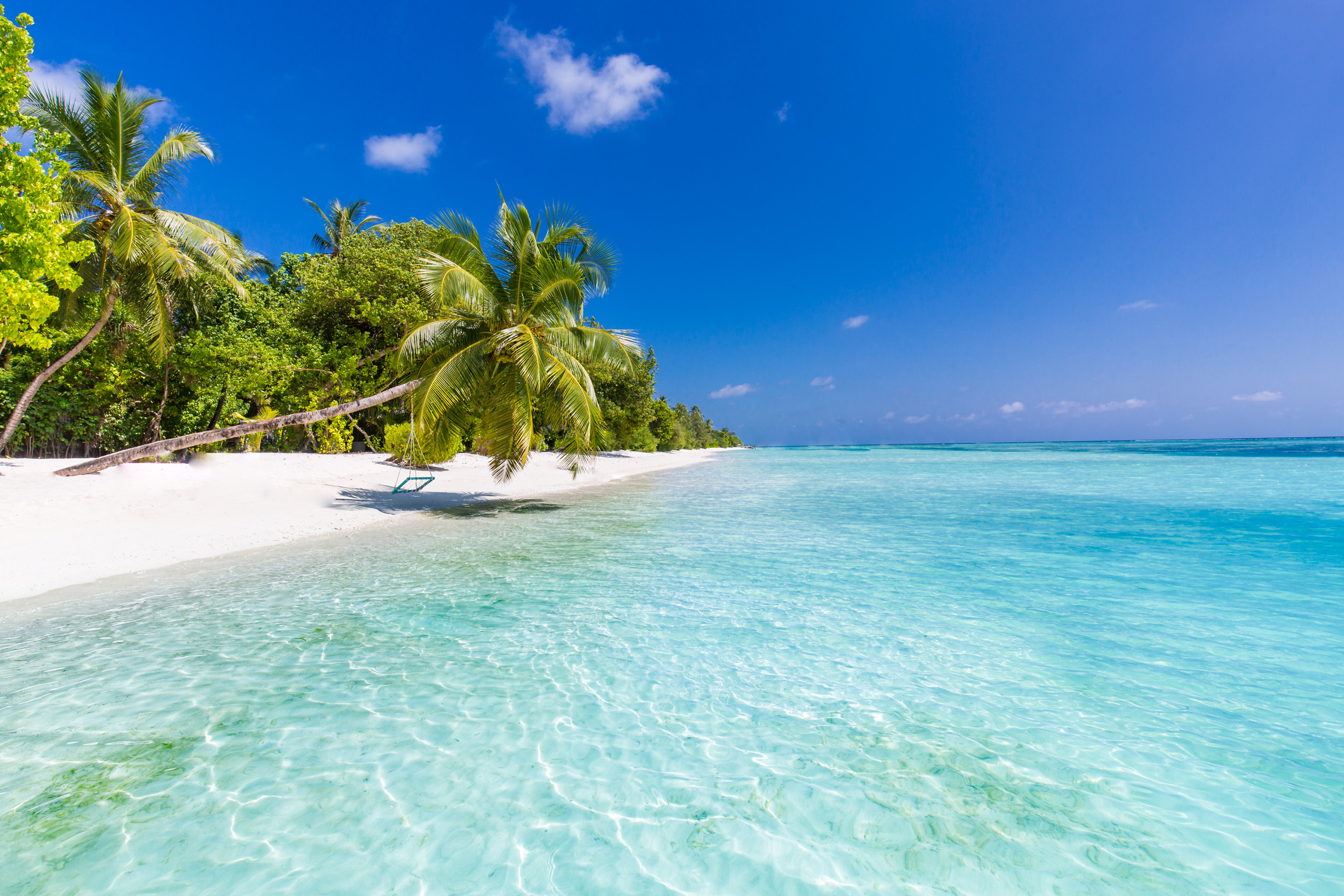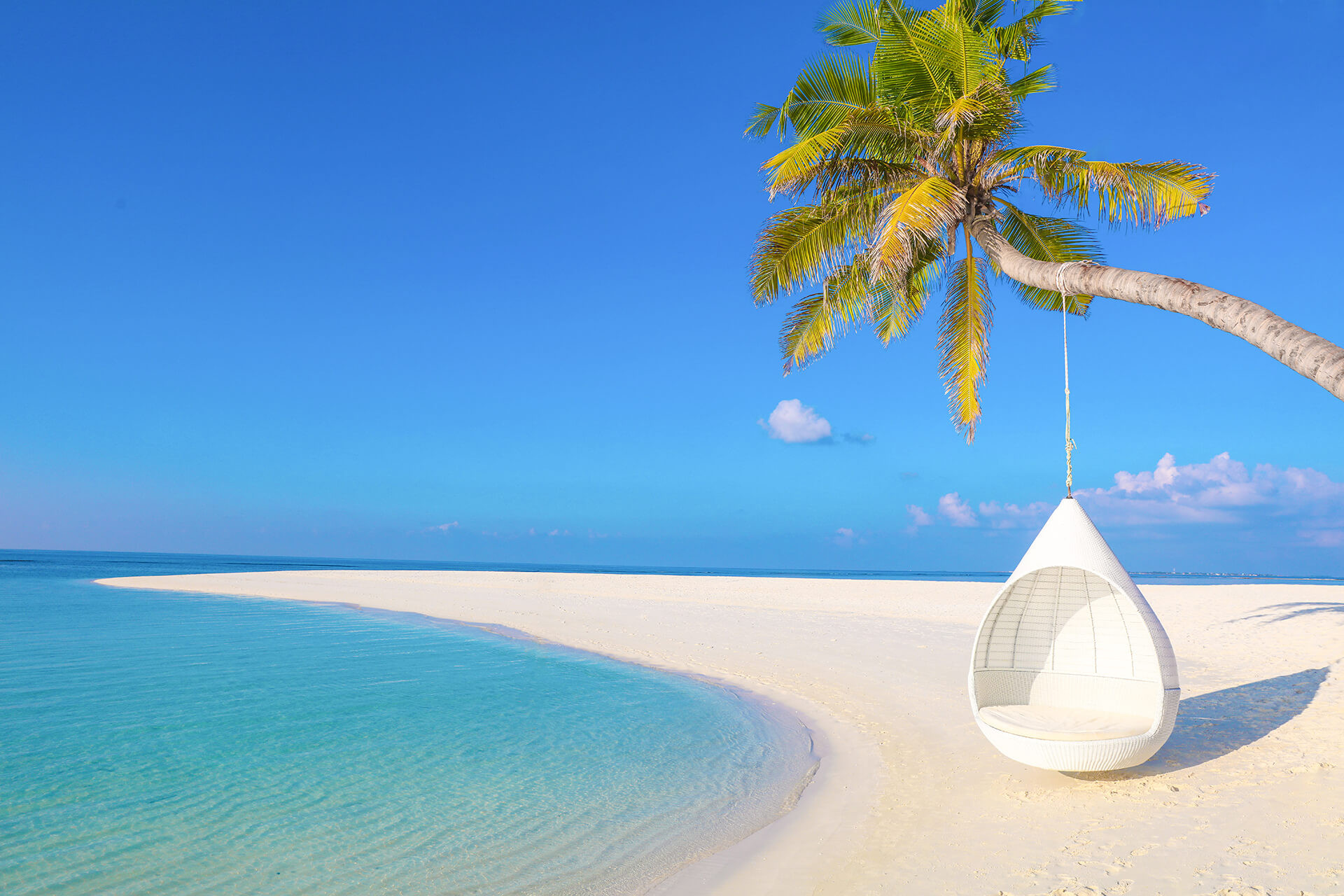
The Maldives is, in almost every meaningful sense, the flattest and most oceanic country on Earth: 1,192 small coral islands arranged in a double chain of 26 atolls that stretches 871 kilometers across the Indian Ocean southwest of India and Sri Lanka, together amounting to barely 298 square kilometers of dry land spread across roughly 90,000 square kilometers of ocean. Its highest natural point reaches just 2.4 meters above sea level, a statistic that makes the Maldives officially the lowest-lying country in the world, and one that shapes almost every aspect of how the nation is discussed internationally, from tourism marketing built around the fantasy of an entirely oceanic landscape to increasingly urgent conversations about the country's long-term physical survival. Each atoll is itself a ring-shaped coral structure built up over geological time atop the rim of a submerged, extinct volcanic seamount, with the shallow, brilliantly clear lagoon inside each ring giving the islands their characteristic pale-turquoise water even before any resort infrastructure enters the picture.
Malé, the compact and densely populated capital built on a small central island, has served as the political and administrative heart of the Maldives since well before the modern nation existed, historically known as the King's Island and seat of a sultanate that governed the archipelago for more than 850 years. That long monarchical tradition ended in stages through the twentieth century: the Maldives became a British protectorate before regaining full independence in 1965, and transitioned from sultanate to presidential republic in 1968, establishing the governmental structure that, with subsequent constitutional changes, continues to shape the country today. Malé itself has grown remarkably dense given the country's tiny land area, packing well over a hundred thousand residents onto an island of only a few square kilometers, a level of urban compression that stands in sharp contrast to the sparsely inhabited, resort-dominated islands that make up most international visitors' entire impression of the country.
Tourism arrived comparatively late to the Maldives, with the first resort opening only in 1972, but it has since transformed the national economy almost completely, now generating more than 28 percent of GDP and forming the backbone of government tax revenue in a country with few other viable large-scale industries given its limited land area and remote location. The distinctive one-island-one-resort model that has come to define much of Maldivian tourism, in which entire small islands are developed as single self-contained properties rather than shared among multiple hotels, has helped the country position itself at the premium end of global travel, drawing over 1.7 million visitors in 2019 alone despite the archipelago's remoteness and the logistical complexity of reaching individual island resorts. This concentration on a single high-value industry has brought considerable prosperity relative to the country's size, but it has also left the Maldivian economy unusually exposed to disruptions in international travel, a vulnerability made starkly clear during global downturns in tourism demand.
Beneath the surface, Maldivian waters support an extraordinary concentration of marine biodiversity for such a small national territory, with 187 recorded coral species and more than 1,100 species of fish inhabiting the reefs, channels, and open water around the atolls. Whale sharks, manta rays, and several species of sea turtle are regularly encountered by divers and snorkelers, and specific sites within the atoll system, including channels where nutrient-rich currents attract concentrations of larger marine life, have become internationally recognized destinations for scuba diving in their own right, distinct from the beach-and-lagoon appeal that dominates most Maldivian tourism marketing. This biodiversity depends heavily on the health of the reef structures that also physically define the islands themselves, since Maldivian coral reefs serve simultaneously as marine habitat, natural wave protection for low-lying islands, and, through ongoing calcium carbonate deposition, one of the few natural processes capable of helping some islands keep pace with rising sea levels, a role that has made reef conservation a matter of both ecological and existential importance to the country.
No discussion of the Maldives is complete without confronting the climate threat that hangs over its long-term future: the Intergovernmental Panel on Climate Change has warned that projected sea-level rise could make the Maldives uninhabitable by 2100 under current trajectories, a genuinely existential risk for a nation whose highest point sits barely two and a half meters above the waves. Maldivian governments have responded with a mix of adaptation measures, including artificial land reclamation projects such as the elevated island of Hulhumalé near Malé, designed explicitly to provide higher-ground housing capacity, and prominent international advocacy, with the country using its unusual vulnerability to push for stronger global climate commitments at forums where larger, less immediately threatened nations often carry more weight. This existential backdrop gives a visit to the Maldives a dimension that many other tropical destinations lack: for a meaningful share of visitors, the appeal now includes an implicit awareness that the landscape they are seeing may not exist in anything like its current form within the lifetimes of today's children.
Velana International Airport, on a small island near Malé, serves as the near-universal entry point for international visitors, connecting to major hubs across Asia, the Middle East, and Europe with a growing number of long-haul routes as tourism demand has grown. From Velana, the journey to an individual resort island typically continues by seaplane, domestic flight to a regional airport, or speedboat, depending on distance, with some of the more remote atolls requiring seaplane transfers of thirty minutes to an hour that themselves offer some of the most striking aerial views of atoll geography available anywhere in the world. Local, non-resort island life relies more on ferries, ordinary domestic flights, and traditional wooden dhoni boats for inter-island transport, a parallel transportation system serving Maldivian residents that operates largely separately from the private speedboat and seaplane network built around the resort industry.
The Maldives' tropical monsoon climate divides broadly into a drier season under the northeast monsoon from December through March, generally considered the most reliable window for calm seas, clear skies, and consistent diving and snorkeling conditions, and a wetter season under the southwest monsoon running roughly June through November, bringing more frequent rain and rougher water but also, for divers specifically, nutrient-rich currents in certain channels that can improve encounters with larger marine life such as manta rays. December through March coincides with peak international demand and correspondingly higher resort prices, while the shoulder months either side of the wet season, along with the wet season itself outside of storm events, can offer a meaningfully more affordable way to experience the same reefs and islands, at the cost of somewhat less predictable weather.
Despite its minimal land area, the Maldives has cultivated an international profile far larger than its physical size or population would typically produce, a result of decades of deliberate positioning as an aspirational luxury destination combined with the country's genuinely unusual geography. Maldivian resorts have been early adopters of high-end sustainability initiatives, from house-reef conservation programs to solar power installations on individual island properties, partly as a genuine environmental response and partly because sustainability messaging has become a meaningful part of how the destination markets itself to an increasingly climate-conscious travel audience. For visitors, this combination of extreme natural fragility and polished luxury infrastructure produces a destination unlike almost anywhere else: a place built almost entirely around water, coral, and sand, where the primary attraction and the primary long-term risk are, in the end, exactly the same geography.
No reviews yet. Be the first to share your experience!
Share your experience and help other travelers