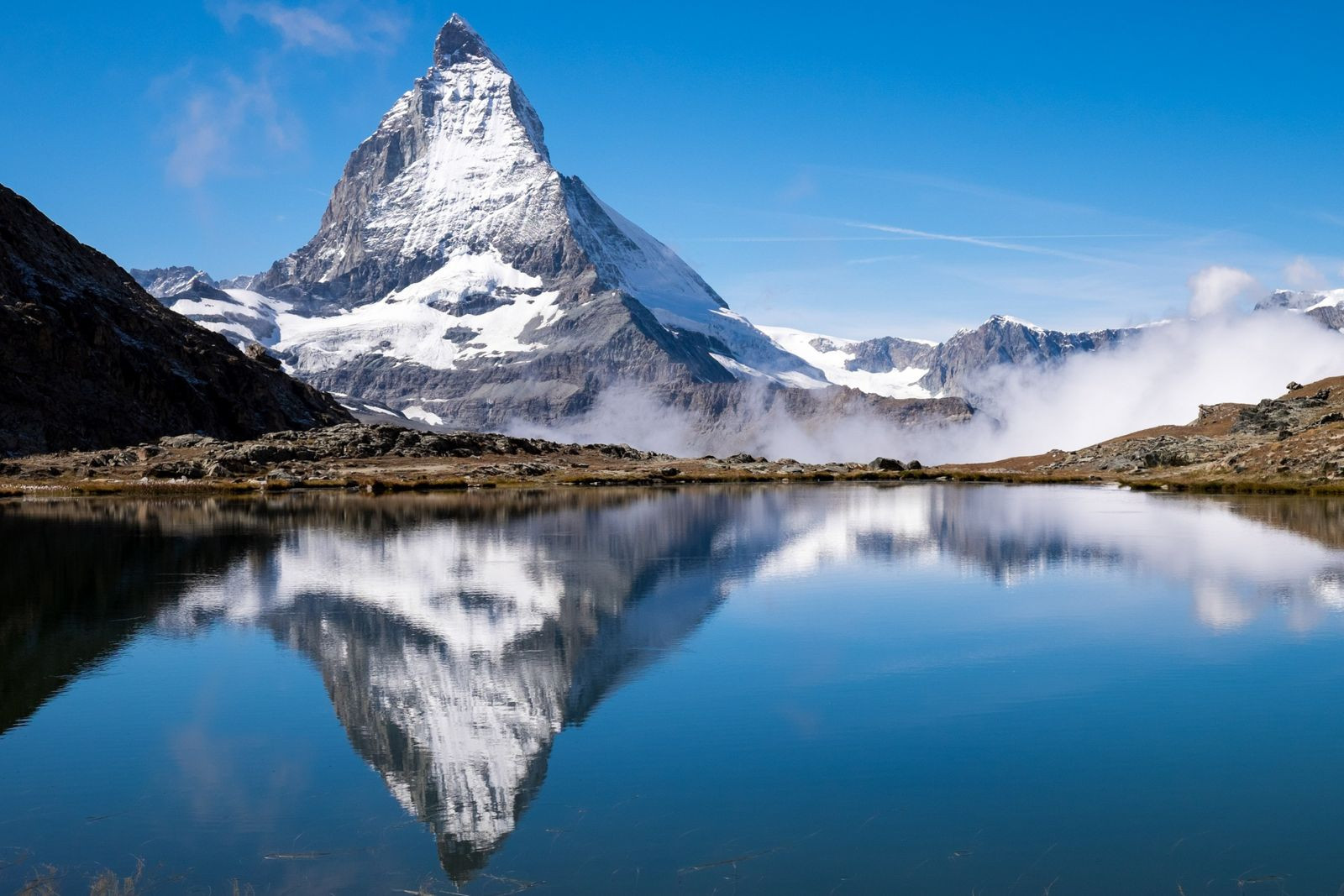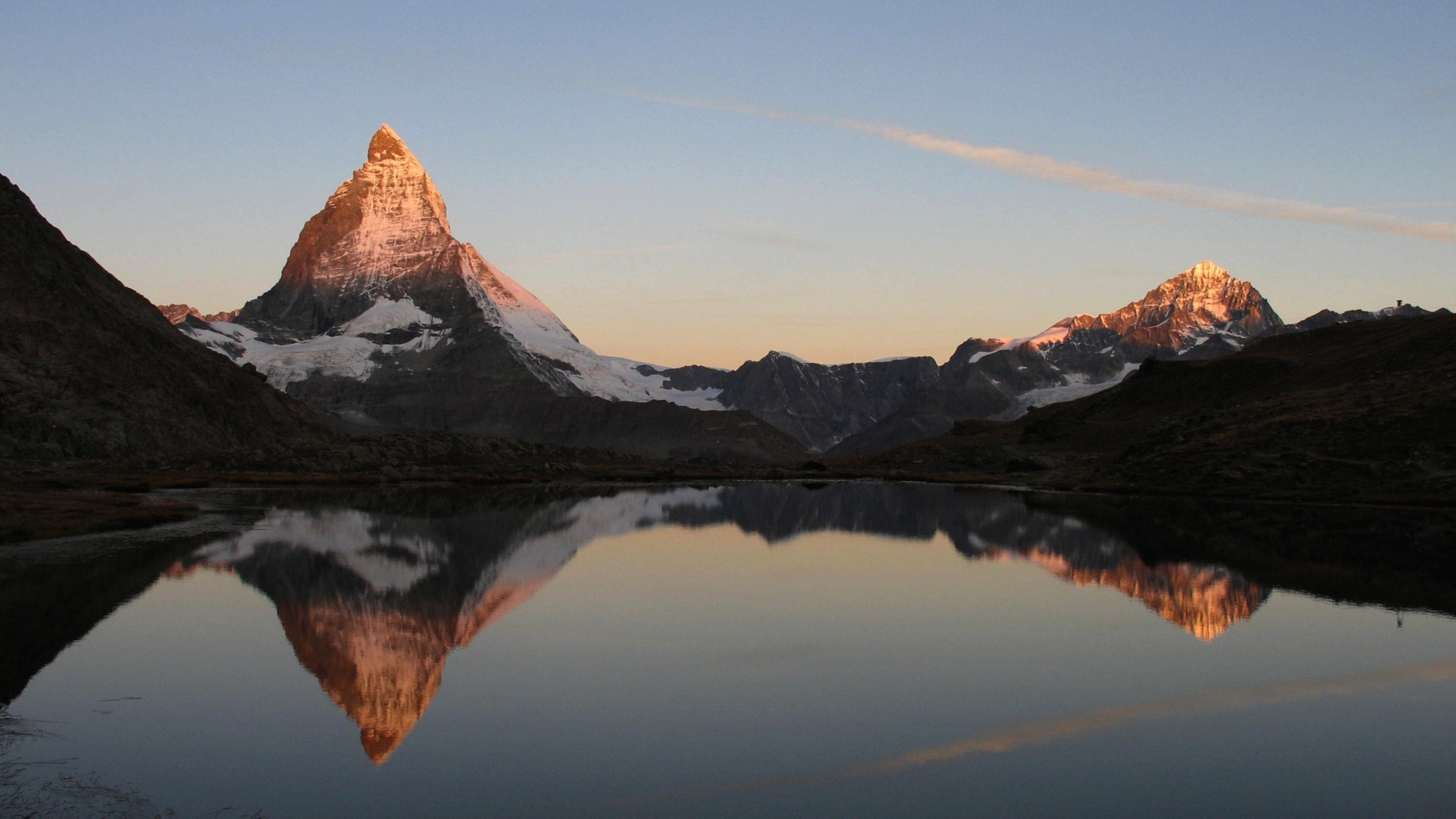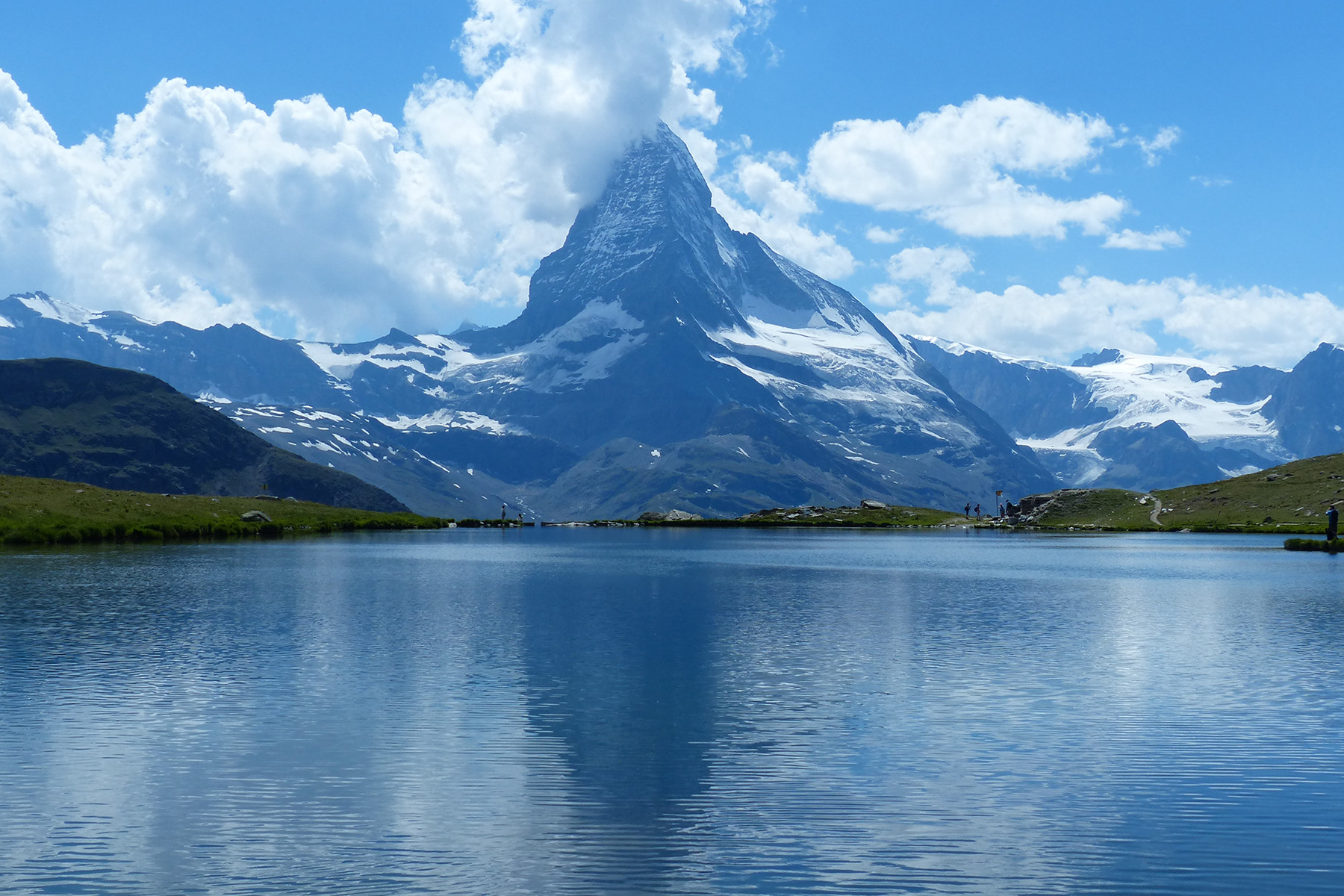
Few mountains anywhere look as deliberately shaped as the Matterhorn — a near-perfect four-sided pyramid rising 4,478 meters above the Swiss-Italian border, so symmetrical from certain angles that it reads almost like a monument rather than a natural landform. That appearance is, in a real sense, an illusion of geology working over an immense span of time rather than any kind of design.
The mountain's rock is mostly gneiss from the Dent Blanche nappe, a slab of crust originally part of the African continental plate that got thrust up and over younger rock during the collision that built the Alps, sitting atop older ophiolites and sedimentary layers. Its distinctive pyramidal shape is the product of cirque erosion: glaciers carved bowl-shaped hollows into the mountain from multiple directions simultaneously over roughly the past million years, while repeated freeze-thaw cycles fractured and stripped away rock along the ridges between them, gradually sharpening what had been a broader mass into four distinct faces meeting at a narrow summit.
By the mid-19th century, most of the Alps' major summits had already been climbed, and the Matterhorn's forbiddingly steep faces had earned it a reputation as unclimbable — a reputation that only made it more magnetic to the mountaineers of what's now called the Golden Age of Alpinism. English illustrator and mountaineer Edward Whymper made repeated attempts over several years, competing informally with Italian guide Jean-Antoine Carrel for the first ascent, before finally succeeding via the Hörnli ridge from the Swiss village of Zermatt on 14 July 1865.
Whymper's party of seven included the guides Michel Croz and father-and-son Peter Taugwalder, alongside British climbers Charles Hudson, Lord Francis Douglas, and Douglas Robert Hadow — the youngest and least experienced of the group. They reached the summit successfully, beating Carrel's rival Italian expedition by mere hours, in what should have been one of alpinism's great triumphs.
The triumph turned to tragedy within hours. During the descent, Hadow slipped, knocking Croz off balance; the fall pulled Hudson and Douglas from their holds in a chain reaction that the remaining rope couldn't stop. The rope connecting Douglas to the elder Taugwalder — investigators later determined it was the weakest and oldest of the three ropes the party carried — snapped under the sudden strain. Four climbers fell to their deaths on the glacier far below; only Whymper and the two Taugwalders survived, and Douglas's body was never recovered.
The disaster became one of the most famous incidents in mountaineering history, prompting Queen Victoria to reportedly consider banning British subjects from alpine climbing altogether, and cementing the Matterhorn's reputation as a mountain that demanded serious respect regardless of its aesthetic appeal from the valley floor.
That reputation has held. More than 500 alpinists have died on the Matterhorn since Whymper's ascent, with recent decades averaging around a dozen deaths a year, making it statistically one of the deadliest peaks in the world — a striking fact given that its standard route, the Hörnli ridge, isn't considered technically extreme by modern alpine standards. Much of the danger comes from rockfall, sudden weather changes, and the sheer volume of climbers attempting the mountain each season, many with less experience than the terrain actually requires.
Beyond the Hörnli ridge, three other major routes ring the mountain — the Zmutt, the Lion (or Italian) ridge, and the notoriously difficult Furggen ridge — while the mountain's 1,200-meter north face, first climbed in 1931, ranks among the most serious and dangerous big walls in the entire Alps, reserved for experienced technical climbers rather than the guided groups that attempt the standard route each summer.
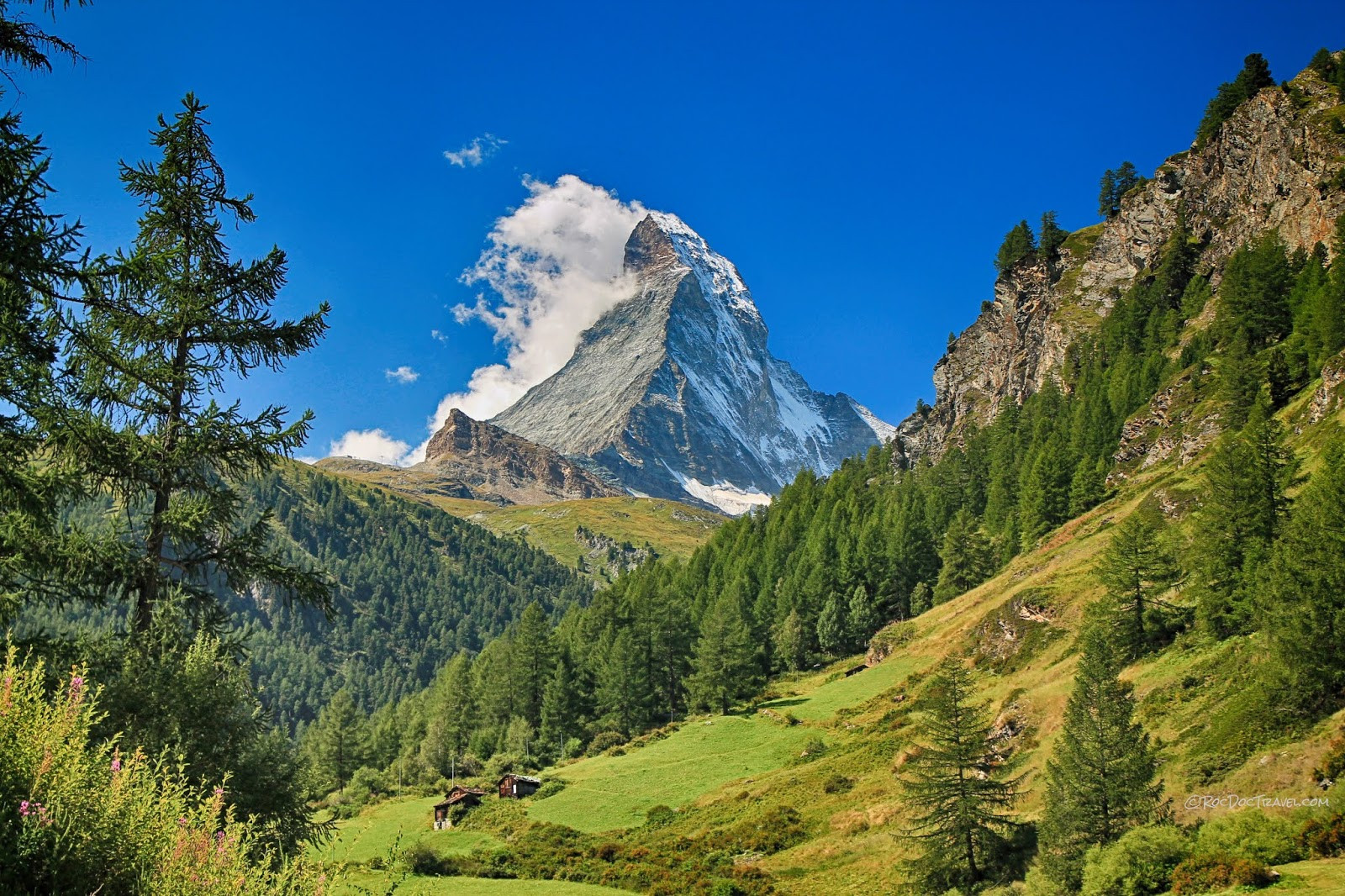
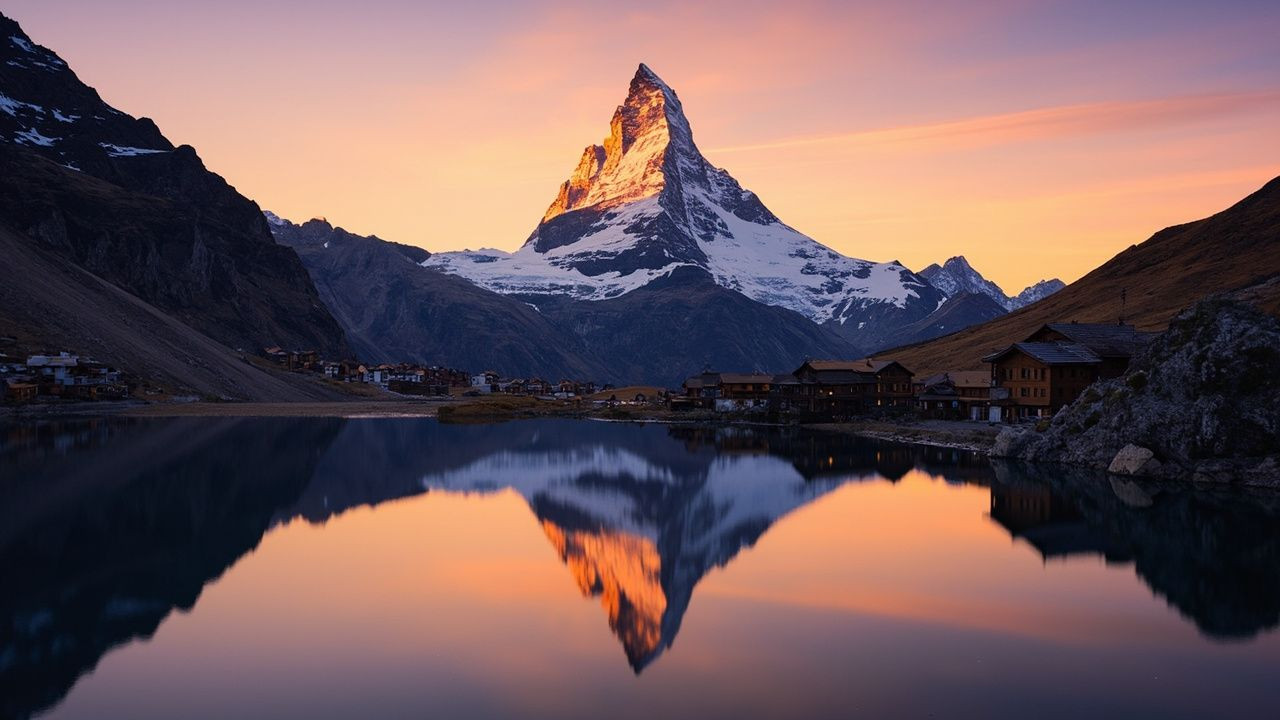
Long before most tourists could realistically climb it, the Matterhorn had already become shorthand for the Alps themselves — arguably the single most photographed mountain on Earth, its silhouette used everywhere from chocolate packaging to a Disneyland attraction modeled directly on its shape. Part of that visual power comes from a geological quirk: because cirque erosion carved the mountain from multiple directions, it presents genuinely distinct, dramatic faces depending on which valley you're viewing it from, rather than the single recognizable profile most peaks offer.
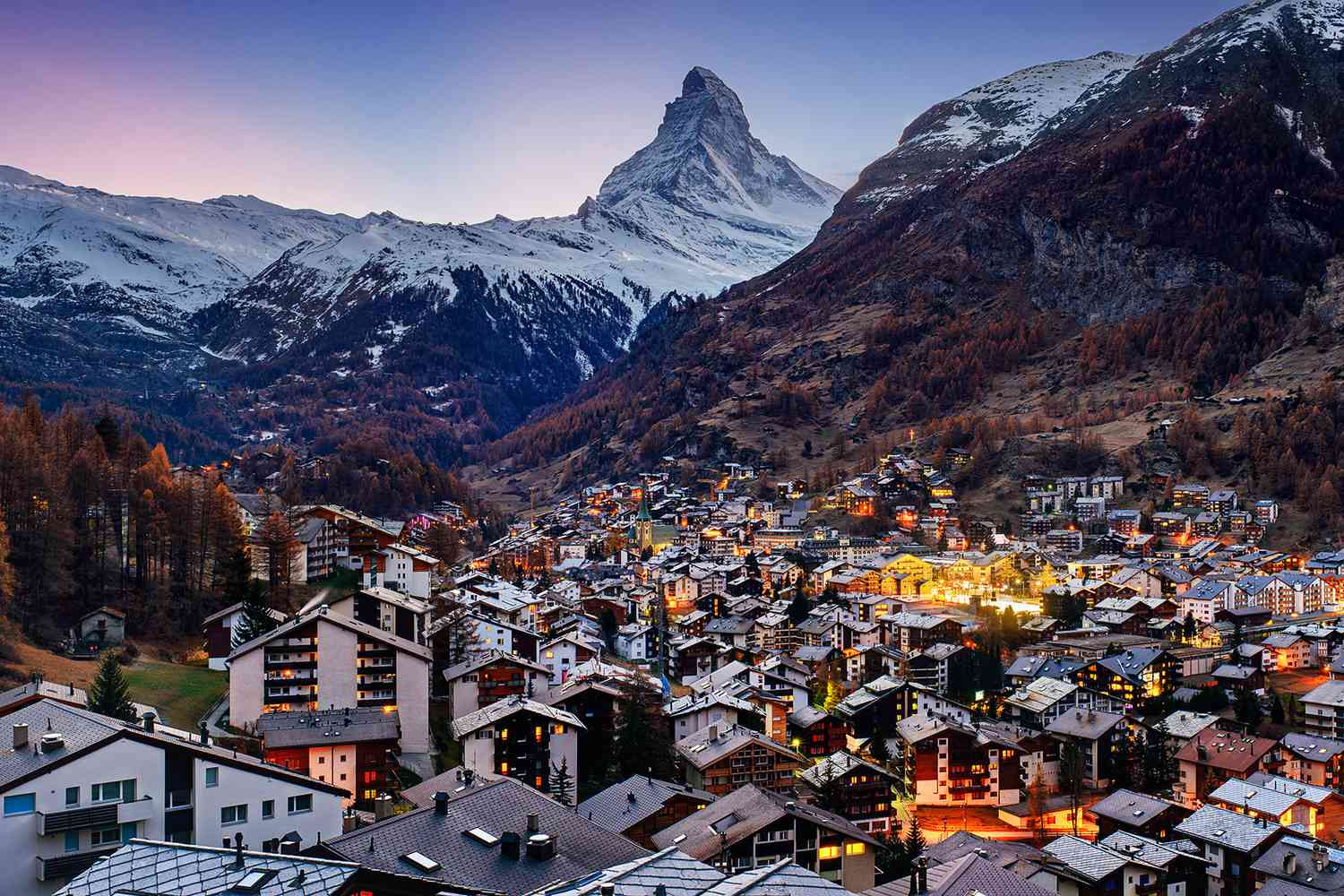
Zermatt, the car-free Swiss village at its base, grew from a small mountain farming settlement into one of the world's most prestigious alpine resort towns almost entirely on the strength of that view, along with the climbing, skiing, and hiking the surrounding terrain supports.
For the overwhelming majority of visitors who have no intention of roping up for the Hörnli ridge, the Matterhorn Glacier Paradise cable car system offers the highest cable car station in Europe, at 3,883 meters, delivering panoramic views of the peak and surrounding glaciers in around 40 minutes from Zermatt without requiring any climbing experience at all. First ascents up the mountain typically depart around 8:30 AM, with the last cable car down in the mid-afternoon, and cars run roughly every 20 to 30 minutes depending on season.
Zermatt itself is entirely car-free — visitors driving in leave their vehicles at Täsch, a few kilometers away, and continue by shuttle train or taxi into the village center, where electric vehicles handle local transport.
Autumn, roughly September through November, tends to offer the clearest visibility and best photography conditions along with smaller crowds than peak summer. Summer remains popular for combining Matterhorn views with hiking on the surrounding trail network, though afternoon cloud buildup is more common than in fall. Winter turns the region into a ski resort built around the same iconic peak, trading hiking trails for snow but bringing stronger winds and more frequent cable car weather delays.
Zermatt has no direct major international airport of its own; most visitors arrive via train connections through larger Swiss hubs like Zurich or Geneva, with the final approach into the car-free village requiring a switch to the narrow-gauge railway that threads up the valley — itself considered one of the more scenic train rides in the Alps.
No reviews yet. Be the first to share your experience!
Share your experience and help other travelers