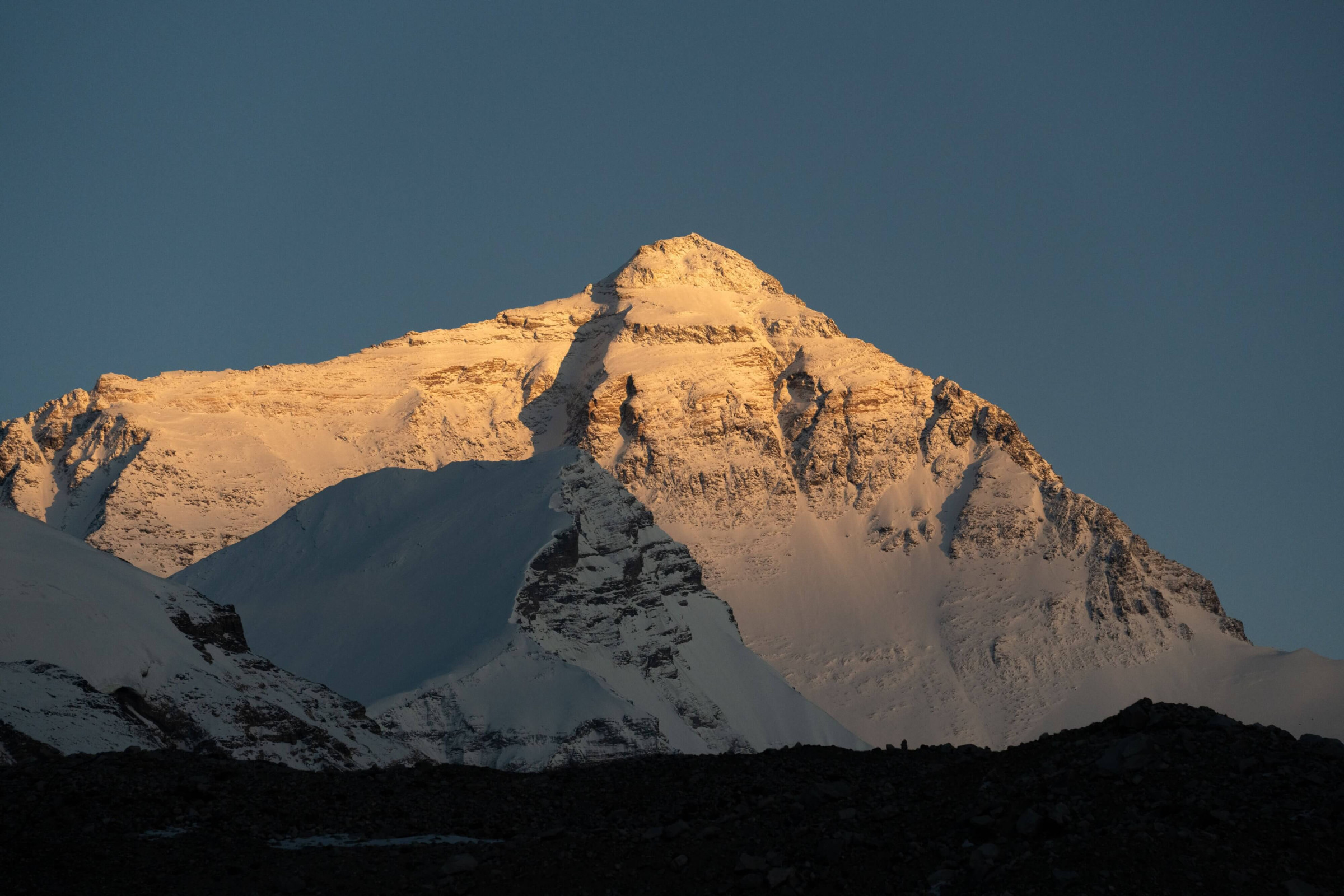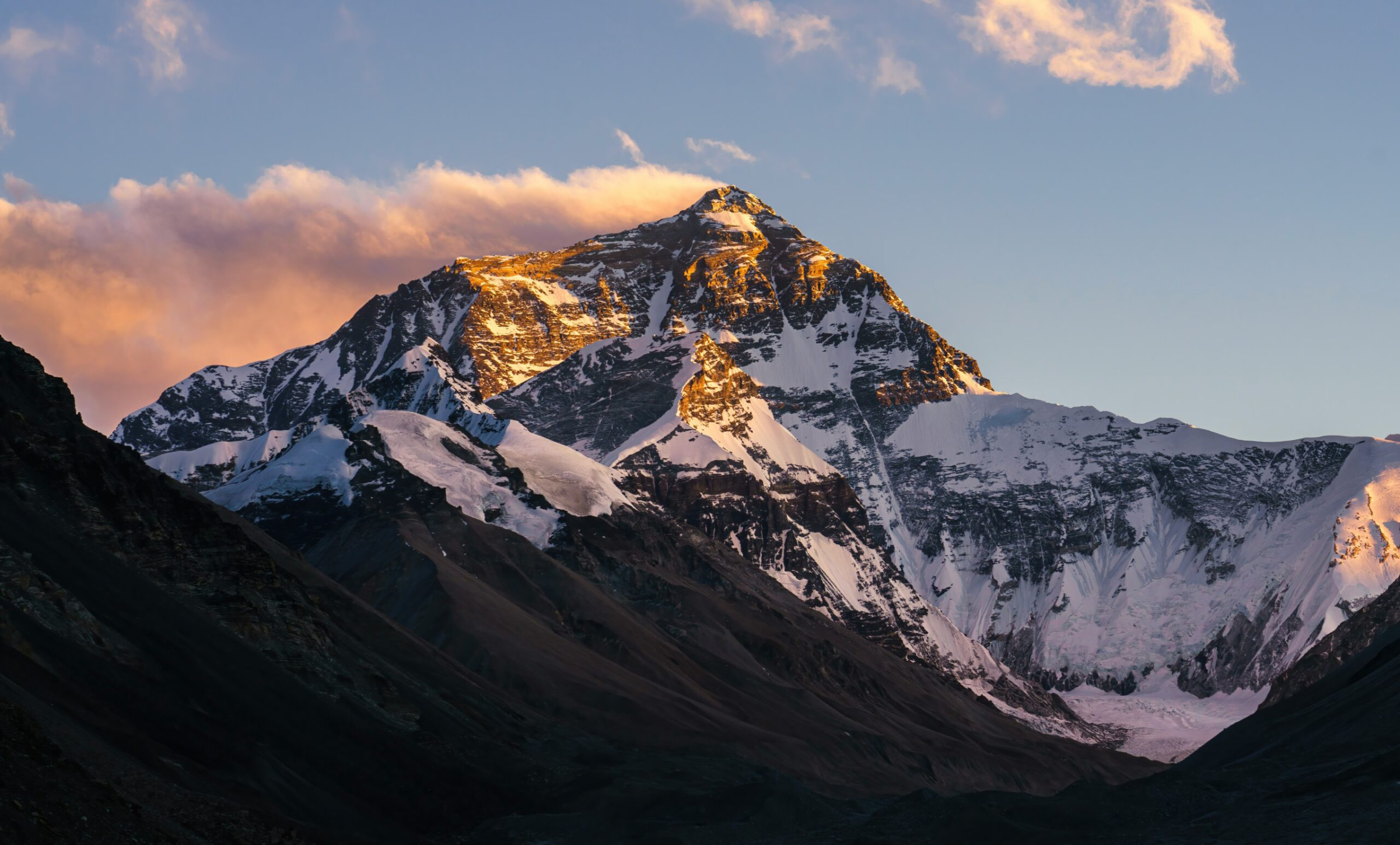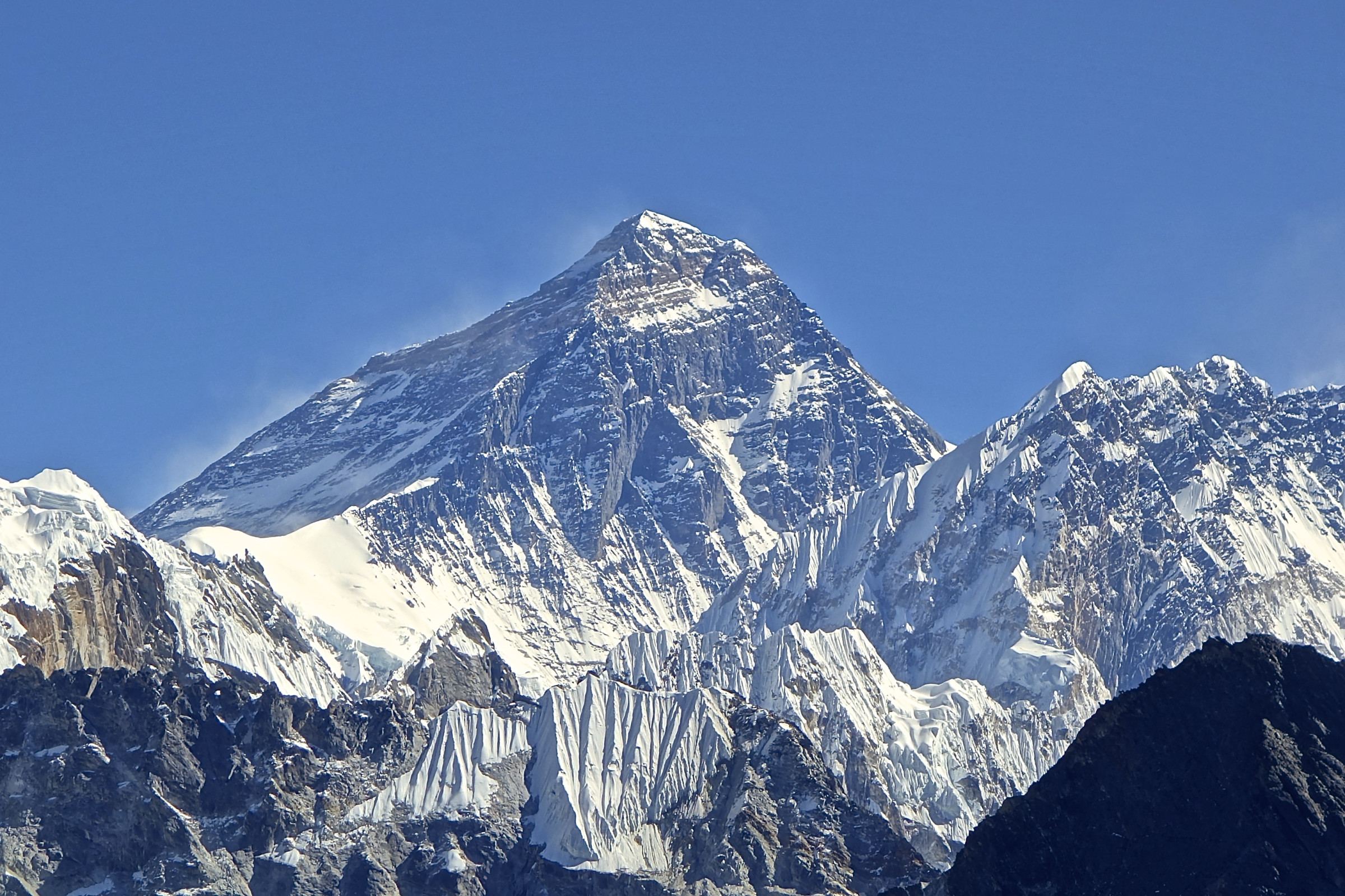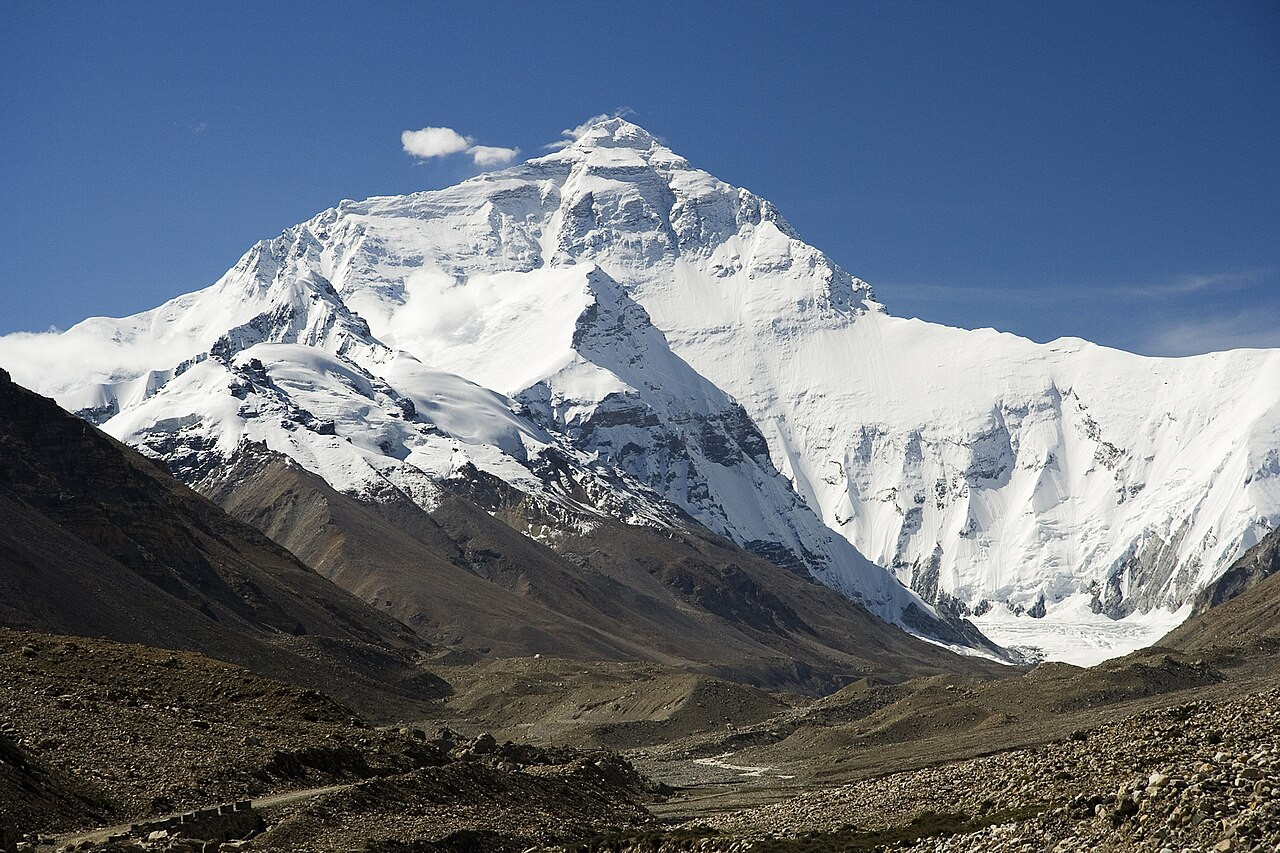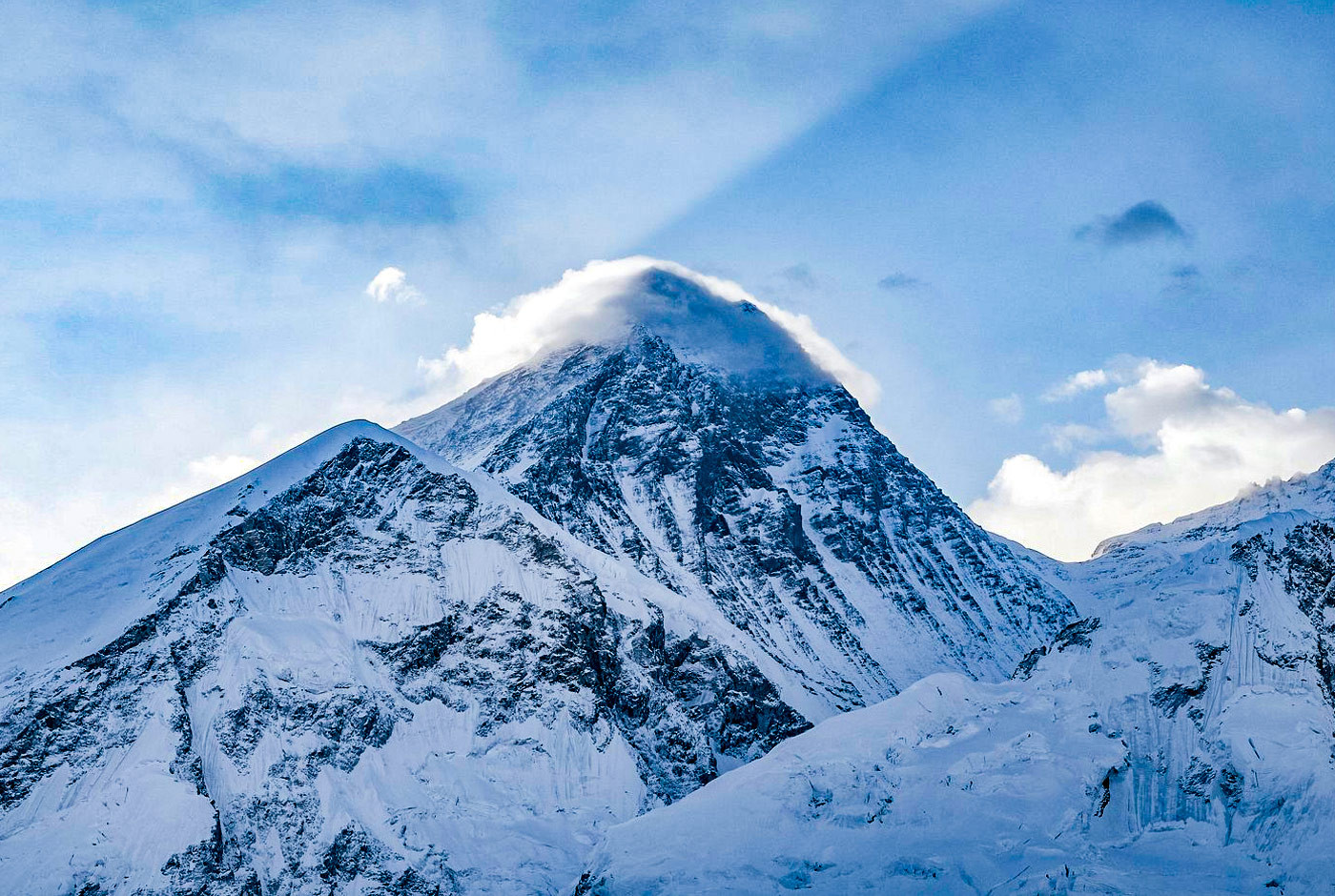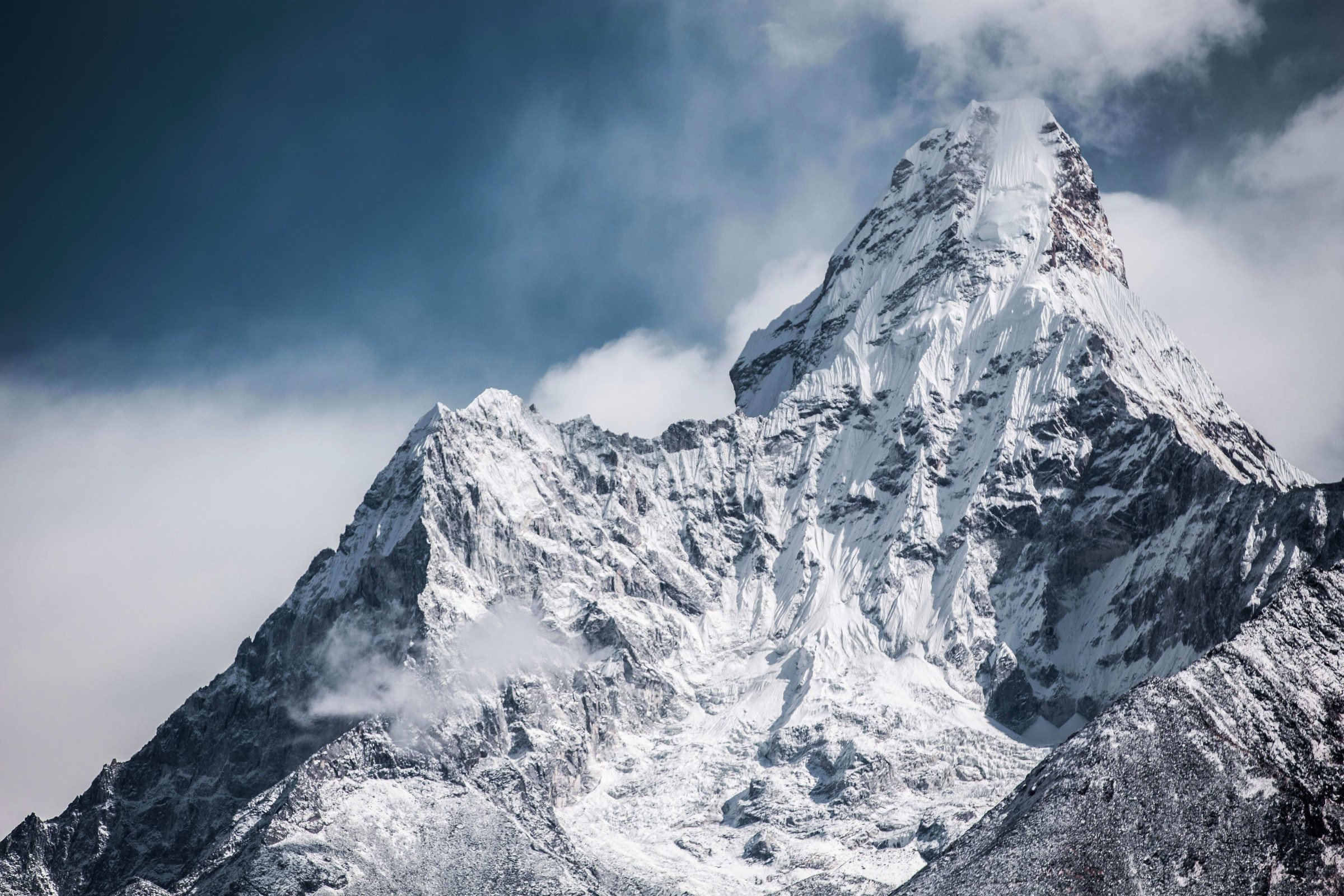
Mount Everest reaches 8,848.86 meters above sea level according to the most recent joint Nepal-China survey completed in 2020, standing as the highest point on Earth's surface and straddling the border between Nepal and the Tibet Autonomous Region of China within the Mahalangur Himal sub-range of the greater Himalayas. Known locally as Sagarmatha in Nepali and Chomolungma in Tibetan, meaning roughly Goddess of the Sky and Goddess Mother of the World respectively, the mountain carries deep spiritual significance for the communities living in its shadow long before it became a global symbol of extreme mountaineering achievement. Its summit marks the precise border point between Nepal and China, meaning climbers reaching the top technically stand with one foot in each country, a detail that reflects Everest's unusual status as a natural landmark whose exact geographic significance is inseparable from an international political boundary running directly across its highest point.
Everest's extraordinary height is the direct product of ongoing tectonic collision between the Indian and Eurasian plates, a process that began roughly 50 million years ago when the Indian subcontinent, then a separate landmass drifting northward across the ancient Tethys Ocean, collided with the Eurasian plate and began compressing and folding the sedimentary and metamorphic rock layers that would eventually form the Himalayas. This collision continues today, with the Indian plate still pushing northward into Eurasia at a rate of a few centimeters per year, a slow but relentless process that continues to raise Everest's summit by approximately two millimeters annually, meaning the mountain, remarkably, is still actively growing even as erosion, glacial movement, and occasional significant earthquakes work to reshape and, at times, damage its slopes and surrounding terrain, as demonstrated dramatically by the devastating 2015 Nepal earthquake, which triggered a deadly avalanche at Everest Base Camp itself.
Edmund Hillary, a New Zealand mountaineer, and Tenzing Norgay, a Nepali Sherpa climber, achieved the first confirmed ascent of Everest's summit on May 29, 1953, reaching the top via the Southeast Ridge route from the Nepalese side as part of a British-organized expedition, an achievement that instantly transformed both men into international icons and marked a pivotal moment in the broader history of high-altitude mountaineering. Their success came after decades of earlier attempts by British expeditions in particular, including the famous and still-debated 1924 attempt by George Mallory and Andrew Irvine, who disappeared high on the mountain in conditions that have left it permanently unclear whether they might have reached the summit nearly three decades before Hillary and Norgay's confirmed success, a mystery further complicated by the 1999 discovery of Mallory's body but no conclusive evidence resolving the question either way. Hillary and Norgay's ascent relied on oxygen equipment and expedition support techniques considered standard for the era but primitive by the standards of modern high-altitude mountaineering, underscoring how much both equipment and route knowledge have advanced in the seven decades since.
Since 1953, Everest has been summited nearly 13,000 times by approximately 7,200 different individuals, some of whom have reached the top multiple times, a volume of successful ascents that reflects both improved equipment and route infrastructure and a substantial commercial guiding industry that now operates on both the Nepalese and Tibetan sides of the mountain. This accessibility has not come without serious risk: as of May 2024, 340 people have died attempting to climb Everest, and more than 200 bodies remain on the mountain today, left in place due to the extreme difficulty and danger involved in body recovery at such extreme altitude, a stark and sobering fact that stands in tension with the mountain's modern reputation as an achievable, if expensive and demanding, goal for well-prepared amateur climbers rather than an endeavor reserved exclusively for elite professional mountaineers.
Everest expeditions target narrow seasonal windows, typically a week or two in spring and a shorter window in autumn, when the seasonal Asian monsoon is either building or retreating and produces a brief period of comparatively calmer high-altitude winds, conditions essential for a realistic summit attempt given how consistently violent Everest's jet-stream-driven winds are outside these windows. Above roughly 8,000 meters, climbers enter what mountaineers call the death zone, an altitude at which atmospheric oxygen levels drop so low that the human body can no longer acclimatize and instead begins actively deteriorating, with most climbers relying on supplemental bottled oxygen to function at all during summit pushes through this final, most dangerous stretch of the ascent. The narrow weather windows combine with the death zone's physiological dangers to concentrate summit attempts into short, extremely crowded periods, producing the now-familiar images of long queues of climbers waiting on fixed ropes near the summit during peak conditions, a bottleneck that has itself become a significant safety concern given how limited each climber's safe time at extreme altitude actually is.
Far more visitors reach Everest Base Camp than ever attempt the summit itself, with the trek to South Base Camp on the Nepalese side, typically beginning with a dramatic flight into Lukla's short mountain airstrip followed by roughly a week or more of trekking through Sherpa villages in the Khumbu region, ranking among the most popular high-altitude trekking routes in the world for travelers without the technical climbing experience, extensive budget, or multi-month time commitment required for an actual summit attempt. This base camp trek, while considerably less dangerous than a summit attempt, still involves genuine altitude risk given base camp's own elevation above 5,000 meters, and proper acclimatization schedules, often including scheduled rest days built into the standard itinerary, are essential even for trekkers with no intention of climbing beyond base camp itself, a reminder that Everest's dangers begin at altitudes considerably lower than the death zone that defines the summit push.
Most international climbers and trekkers approach Everest from the Nepalese side, flying into Kathmandu before continuing to Lukla, roughly 100 kilometers from the mountain, and trekking or, for support flights and emergency evacuation, using helicopter access into the Khumbu region, while a smaller number approach via Tibet, requiring travel to Lhasa, roughly 300 kilometers distant, and Chinese travel permits considerably more restrictive than Nepal's climbing permit system. Nepal's climbing permits for the mountain itself cost between 10,000 and 30,000 US dollars per person depending on season and route, a substantial expense that sits on top of the considerable additional costs of guides, equipment, oxygen, and logistical support, together making a full Everest summit attempt one of the more expensive forms of adventure travel available anywhere, quite apart from the physical training and mountaineering experience it demands of anyone realistically attempting it.
Every Everest expedition, whether aiming for the summit or simply reaching Base Camp, depends fundamentally on the Sherpa people of Nepal's Khumbu region, whose generations of high-altitude expertise and physical adaptation to thin mountain air have made them indispensable to virtually every successful ascent since Tenzing Norgay's own historic 1953 climb. Sherpa guides and porters fix ropes, carry equipment, establish and stock the series of camps that climbers use as they progress up the mountain, and frequently make multiple trips through the most dangerous sections, including the notoriously unstable Khumbu Icefall, exposing themselves to more cumulative risk than the paying clients whose summit attempts depend entirely on this support work. This dynamic has drawn increasing attention and scrutiny in recent decades, particularly following incidents such as the 2014 Khumbu Icefall avalanche that killed sixteen Sherpa workers in a single event, prompting broader conversations within the climbing industry about fair compensation, insurance, and safety standards for the local workforce whose labor underpins nearly the entire modern Everest climbing and trekking economy.
No reviews yet. Be the first to share your experience!
Share your experience and help other travelers