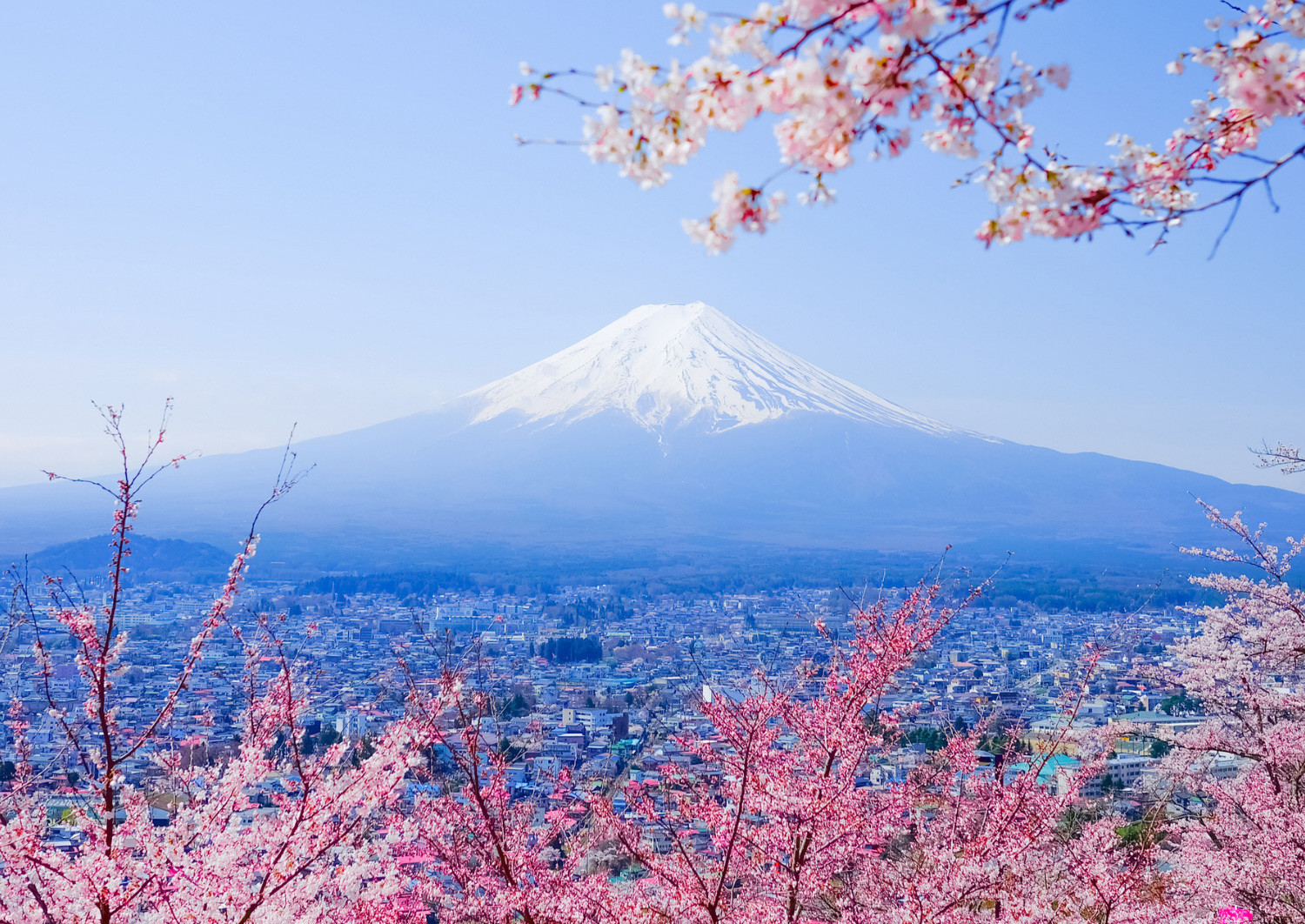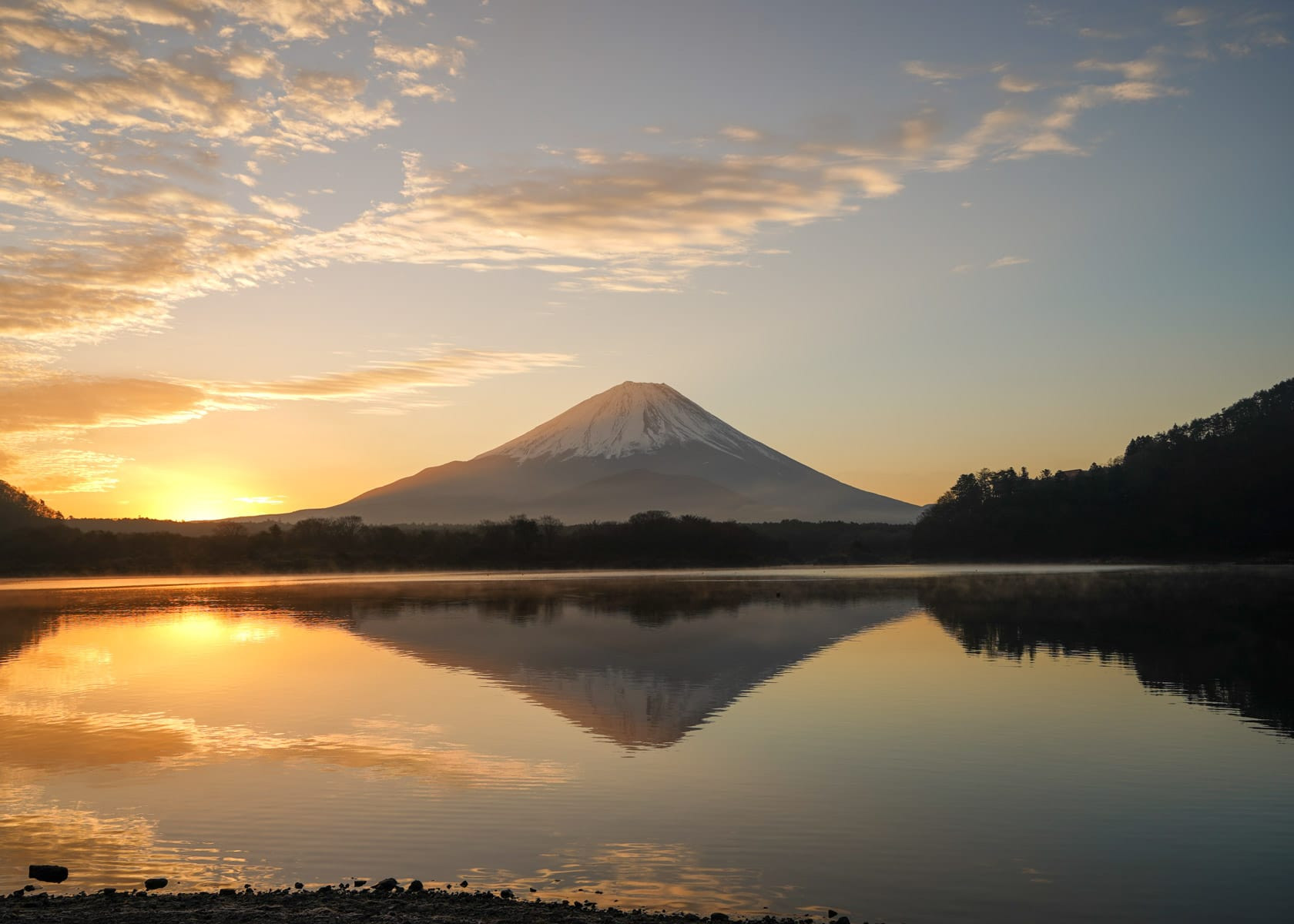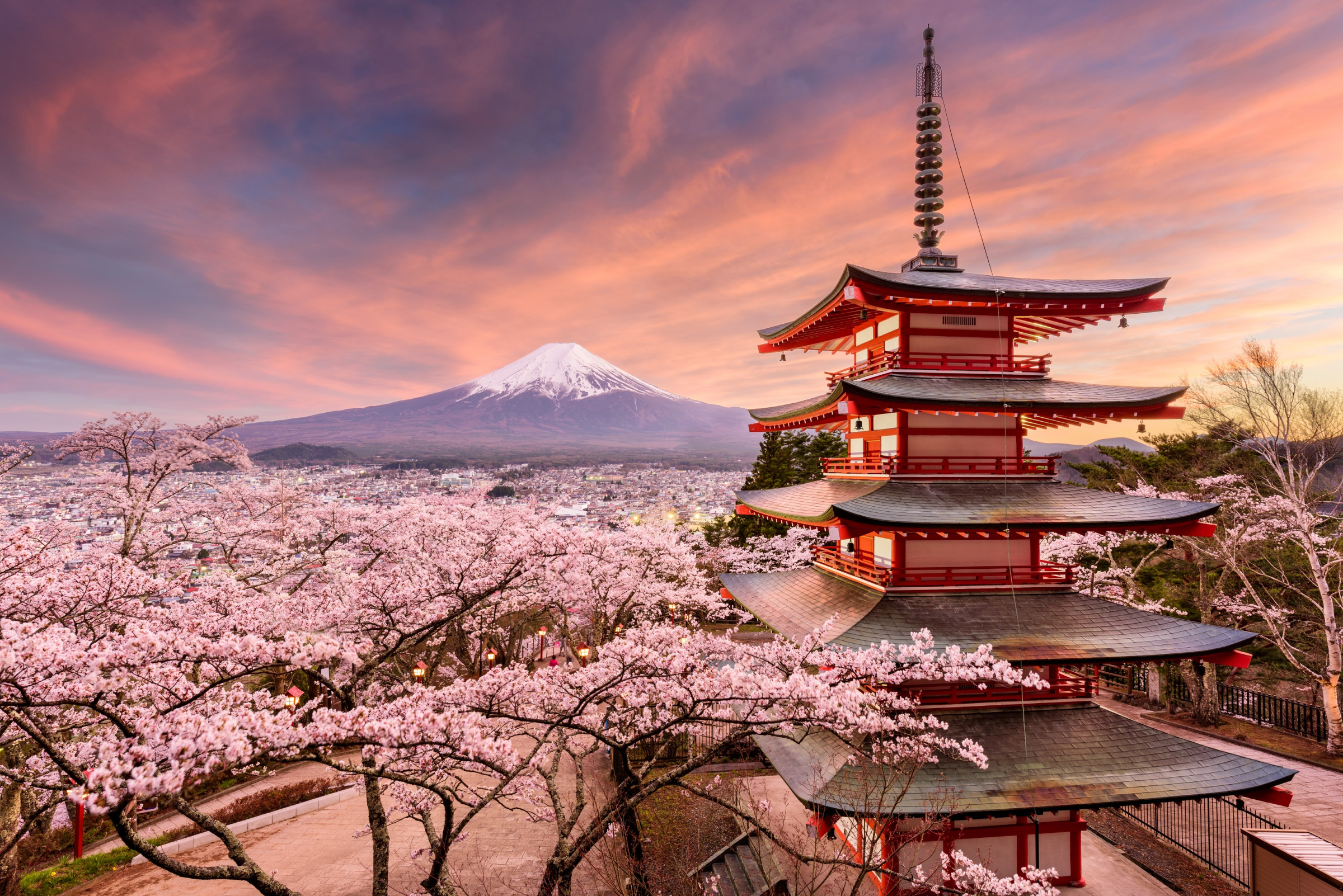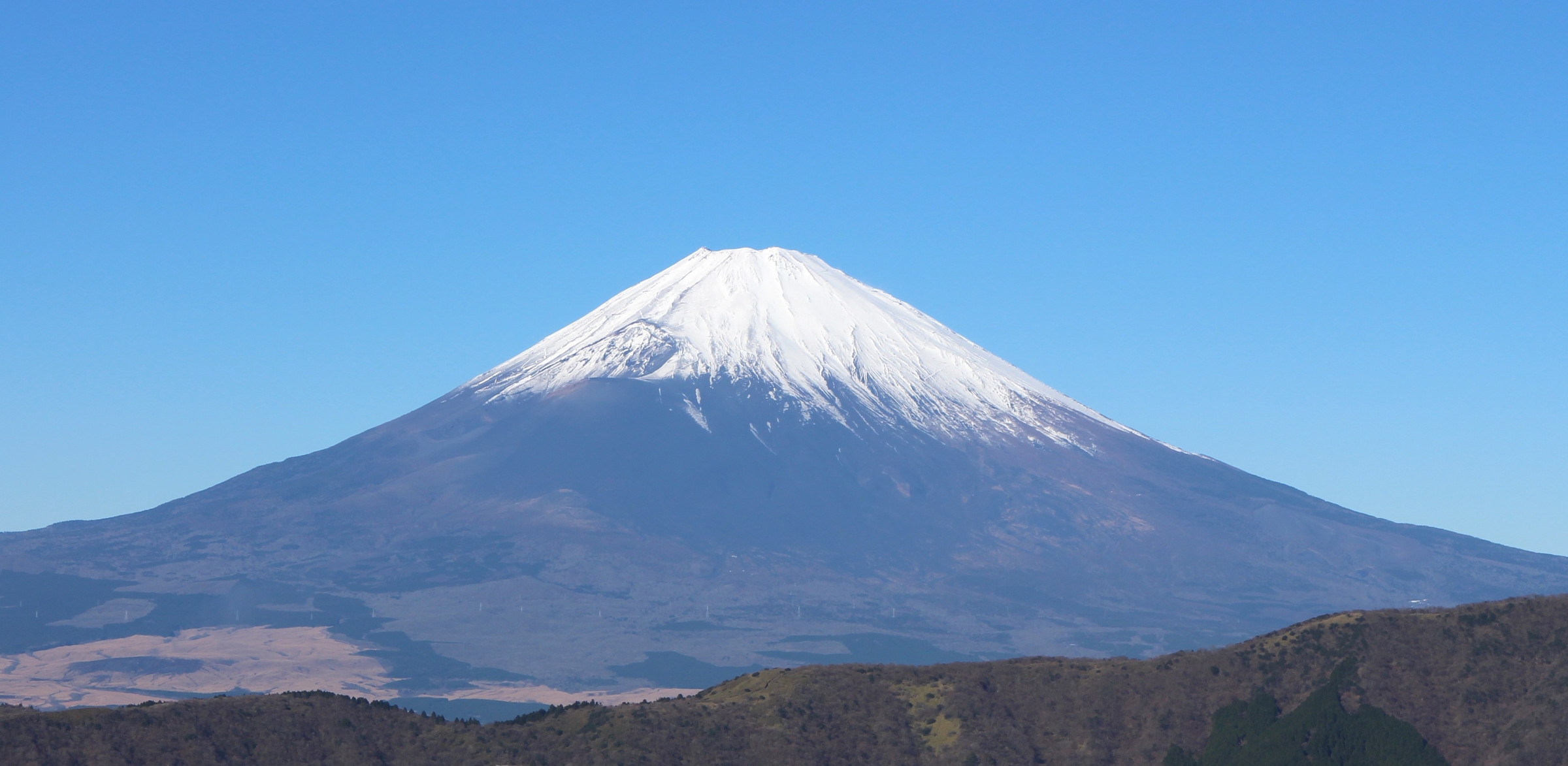
Rising 3,776 meters above sea level roughly 100 kilometers southwest of Tokyo, Mount Fuji is Japan's tallest mountain by a wide margin and, arguably, the single most recognized natural symbol of the country anywhere in the world. Its near-perfect conical silhouette, straddling the boundary between Shizuoka and Yamanashi prefectures, has appeared in Japanese art for over a thousand years, most famously in Katsushika Hokusai's woodblock print series "Thirty-six Views of Mount Fuji," and continues to draw both religious pilgrims and secular tourists in numbers that few mountains anywhere can match.
Fuji's smooth, symmetrical profile hides a more complicated geological history than its shape suggests. The mountain is actually the most recent of three overlapping stratovolcanoes that have erupted at roughly the same location over hundreds of thousands of years — an older volcano called Komitake, followed by an intermediate volcano called Ko Fuji ("Old Fuji"), and finally the current cone, Shin Fuji ("New Fuji"), which built up over the older structures and gave the mountain its present, almost mathematically precise conical form.
As an active stratovolcano, Fuji has erupted repeatedly throughout recorded Japanese history, though not recently. Its last eruption, known as the Hōei eruption, ran from December 16, 1707, into approximately January 1708, and was significant enough to open a new crater and a secondary peak, Mount Hōei, partway down the mountain's southeastern flank — a scar still visible in the mountain's profile today, over three centuries later.
Long before it became a hiking destination, Fuji held deep religious significance in Japan, venerated as one of the country's "Three Holy Mountains" and associated with both Shinto kami (spirits) and Buddhist cosmology. Shugendō ascetic practitioners and other pilgrims climbed the mountain as a spiritual discipline for centuries, following established pilgrimage routes and rituals that predate recreational mountaineering by a wide margin — a devotional tradition that continues today alongside the mountain's modern role as a tourist attraction.
UNESCO recognized this layered cultural significance in 2013, inscribing Mount Fuji as a World Heritage Cultural Site — notably a cultural rather than natural designation, reflecting the mountain's role in Japanese art, religion, and identity as much as its geology. The listing encompasses 25 separate sites of cultural interest across the wider region, including shrines, pilgrimage stations, and scenic viewpoints connected to the mountain's spiritual history.
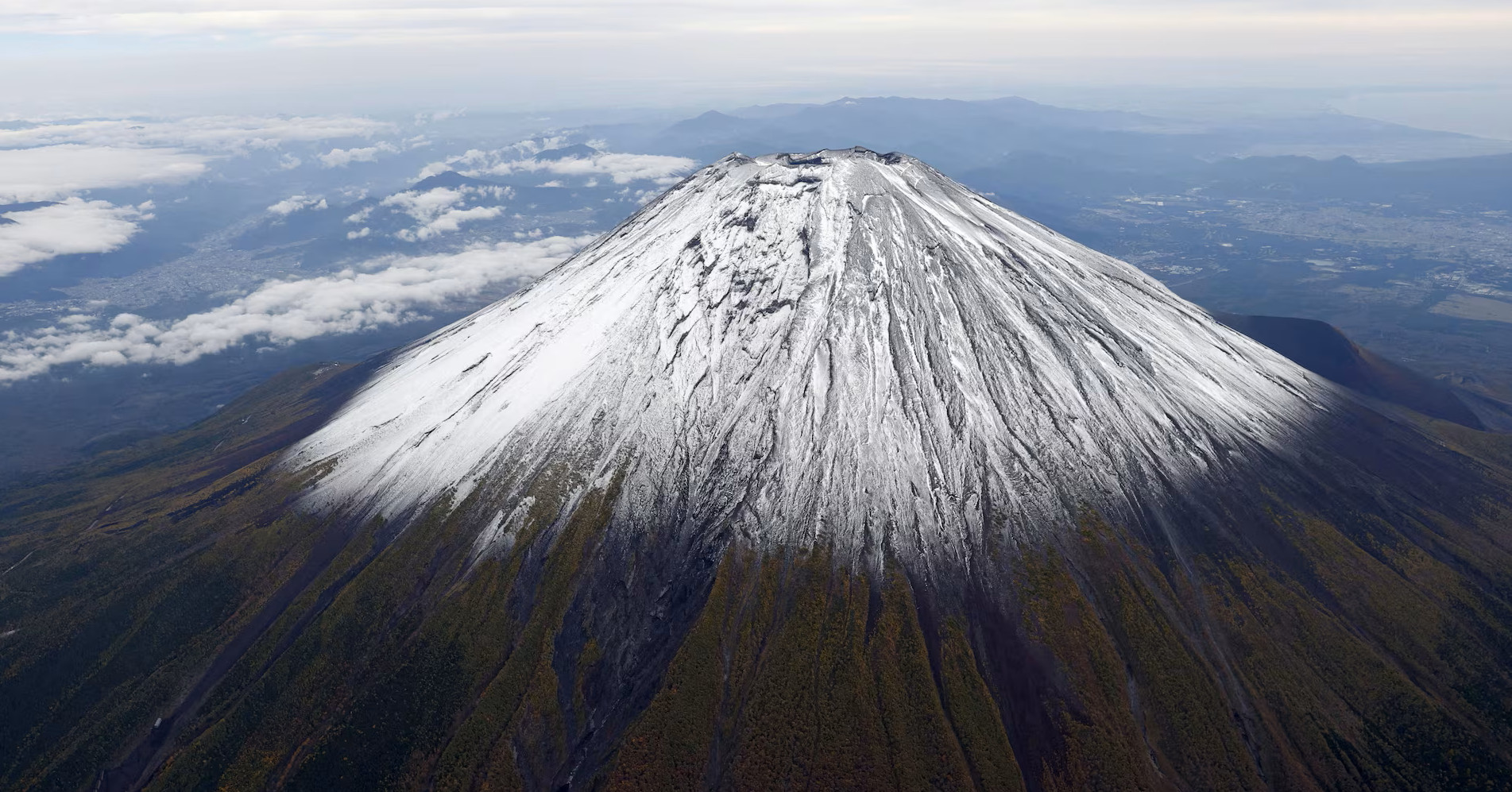
Fuji's summit stays snow-covered for roughly five months of the year, with the seasonal snowcap typically beginning to form around early October and lingering into the following spring or early summer. That leaves a narrow official climbing season, running from early July to mid-September, when mountain huts, first-aid stations, and other trail infrastructure actually operate — climbing outside this window is technically possible but considerably more dangerous, without support facilities and with a higher risk of severe weather.
Despite that narrow window, the mountain draws enormous crowds during peak season: roughly 300,000 people climbed Fuji in a single recent year, concentrated almost entirely within those ten or so weeks, creating congestion on the most popular trails and prompting local authorities to introduce new management measures.
Climbers can choose among four official trails, each starting at a different altitude and offering a different balance of accessibility and difficulty. The Yoshida Trail, starting around 2,300 meters, is by far the most popular route and has the most mountain huts along its length, making it the default choice for first-time climbers; a full ascent takes up to six hours. Fujinomiya offers the shortest climb from its 2,400-meter starting point, Subashiri splits off from Yoshida partway up, and Gotemba, starting lowest at 1,400 meters, is both the longest and least crowded of the four, with an ascent that can take up to seven and a half hours.
Mountain huts along the routes, especially on Yoshida, allow climbers to rest partway up and time their final push to reach the summit for sunrise — a moment known in Japanese as goraiko, considered by many climbers the entire point of a night ascent. Advance hut reservations have become essential rather than optional in recent years, and entry to the upper mountain between 2 PM and 3 AM is now restricted for climbers without a confirmed hut booking, a rule introduced to reduce dangerous overnight "bullet climbing" without rest.
Fuji's popularity has increasingly strained both the mountain's infrastructure and its environment, prompting new regulatory measures in recent years. Starting in 2024, Yamanashi prefecture introduced a mandatory 2,000 yen entry fee alongside a daily cap of 4,000 hikers on the Yoshida Trail specifically — the mountain's busiest route — an attempt to manage overcrowding, trail erosion, and safety incidents involving underprepared climbers attempting the ascent without adequate gear or acclimatization.
Most climbers reach the trailheads via train connections from Tokyo: the Yoshida and Subashiri trails are accessed via the JR Chuo Line to Otsuki and then the Fujikyu Railway, Gotemba via the JR Tokaido Main Line to Kozu Station, and Fujinomiya via the Tokaido Shinkansen to Shin-Fuji Station. Tokyo's airports serve as the primary international gateway for essentially all climbing routes, with the mountain accessible as a long day trip or, more commonly for the standard overnight ascent, a one- or two-night trip built around a mountain hut stay.
Climbers should expect a real, demanding hike rather than a casual walk — proper footwear, layered clothing for rapidly changing mountain weather, and enough water and food for a multi-hour ascent are essential, and the 2026 season's ¥4,000 hiking fee and advance hut reservations are worth arranging well before arrival given how quickly peak-season huts fill.
No reviews yet. Be the first to share your experience!
Share your experience and help other travelers