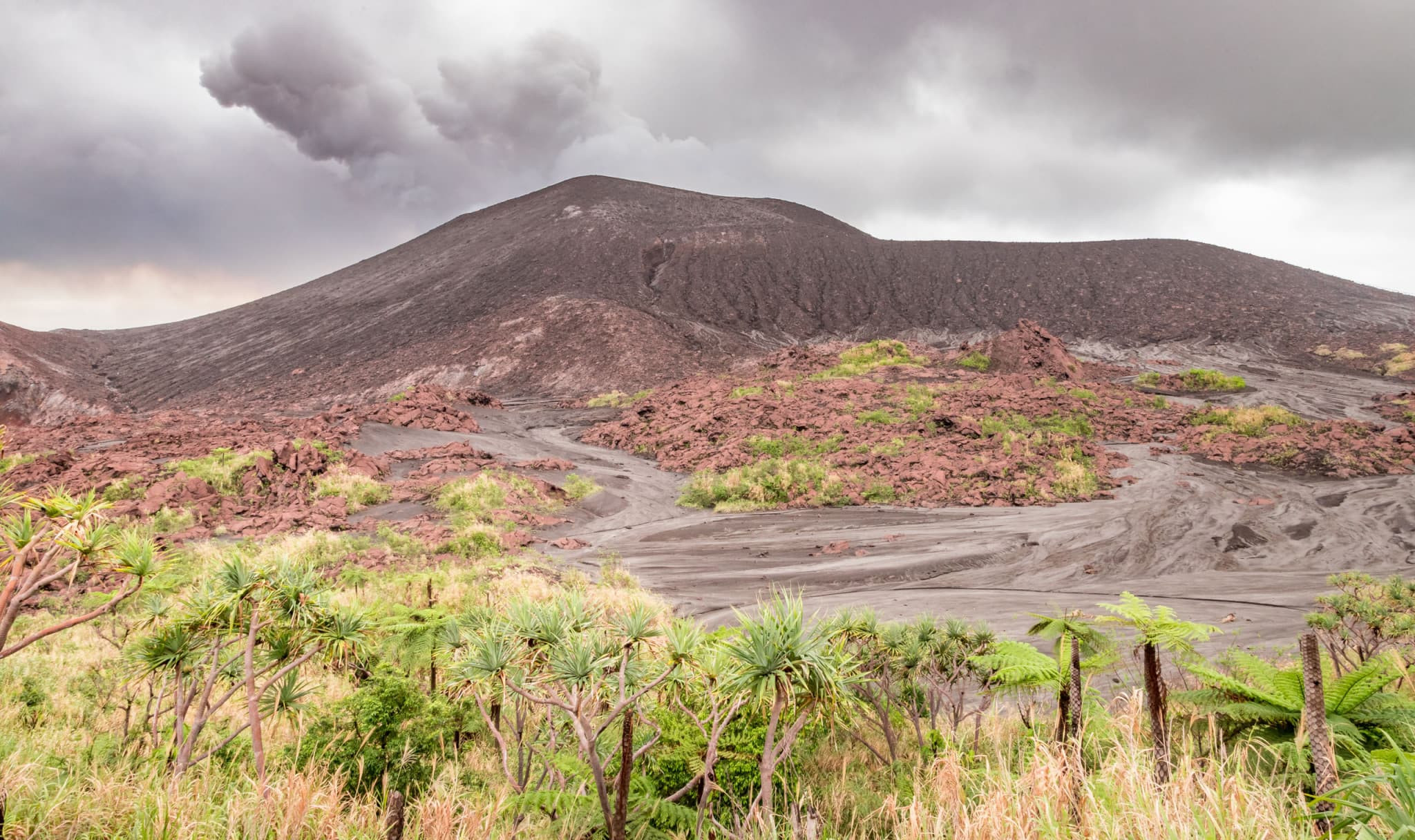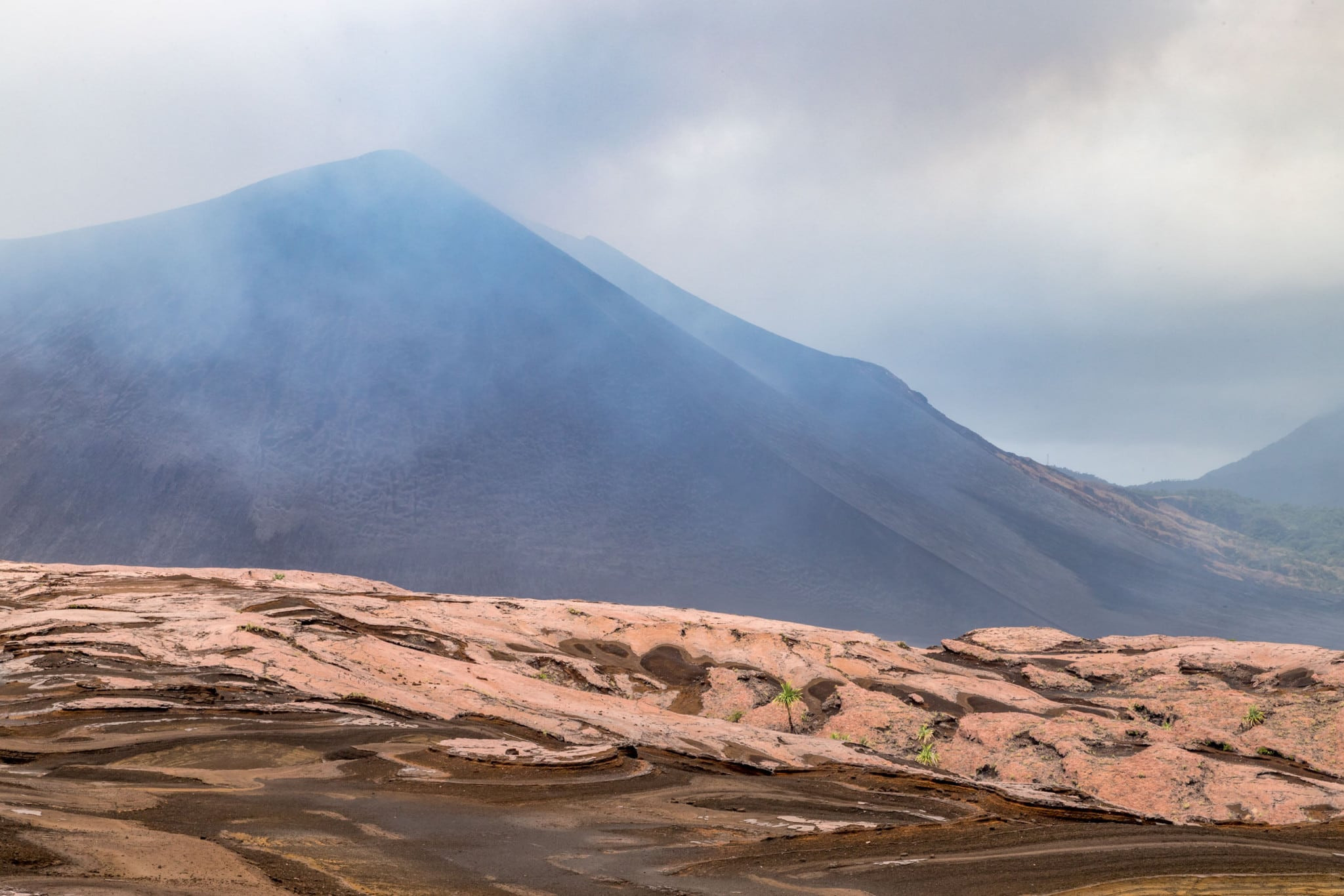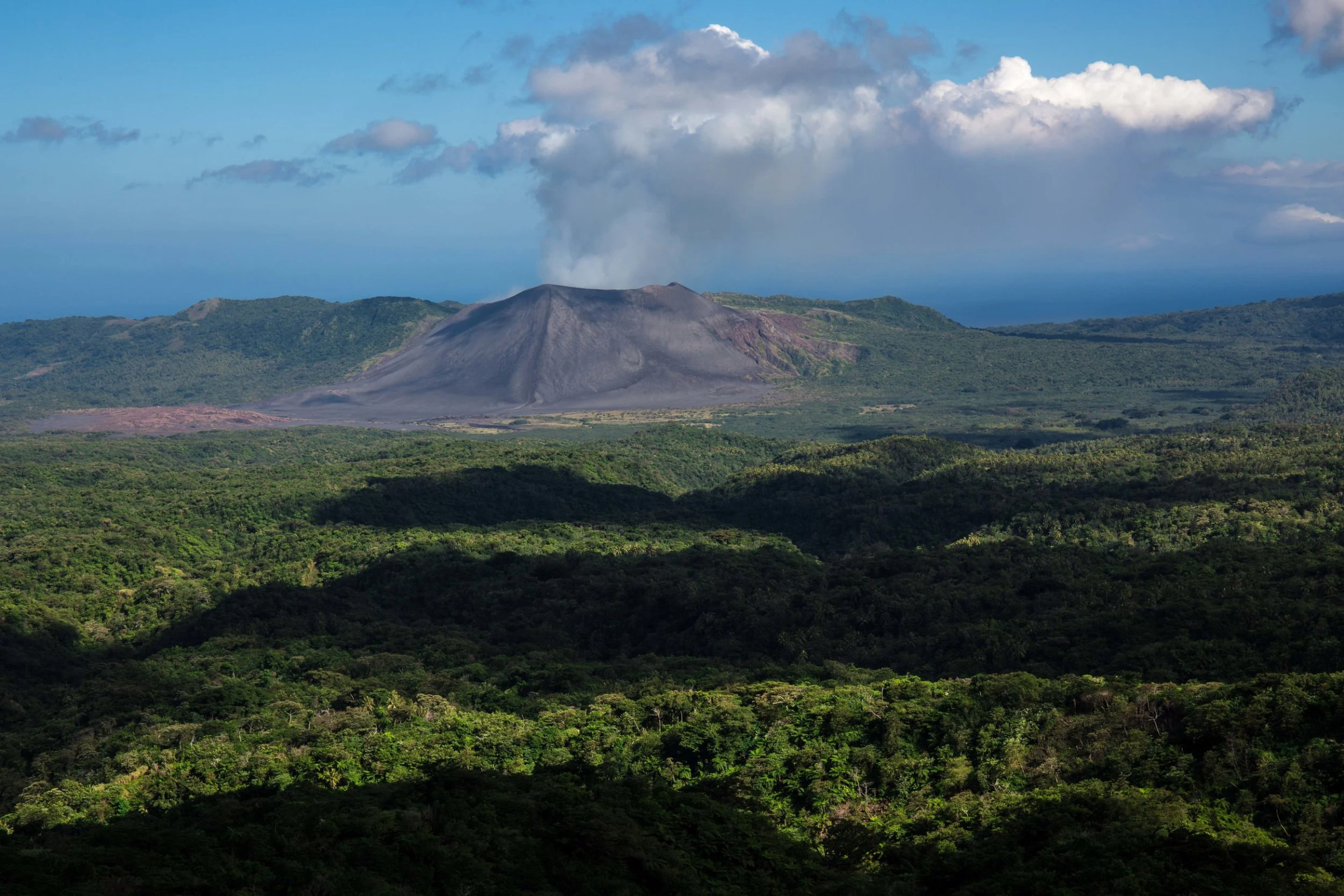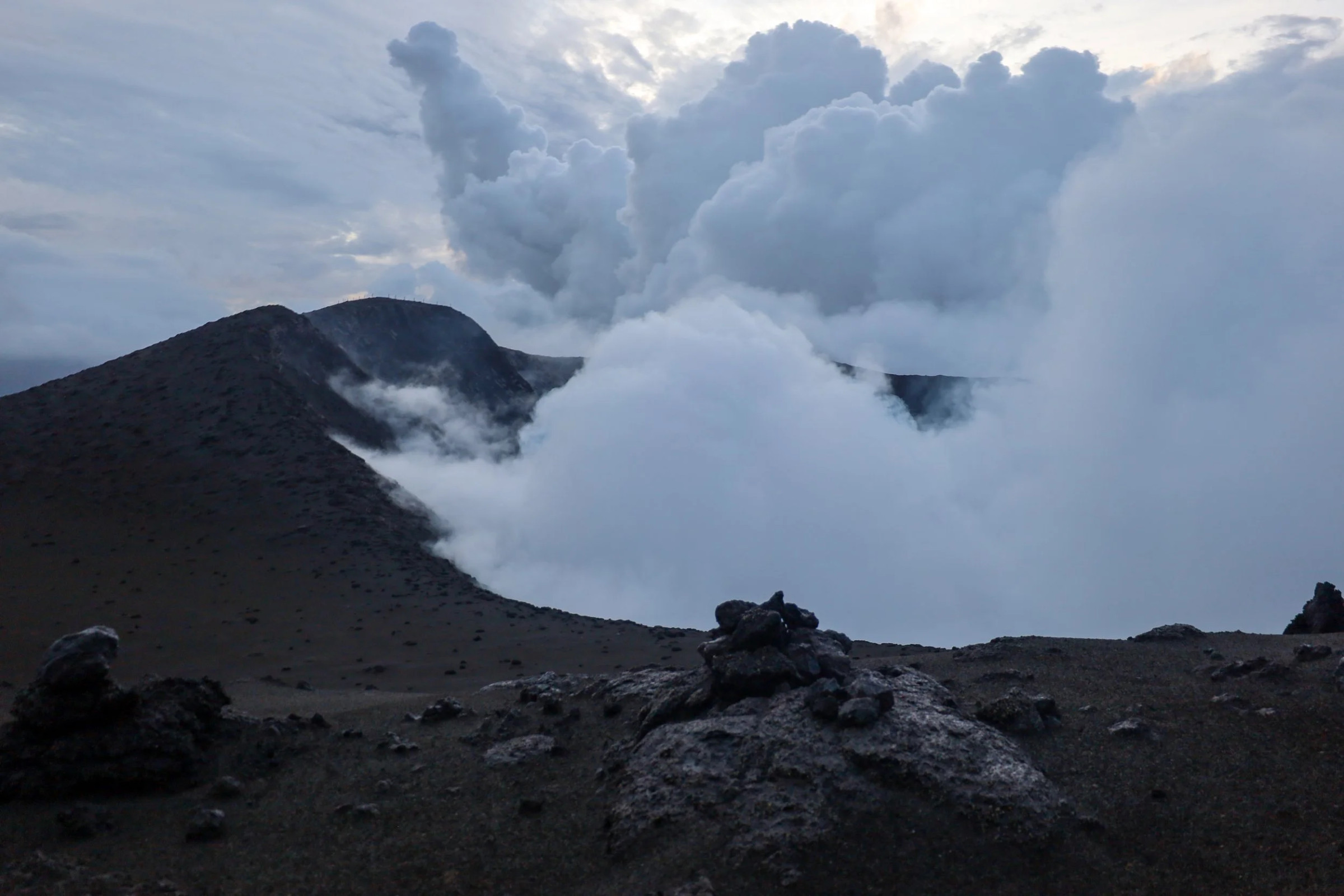
Mount Yasur rises 361 meters on Tanna Island in Vanuatu's southern archipelago, a modestly sized stratovolcano that has erupted almost continuously for at least 800 years, making it one of the most reliably active, easily observed volcanoes anywhere on Earth. Unlike most active volcanoes, which require significant hiking or specialized access to approach safely, Yasur's crater rim can be reached by a relatively short walk, or even a vehicle track partway up, putting visitors remarkably close to genuine, ongoing eruptive activity within the same day they arrive on the island.
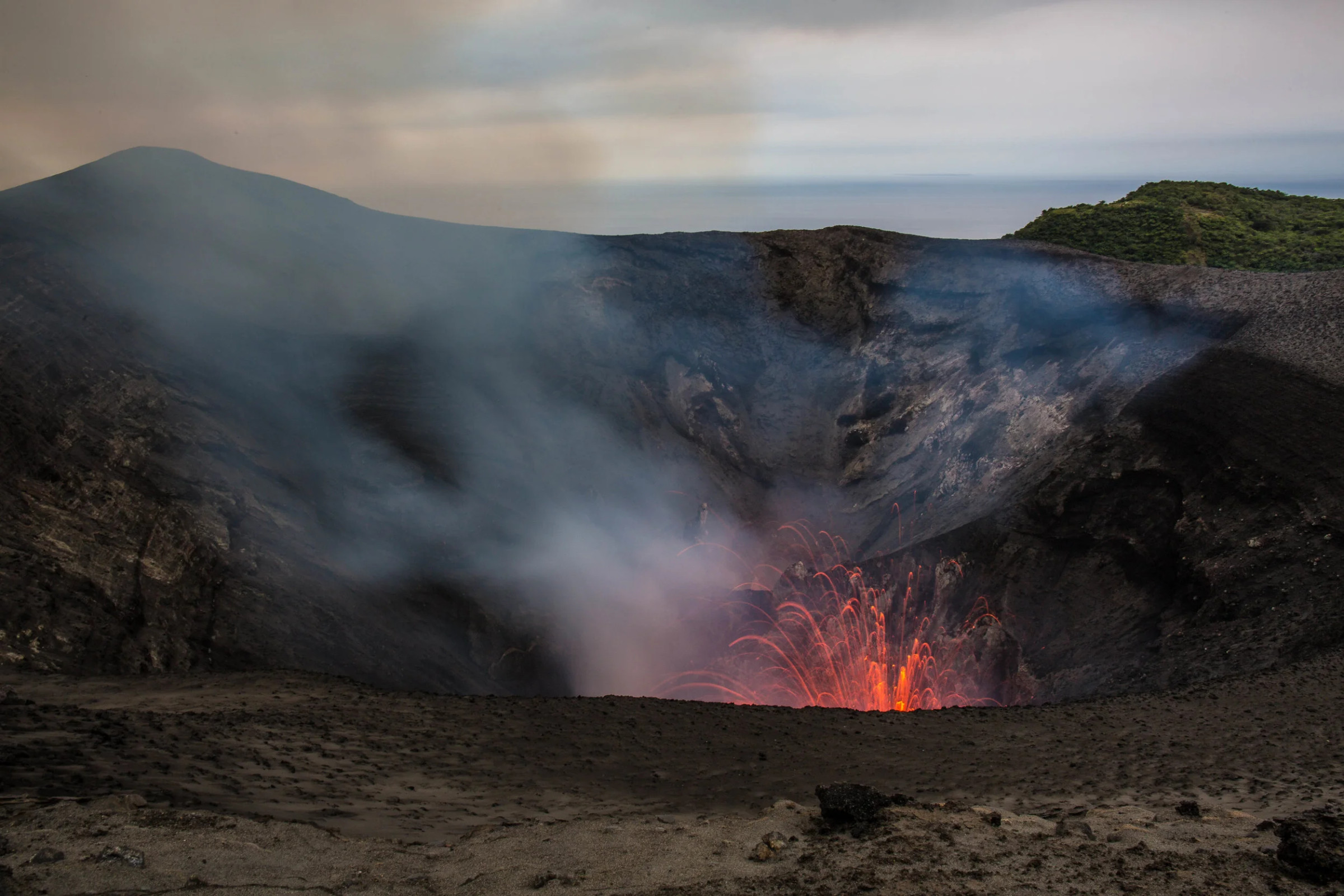
Eruptions at Yasur occur frequently, sometimes every few minutes, ranging from small ash and gas emissions to more dramatic explosions throwing incandescent lava bombs visibly into the air, particularly striking after dark when the glow and trajectory of ejected material become clearly visible against the night sky from the crater rim viewing area.
Yasur's characteristic eruption style, known volcanologically as Strombolian activity, involves relatively small, rhythmic bursts of gas-propelled lava rather than the massive, unpredictable explosions associated with more violent volcanic eruption types, a pattern that has made it one of the most studied and, relatively speaking, predictable active volcanoes for both scientists and tourists. This persistent, moderate activity level is precisely what allows guided visits to the crater rim at all, though volcanic activity does periodically intensify, prompting temporary access restrictions or closures when conditions become genuinely hazardous.
Volcanologists maintain ongoing monitoring equipment on Yasur specifically because its frequent, observable activity offers unusually good research opportunities to study Strombolian eruption mechanics in real time, insights that inform broader understanding of similar volcanic systems elsewhere in the world that are harder or more dangerous to observe this closely.
Local Ni-Vanuatu communities on Tanna, including the Yakel village near the volcano's base, regard Yasur as spiritually significant, home to ancestral spirits and traditional beliefs woven deeply into local culture, and access to the volcano remains managed in cooperation with these communities rather than purely through government park administration. Visitors typically pay an access fee that flows directly to local landowning communities, a model that has helped ensure the volcano's tourism economy benefits Tanna's traditional villages rather than bypassing them entirely.
Traditional Kastom culture remains strong on Tanna, with several communities, including Yakel, maintaining traditional dress and customs largely independent of Western influence, and cultural visits to nearby villages are frequently combined with a Yasur excursion, giving travelers exposure to both a rare geological phenomenon and a genuinely distinct living culture within the same trip.
British explorer Captain James Cook became the first European to document Mount Yasur during his 1774 Pacific voyage, noting the volcano's glow visible from his ship offshore, an early written record that later helped establish Yasur's reputation among Western scientists and travelers as an unusually persistent and visible active volcanic system. Cook's brief account predates any detailed volcanological study by well over a century, but it remains a frequently cited historical reference point in discussions of the volcano's long, well-documented eruptive history.
Since Cook's era, Yasur has continued erupting with little meaningful pause, giving it one of the longest continuously observed eruption records of any volcano on the planet, a distinction that has only reinforced its scientific and tourism significance over the intervening two and a half centuries.
Author James Michener, stationed in Vanuatu, then the New Hebrides, during World War II, is widely believed to have drawn on Mount Yasur's dramatic nighttime eruptions as inspiration for elements of his short story collection "Tales of the South Pacific," later adapted into the famous Broadway musical and film "South Pacific." While Michener never explicitly confirmed Yasur as a direct model, the volcano's visibility and drama during the wartime Pacific campaign made it a recognizable landmark to Allied personnel stationed in the region, adding a layer of 20th-century cultural resonance to a site already ancient in local significance.
This literary connection, though somewhat informal and undocumented in Michener's own writing, has become part of Yasur's broader popular reputation, occasionally referenced in tourism materials promoting the volcano alongside its more strictly geological credentials.
Vanuatu sits along the Pacific Ring of Fire, hosting several active volcanoes across its island chain, and the country ranks among the most disaster-vulnerable nations on Earth according to various global risk indices, facing combined threats from volcanic activity, cyclones, and earthquakes given its location along active tectonic boundaries. Yasur's relatively stable, moderate activity level makes it something of an exception among the country's volcanic hazards, most of which are considerably less predictable or safely observable than this particular site.
Other Vanuatu volcanoes, including Ambrym and the more remote Manaro Voui on Ambae, have required significant evacuations in recent decades due to more violent or unpredictable eruptive activity, underscoring how unusual Yasur's combination of frequent activity and relative visitor accessibility genuinely is even within its own volcanically active home country.
Most visitors reach Tanna Island by small domestic flight from Vanuatu's capital, Port Vila, followed by a vehicle transfer across the island to Yasur's base, where a combination of driving and a short walking trail leads to designated crater rim viewing platforms. Evening visits are particularly popular, since eruptions and lava trajectories become dramatically more visible against a dark sky, though access is always subject to current volcanic activity levels and safety assessments made by local guides and monitoring authorities on any given day.
Sturdy closed shoes, warm layers for the exposed, windy crater rim, and a willingness to accept that access can be restricted on short notice given genuine volcanic hazard are all practical realities of visiting one of the few active volcanoes in the world where witnessing real eruptions this closely is a realistic, near-daily possibility rather than a rare stroke of luck.
Mount Yasur's combination of near-continuous, relatively predictable activity, deep cultural significance to Tanna's traditional communities, and a documented history stretching back to Captain Cook's 18th-century voyage make it one of the most remarkable active volcanoes accessible to ordinary travelers anywhere on Earth. Few destinations let visitors stand this close to genuine, unscripted volcanic activity while also engaging directly with a living culture that has coexisted with the volcano for countless generations.
Tanna Island's economy remains heavily dependent on subsistence agriculture, but Yasur tourism has become an increasingly important secondary income source for surrounding communities, supplemented by small guesthouses, local guiding services, and handicraft sales tied directly to volcano visits. This economic reliance adds real weight to how carefully local landowners and Vanuatu's geo-hazards authorities balance visitor access against safety, since a serious eruption-related incident would carry consequences well beyond the immediate area, potentially undermining a tourism model that a meaningful share of the island's population now depends on at least partially for income.
That balance, between welcoming visitors close enough to witness genuinely rare volcanic activity and protecting both those visitors and Tanna's own communities from an unpredictable natural hazard, remains an ongoing, actively managed negotiation rather than a settled arrangement, reassessed continuously as Yasur's activity levels shift from week to week.
No reviews yet. Be the first to share your experience!
Share your experience and help other travelers