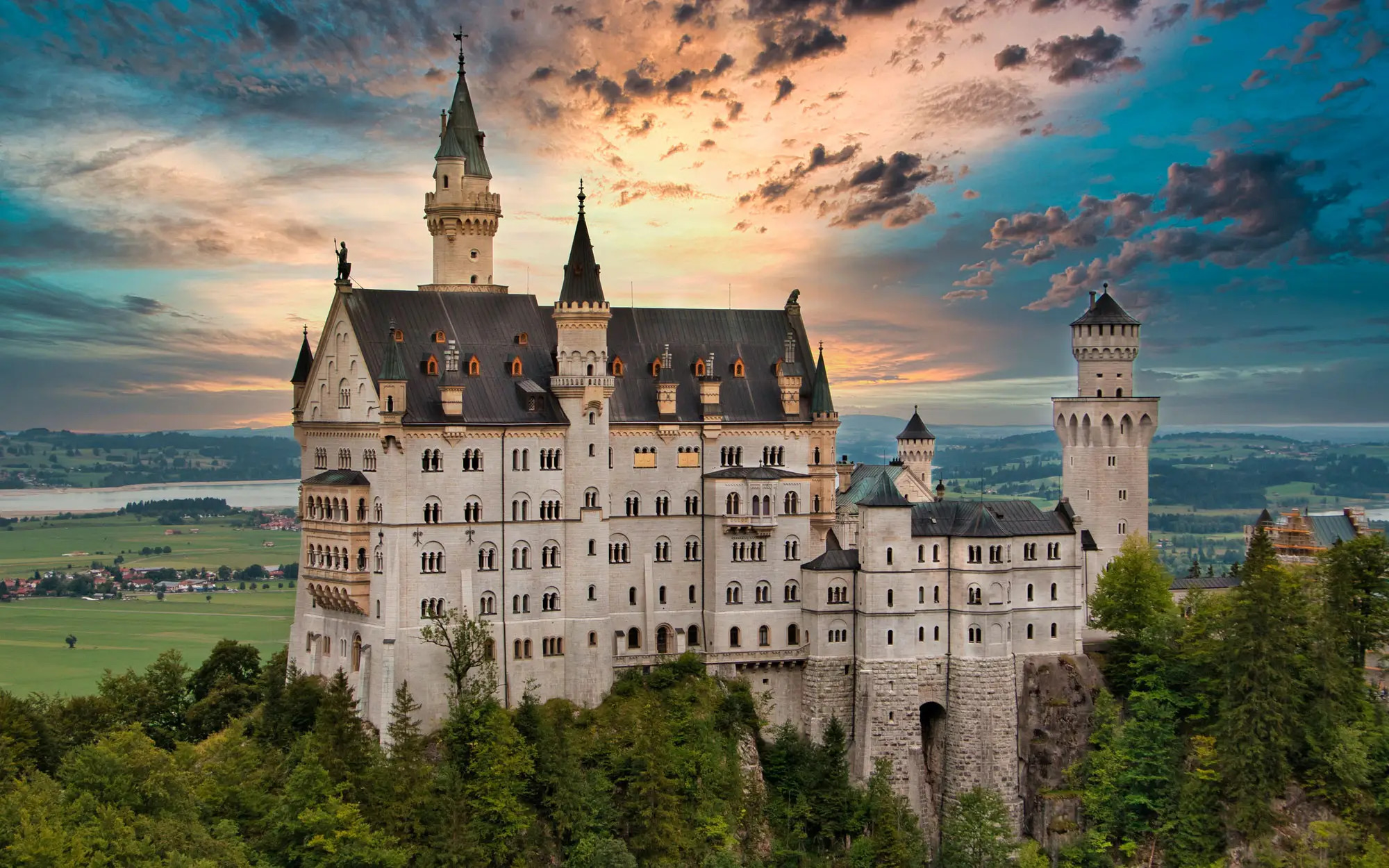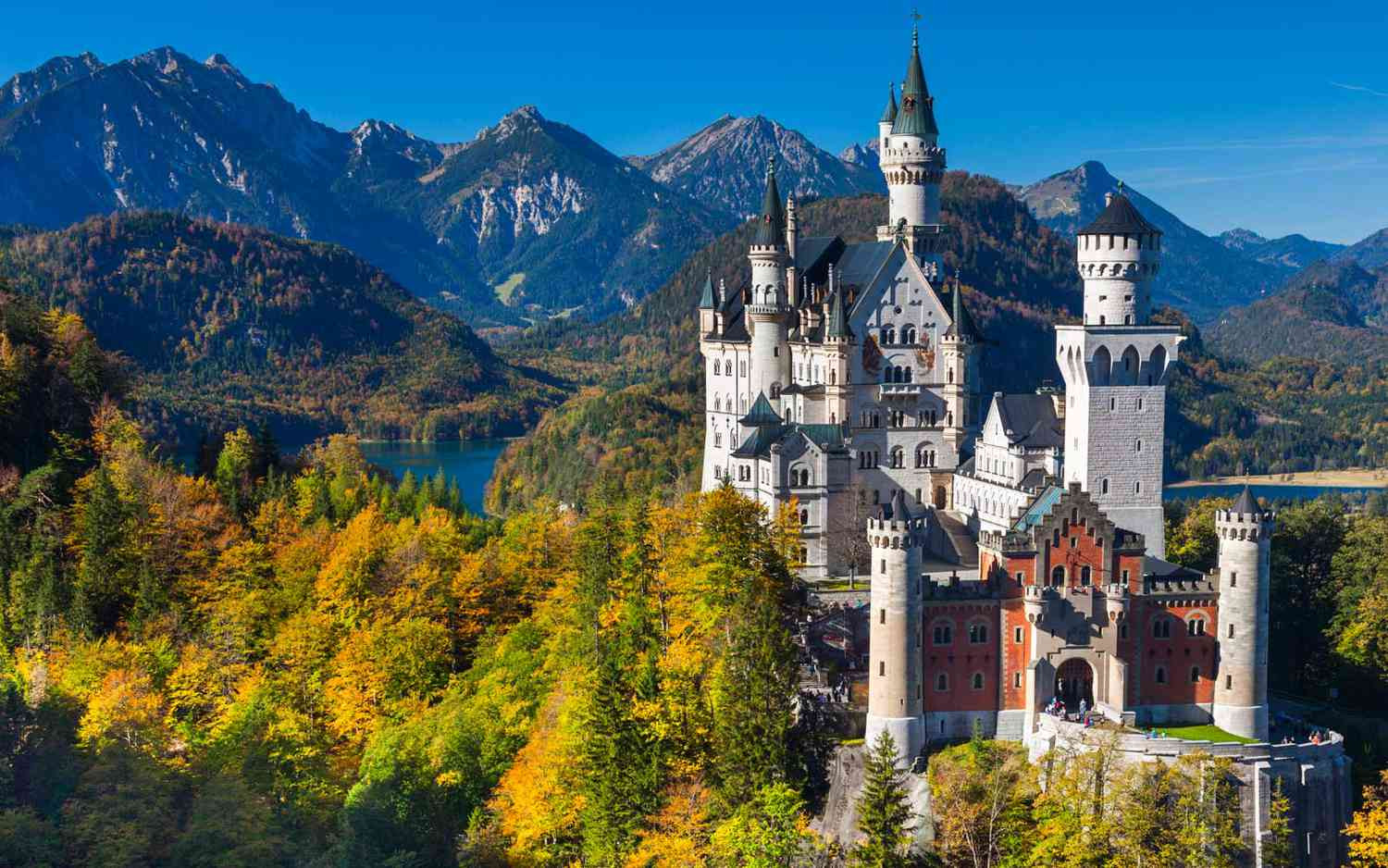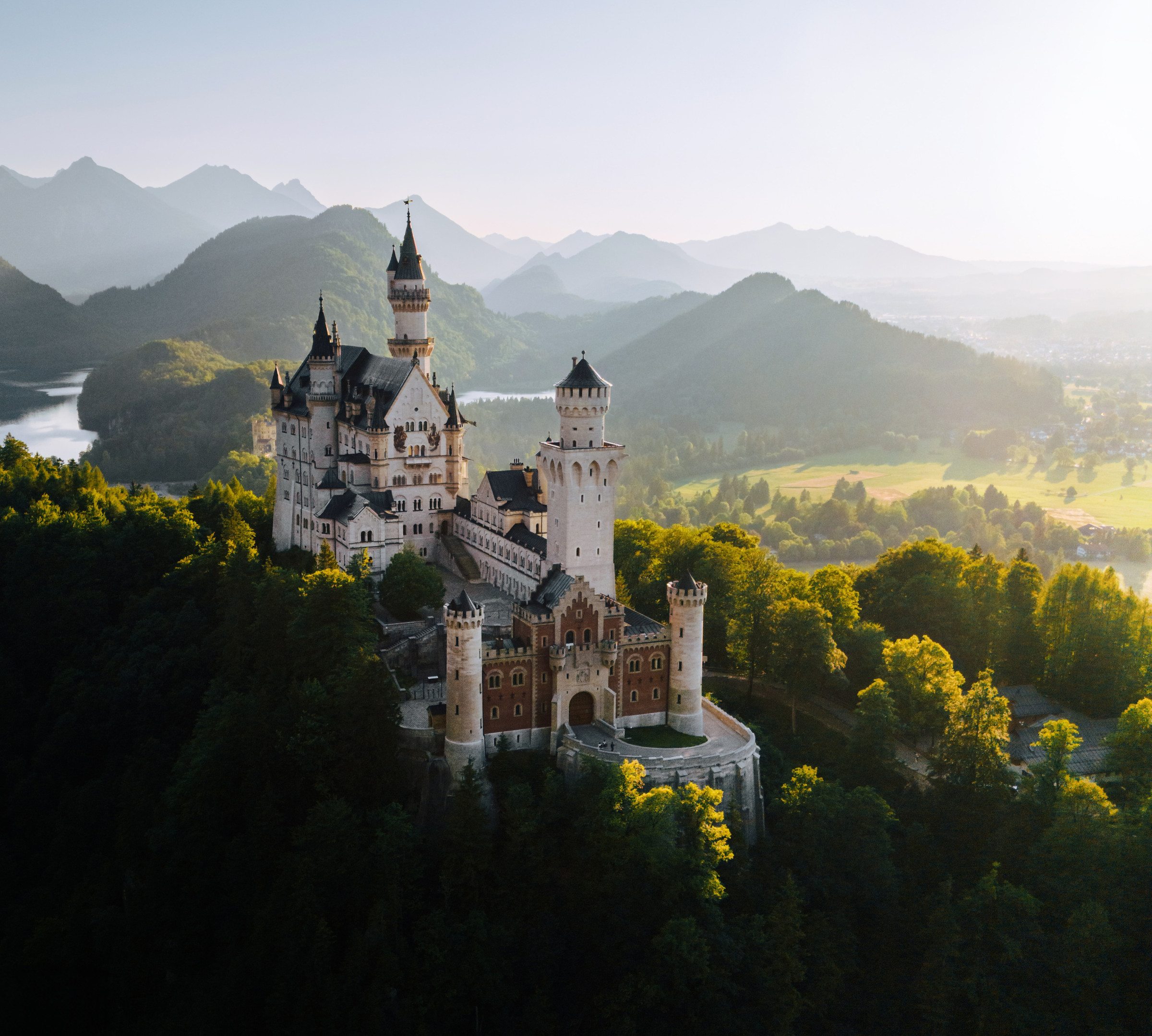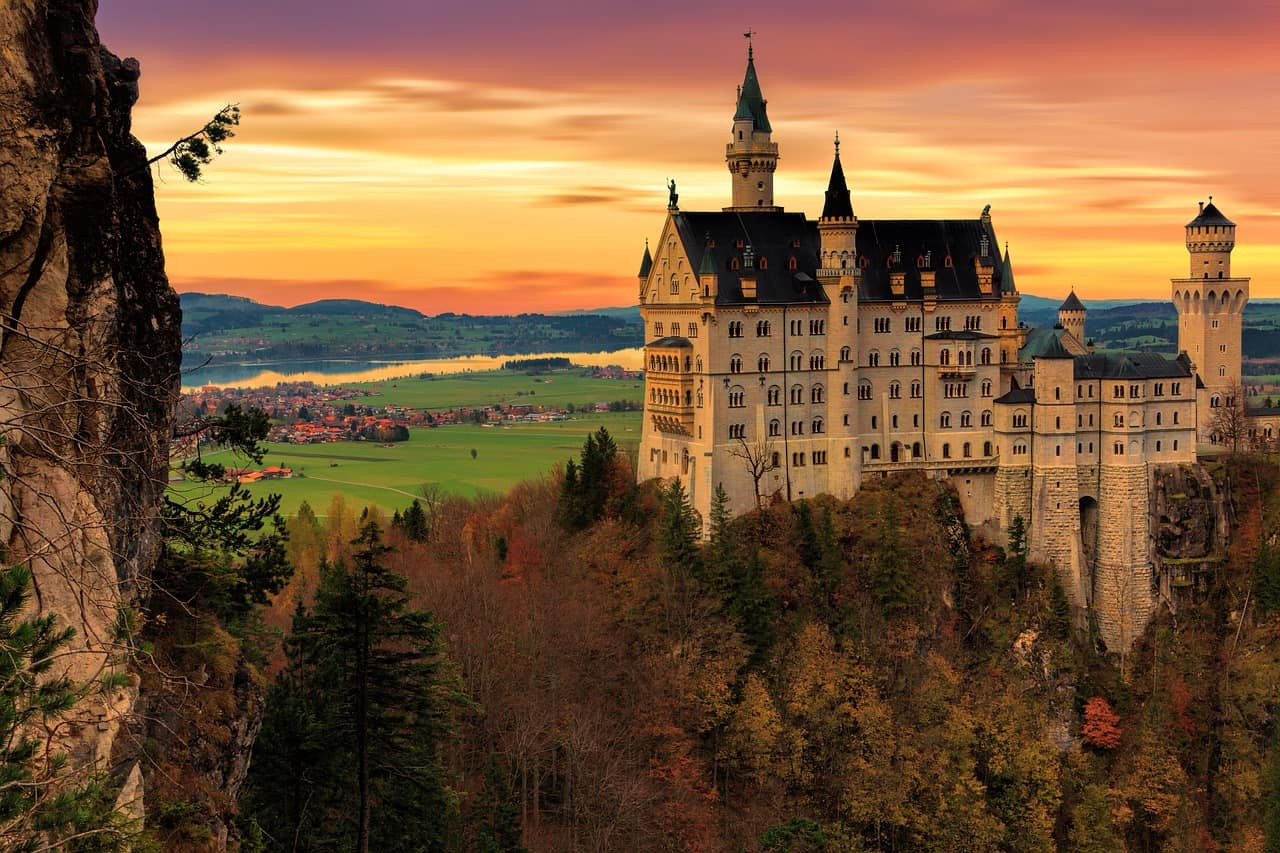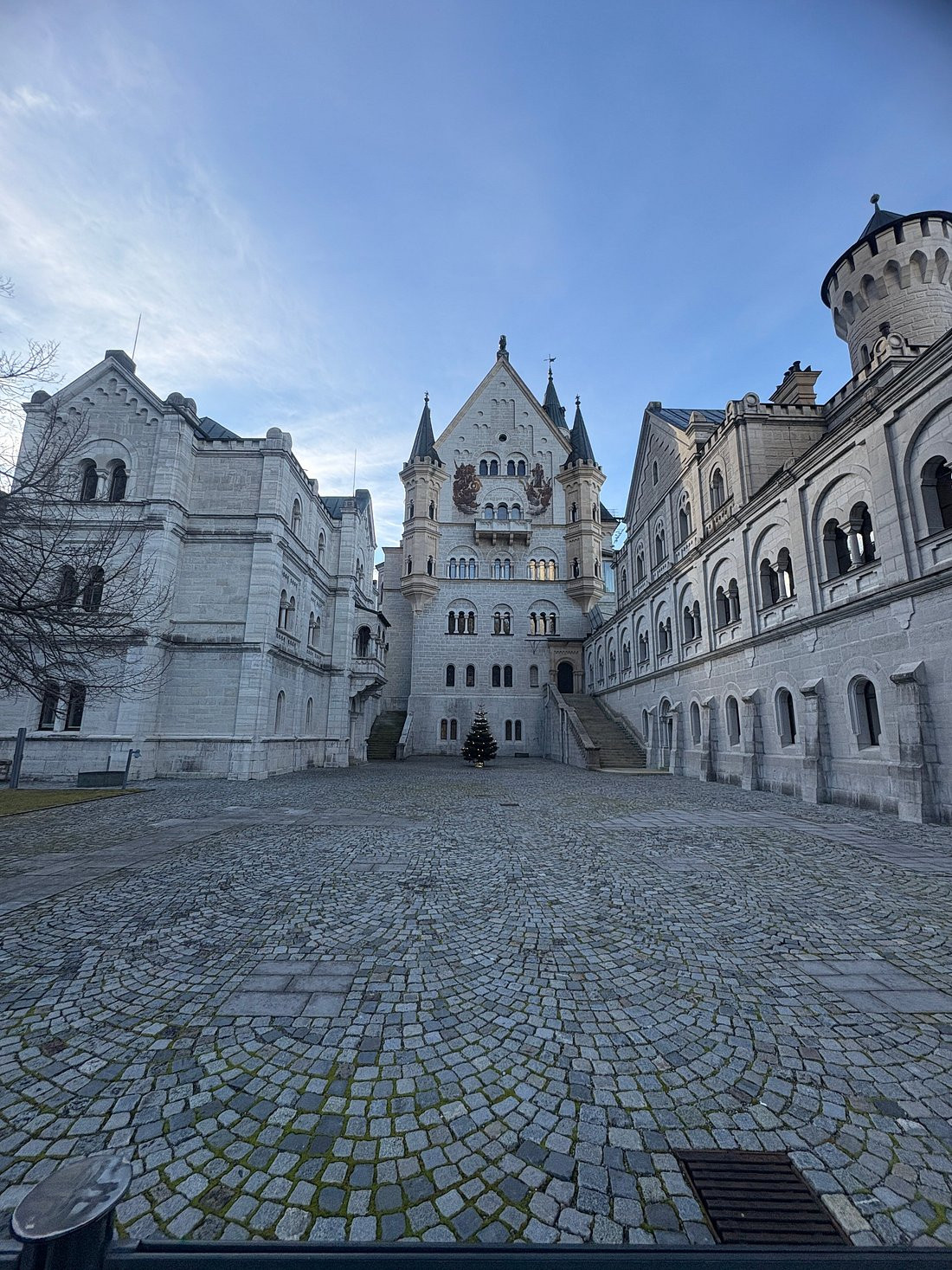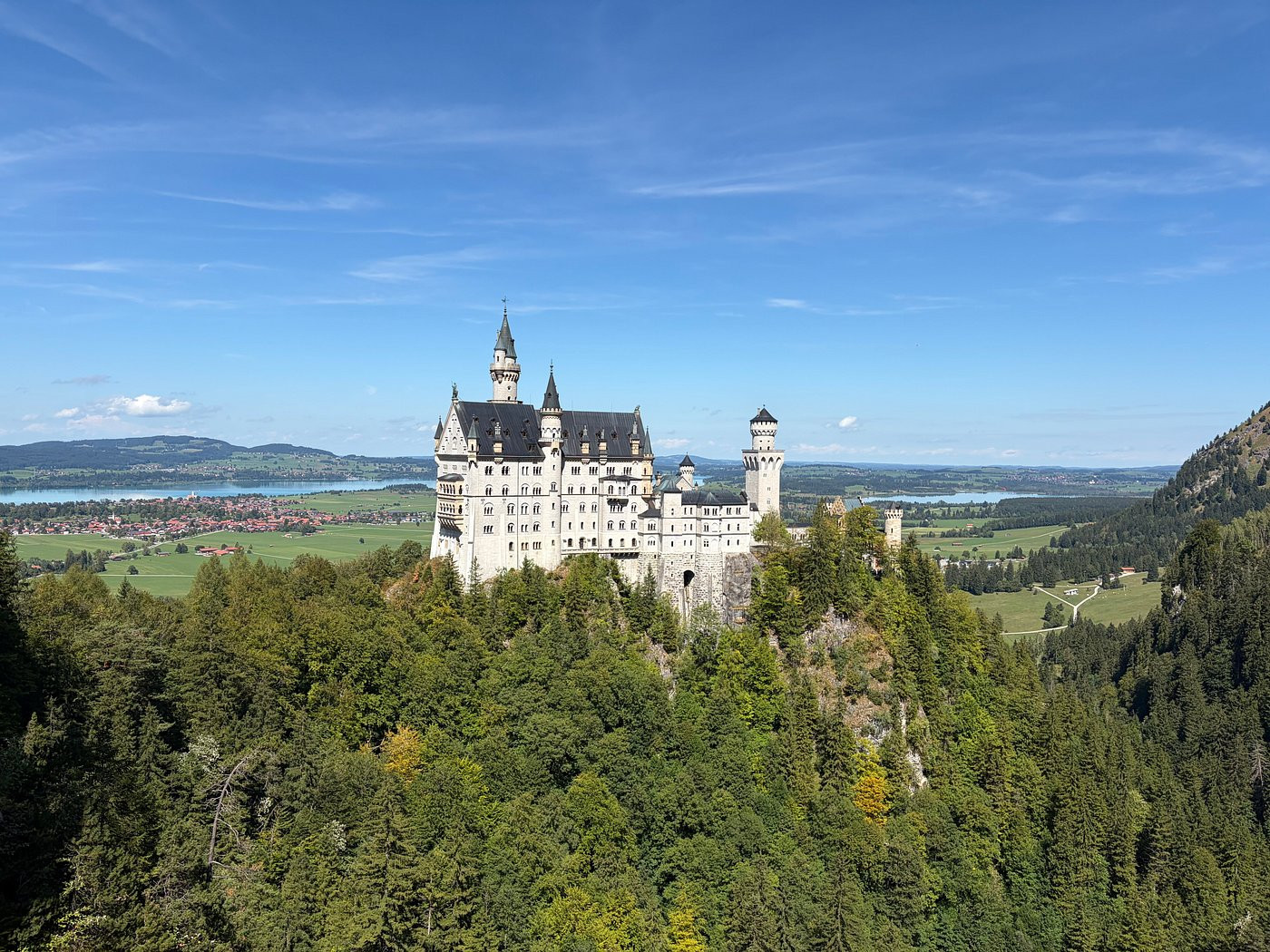
Neuschwanstein Castle rises from a rocky ridge above the Bavarian countryside near Füssen in southern Germany, its slim white towers and steep turrets forming a silhouette so closely associated with the popular idea of a fairy-tale castle that it has become one of the most recognizable buildings in the world despite never having served any genuine defensive or governmental purpose. King Ludwig II of Bavaria commissioned the castle not as a functioning royal residence in the traditional sense but as an intensely personal retreat, a private architectural fantasy built to Ludwig's own idiosyncratic vision at a moment when the Bavarian monarchy's real political power was already fading within the broader unification of the German Empire. Construction began on September 5, 1869, and continued for more than two decades, though the scale of Ludwig's ambitions meant that even this extended building period was not enough to see the project through to full completion during his lifetime.
Despite its deliberately medieval visual language, Neuschwanstein was built using thoroughly modern nineteenth-century construction techniques and materials hidden beneath its historicist exterior, a combination that places it within a broader European tradition of Romantic-era castles designed to evoke an idealized past rather than to authentically replicate it. The architectural style blends Romanesque elements, including simple geometric forms and semicircular arches, with Gothic features such as steep upward lines and slender, ornamented towers, layered with Ludwig's own idiosyncratic additions and, notably, some genuinely innovative building technology for its era, including a sophisticated central heating system and running water on every floor, features considered remarkably advanced for a private residence of the period even as the building's overall aesthetic looked deliberately backward toward a romanticized medieval Bavaria that had never actually existed in quite the form Ludwig imagined.
Ludwig's devotion to the composer Richard Wagner shaped Neuschwanstein's design and decoration to an unusual degree, with the king dedicating the castle to Wagner and filling its interior with imagery drawn directly from the composer's operas, including Tannhäuser, Lohengrin, and Parsifal, whose themes of medieval knighthood, chivalric quest, and swan symbolism run throughout the castle's murals and decorative program. This deep personal and artistic connection reflected a broader pattern in Ludwig's reign, during which he became known as an enthusiastic patron of Wagner's work even as his personal fascination with the composer's operatic vision of medieval Germanic legend increasingly shaped his own architectural and aesthetic choices, most visibly at Neuschwanstein but also at his other extravagant royal building projects elsewhere in Bavaria. The castle's very name, meaning New Swan Stone, directly references the swan imagery central to the Lohengrin legend that so captivated Ludwig throughout his adult life.
Ludwig himself lived at Neuschwanstein for only 172 days before his death in 1886 under circumstances that remain genuinely disputed, officially ruled a drowning but long surrounded by speculation about murder or a failed escape attempt following his controversial deposition on grounds of mental incapacity just days before his death. At the time of his death, the castle remained substantially incomplete, most notably lacking its planned 90-meter central keep, a tower intended to serve as the building's dominant architectural centerpiece but never built, leaving Neuschwanstein permanently frozen at a state of roughly fifteen finished interior rooms out of a much larger originally planned layout. This incompleteness, rather than diminishing the castle's appeal, has arguably added to its mystique, the building standing today as a monument as much to an unrealized royal vision as to whatever portions actually reached completion before Ludwig's death brought the project to an abrupt and permanent halt.
Bavarian authorities opened Neuschwanstein to public visitors remarkably quickly after Ludwig's death, beginning tours just weeks later in 1886, a decision partly motivated by the Bavarian state's need to recoup some of the enormous construction costs Ludwig had incurred largely from his personal fortune and extensive borrowing rather than state funds. That decision to open the castle so soon after the king's death set the pattern for the following century and beyond, during which Neuschwanstein steadily grew into one of Europe's most visited historic buildings, drawing an estimated 60 million visitors by 2008 and continuing to welcome close to 1.5 million visitors annually in more recent years, a volume that has required Bavarian heritage authorities to manage access through mandatory guided tours lasting roughly 35 minutes rather than allowing the kind of unstructured wandering possible at less heavily visited historic sites.
Neuschwanstein's fairy-tale silhouette achieved a further layer of global recognition through its widely cited influence on Walt Disney's design teams, whose work on both Disneyland's Sleeping Beauty Castle and the later Cinderella Castle at Walt Disney World drew visibly on Neuschwanstein's steep towers and dramatic hilltop setting, cementing an already famous German royal folly as an indirect but unmistakable ancestor of some of the most recognizable structures in American theme park architecture. This connection has become part of how the castle is popularly understood internationally, with many visitors arriving already aware of the Disney association before learning the considerably stranger and more melancholy true story of the isolated, politically marginalized king who built the castle as an escape from a modernizing world he found increasingly uncongenial. The gap between the castle's popular image as a whimsical fairy-tale backdrop and its actual origin as the private retreat of a troubled, ultimately deposed monarch gives a Neuschwanstein visit an unexpectedly poignant undercurrent for visitors who dig even slightly beneath the postcard image.
Füssen, the nearest town, sits at the southern end of Germany's Romantic Road tourist route and serves as the practical base for most Neuschwanstein visits, with the castle itself reached by a walk or horse-drawn carriage ride up the hill from the valley below, or, for visitors wanting a distant view of the castle in its full dramatic setting, a short additional hike to Marienbrücke, a bridge spanning a gorge behind the castle that offers the classic photographic vantage point seen in most Neuschwanstein imagery. Munich, roughly two hours away by car or train, serves as the nearest major international airport and the most common base for day trips, and given the castle's enormous popularity, advance ticket booking is strongly recommended year-round, with summer weekends in particular seeing long queues for visitors who arrive without a pre-purchased timed entry ticket.
Neuschwanstein was not an isolated project but one of several extravagant building schemes Ludwig pursued during his reign, alongside Linderhof Palace and the unfinished Herrenchiemsee, each reflecting different facets of the king's fascination with earlier European monarchies and architectural traditions, from French Baroque grandeur to Byzantine and Moorish influences layered into interior rooms elsewhere in his portfolio. Taken together, these projects consumed such a substantial share of Ludwig's personal fortune and borrowed funds that his ministers eventually cited the mounting debt, alongside broader concerns about his withdrawal from state affairs, as part of the justification for his 1886 deposition on grounds of mental incapacity, a medical judgment that has been extensively debated by historians ever since given how directly it served the political interests of the ministers who orchestrated it. Neuschwanstein's survival and eventual transformation into Bavaria's most profitable heritage tourism asset stands as a genuinely ironic outcome for a project originally conceived purely as a private escape from public life, now visited by millions of people annually specifically because of the very public fascination Ludwig himself so deliberately tried to avoid.
No reviews yet. Be the first to share your experience!
Share your experience and help other travelers