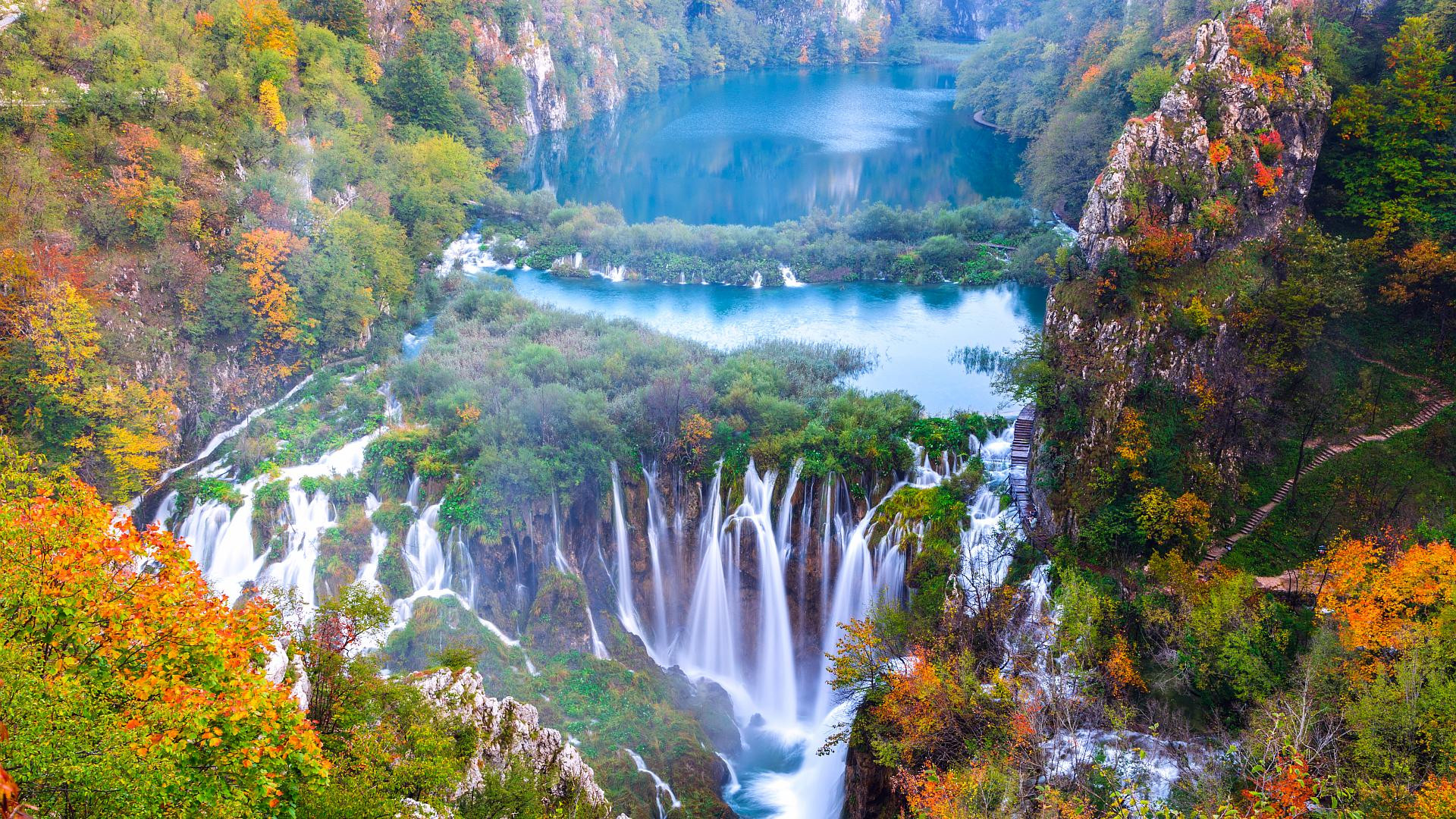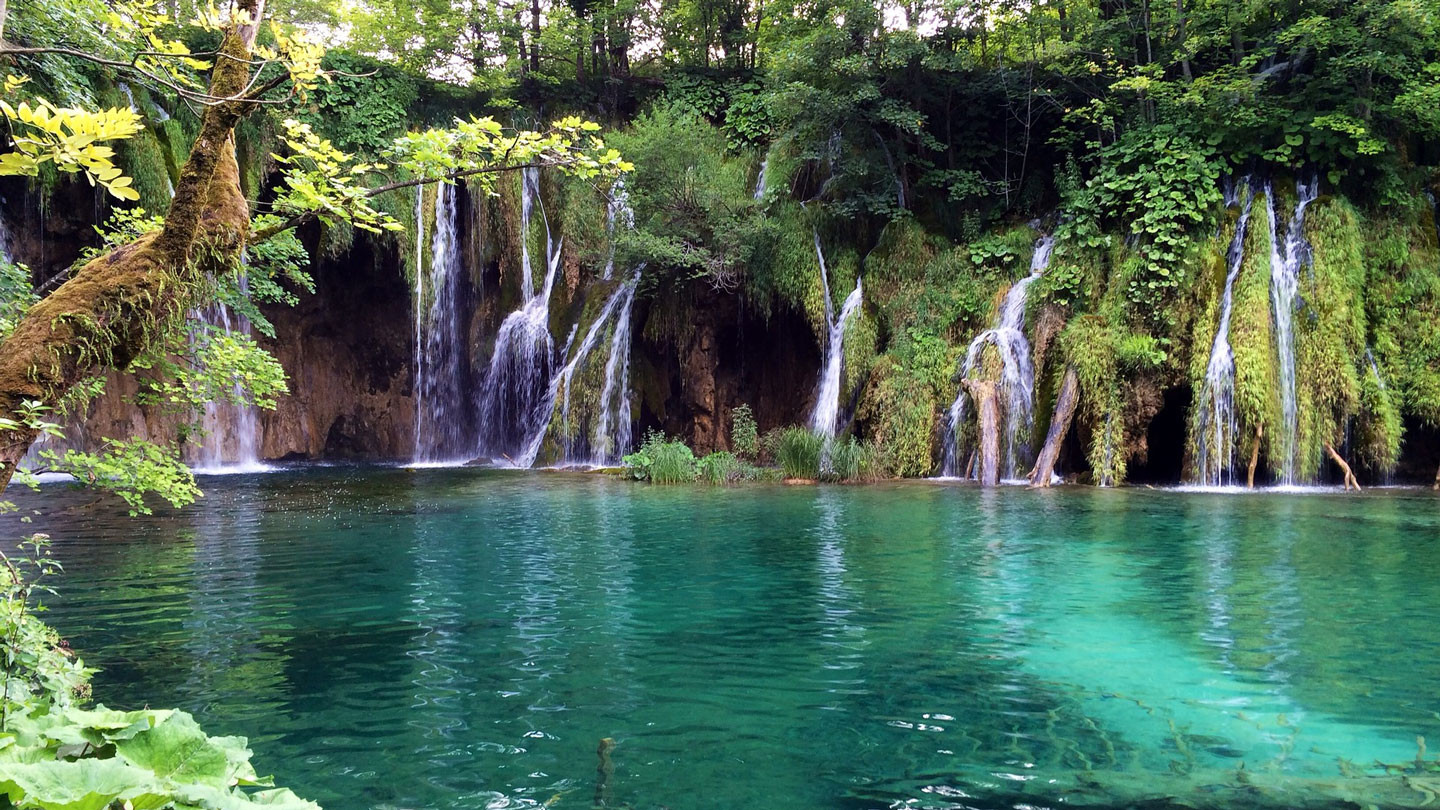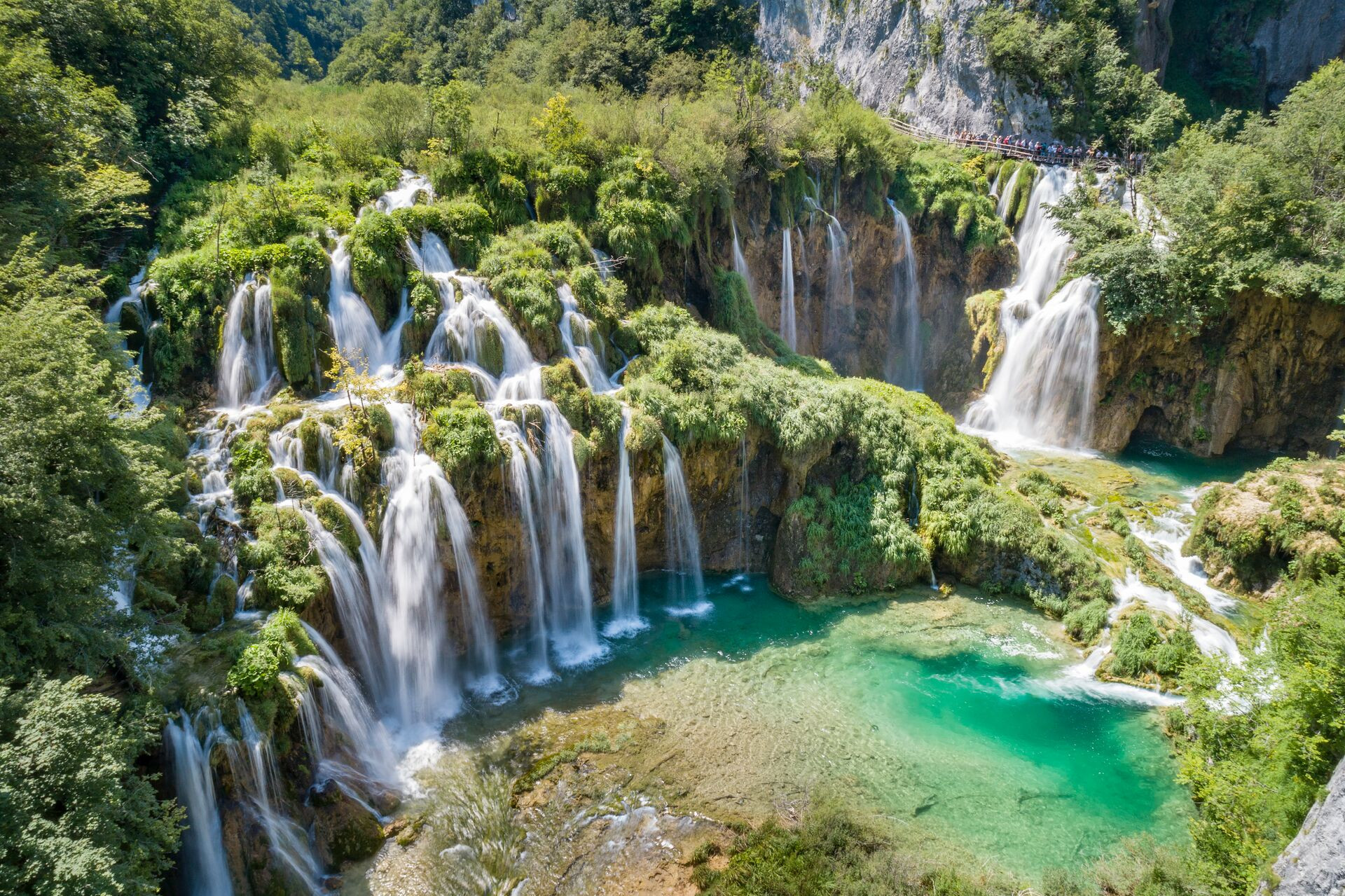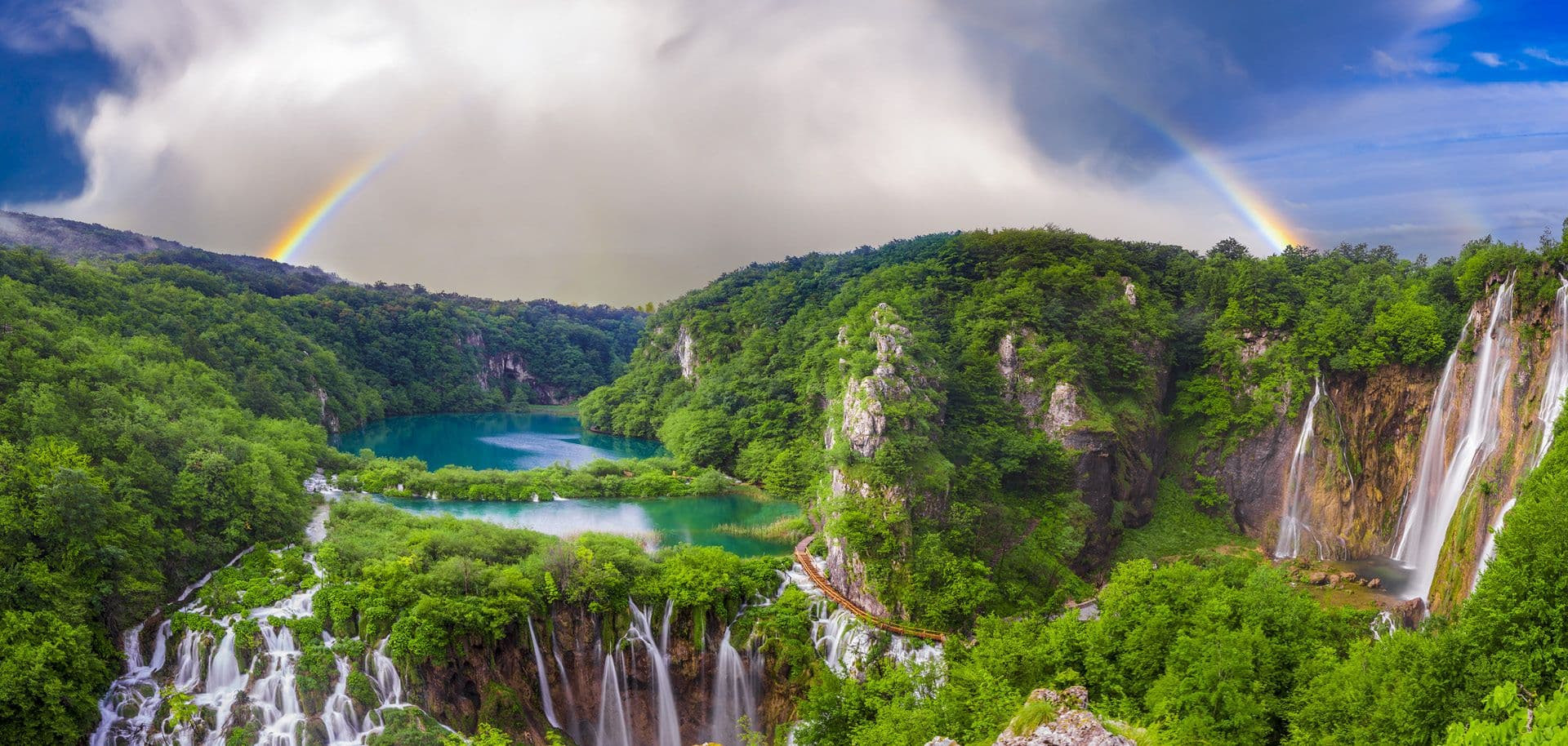
Tucked into the karst mountains of central Croatia, this cascading system of lakes owes its existence to a process still happening today. Sixteen named lakes step down through a forested valley, connected by dozens of waterfalls, but the barriers separating them aren't ordinary rock — they're travertine, a porous limestone deposit built up over thousands of years by moss, algae, and bacteria that pull dissolved calcium carbonate out of the water and lock it into place. The result is a landscape that is, quite literally, still under construction: travertine barriers here can grow by as much as 13 millimeters a year, meaning the lakes' shapes and waterfalls are slowly and continuously reshaping themselves.
The lake system as it exists today began forming roughly 12,000 to 15,000 years ago, as glaciers retreated at the end of the last ice age and mineral-rich water began flowing through the region's limestone bedrock. Sediment core samples from the largest lake, Kozjak, show the lakebed has been building up at a rate of less than a millimeter a year over the past 3,000 years, a pace of change almost imperceptible on a human timescale but responsible for one of the most distinctive landscapes in Europe.
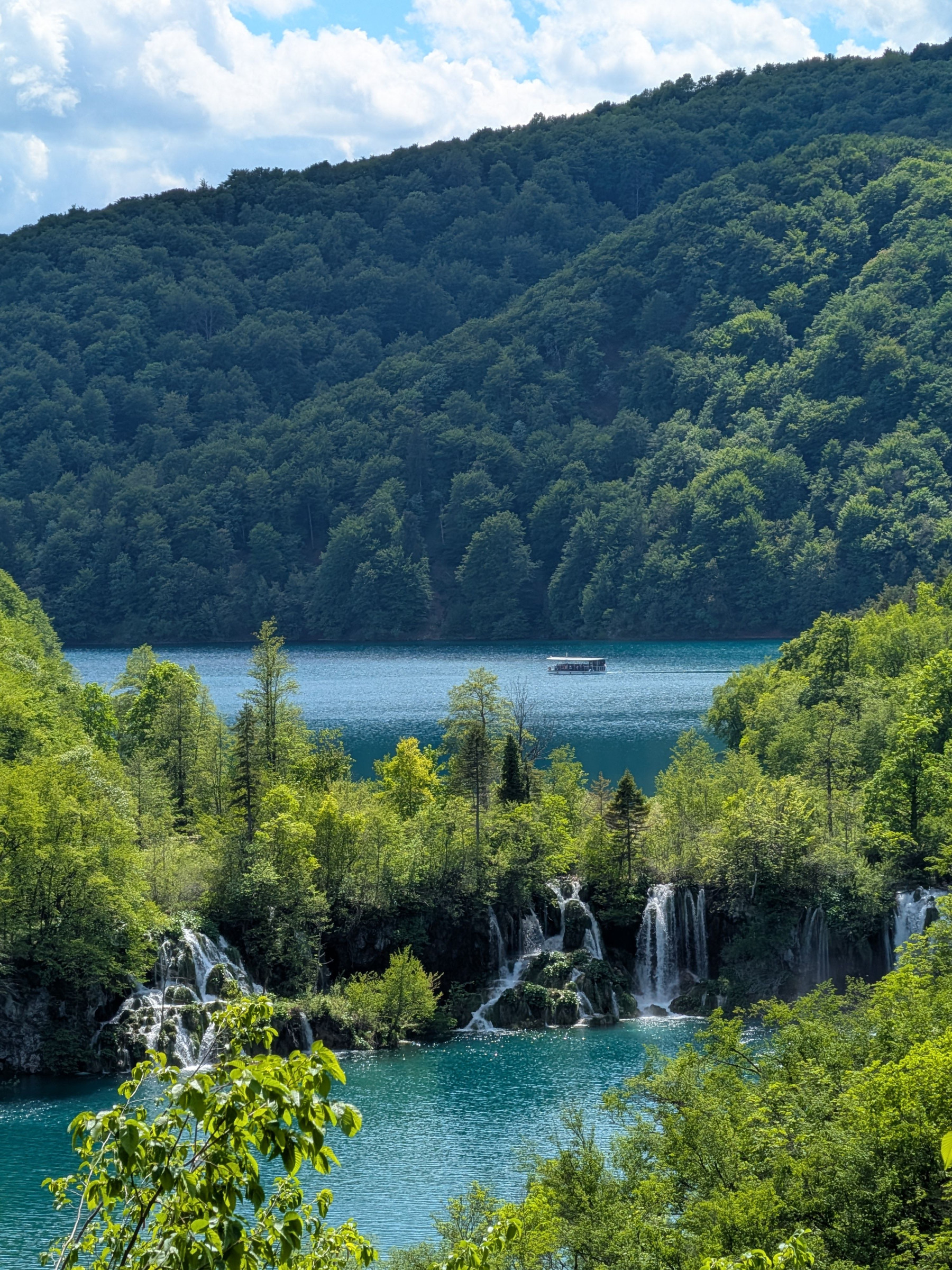
The lakes are famous for shifting between azure, green, grey, and deep blue, sometimes within the same afternoon. The effect comes from a combination of mineral content, the depth of the water, the angle of sunlight, and the microorganisms living in it — conditions that vary lake to lake and hour to hour. The two largest lakes, Prošćansko jezero and Kozjak, together account for roughly 80% of the park's total water surface, with Kozjak reaching depths of 47 meters and Prošćansko jezero 37 meters, both deep enough to hold their color even under bright midday sun.
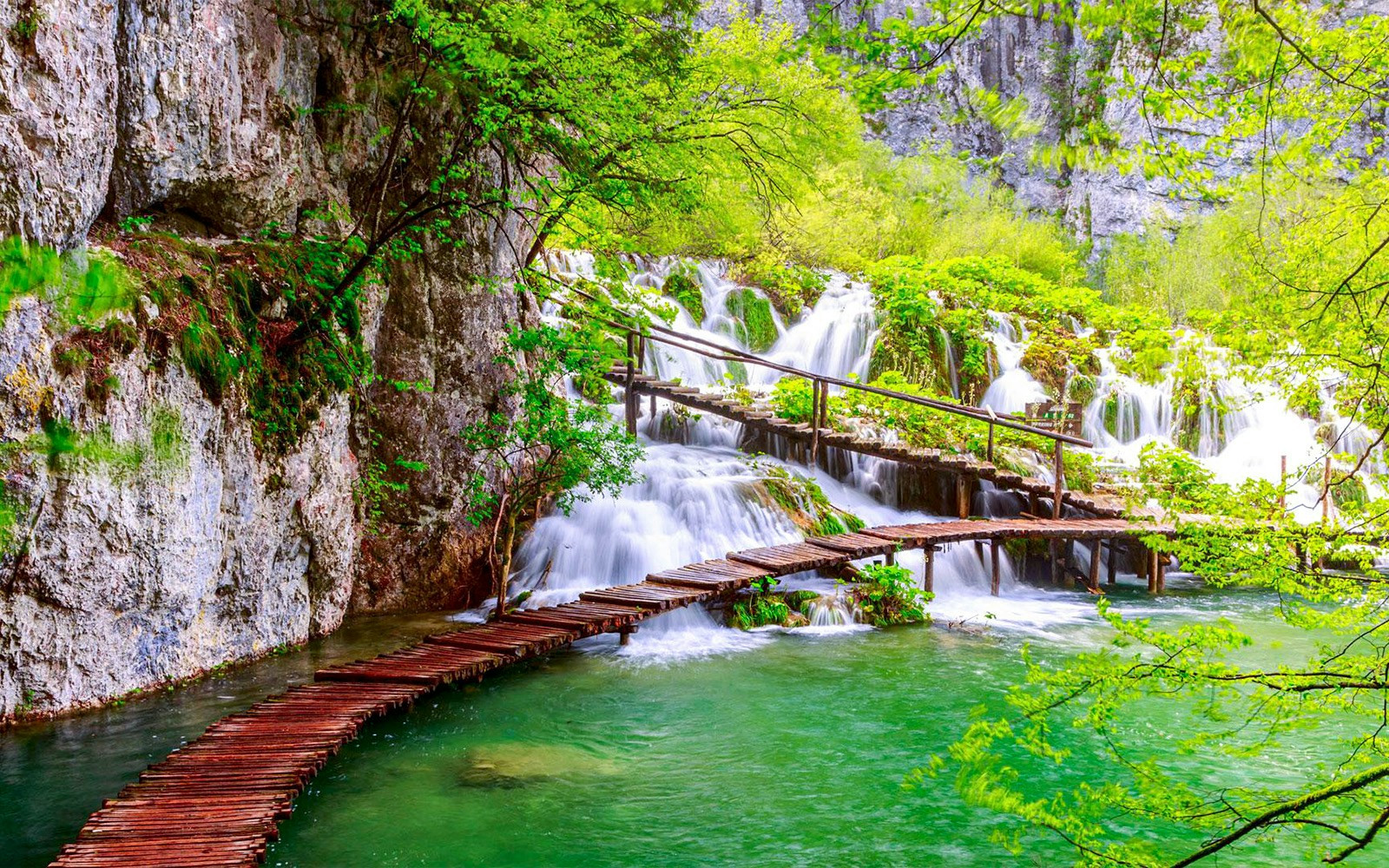
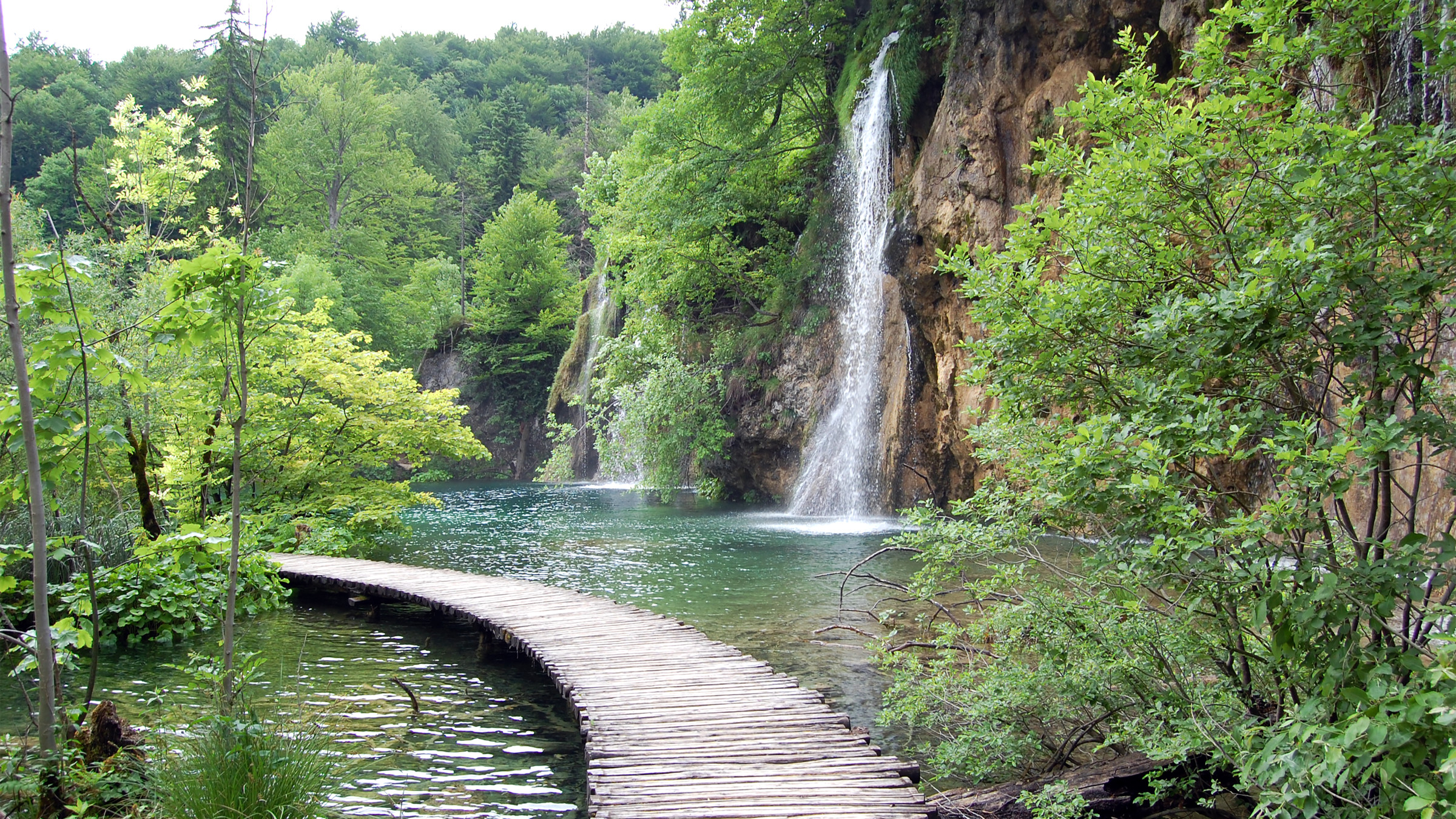
Between the lakes, water drops through dozens of waterfalls of varying size, the most dramatic being Veliki Slap ("Great Waterfall"), which plunges 78 meters and marks the end of the lower lakes chain. Wooden boardwalks thread directly over and alongside the water in several sections, putting visitors close enough to see fish moving beneath the surface and hear the constant sound of falling water that defines the park.
Recognition of the area's uniqueness came early by regional standards: it was declared a national park in 1949, one of the oldest in Southeast Europe, protecting both the lake system and the surrounding beech and fir forest that shelters brown bears, wolves, and a wide range of bird species. In 1979 UNESCO inscribed the park on its World Heritage list, citing the "outstanding and picturesque" combination of tufa lakes, caves, and interconnected waterfalls as a natural phenomenon of global significance.
Visitor numbers have grown enormously since the park's early days — from around 1,000 visitors in 1894, when the site was still a regional curiosity, to roughly 1.5 million a year in recent seasons, making infrastructure like boardwalks, electric boats, and a shuttle bus system necessary to manage the flow of people without overwhelming the fragile travertine formations.
Eight marked trails of varying length let visitors choose how much of the roughly 300 square kilometer park to cover, from a compact 3.5-kilometer loop near the main entrance to a full-day 16.5-kilometer route through both the upper and lower lakes. Because the boardwalks sit directly over water in places and swimming is strictly prohibited throughout the park, the experience is built around walking, boat rides across the two largest lakes, and a park shuttle bus connecting the more distant sections.
Arriving early, ideally before the first tour buses around 8 AM, remains the most reliable way to experience the boardwalks with any degree of quiet, particularly during the peak summer months when the park's beauty is best matched by its popularity.
No reviews yet. Be the first to share your experience!
Share your experience and help other travelers