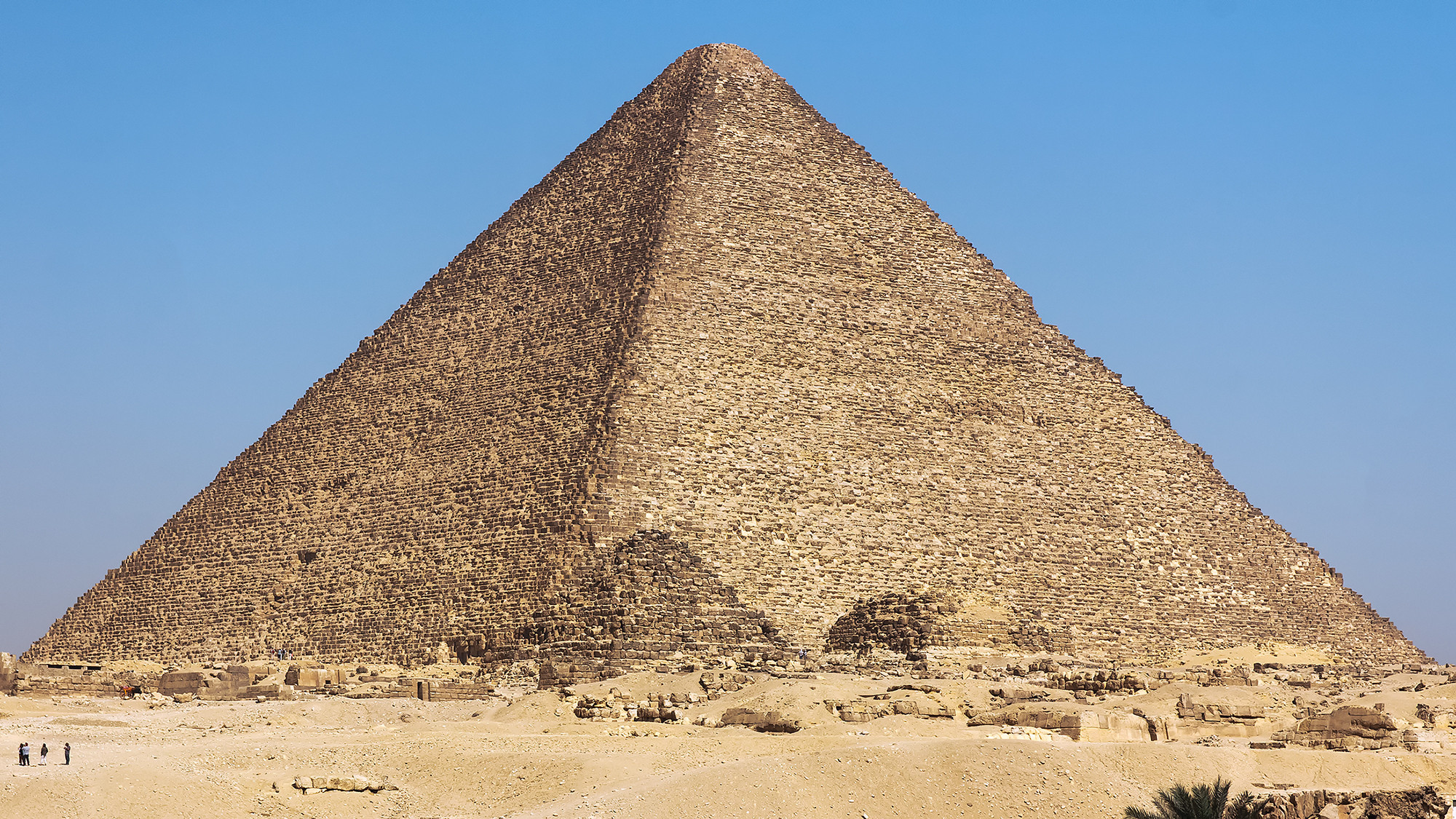
The Great Pyramid of Giza rises from the desert plateau on the outskirts of Cairo as the sole survivor among the Seven Wonders of the Ancient World, a list compiled by Hellenistic writers more than two thousand years ago that included structures such as the Colossus of Rhodes and the Hanging Gardens of Babylon, all of which have long since vanished while Khufu's pyramid still stands substantially intact. Built around 2600 BC as the tomb of the pharaoh Khufu, also known by his Hellenized name Cheops, the pyramid originally rose to a height of 146.6 meters, though the removal of its smooth outer casing stones over the centuries has reduced its current height to roughly 138.5 meters, still an imposing scale for a structure whose fundamental design and construction techniques predate nearly every other surviving large-scale monument on Earth by well over two millennia.
The pyramid's construction required an estimated 2.3 million individual limestone and granite blocks, together totaling roughly 2.6 million cubic meters of stone, most of the limestone quarried locally near the construction site while considerably harder granite blocks, some weighing up to 80 tonnes, were transported from Aswan, more than 800 kilometers to the south, floated down the Nile on barges before being hauled the final distance to the construction site itself. Modern archaeological evidence, including worker settlements and administrative records discovered near Giza in recent decades, has largely overturned older popular assumptions that the pyramid was built by enslaved labor, instead pointing to a workforce of conscripted laborers who received housing, food rations, and, based on evidence from worker cemeteries, apparently genuine respect within Egyptian society for the difficult and skilled work involved. A 1999 engineering study estimated the project required an average workforce of around 13,200 people, with peaks reaching roughly 40,000 during particularly intensive construction phases, sustained across the approximately 26 years the project is believed to have taken to complete.
Hemiunu, believed to have served as Khufu's vizier, is generally credited by Egyptologists as the pyramid's chief architect, a role reflecting how closely intertwined political administration and monumental construction projects were within Old Kingdom Egyptian society, where organizing a project of this scale required not just engineering knowledge but the administrative capacity to coordinate labor, food supply, and material transport across a construction timeline spanning decades. The precision achieved in the pyramid's construction, including its remarkably accurate alignment with true north and the tight fit of its enormous stone blocks, has generated centuries of speculation and, at times, pseudoscientific theorizing about the construction methods involved, though mainstream archaeological consensus holds that the ancient Egyptians achieved these results through sophisticated but fundamentally comprehensible techniques involving ramps, sledges, levers, and careful surveying, rather than through any lost or mysterious technology.
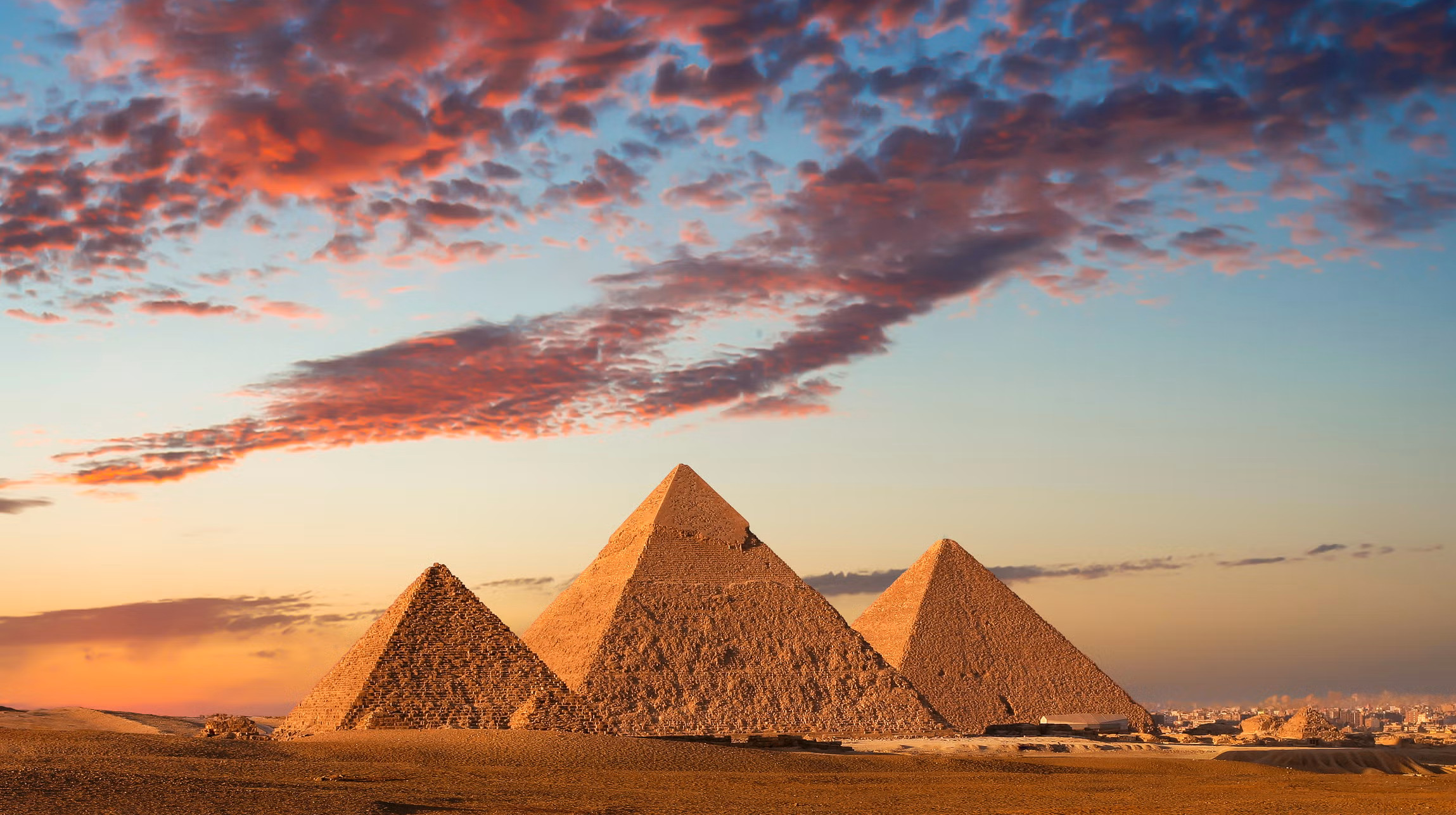
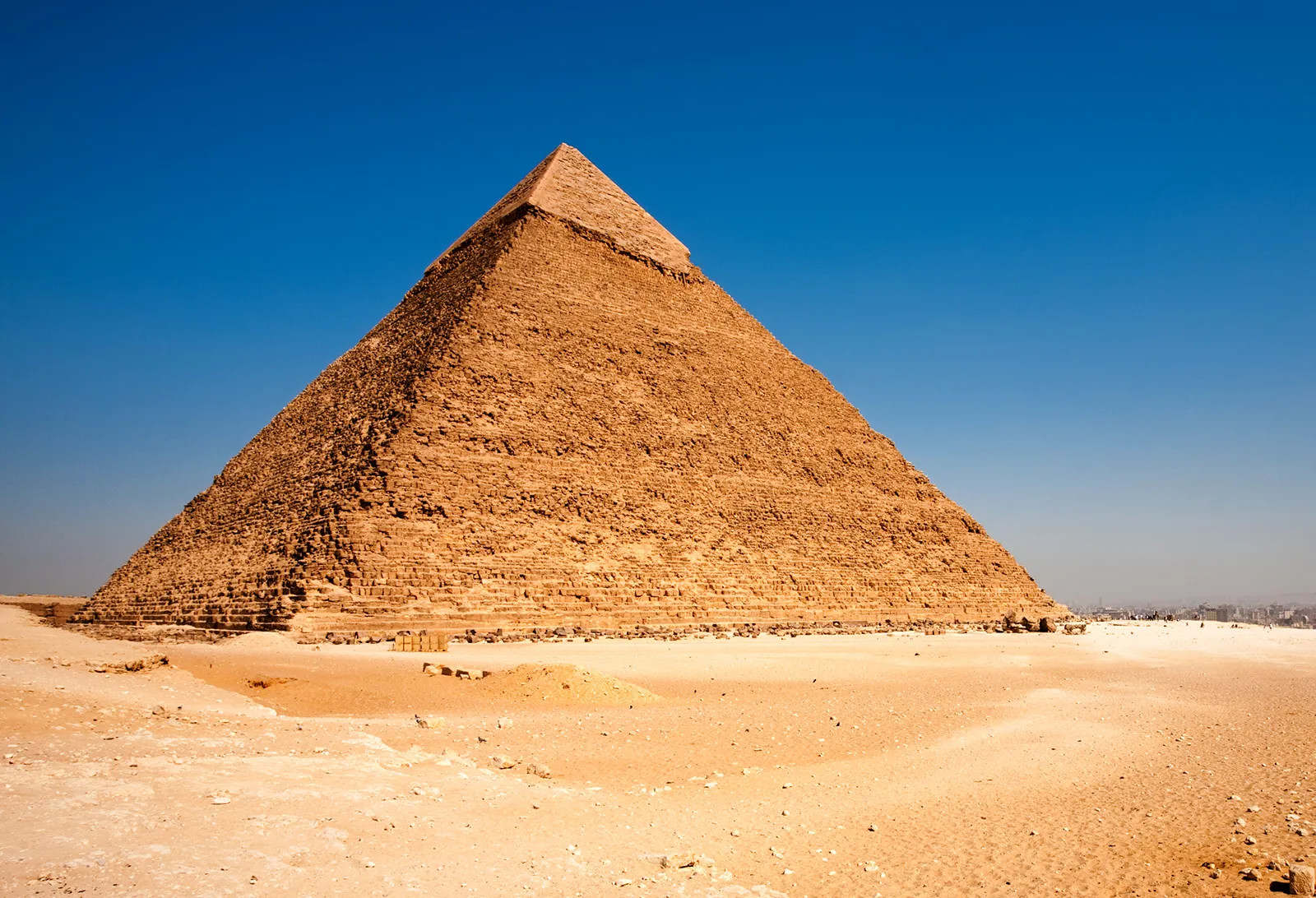
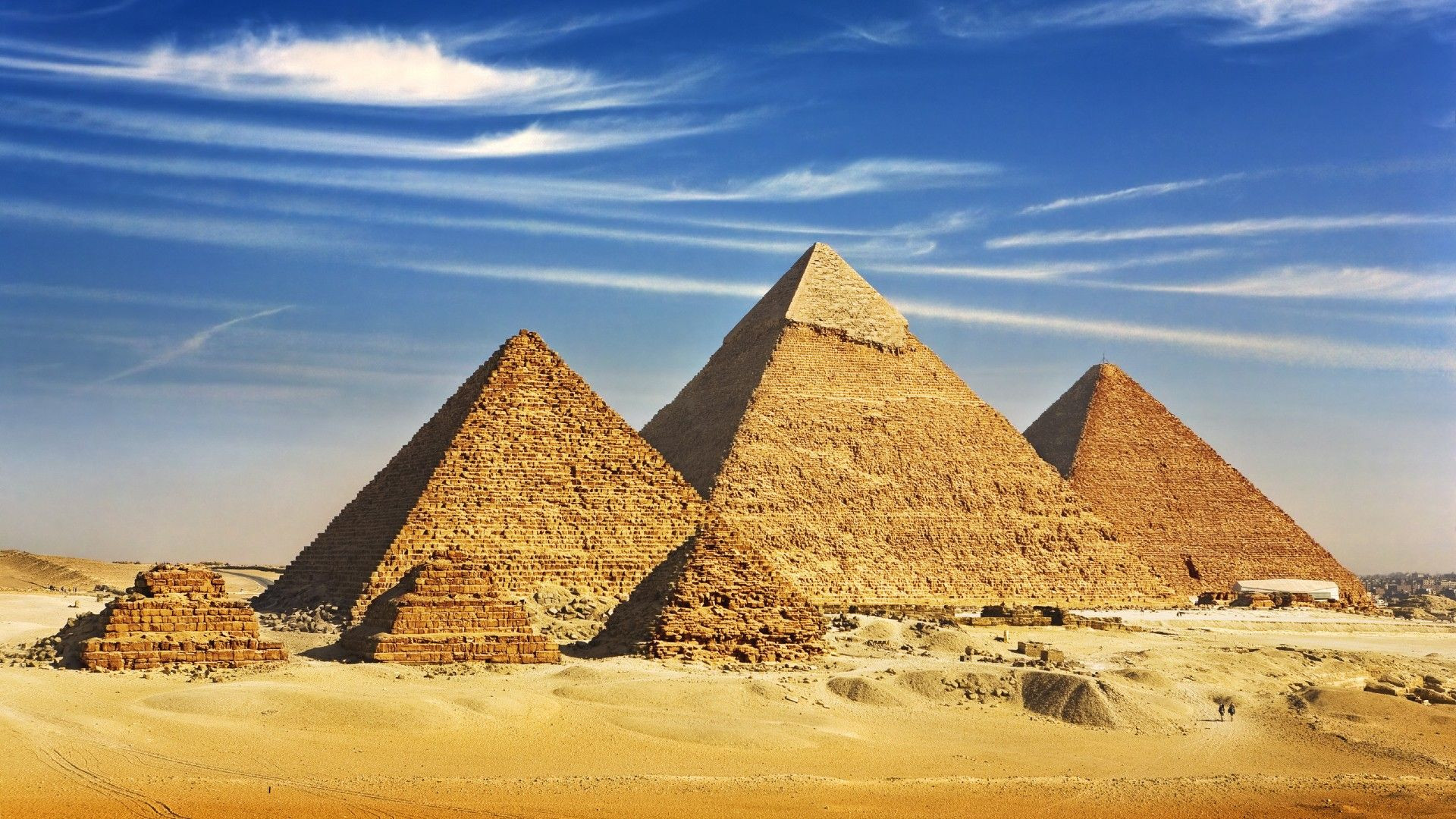
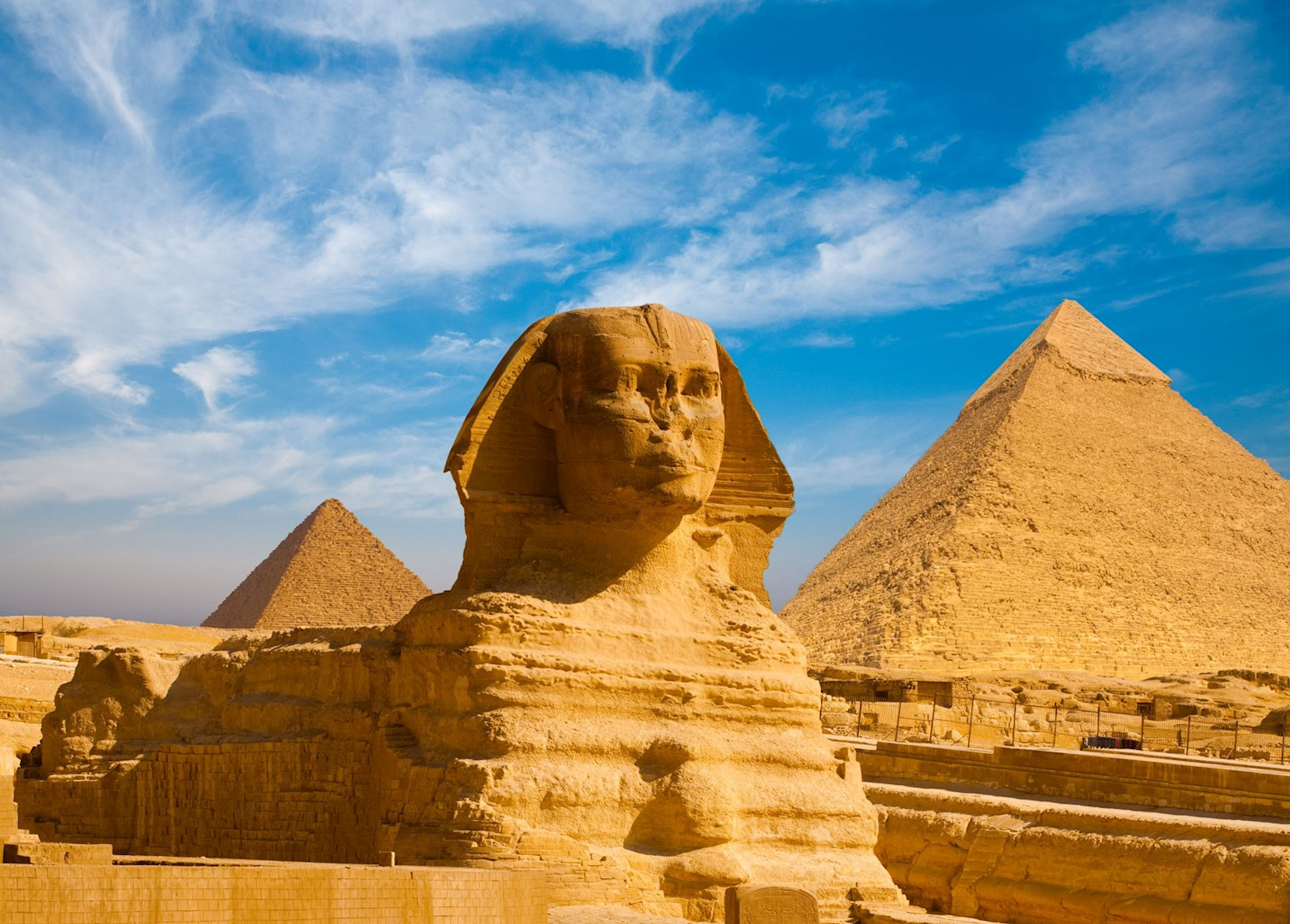
The Great Pyramid forms the centerpiece of a much larger Giza pyramid complex that also includes two additional major pyramids, built for Khufu's son Khafre and grandson Menkaure, along with a scattering of smaller subsidiary pyramids built for royal family members and an extensive field of mastaba tombs constructed for high-ranking officials who sought burial near their pharaohs in the afterlife. This wider complex, along with the Great Sphinx of Giza, a monumental limestone statue with a lion's body and a human head generally believed to depict Khafre, together form a UNESCO World Heritage Site recognizing the site's significance as a coherent Old Kingdom funerary landscape rather than a single isolated monument. The Sphinx in particular has generated its own body of scholarly debate regarding its exact construction date and original purpose, though it is generally understood as part of the same broader Fourth Dynasty building program that produced the pyramids themselves, standing guard over the approach to Khafre's pyramid complex immediately behind it.
Like most ancient Egyptian royal tombs, the Great Pyramid's interior burial chambers were looted of their original funerary goods in antiquity, likely not long after the pharaoh's burial, despite elaborate internal security measures including granite blocking stones designed to seal passages against exactly this kind of intrusion. Medieval Arab scholars and later European explorers conducted early investigations of the pyramid's interior passages, with the so-called Robbers' Tunnel, a rough passage cut through the pyramid's solid stone by ninth-century explorers seeking treasure, providing the main entrance route used by visitors and archaeologists for centuries since, well before modern non-invasive survey technology such as muon tomography began revealing previously unknown internal voids within the structure in recent years. These ongoing discoveries, including a large hidden chamber identified above the Grand Gallery through cosmic-ray imaging in 2017, demonstrate that even a monument as thoroughly studied as the Great Pyramid continues to yield genuinely new information more than 4,600 years after its construction.
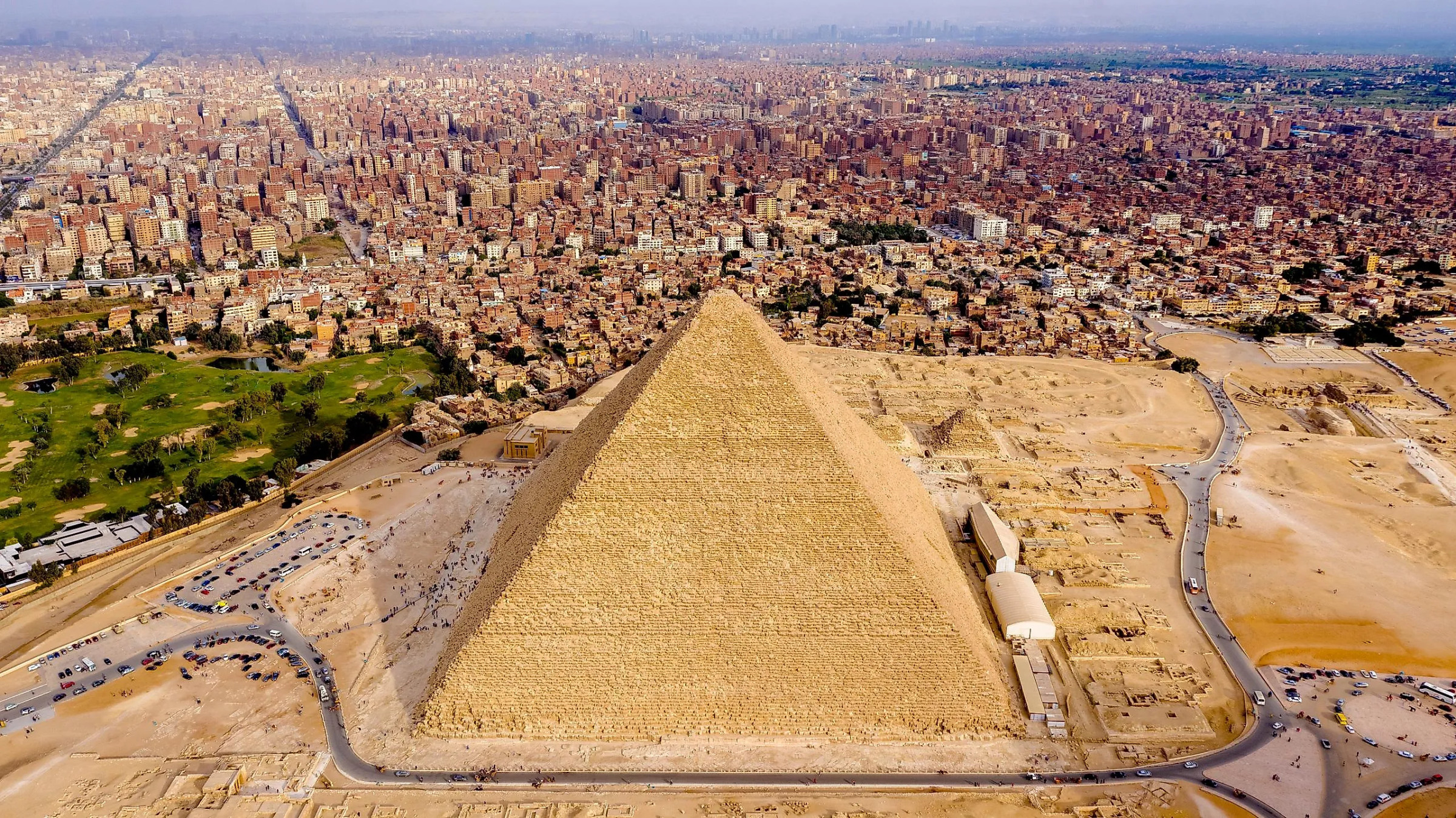
Once standing in genuine desert isolation, the Giza pyramid complex now sits at the literal edge of greater Cairo's urban sprawl, with modern apartment buildings visible in photographs taken from certain angles near the site, a juxtaposition that has drawn both criticism from heritage preservationists concerned about encroaching development and a certain resigned acceptance from Egyptian authorities managing the practical realities of a rapidly growing capital city bordering one of the world's most significant archaeological zones. This proximity to a major modern metropolis is itself part of what makes Giza distinctive among the world's great ancient monuments, offering visitors an experience of walking directly from a bustling contemporary city street into a 4,600-year-old funerary complex within the span of a single short taxi ride, a contrast rarely available at other comparably ancient and significant archaeological sites, which are more typically located in genuinely remote or rural settings.
Cairo International Airport serves as the primary gateway for international visitors, with the Giza plateau reachable within roughly 30 to 45 minutes by taxi or organized tour depending on traffic conditions in a city known for its congestion, and most visits combine the pyramid complex itself with the nearby Sphinx and, increasingly, the newly opened Grand Egyptian Museum, built specifically to house a substantial share of Egypt's ancient artifact collection within sight of the pyramids themselves. Entry tickets to the main pyramid complex are supplemented by separate, additional tickets required for entering individual pyramid interiors, and visitors hoping to see the Great Pyramid's interior chambers specifically should plan for limited daily entry numbers and, during peak tourist season, the possibility of queuing, a practical consideration given how central an interior visit is to many travelers' sense of a complete Giza experience.
By the time classical Greek and Roman travelers began visiting and writing about the Great Pyramid, it was already more ancient to them than the Colosseum or the Parthenon are to visitors today, a striking reminder of just how much time separates the pyramid's construction from even the earliest surviving foreign accounts describing it as an object of wonder. The pharaonic civilization that built it had itself given way to successive waves of foreign rule, including Persian, Greek, and Roman administration of Egypt, long before the pyramid's original purpose as a royal tomb had faded from active religious practice into historical memory, yet the structure itself endured through all of these transitions essentially unchanged in its fundamental form. That extraordinary continuity, a single monument bridging the entire span of recorded human civilization from the Old Kingdom through to the present day, is arguably as central to the Great Pyramid's enduring fascination as its raw scale or the engineering ingenuity required to build it in the first place.
No reviews yet. Be the first to share your experience!
Share your experience and help other travelers