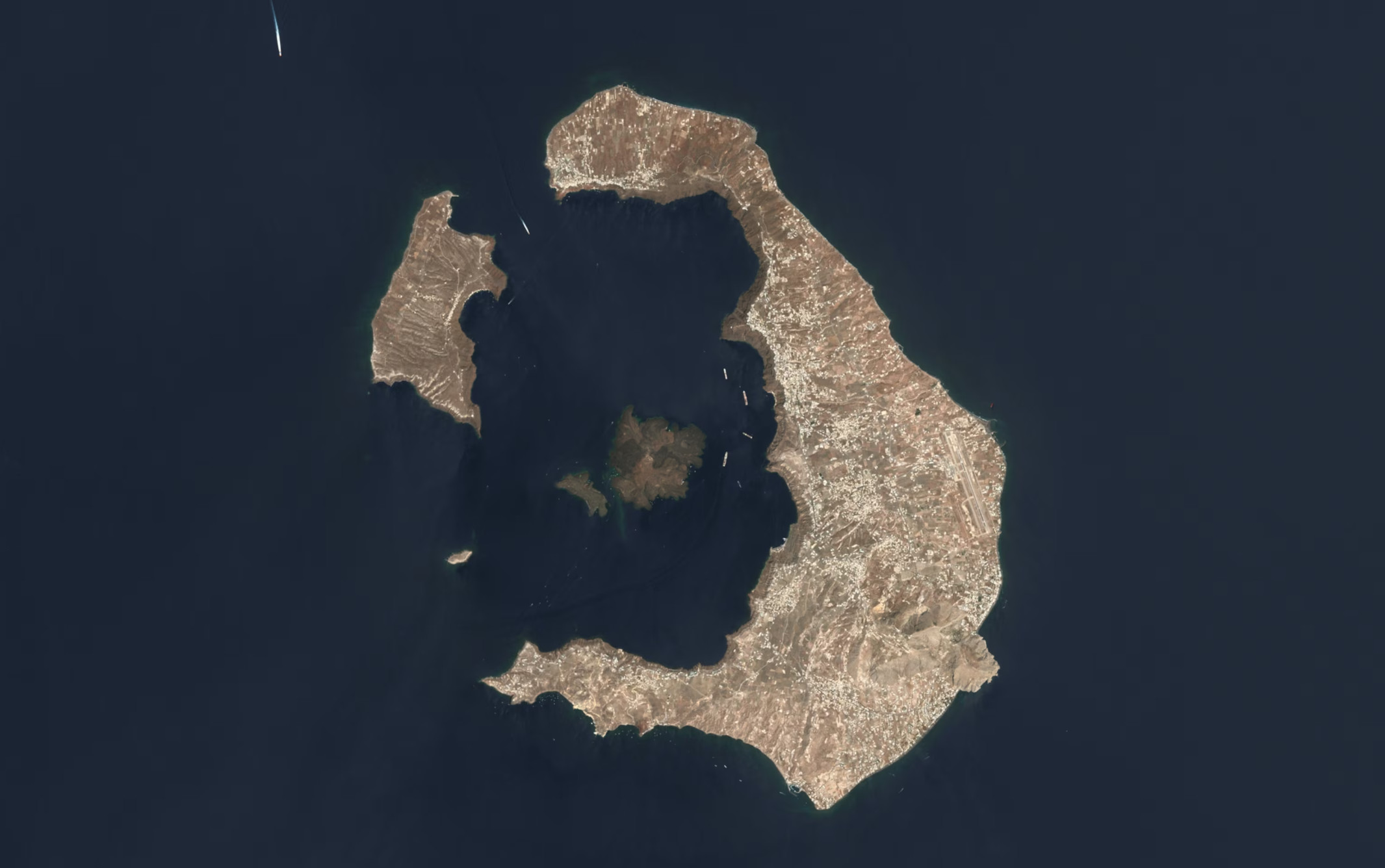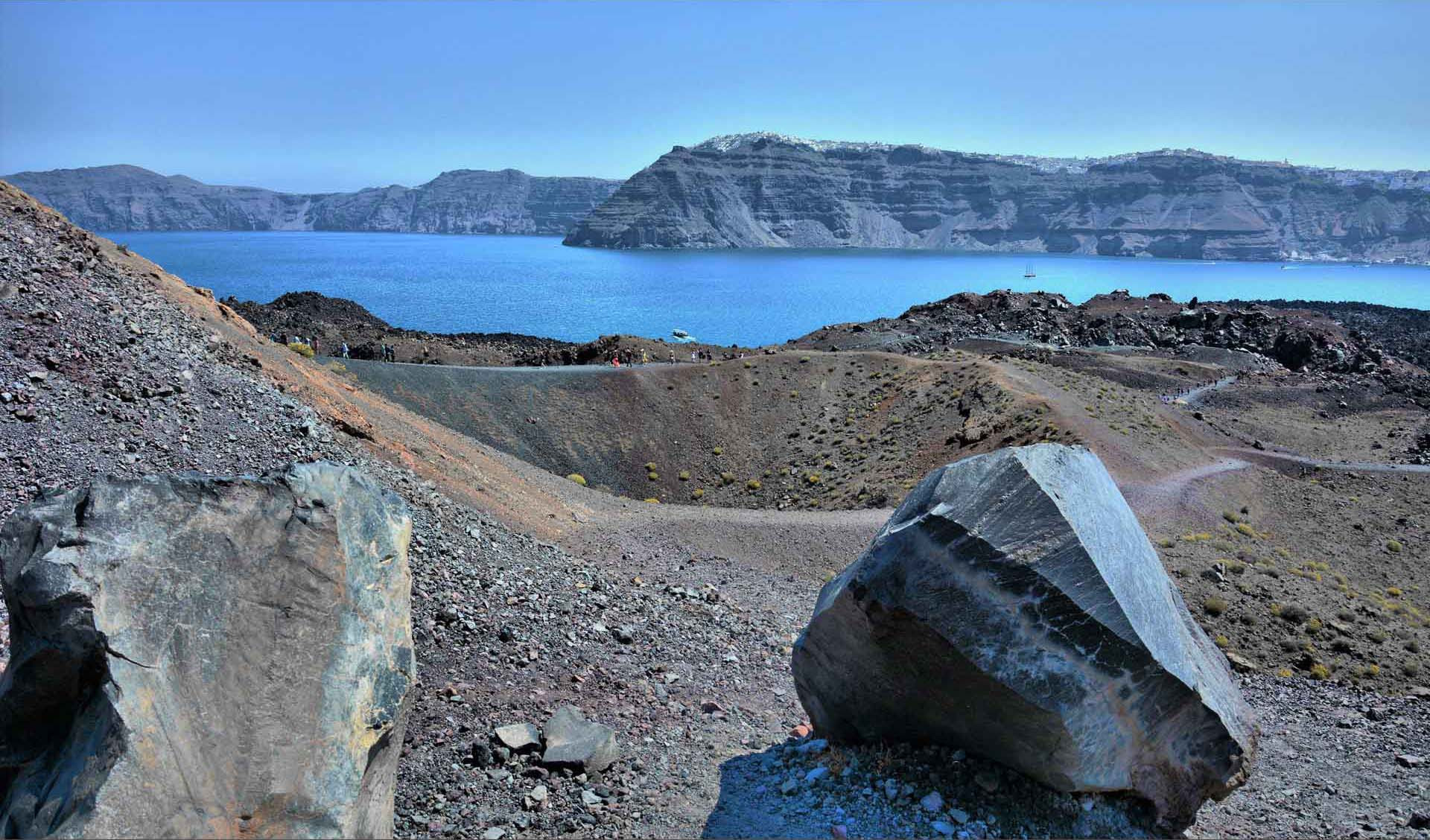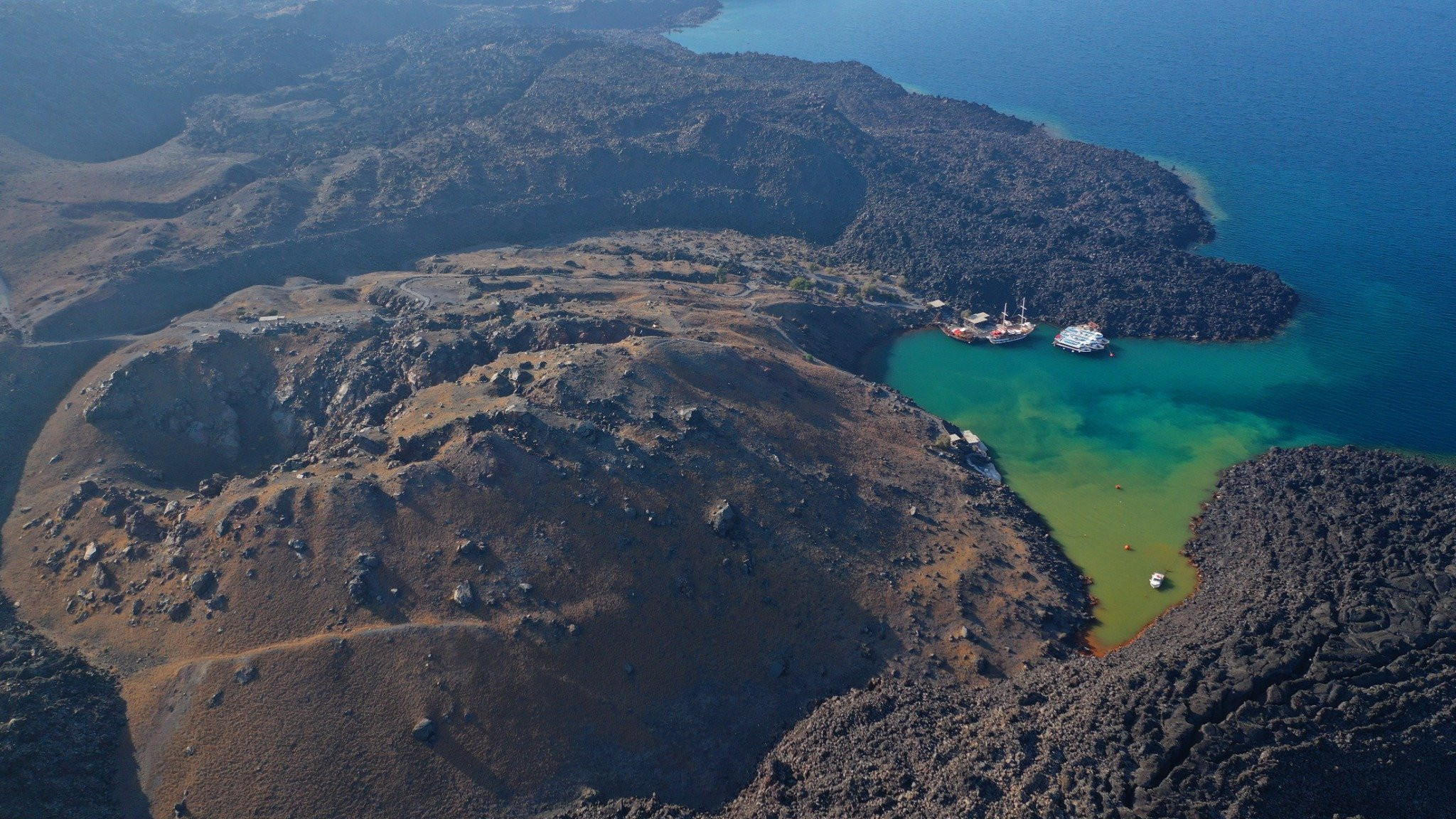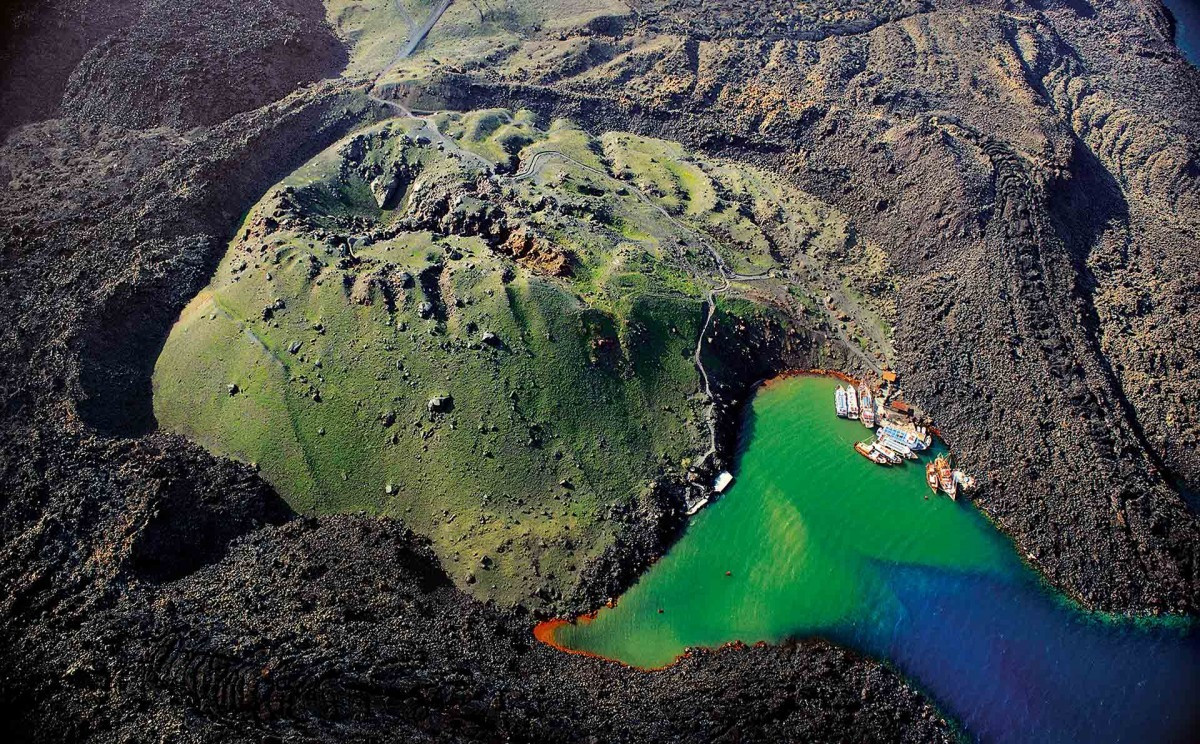
Santorini's crescent shape — the thing that makes it instantly recognizable on a map — isn't a coastline in the ordinary sense. It's the surviving rim of a volcanic caldera, the collapsed remnant of a much larger island that blew itself apart in one of the most powerful eruptions in recorded human history. The wider South Aegean Volcanic Arc, of which Santorini is the most active center, has been volcanically alive for 3 to 4 million years, with the specific volcanic system beneath modern Santorini active for roughly 2 million years, built up through repeated cycles of shield volcano construction followed by catastrophic caldera collapse.
Each cycle followed a similar pattern: lava and ash accumulated to build a broad volcanic island, pressure built in the magma chamber beneath it, and eventually a massive eruption emptied that chamber fast enough that the ground above it collapsed inward, leaving a caldera that would later become an island once again as new eruptions rebuilt land within and around it. Santorini as it exists today is essentially a scar from the most recent, and most catastrophic, of these cycles.
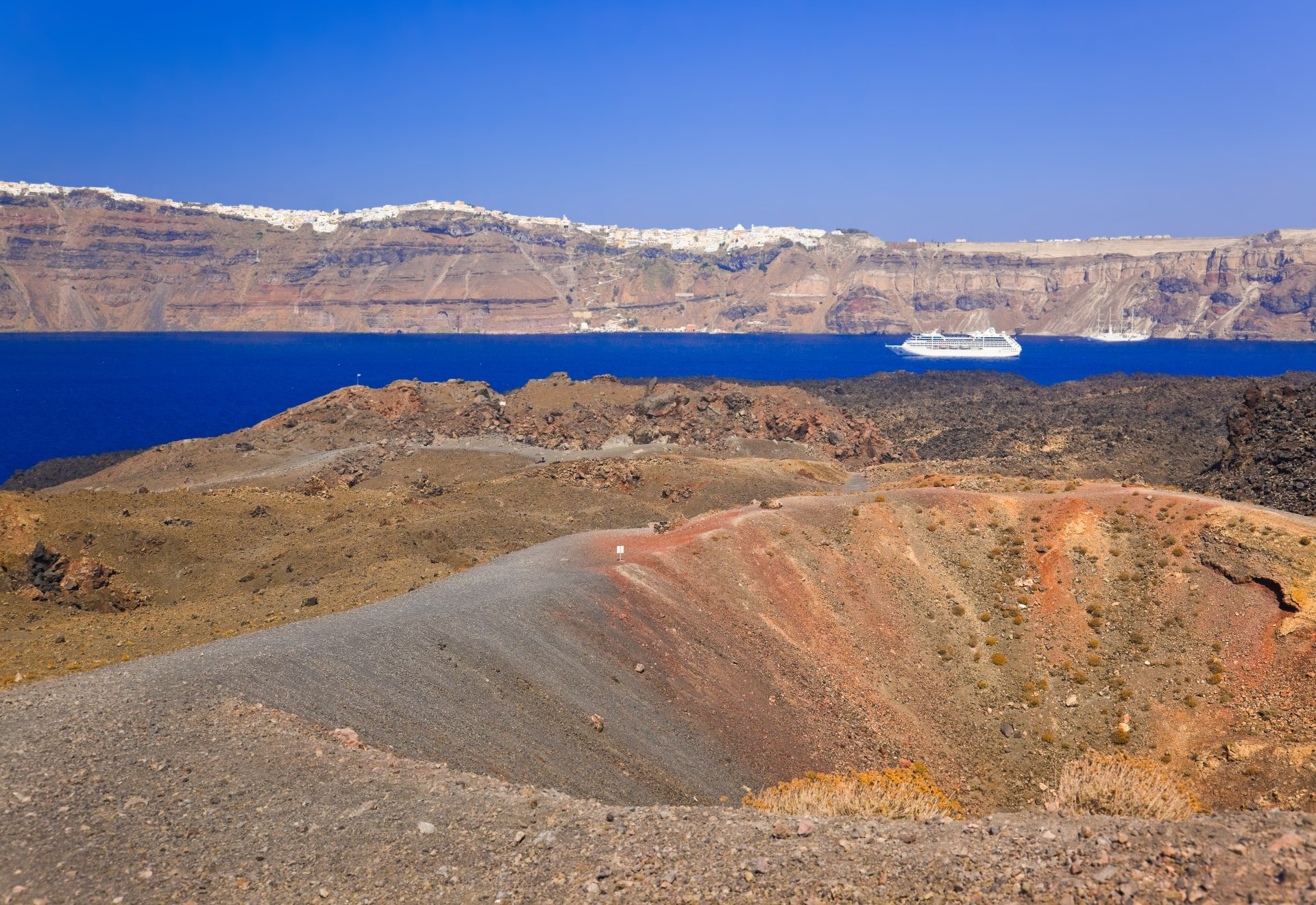
Around 1600 BCE, at the height of Minoan civilization's influence across the Aegean, Thera — the volcano beneath what's now Santorini — erupted in an event now ranked among the largest volcanic explosions in human history. Estimates put the eruption at roughly 61 cubic kilometers of magma and rock ejected, producing around 100 cubic kilometers of tephra, with ash deposits on Santorini itself reaching up to 60 meters thick in places, layered clearly enough that geologists can read distinct phases of the eruption in the exposed cliffs.
The explosion triggered massive tsunamis that likely devastated coastal settlements across the Aegean, including Minoan sites on Crete roughly 110 kilometers away, and many archaeologists connect the eruption's aftermath to the broader decline of Minoan civilization in the following decades, even if the exact causal relationship remains debated. The eruption obliterated the pre-existing caldera ring, blasting open two new channels and leaving the dramatically asymmetric, horseshoe-shaped caldera that defines Santorini's geography today.
The scale and suddenness of the Minoan eruption has led generations of scholars to propose it as a possible historical seed for Plato's account of Atlantis — an advanced island civilization that supposedly vanished beneath the sea in a single catastrophic event. The archaeological evidence doesn't actually support a direct, literal connection between Thera and Plato's story, which was written over a thousand years after the eruption and set explicitly outside the Mediterranean. But the parallel between a Bronze Age civilization erased by sudden volcanic and tsunami destruction and a myth about exactly that kind of disappearance has kept the theory alive in popular imagination regardless of the archaeological caveats.
Thera is dormant, not extinct, and the volcanic system beneath the caldera remains monitored and periodically active. Between January 2011 and April 2012, seismologists tracked the underground magma chamber swelling by an estimated 10 to 20 million cubic meters, enough to lift parts of the island's surface by 8 to 14 centimeters — a striking, measurable reminder that the same forces that built and then destroyed the island are still, slowly, operating beneath it.
More recently, in February 2025, Santorini experienced an intense earthquake swarm involving hundreds of tremors, including one measuring magnitude 5.3, which scientists attributed to a roughly 30-kilometer volcanic dyke forming beneath the Aegean seabed nearby — activity connected to the region's volcanic and tectonic system rather than a sign of imminent eruption, but a reminder that Santorini's postcard views sit directly atop genuinely active geology.
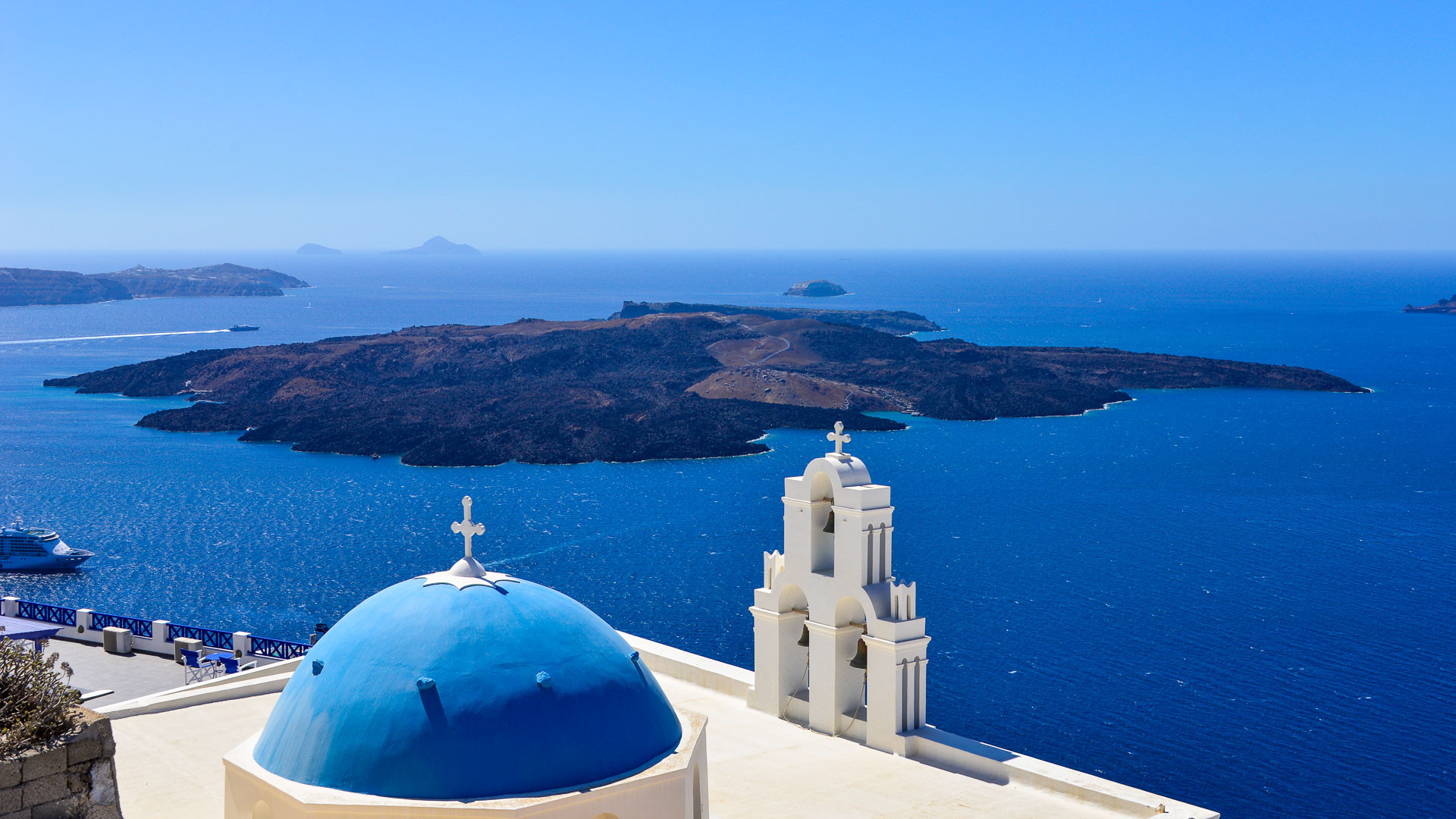
The villages that give Santorini its signature look — Oia and Fira chief among them — are built directly along the caldera's steep rim, their whitewashed, cubic houses clinging to cliffs that plunge hundreds of meters down to the water. Traditional Cycladic architecture here developed a distinctive local variation called "hypóskapha": homes partly carved into the surrounding volcanic pumice rather than built entirely above ground, which provided natural insulation against both summer heat and winter cold long before mechanical climate control existed.
That historic architecture isn't fully original, however. A major earthquake in 1956 destroyed roughly 35 percent of the island's buildings outright and severely damaged nearly half of what remained, forcing a wave of reconstruction that altered the island's aesthetic even as it largely preserved the whitewashed, caldera-hugging character tourists recognize today. As of the 2021 census, the island's permanent population sits around 15,480 people across a municipality of about 90 square kilometers, including the inhabited main island and Therasia along with several smaller, uninhabited volcanic islets within the caldera itself.
Santorini's defining tourist ritual is watching the sun set over the caldera from Oia's clifftop pathways, where the town's western-facing position and the water-filled caldera below combine for a widely photographed, often crowded evening spectacle. Beyond the sunset itself, the caldera view generally — from Oia, Fira, Imerovigli, or a boat crossing the water toward the volcanic islets in its center — is the through-line connecting most of what draws visitors here, whether they're there for the architecture, the wineries built on volcanic soil, or simply the geology.
Santorini has its own airport (JTR), with direct flights available from numerous major European cities during peak season and connections through Athens common for visitors arriving from farther afield; the airport is small enough that baggage claim typically takes only 10–15 minutes. Ferries from Athens's port of Piraeus offer an alternative, with high-speed services taking 2 to 2.5 hours and slower conventional ferries taking 5 to 8 hours, the latter arriving with a dramatic approach directly into the caldera.
Getting around the island typically means a private transfer or taxi from the airport (roughly €20–25 to Fira, €30–40 to Oia), a rental car, or the considerably cheaper but slower local bus network. High season sees heavy demand for hotels, ferries, and flights, and both accommodations and transport are typically worth booking five to six months ahead for peak summer travel.
No reviews yet. Be the first to share your experience!
Share your experience and help other travelers