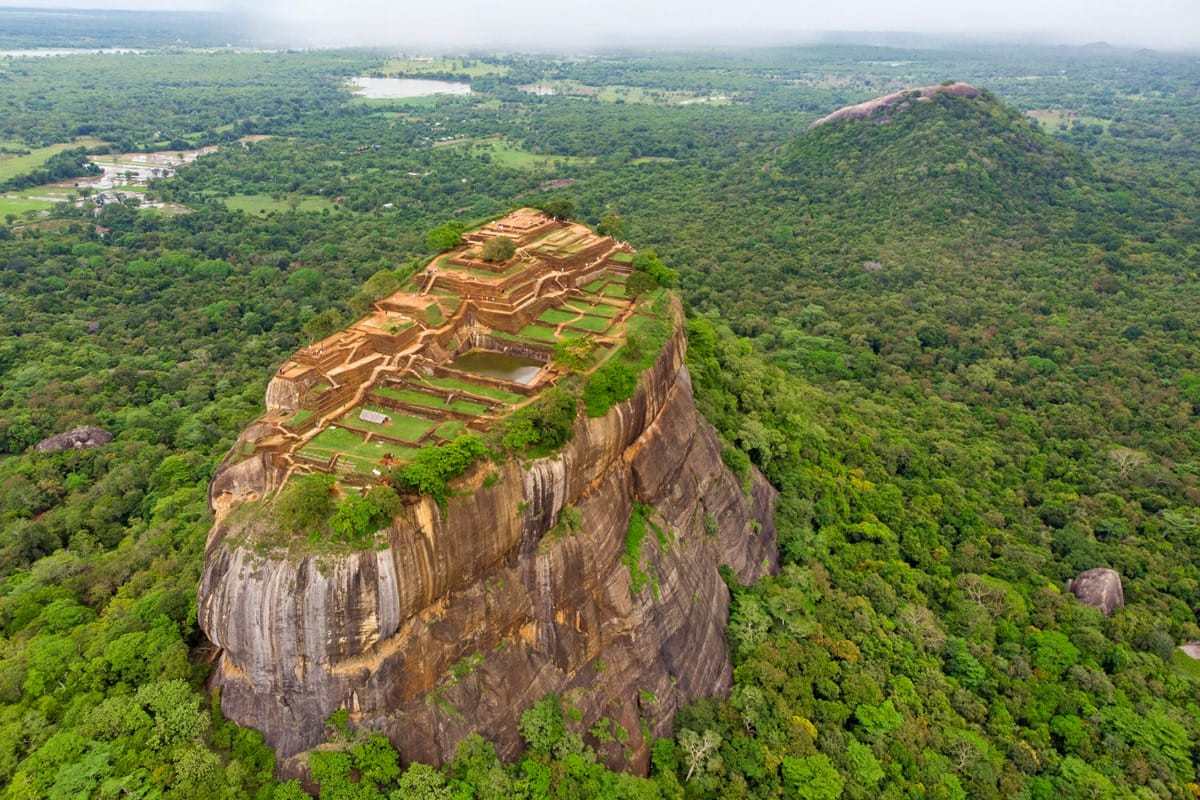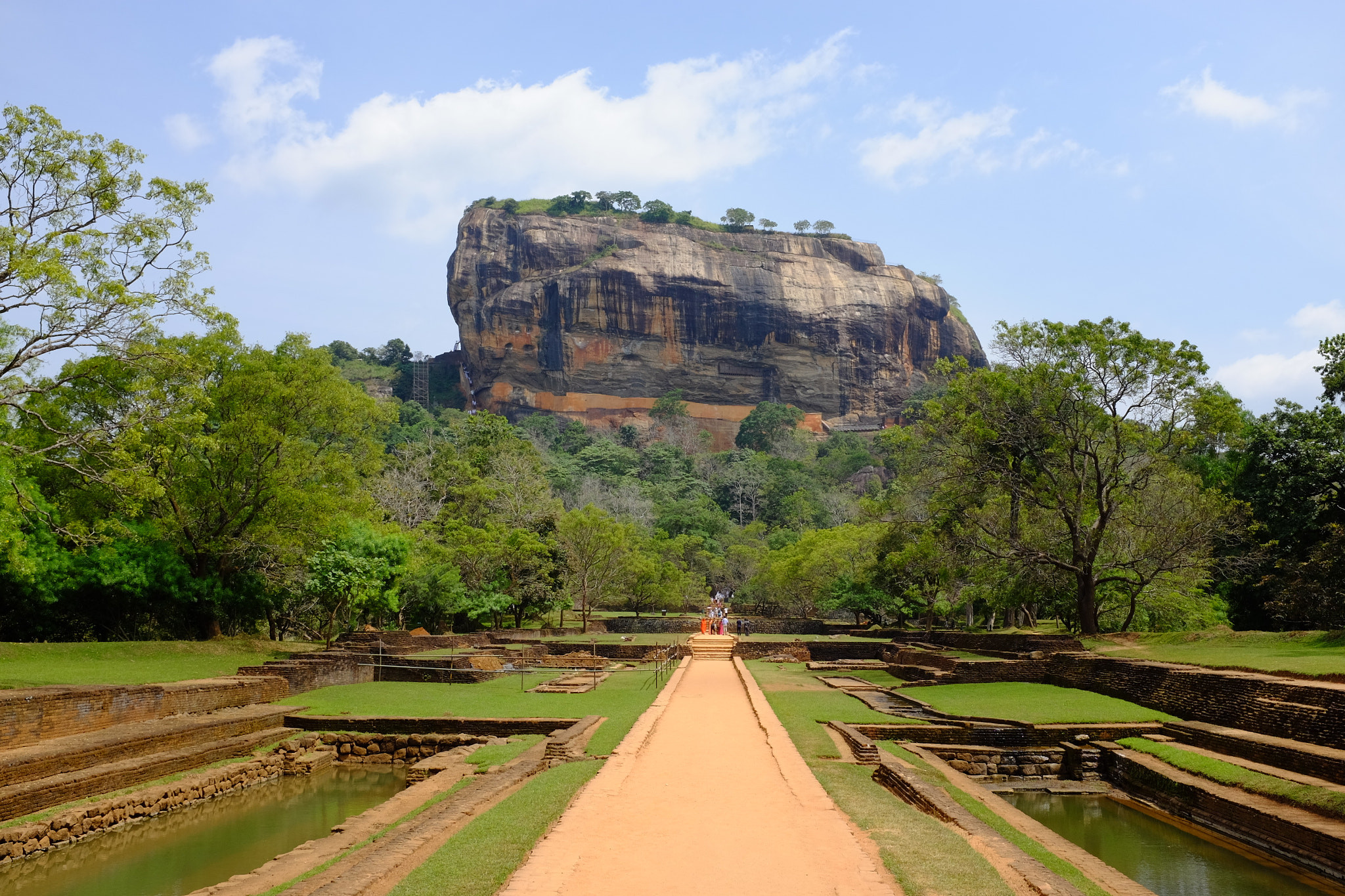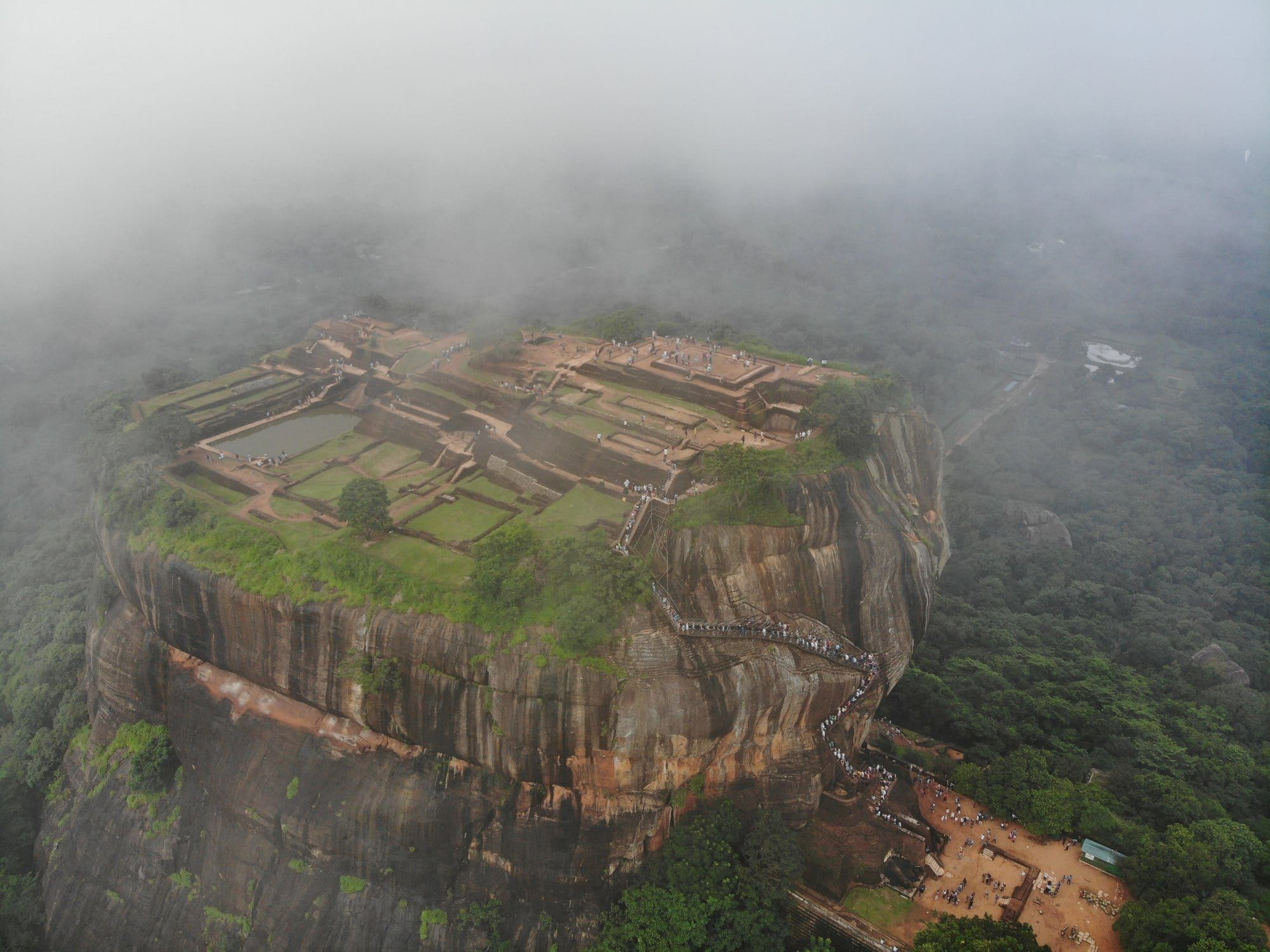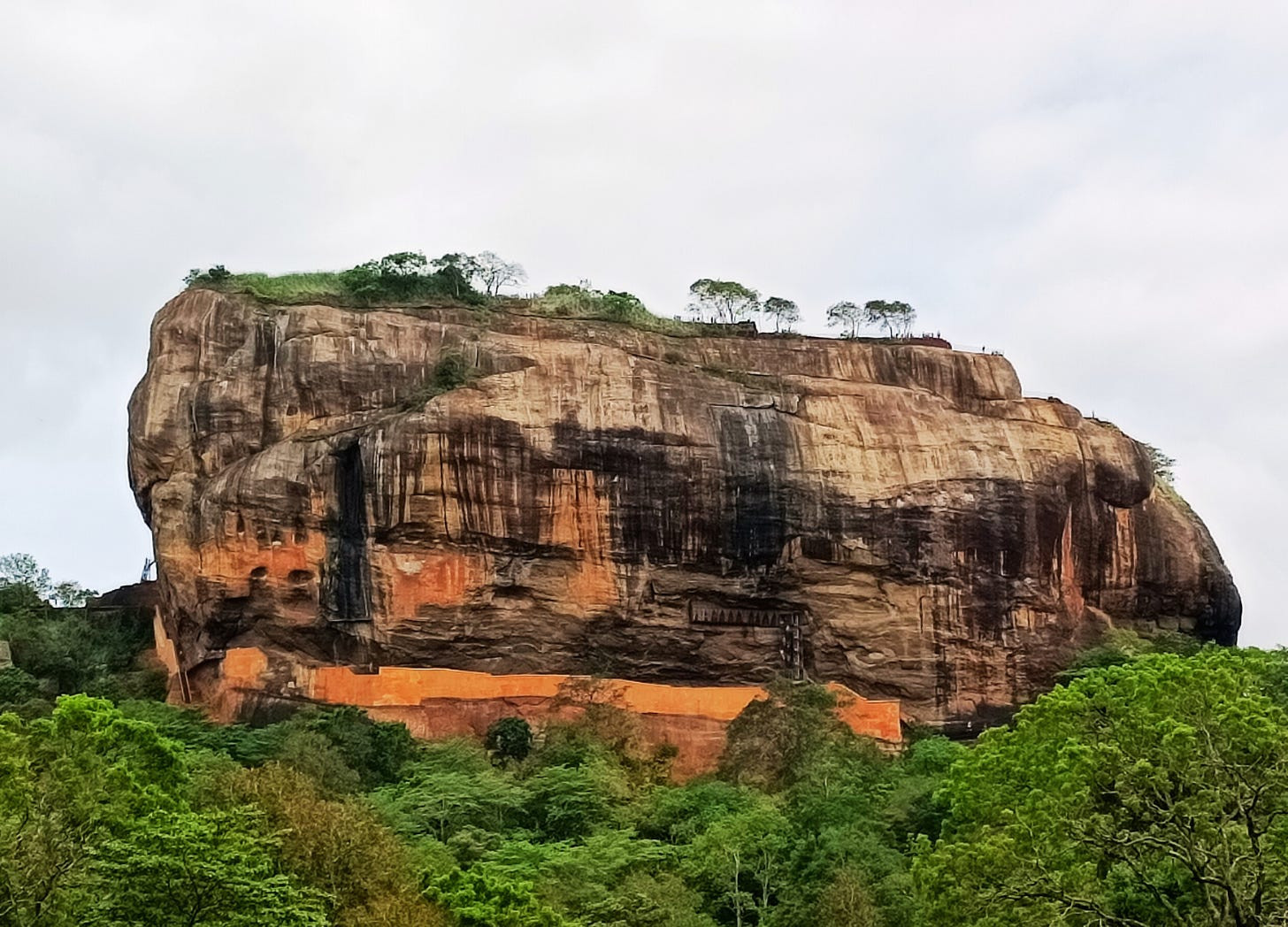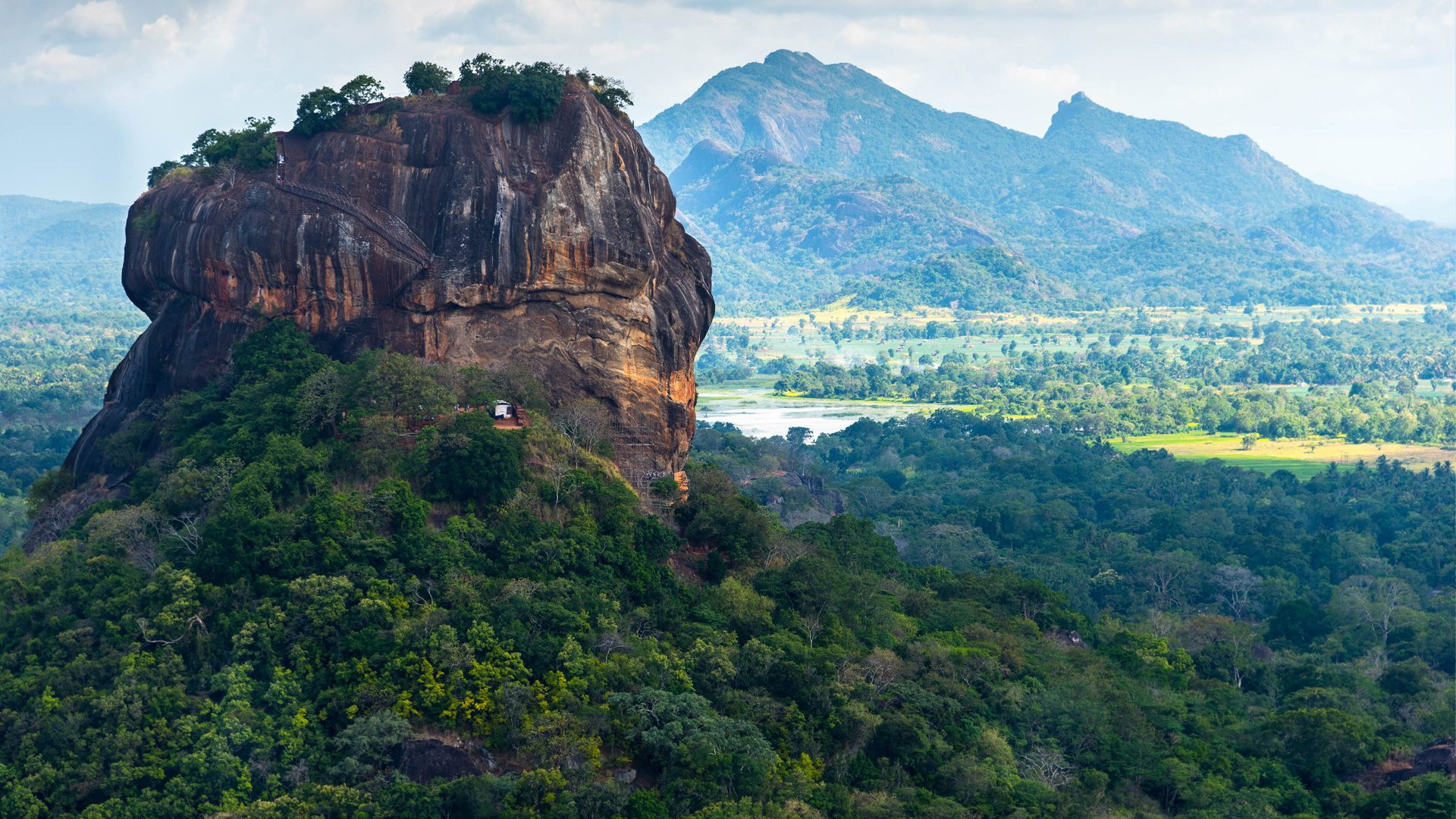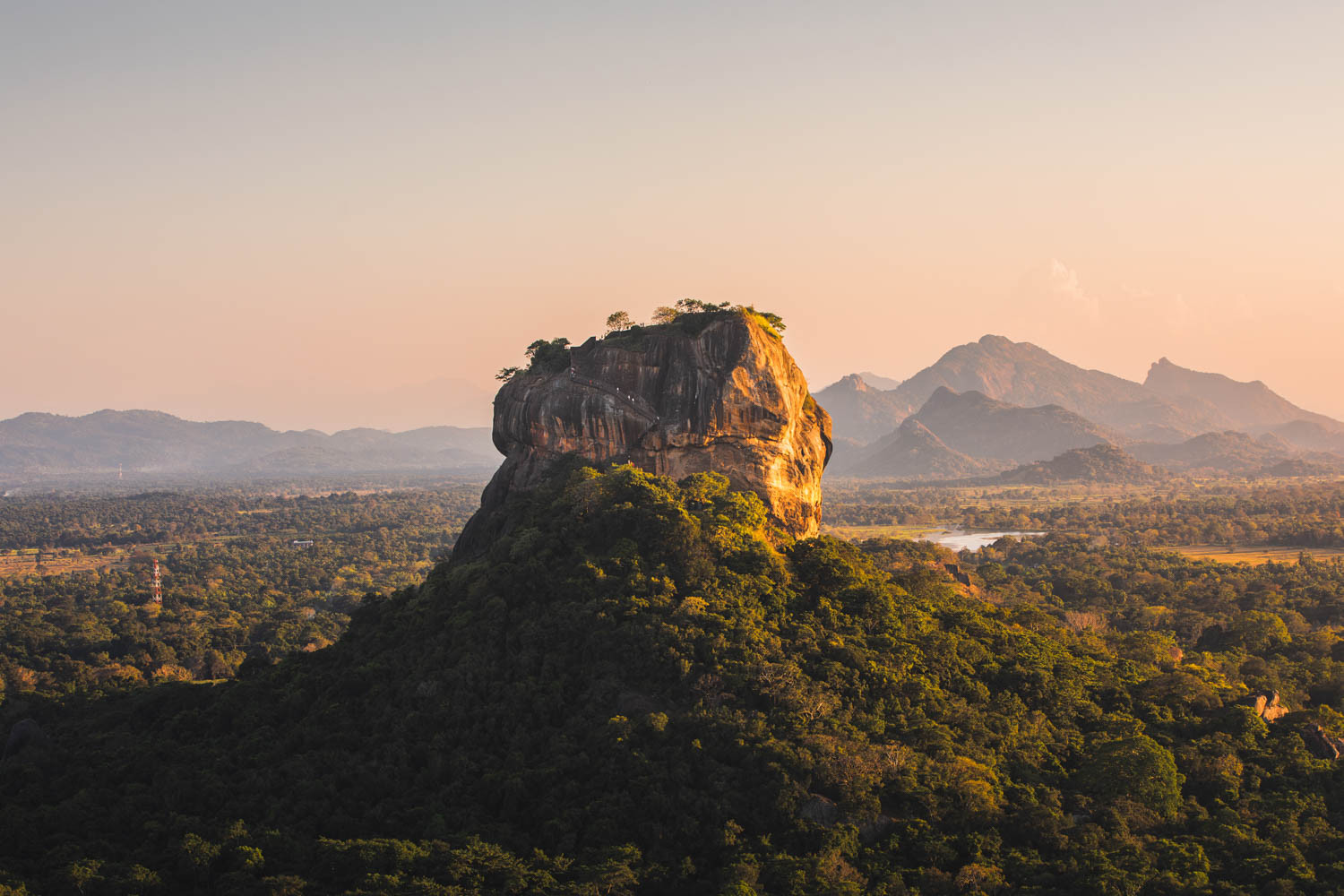
Sigiriya rises abruptly 200 meters above the surrounding Sri Lankan plain, an ancient volcanic plug of hardened magma left standing after softer surrounding rock eroded away over millions of years, its sheer, near-vertical sides making it a natural fortress site chosen deliberately for that defensive advantage. Atop this dramatic outcrop, King Kashyapa built an elaborate royal complex in the late 5th century AD, transforming the rock into one of the most extraordinary combinations of natural landscape and ancient engineering found anywhere in South Asia.
The site's summit palace ruins, along with extensive gardens, moats, and defensive walls at the base, together form a complex that Sri Lankan archaeologists and UNESCO alike consider one of the best-preserved examples of ancient urban planning from the period, remarkable both for its ambition and for how much of the original layout remains legible today despite more than 1,500 years of exposure and, at points, abandonment.
According to the Culavamsa, an ancient Sri Lankan chronicle, King Kashyapa seized the throne after killing his father, King Dhatusena, and building his fortress atop Sigiriya specifically out of fear of retaliation from his half-brother Moggallana, who had fled to India to raise an army. This origin story, patricide followed by an elaborate defensive retreat, gives Sigiriya's construction a genuinely dramatic historical backstory rarely matched by other ancient royal sites, even if some details recorded centuries after the events remain difficult to verify with full historical certainty.
Kashyapa's reign and his fortress proved relatively short-lived: Moggallana eventually returned with an army around 495 AD, and Kashyapa was defeated in battle, after which Sigiriya's royal function ended and the site was converted into a Buddhist monastery, a role it retained intermittently for centuries afterward before falling into obscurity.
Sigiriya's base complex includes an intricate network of gardens, water features, and hydraulic systems, including boulder gardens, terraced gardens, and water gardens with symmetrical pools and functioning fountains that, remarkably, still operate today during the rainy season using entirely gravity-fed original engineering with no modern pumping. This level of hydraulic sophistication, achieved more than 1,500 years ago, has drawn particular admiration from engineers and archaeologists studying ancient water management systems across South Asia.
The climb to the summit itself was engineered with brick and limestone stairways, including a section built directly into a giant carved lion's paws, the remains of what was once a massive lion statue framing the final approach, giving the site its name: "Sigiriya" derives from the Sinhala for "lion rock."
Partway up the rock, visitors pass the Mirror Wall, originally a highly polished plaster surface so reflective that the king could reportedly see his own image while walking past it, now covered with hundreds of pieces of ancient graffiti, poems and short verses scratched into the surface by visitors between the 6th and 13th centuries, providing an unusually direct written record of how ordinary travelers of the era responded to the site's famous frescoes and views. These verses, largely admiring the site's beauty and the frescoed women painted nearby, represent one of the largest collections of ancient graffiti poetry preserved anywhere in the world.
Sigiriya's famous frescoes themselves, depicting bare-chested women often interpreted as celestial nymphs or possibly royal court women, survive today only in a small protected section of the original rock face, most of the original fresco coverage having been lost to weathering and, at points, deliberate damage over the centuries since their creation.
After its monastic period ended sometime in the 14th century, Sigiriya was largely abandoned and reclaimed by jungle for hundreds of years, known locally but essentially forgotten internationally until British colonial-era surveyors and archaeologists began systematic documentation and excavation in the late 19th and early 20th centuries. Major restoration and archaeological work continued through the 20th century, gradually revealing the full extent of the original gardens, water systems, and palace ruins that had been buried under vegetation and soil for centuries.
This rediscovery period transformed Sigiriya from a locally known ruin into an internationally recognized archaeological landmark, culminating in its UNESCO World Heritage Site inscription in 1982, recognition that has driven a substantial and ongoing increase in both scholarly research and tourism at the site since.
Reaching the summit requires climbing roughly 1,200 steps across multiple stairway sections, including narrow spiral metal staircases attached to the sheer rock face near the Mirror Wall and lion's paw entrance, a climb that takes most visitors between 45 minutes and an hour and a half depending on fitness level and how many stops are made along the way. The reward at the top is both the palace ruins themselves and sweeping panoramic views across the surrounding Sri Lankan Cultural Triangle region, including visible sightlines to other ancient sites in clear weather.
Because the climb offers minimal shade and can become uncomfortably hot and crowded by midmorning, most guides recommend an early start, both for cooler conditions and to reach the summit before the largest tour groups arrive later in the day.
Sigiriya sits within Sri Lanka's Cultural Triangle, a region bounded by the ancient cities of Anuradhapura, Polonnaruwa, and Kandy, all rich with archaeological and religious heritage sites spanning more than two thousand years of Sri Lankan history. Many visitors combine a Sigiriya climb with nearby Dambulla's cave temples, a separate UNESCO-listed site featuring an extensive collection of Buddhist cave shrines and statuary just a short drive away.
This geographic clustering of major heritage sites has made the region one of Sri Lanka's most consistently popular tourism circuits, with Sigiriya typically serving as the visual and logistical centerpiece of a multi-day Cultural Triangle itinerary.
Few ancient sites combine dramatic natural geology, a genuinely gripping royal backstory, sophisticated ancient hydraulic engineering, and unusually well-preserved fresco and graffiti art as tightly as Sigiriya does within a single, climbable rock formation. More than 1,500 years after Kashyapa's brief, fear-driven reign atop it, the fortress remains one of the most visually striking and historically rich ancient sites anywhere in South Asia.
While the Culavamsa chronicle frames Sigiriya primarily as Kashyapa's defensive royal citadel, some modern archaeologists have argued the site may have functioned partly as a Buddhist monastic retreat both before Kashyapa's reign and continuously alongside its royal use, pointing to earlier cave shrine inscriptions found at the rock's base that predate the palace complex by centuries. This ongoing scholarly debate over Sigiriya's precise original function, purely military fortress, royal pleasure garden, religious site, or some combination of all three, has never been fully settled, adding an additional layer of historical intrigue to a site already rich with dramatic legend.
Regardless of the exact balance between these functions, the physical evidence left behind, elaborate gardens clearly built for aesthetic pleasure alongside genuinely defensible fortifications, suggests Kashyapa's Sigiriya was never intended as a purely utilitarian military outpost, but rather a statement of royal power and taste built atop one of the most visually commanding natural formations available to him.
No reviews yet. Be the first to share your experience!
Share your experience and help other travelers