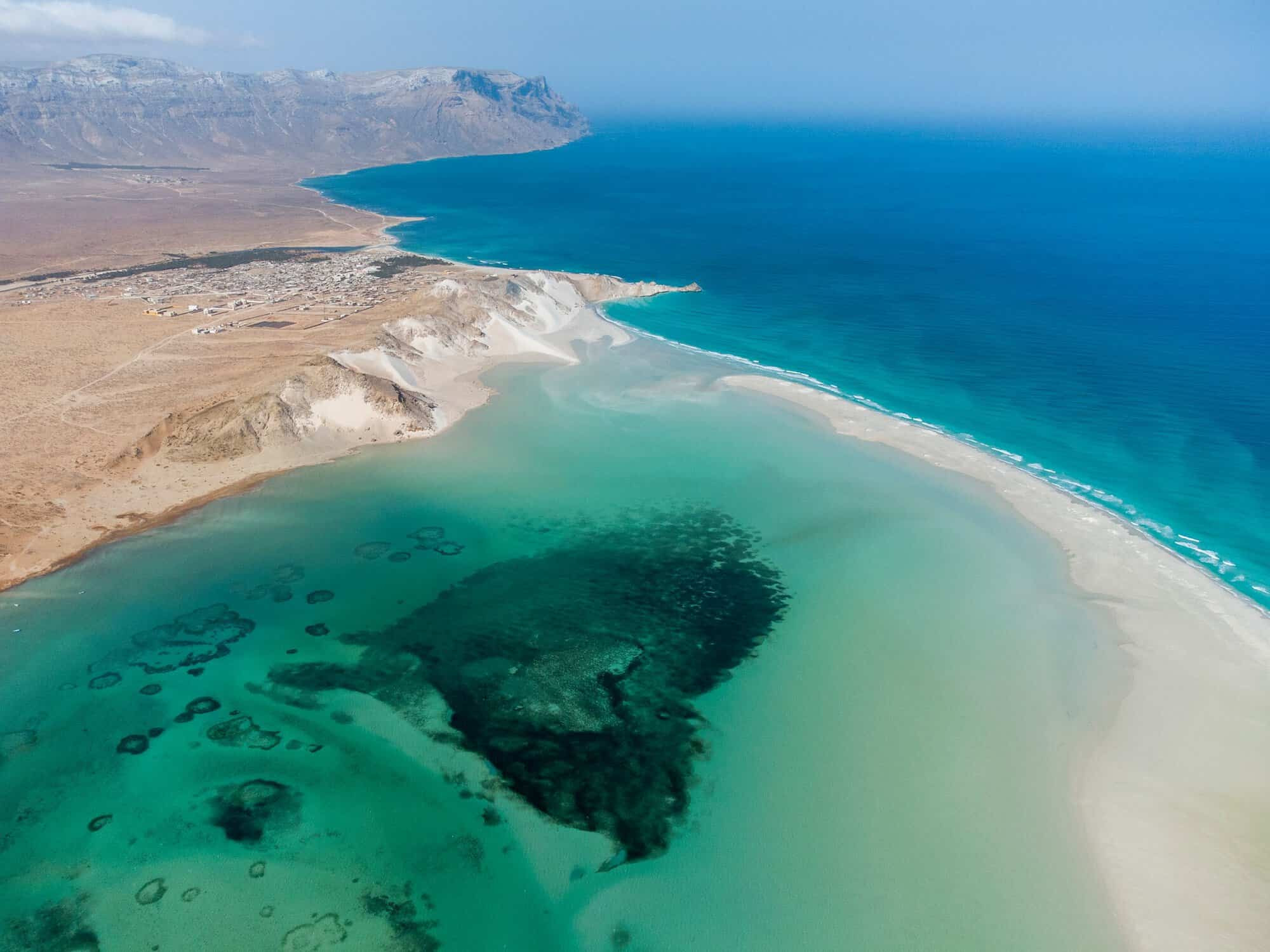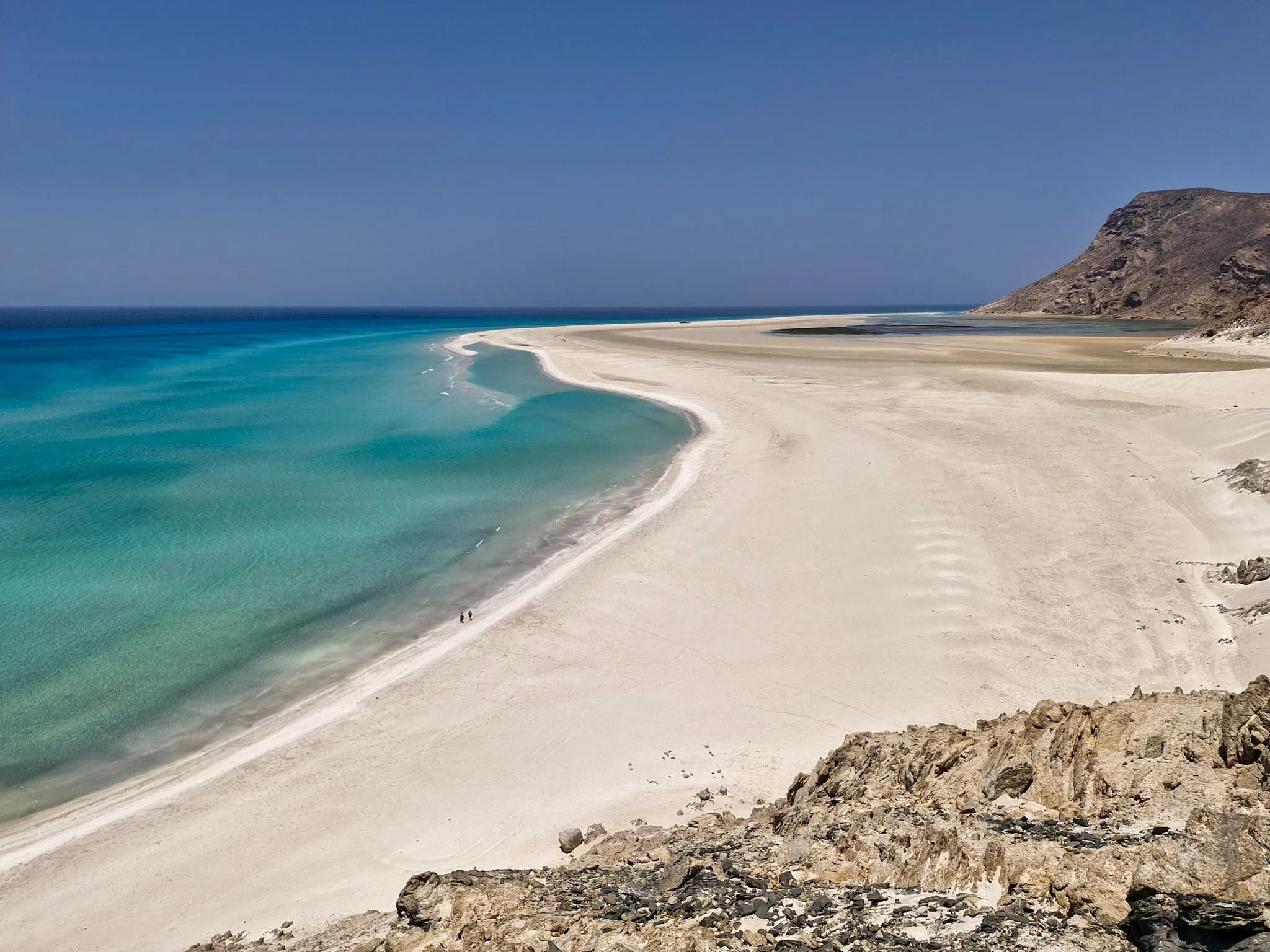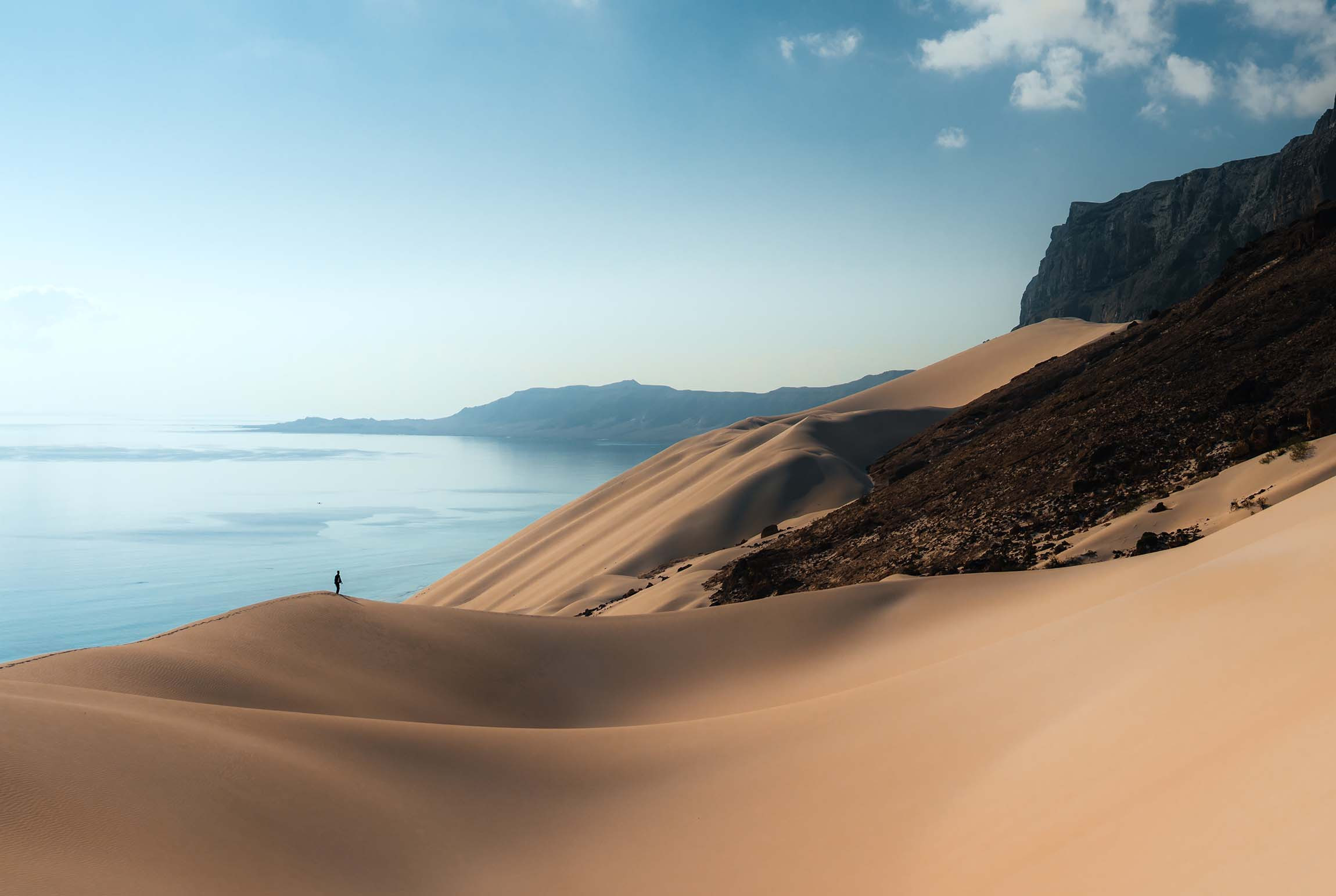
Socotra is a small archipelago in the Arabian Sea belonging to Yemen, isolated roughly 350 kilometers from the African mainland and 380 kilometers from the Yemeni coast, cut off from both continents long enough, an estimated 6 to 18 million years, that it developed one of the highest concentrations of endemic species found anywhere on Earth. Roughly a third of its plant species exist nowhere else in the world, earning the island frequent comparisons to the Galapagos as one of the planet's most biologically distinct places.
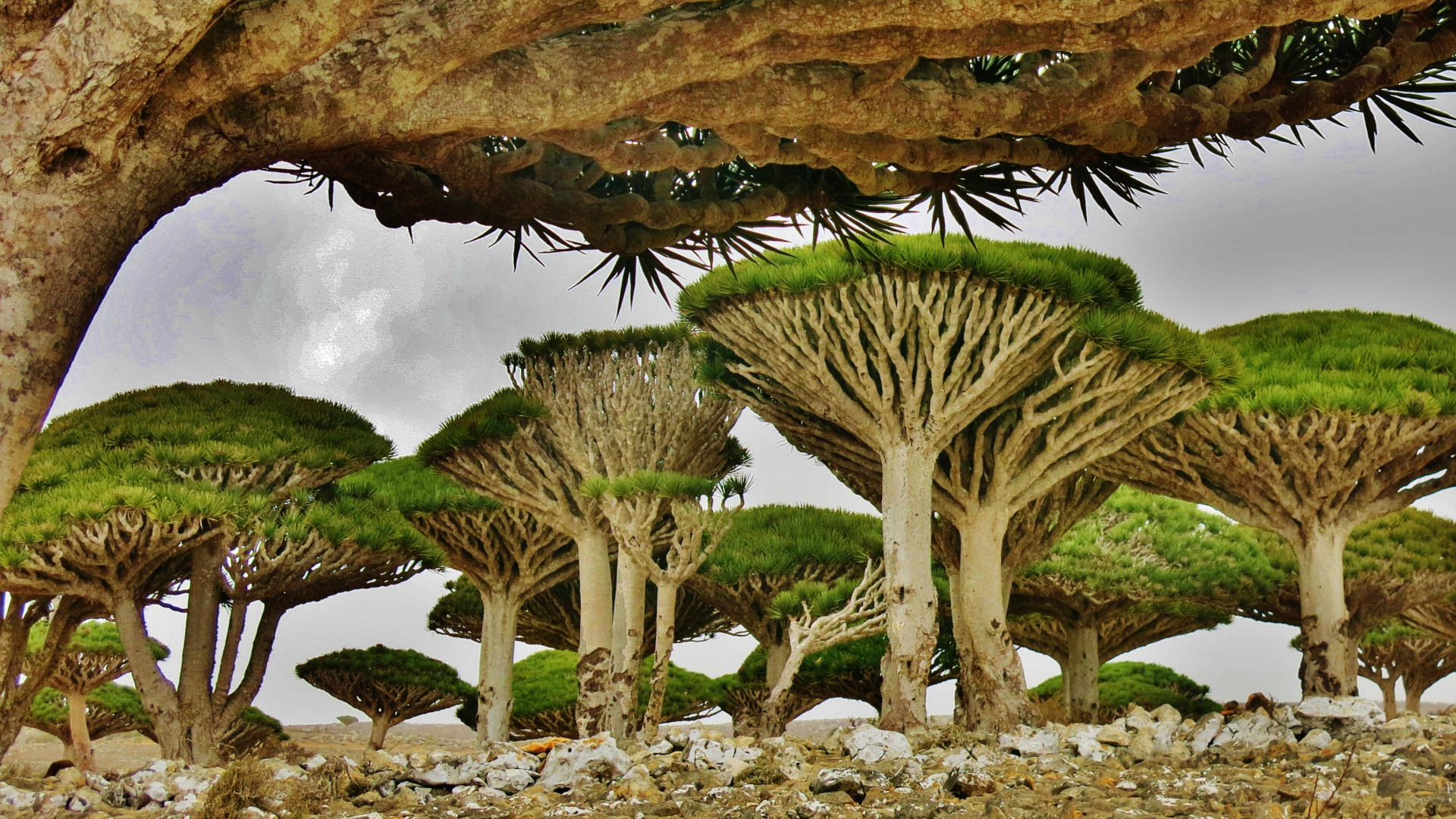
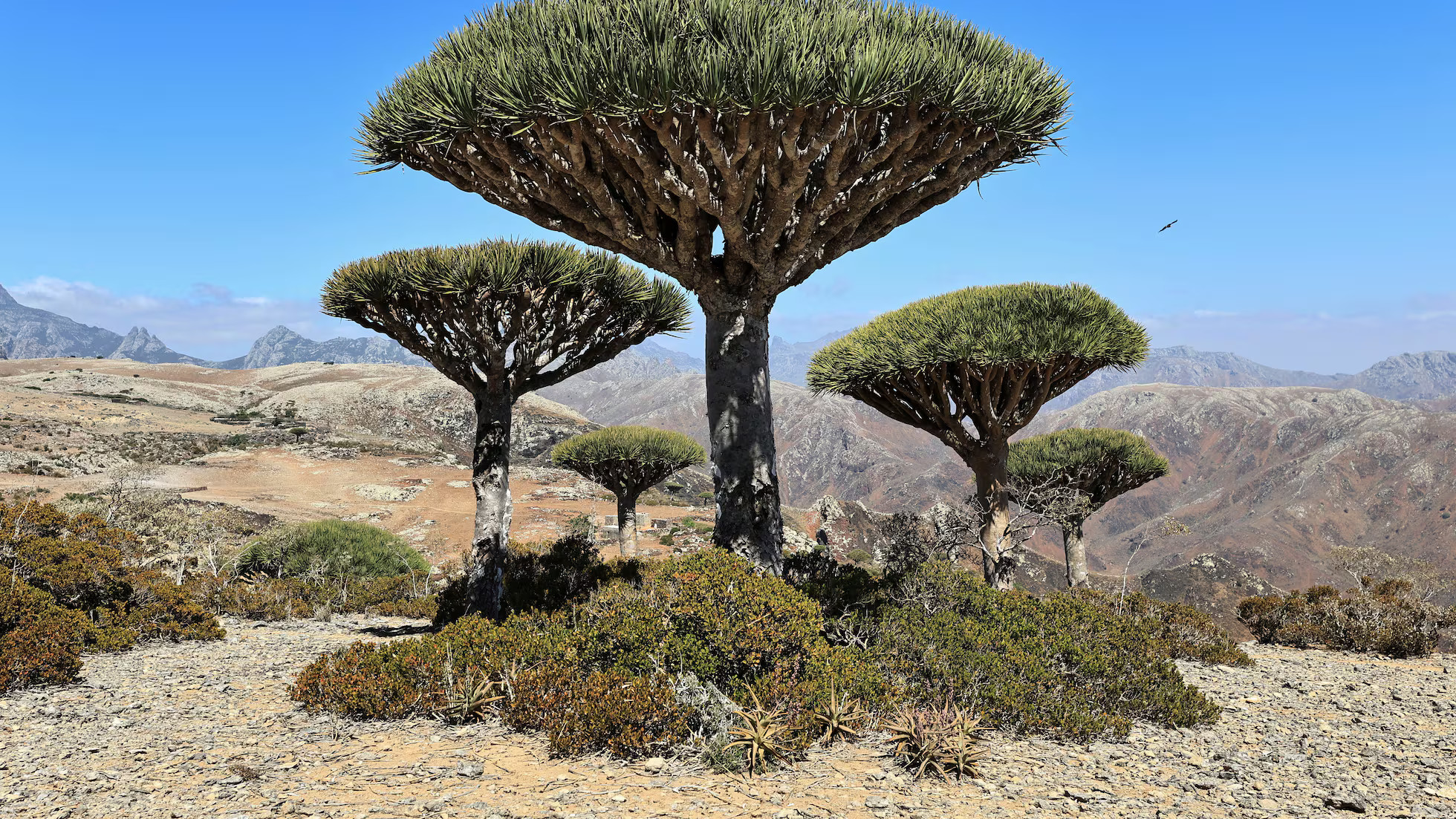
The island's most recognizable resident is the dragon's blood tree, Dracaena cinnabari, an umbrella-shaped tree with a dense canopy of upward-pointing branches that produces a deep red resin once prized across the ancient world for dye, medicine, and incense. Groves of these unmistakable trees cover Socotra's Dixam Plateau, creating a landscape so visually alien that photographs of the island are frequently mistaken for concept art or another planet entirely.
Socotra separated from the African-Arabian mainland during the breakup of the ancient Gondwana supercontinent, drifting into isolation long before most modern plant and animal lineages had fully diversified elsewhere. That extreme isolation, combined with the island's harsh, semi-arid climate and limited freshwater, pushed surviving species toward highly specialized adaptations found nowhere else, from the dragon's blood tree's water-conserving canopy shape to a range of succulent plants with bizarre, bottle-like swollen trunks built to store scarce water.
Scientists studying island biogeography consider Socotra one of the most important living laboratories on Earth for understanding how isolation drives rapid, unusual evolutionary adaptation, a status recognized formally when UNESCO inscribed the archipelago as a World Heritage Site in 2008 specifically for its exceptional biodiversity.
Beyond the dragon's blood tree, Socotra hosts several hundred additional endemic plant species, including the bottle-shaped Adenium obesum socotranum, the Socotran desert rose, which stores water in a grotesquely swollen trunk that has made it a prized, if slow-growing, specimen among succulent collectors worldwide. Cucumber trees, another Socotra-only species with a soft, swollen trunk unlike any related mainland cucumber plant, add to the island's reputation as a place where ordinary plant families evolved into visibly unrecognizable forms.
Botanists have documented similarly high endemism among the island's reptiles and birds, including several gecko and lizard species and the Socotra starling, none of which occur naturally anywhere else, reinforcing the island's status as a genuinely isolated evolutionary pocket rather than simply an unusual-looking extension of the nearby mainland.
Dragon's blood resin was traded across the ancient world for millennia, valued by Greek, Roman, and later medieval European and Middle Eastern cultures for use in dyes, varnishes, and traditional medicine, and Socotra's role as a resin source made the island a known, if remote, waypoint on regional maritime trade routes stretching back over two thousand years. Some historians have connected Socotra to ancient references describing a remote "Isle of Bliss" or similarly mythologized island, though firm identification with specific ancient texts remains debated among scholars.
Later, the island's strategic position near the mouth of the Gulf of Aden drew interest from various regional and colonial powers, including a period of British protectorate status in the 19th and 20th centuries, though Socotra's genuine remoteness meant it was never developed or settled as intensively as more accessible territories elsewhere in the region.
Socotra's roughly 60,000 residents live primarily through fishing, livestock herding, and small-scale agriculture, maintaining a distinct Socotri language and cultural identity shaped heavily by the island's isolation from mainland Yemen and the wider Arab world. Traditional practices, including the harvesting of dragon's blood resin itself, continue today, though modern medicine and synthetic dyes have reduced global commercial demand considerably compared to the resin's ancient trading peak.
Despite Yemen's prolonged civil conflict on the mainland since 2015, Socotra has remained relatively insulated from direct fighting due to its geographic separation, though the island has still experienced political disputes over administrative control and periodic disruption to supply lines and tourism infrastructure connecting it to the outside world.
Socotra's unique ecosystem faces mounting pressure from increasingly severe cyclones linked to changing regional weather patterns, with major storms in 2015 causing significant damage to dragon's blood tree populations and broader island infrastructure alike. Conservationists have also raised concerns about overgrazing by introduced livestock limiting natural regeneration of young dragon's blood trees, threatening the long-term survival of groves that can take well over a century to mature fully.
Political instability on the Yemeni mainland has complicated conservation funding and enforcement on Socotra specifically, even as international recognition of the island's ecological importance has grown steadily since its UNESCO inscription, creating an uneasy balance between global scientific interest and genuinely limited local capacity to manage environmental threats.
Socotra remains genuinely difficult to visit, with limited flight connections, typically routed through mainland Yemen or occasionally the UAE, and infrastructure considerably less developed than most other UNESCO-listed natural sites, meaning nearly all visitors arrive through specialized tour operators experienced in navigating both logistics and safety considerations tied to Yemen's broader political situation. Camping remains the standard form of accommodation across much of the island outside its small main town, Hadibu, giving visits here a considerably more expedition-like character than typical nature tourism elsewhere.
Those who do reach Socotra typically describe an experience unlike anywhere else they have traveled, both for the landscape's genuine strangeness and for the significant logistical effort required simply to arrive, a combination that has kept visitor numbers low and the island's ecosystems comparatively undisturbed by mass tourism.
Socotra's combination of extreme isolation, extraordinary endemism, and a landscape genuinely unlike anywhere else on the planet gives it a claim to biological uniqueness matched by very few other places, island or otherwise. For travelers willing to accept real logistical and political complexity, Socotra offers something increasingly rare: a landscape that still looks and feels almost entirely unmediated by mass tourism or modern development.
Socotra's isolation extends beneath the waterline as well, with surrounding reefs supporting an unusually high number of endemic fish species alongside more typical Indian Ocean marine life, a combination that has drawn a small but growing interest from specialist dive operators despite the island's broader inaccessibility. Coral coverage around parts of the archipelago remains comparatively healthy relative to more heavily trafficked Indian Ocean dive destinations, another byproduct of Socotra's low visitor numbers over the decades.
Researchers continue documenting new endemic species both on land and in surrounding waters, suggesting that Socotra's full biological inventory, despite decades of scientific interest, likely remains incomplete even today, adding an ongoing sense of genuine discovery to an island already considered one of the most biologically significant places on the planet.
No reviews yet. Be the first to share your experience!
Share your experience and help other travelers