The Taj Mahal exists because of a death in childbirth. In 1631, Mumtaz Mahal, the favorite wife of the fifth Mughal emperor Shah Jahan, died delivering their fourteenth child while accompanying her husband on a military campaign. Grief-stricken, Shah Jahan commissioned a mausoleum unlike anything the Mughal Empire had built before — not just a tomb, but a declaration, in white marble, of a love story that has since outlasted the empire that produced it.
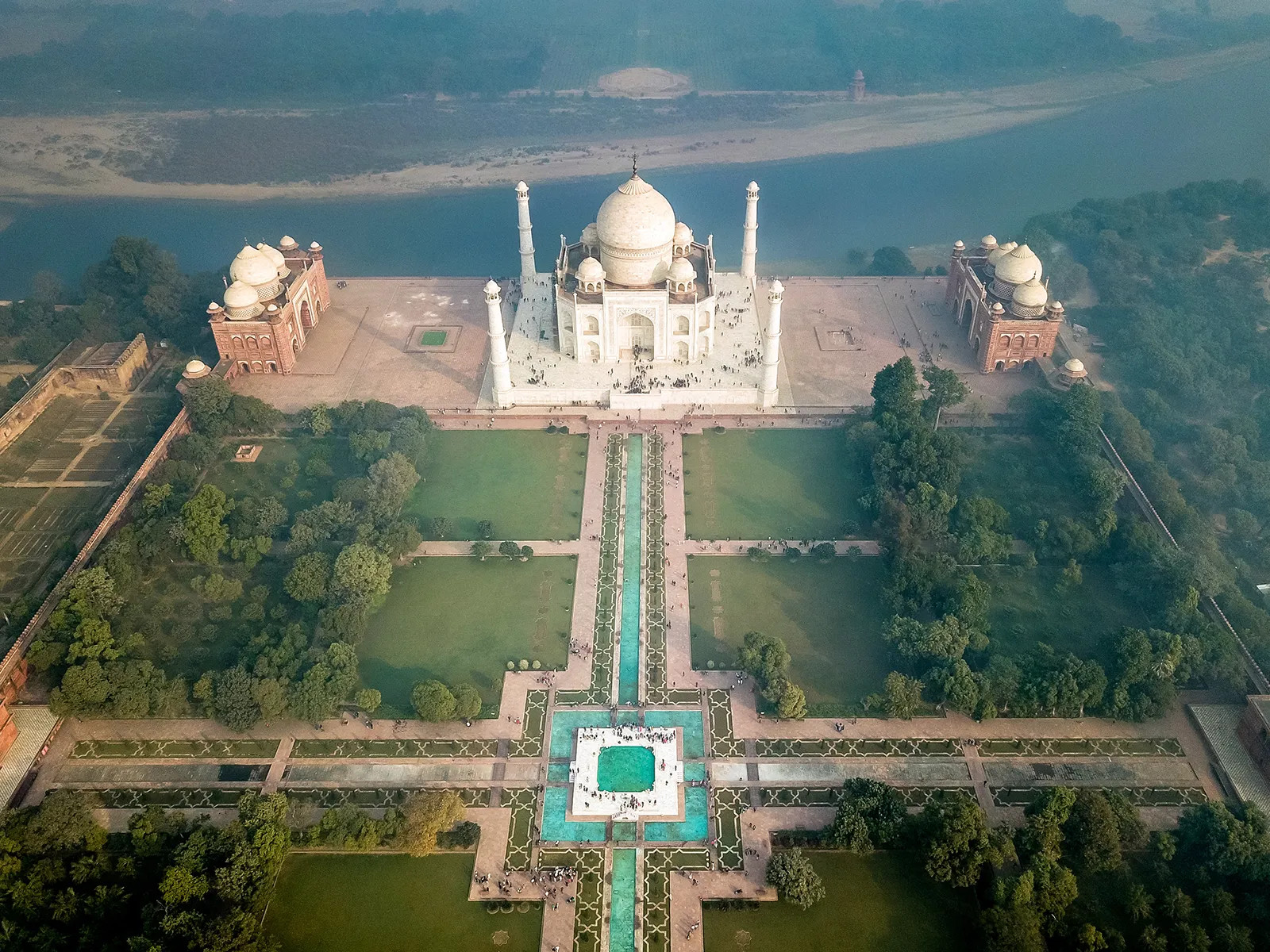
Construction began in 1632 on the banks of the Yamuna River in Agra, then a major Mughal capital. The mausoleum itself took roughly sixteen years to complete, finished around 1648, while the surrounding complex — gardens, a mosque, a guest house, and the great gateway — continued until about 1653. More than 20,000 workers and artisans, drawn from across the empire and beyond, labored on the project for over two decades.
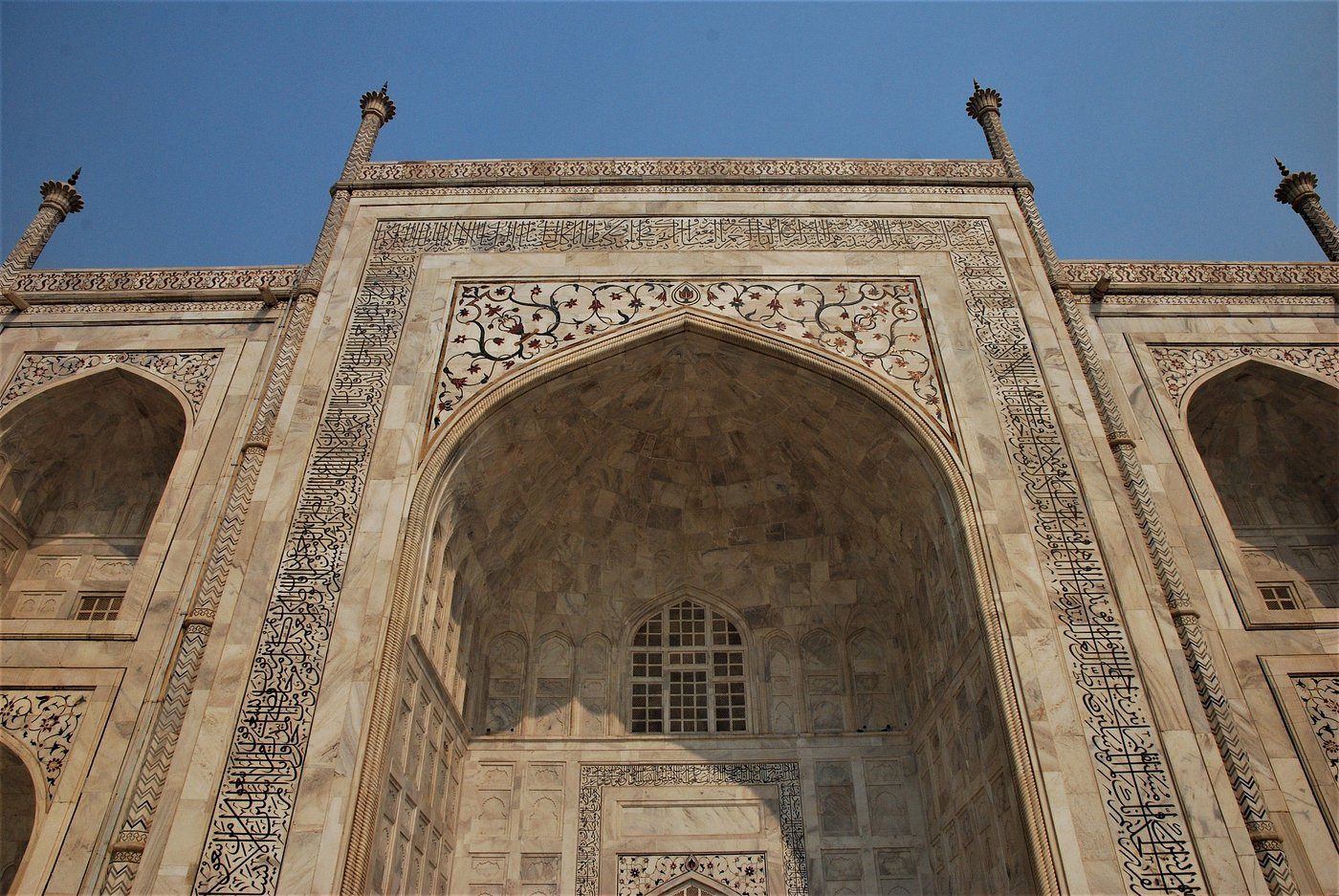
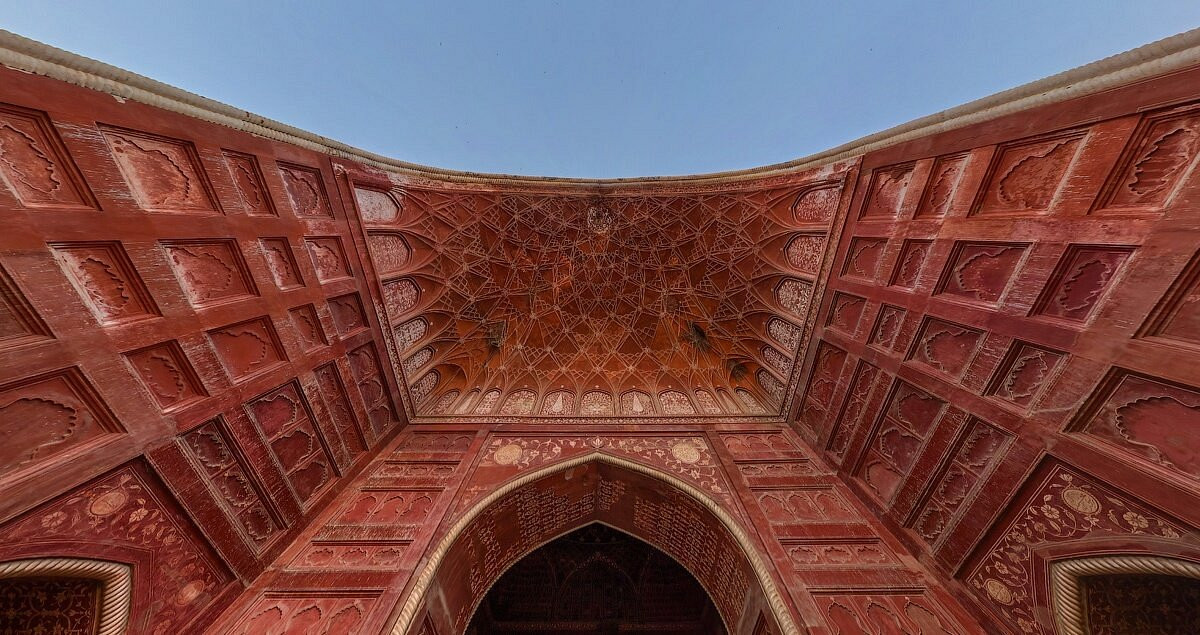
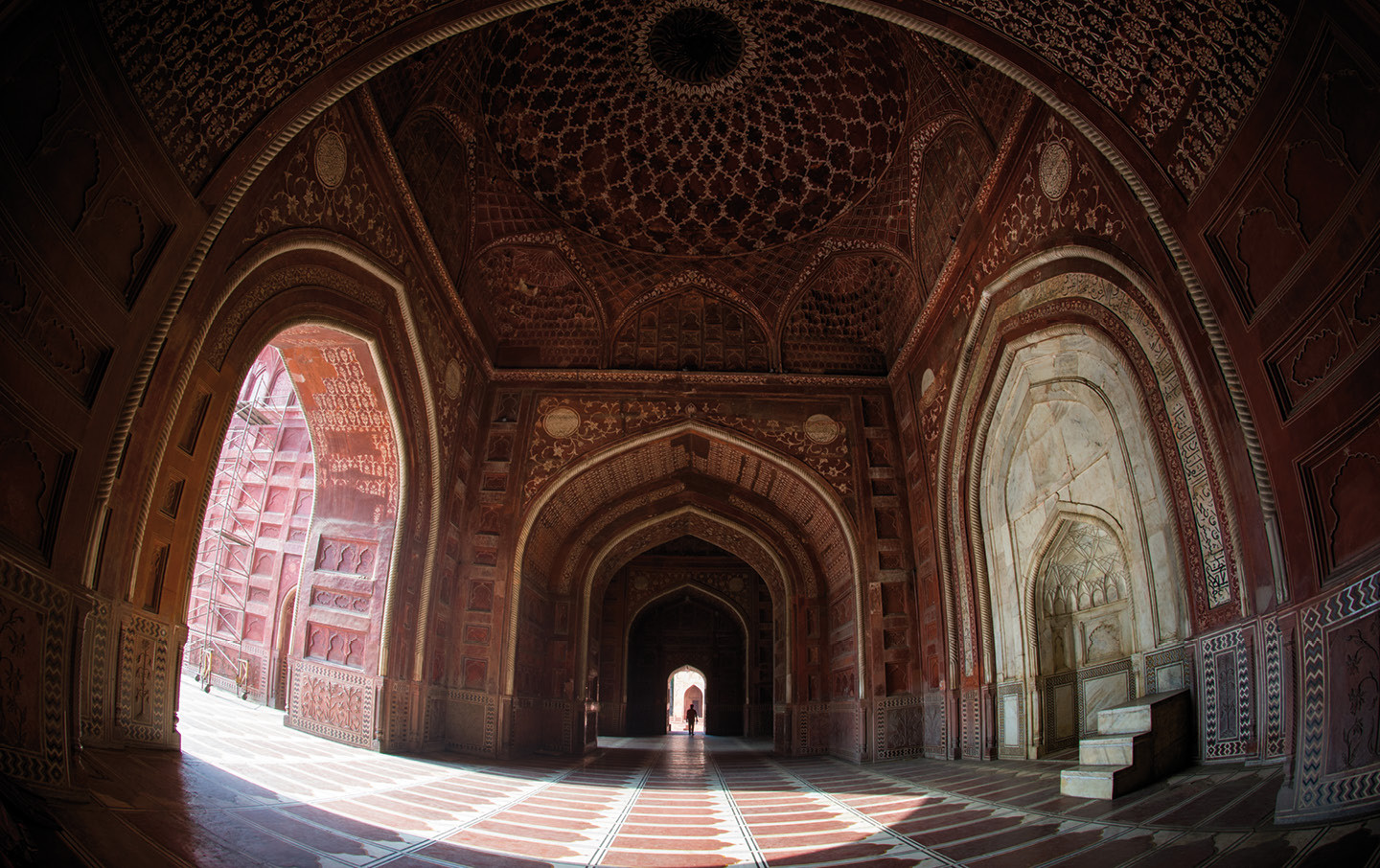
The building's material palette reads like a inventory of the empire's trade networks. The luminous white marble sheathing the exterior came from quarries in Makrana, Rajasthan, hauled hundreds of kilometers to the construction site, while red sandstone from Fatehpur Sikri frames the surrounding structures in deliberate visual contrast. Set into the marble surfaces is pietra dura inlay work using 28 types of precious and semi-precious stones — jade, turquoise, lapis lazuli, sapphire, carnelian, and more — forming intricate floral and calligraphic patterns across walls that shift in appearance with the changing light throughout the day.
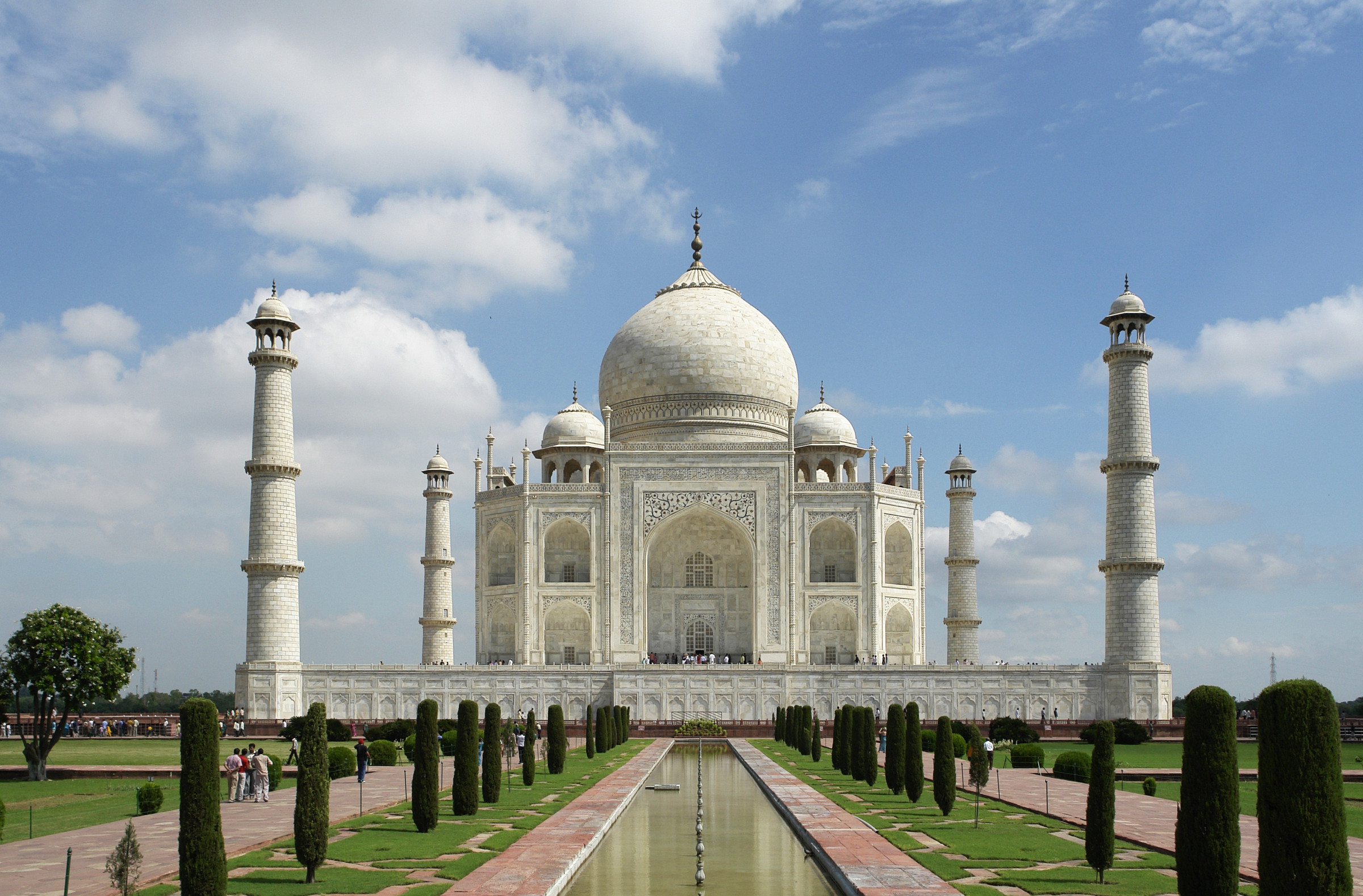
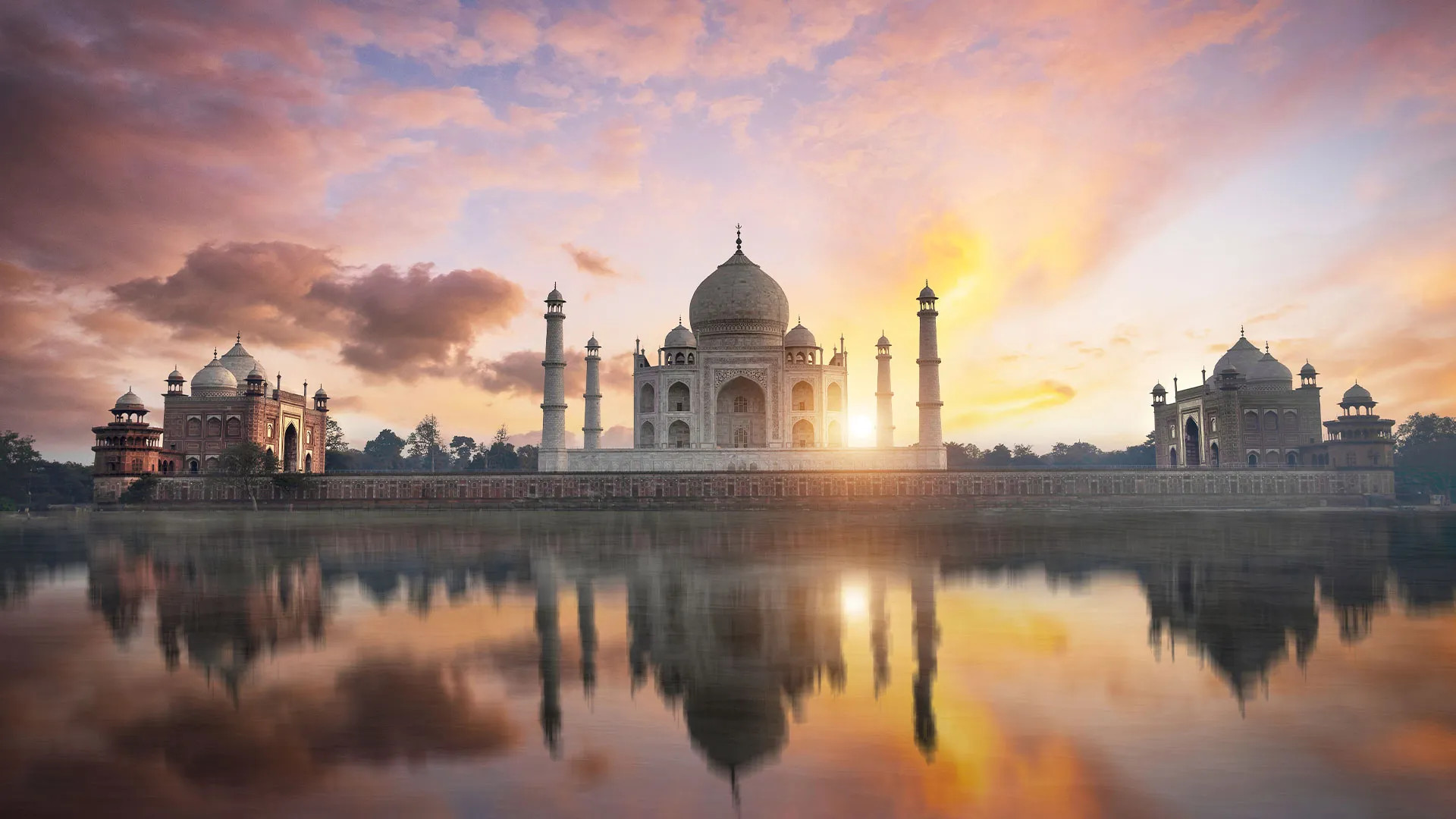
At the center of the complex, the mausoleum's white dome rises 23 meters, topped by a gilded finial reaching another 9.6 meters skyward, while four minarets over 40 meters tall stand at each corner of the marble platform — angled slightly outward, engineers believe, so that in the event of an earthquake they would fall away from the tomb rather than onto it. The full complex spans roughly 17 hectares enclosed within crenellated walls, designed as an integrated architectural and garden composition rather than a single isolated building.
Contemporary estimates put construction costs at around 32 million rupees — a staggering sum for the era, equivalent to roughly $827 million in 2015 dollars by some economic conversions. That cost, along with Shah Jahan's later ambitions for a planned black marble mausoleum for himself across the river, contributed to the financial strain that weakened the Mughal treasury in his final years. His son Aurangzeb deposed him in 1658, and Shah Jahan spent his remaining years imprisoned in nearby Agra Fort, reportedly with a clear view of the monument he'd built for his wife, until his death in 1666 — after which he was buried beside her inside the tomb he never fully finished his own version of.
Architecturally, the Taj Mahal synthesizes Persian, Islamic, Ottoman Turkish, and Indian design traditions into a coherent whole that historians consider the high point of Mughal architecture. Its perfect bilateral symmetry, the reflecting pool leading up to its facade, and the precise geometric relationship between the dome, minarets, and surrounding gardens all reflect Islamic cosmological ideas about paradise rendered in physical form — a garden tomb meant to evoke a vision of the afterlife rather than simply memorialize the dead.
Centuries of exposure have not been kind to the marble's original brilliance. Industrial pollution and vehicle emissions from nearby Agra have discolored sections of the facade with a yellow-brown patina, while acid rain and contamination from the Yamuna River — including runoff linked to the Mathura Oil Refinery upstream — have accelerated the deterioration of the marble surfaces. Declining groundwater levels have caused structural cracking, first documented in 2010, and a gradual tilt in some of the corner minarets that conservators continue to monitor closely.
The Archaeological Survey of India has responded with ongoing restoration work, including regular mud-pack treatments intended to draw pollutants out of the marble and restore its whiteness, along with selective replacement of damaged marble sections — a maintenance program that, unlike a one-time restoration, has to continue indefinitely given the surrounding environmental pressures.
UNESCO inscribed the Taj Mahal as a World Heritage Site in 1983, describing it as "the jewel of Islamic art in India," and in 2007 a global public vote named it one of the New 7 Wonders of the World — recognition that has done little to slow the flow of visitors it draws. The monument now receives more than 5 million visitors annually, generating the highest revenue of any site managed by the Archaeological Survey of India, and remains, by a wide margin, the most internationally recognized symbol of India itself.
Entry tickets for foreign visitors run around ₹1,300, with an additional ₹200 required to enter the main mausoleum itself; Indian citizens pay a fraction of that at ₹50, and children under 15 enter free. The complex opens 30 minutes before sunrise and closes 30 minutes before sunset, timed to the season, and is closed entirely every Friday for prayers at the on-site mosque.
October through March offers the most comfortable weather for visiting, and arriving for sunrise — both for the cooler temperatures and the noticeably thinner early-morning crowds — is widely considered the best way to experience the monument, particularly on weekdays rather than weekends or Indian public holidays. Most international visitors fly into Delhi's Indira Gandhi International Airport and continue to Agra by road or high-speed train, a journey of a few hours either way.
No reviews yet. Be the first to share your experience!
Share your experience and help other travelers