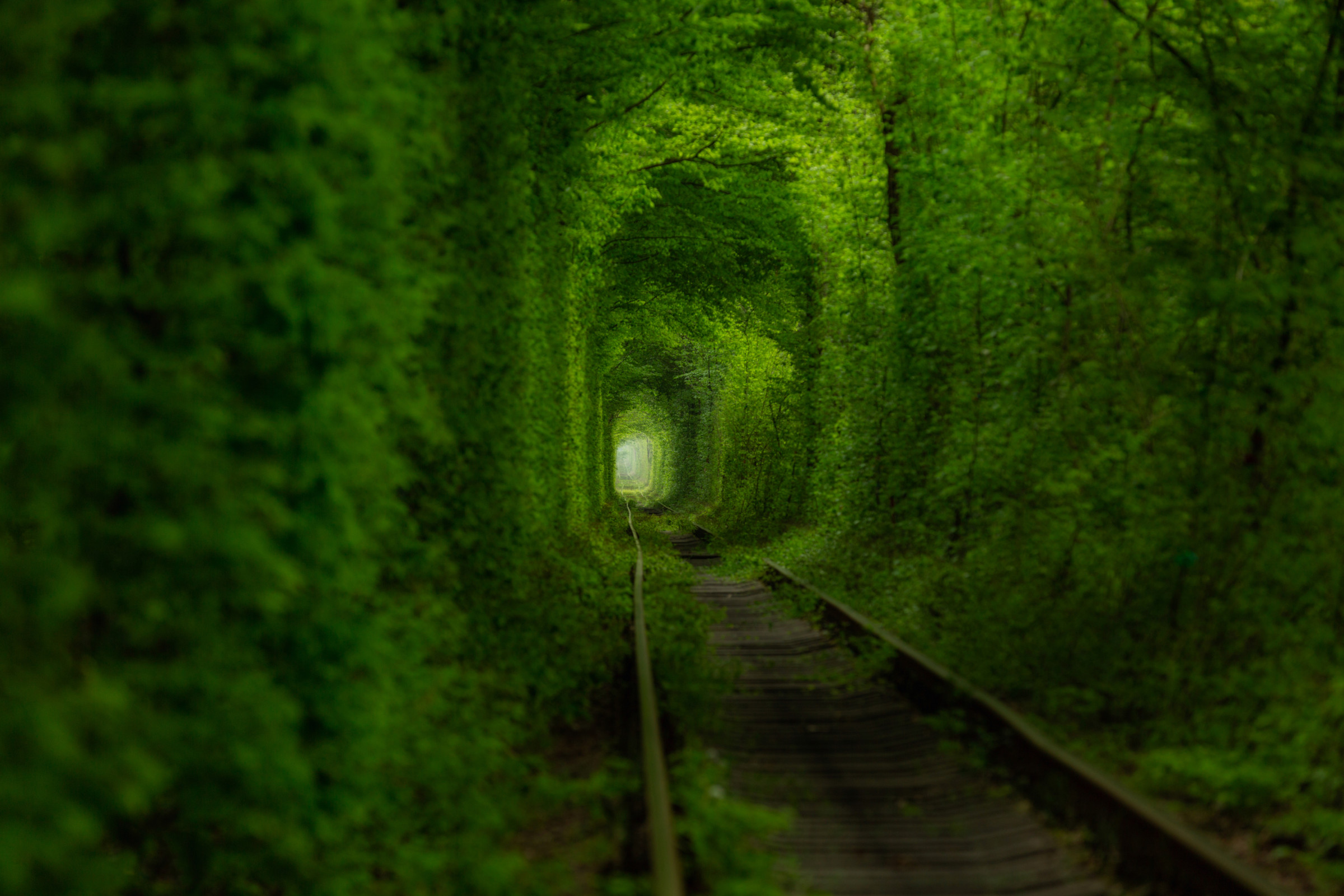
For much of its existence, this half-wild arch of trees near the small town of Klevan in Ukraine's Rivne region wasn't meant to be seen at all. The narrow rail line was laid in the 1940s, in the tense years around the start of the Cold War, to move equipment in and out of a military facility hidden in the surrounding forest. According to local accounts, the trees lining the tracks were planted deliberately — not for beauty, but for concealment, a leafy screen meant to hide freight trains from view.
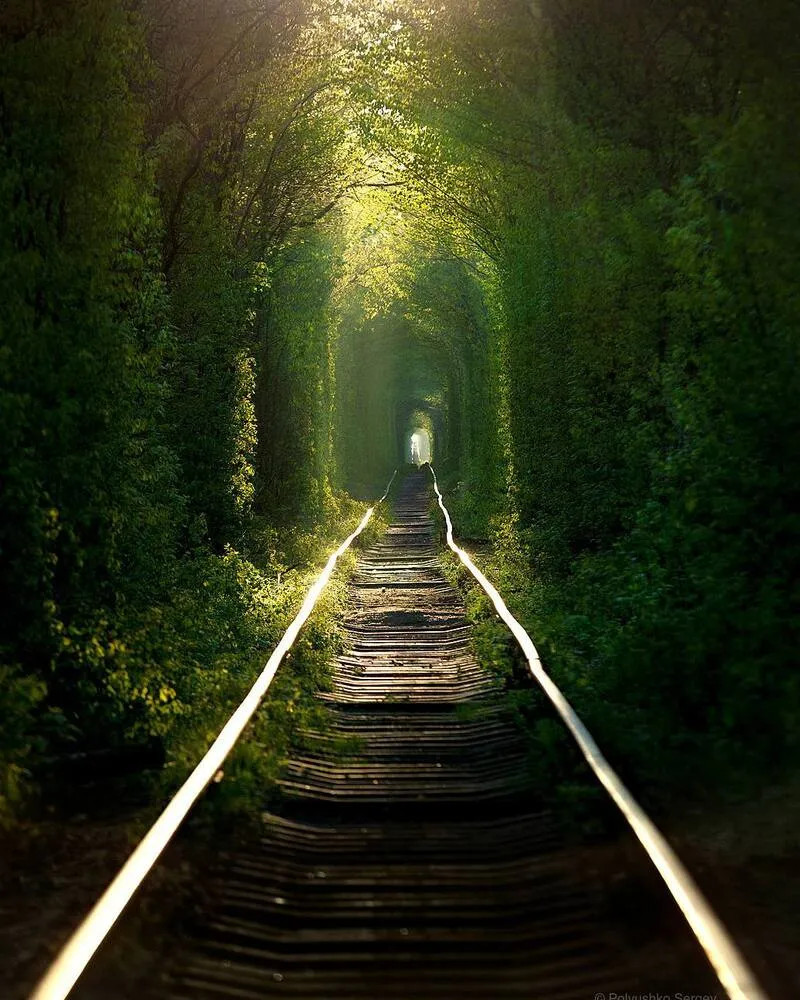
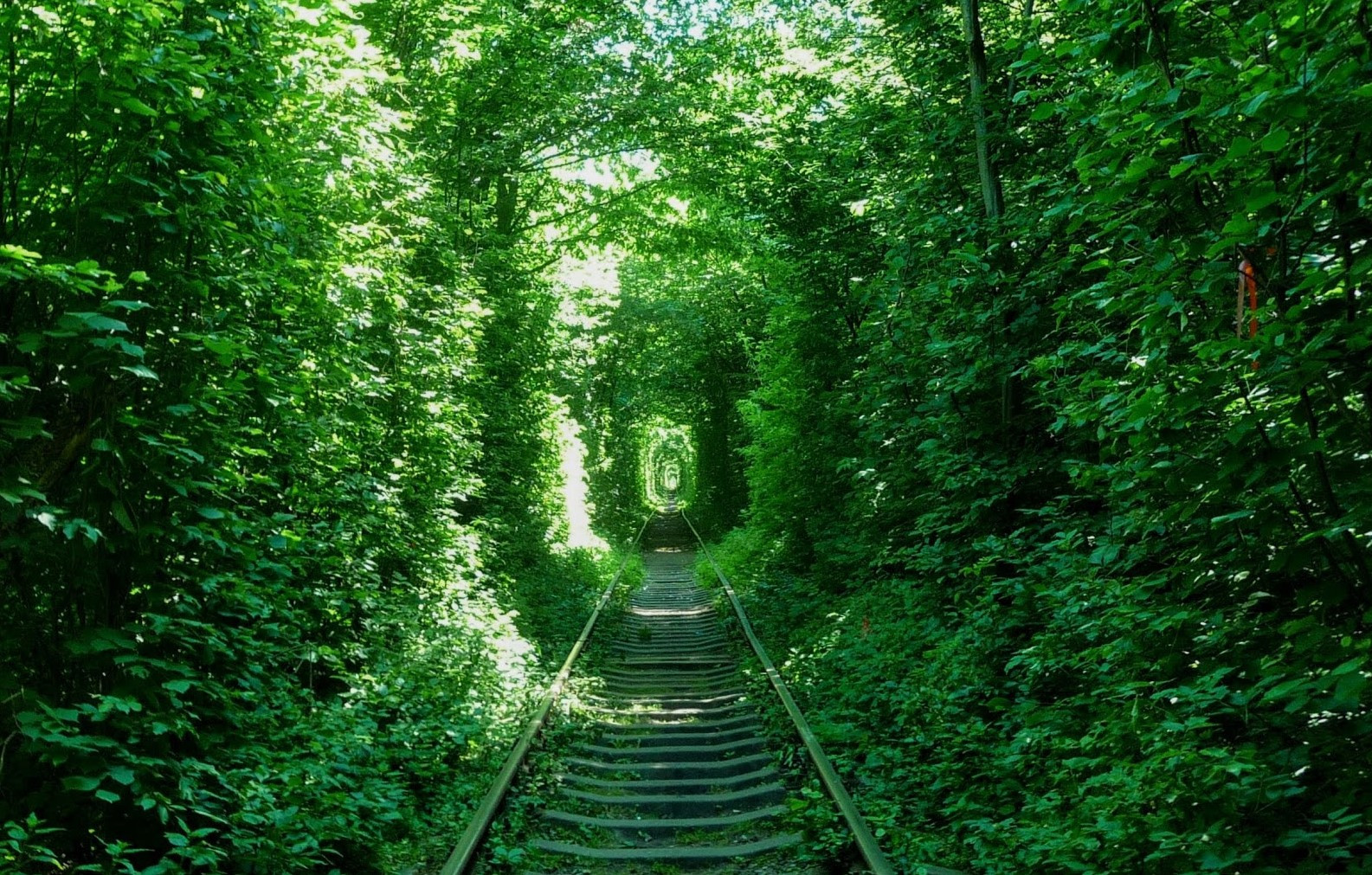
The military purpose eventually faded, but the trains kept running. For decades, a short freight service has carried timber to a fibreboard factory in the neighboring village of Orzhiv, passing through the same stretch of forest a few times a day. Nobody planned for what happened next: left largely undisturbed, the trees along the track kept growing toward each other year after year until their crowns met overhead, fusing into a continuous green vault stretching roughly four kilometers.
By the time the place had a name outside the region, locals already called it the Tunnel of Love. Couples from Klevan and nearby Rivne began walking its length on quiet evenings, drawn by the strange hush of a rail corridor with no platforms, no signage, and almost no crowds — just two rails disappearing into a wall of leaves. A local superstition took hold: if a couple walks the tunnel together and makes a wish while their feelings for each other are genuine, the wish comes true. Whatever its origin, the story stuck, and the tunnel became one of the most photographed backdrops in the country, a favorite setting for engagement photos, wedding shoots, and long-distance couples marking anniversaries.
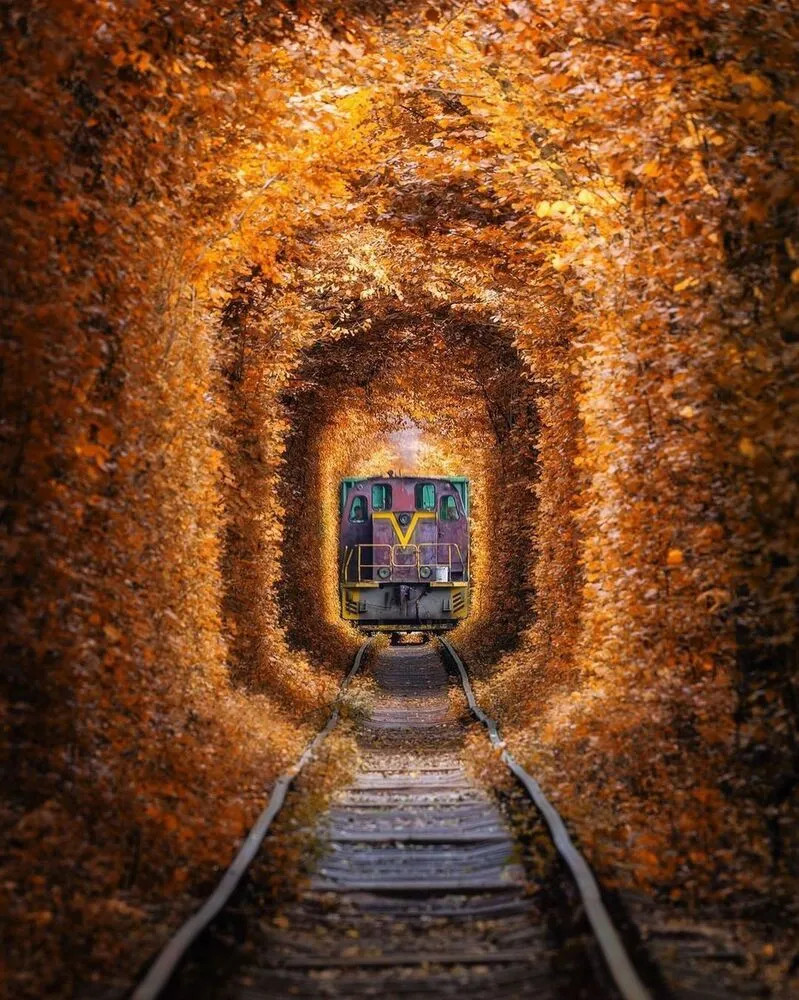
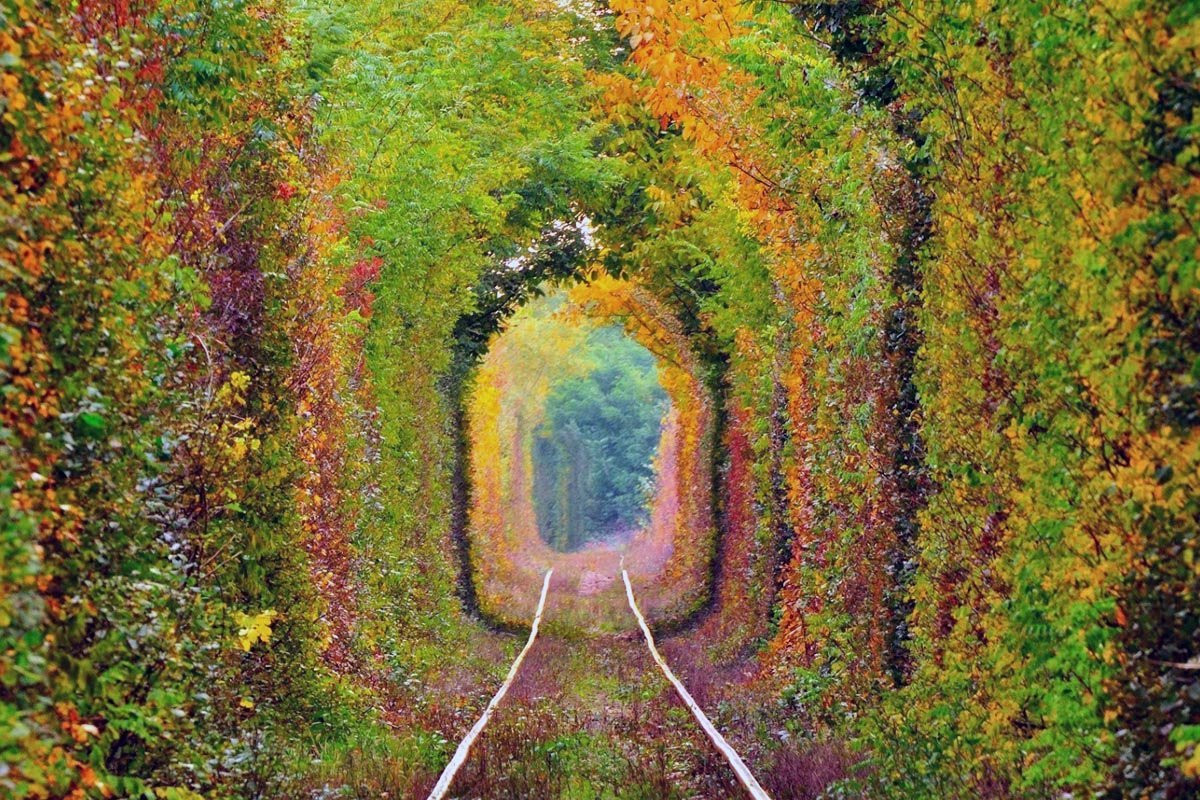
What makes the place so photogenic is also what makes it constantly changing. In late spring and summer it's a tunnel of solid green, sunlight filtering down through layers of leaves onto the gravel and rusting rails below. By October the canopy turns gold, orange, and deep red, and low autumn light turns the whole corridor into something closer to stained glass. In winter, snow settles on bare branches and the structure turns starker and more skeletal, trading color for silence. There's no single "best" season here — only a best season for the kind of photograph you're after.
The tunnel nearly didn't survive to be photographed at all. In 2013, railway maintenance crews began cutting back branches and felling some of the trees growing into the rail corridor — standard upkeep for a working freight line. It triggered a public backlash strong enough that further cutting stopped. Since then the trees have effectively been left alone, without any formal protected status, held in place mostly by public attention and the site's growing reputation.
It's worth remembering, walking through, that this is still a working line rather than a managed park. Trains pass a few times a day, moving slowly but without barriers or warning bells, so visitors are expected to watch and listen rather than assume the track is always clear. There is no entrance fee: the tunnel simply begins near Klevan's small railway station and runs north toward Orzhiv, open to anyone willing to walk the gravel bed between the rails.
Tree-lined corridors exist elsewhere in the world — Ireland's Dark Hedges is probably the best known — but few double as an active industrial railway rather than a road, and fewer still grew by pure accident out of a site built to stay hidden. For a place that began as a Cold War secret, the Tunnel of Love has ended up as something close to the opposite: an unplanned stretch of forest that turned into one of Ukraine's most recognizable images, kept alive by a factory that still needs its lumber moved, and kept green by nothing more deliberate than trees doing what trees do when nobody clears them away.
No reviews yet. Be the first to share your experience!
Share your experience and help other travelers