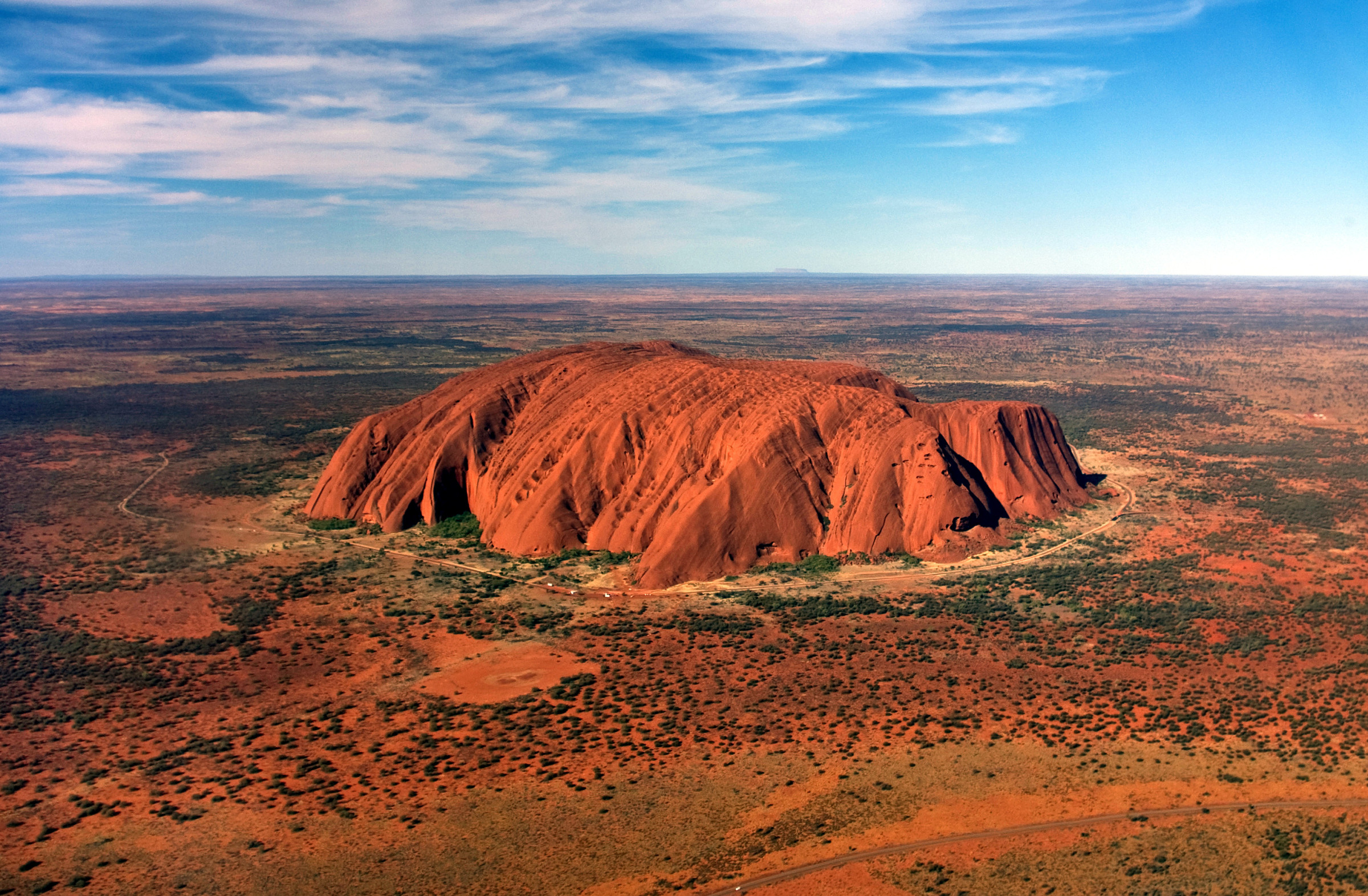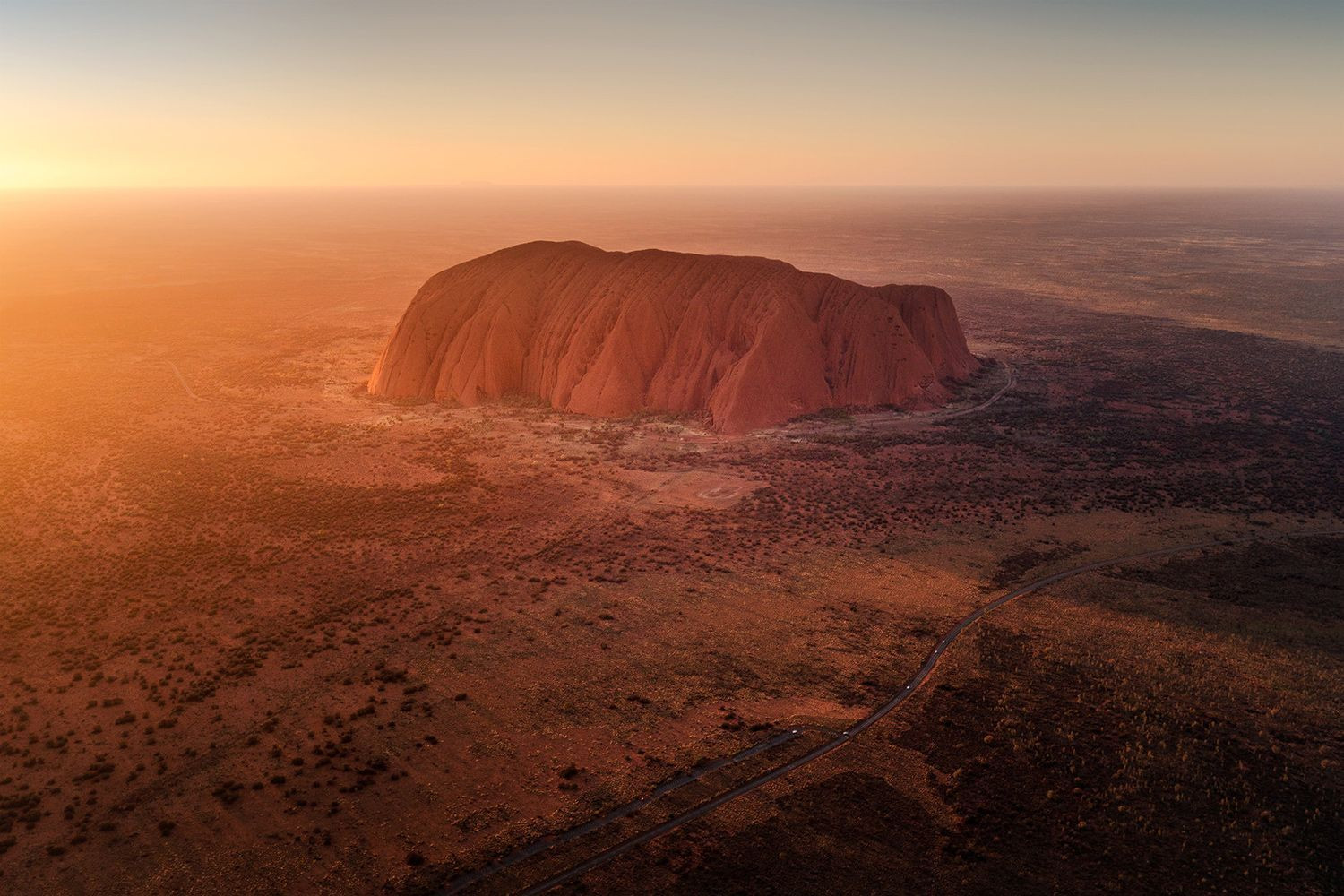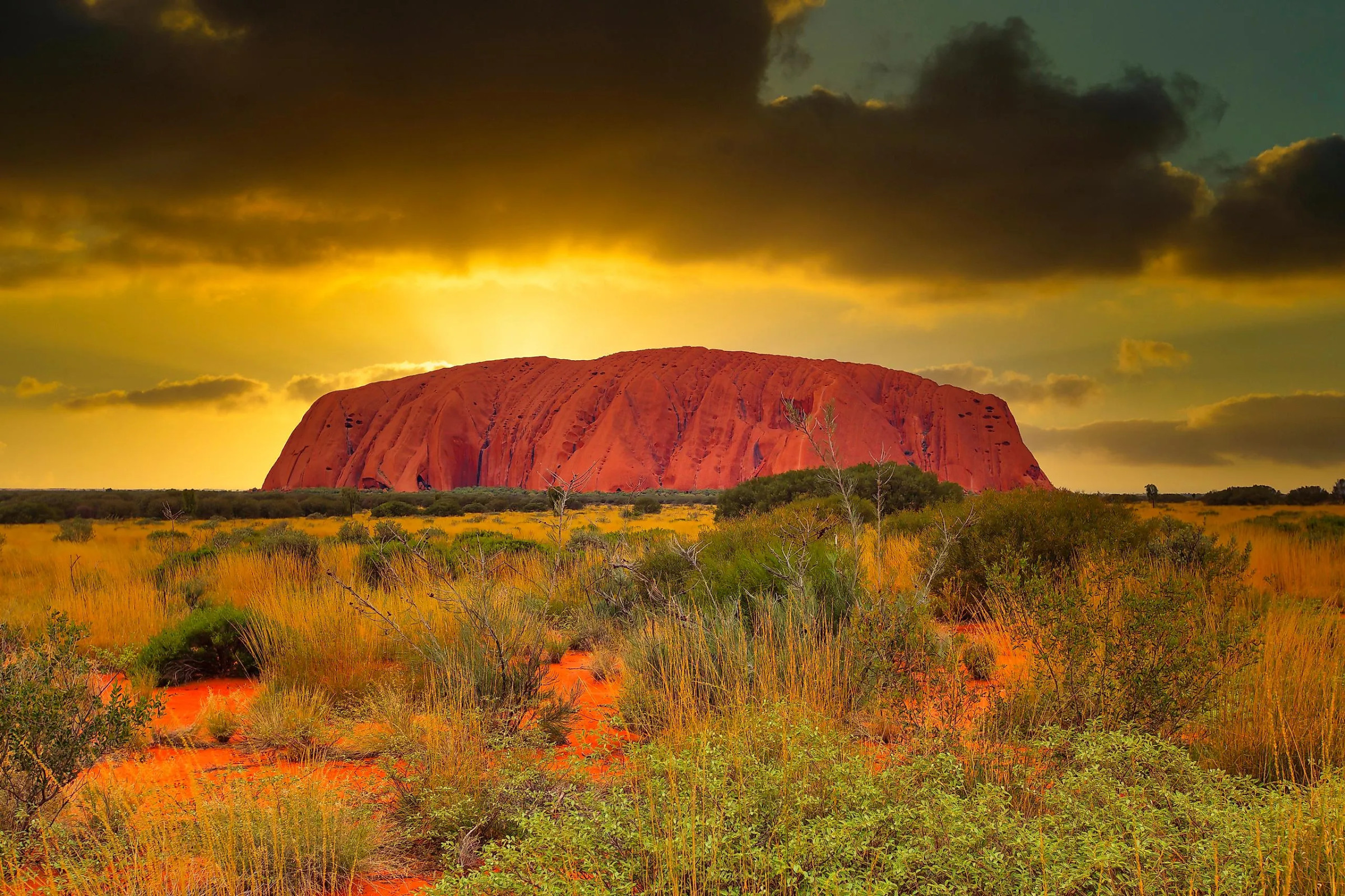
Rising abruptly from the flat scrubland of central Australia, this single sandstone monolith is one of the most recognizable natural formations on the planet, and one of the oldest. The rock itself, technically an arkose sandstone rich in feldspar and quartz, formed from sediment laid down roughly 550 to 530 million years ago, during the same mountain-building episode, the Petermann Orogeny, that shaped much of the surrounding region. What visitors see today is only the tip of a far larger structure: most of the formation extends underground, with the visible dome representing a small fraction of the total rock mass.
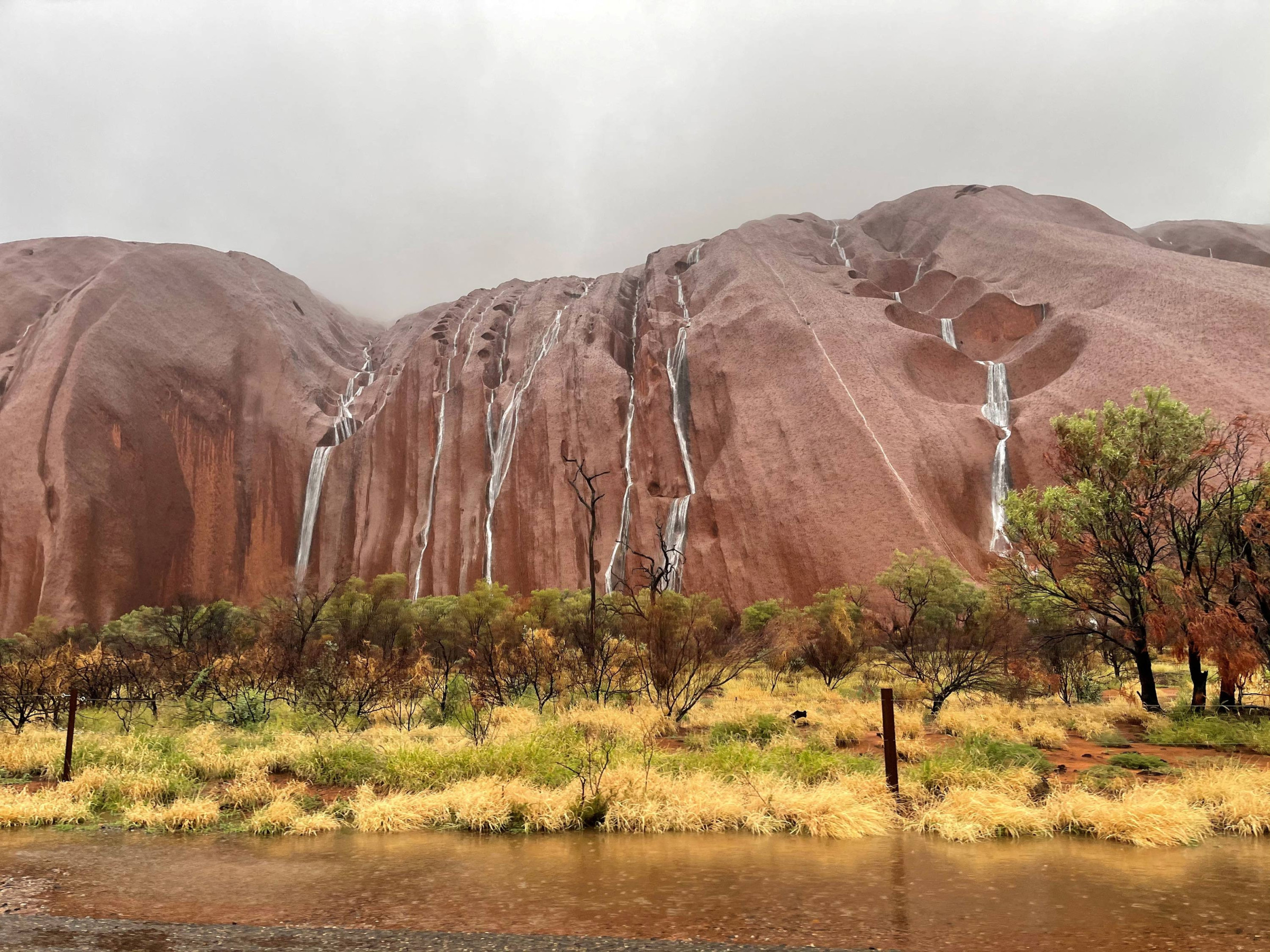
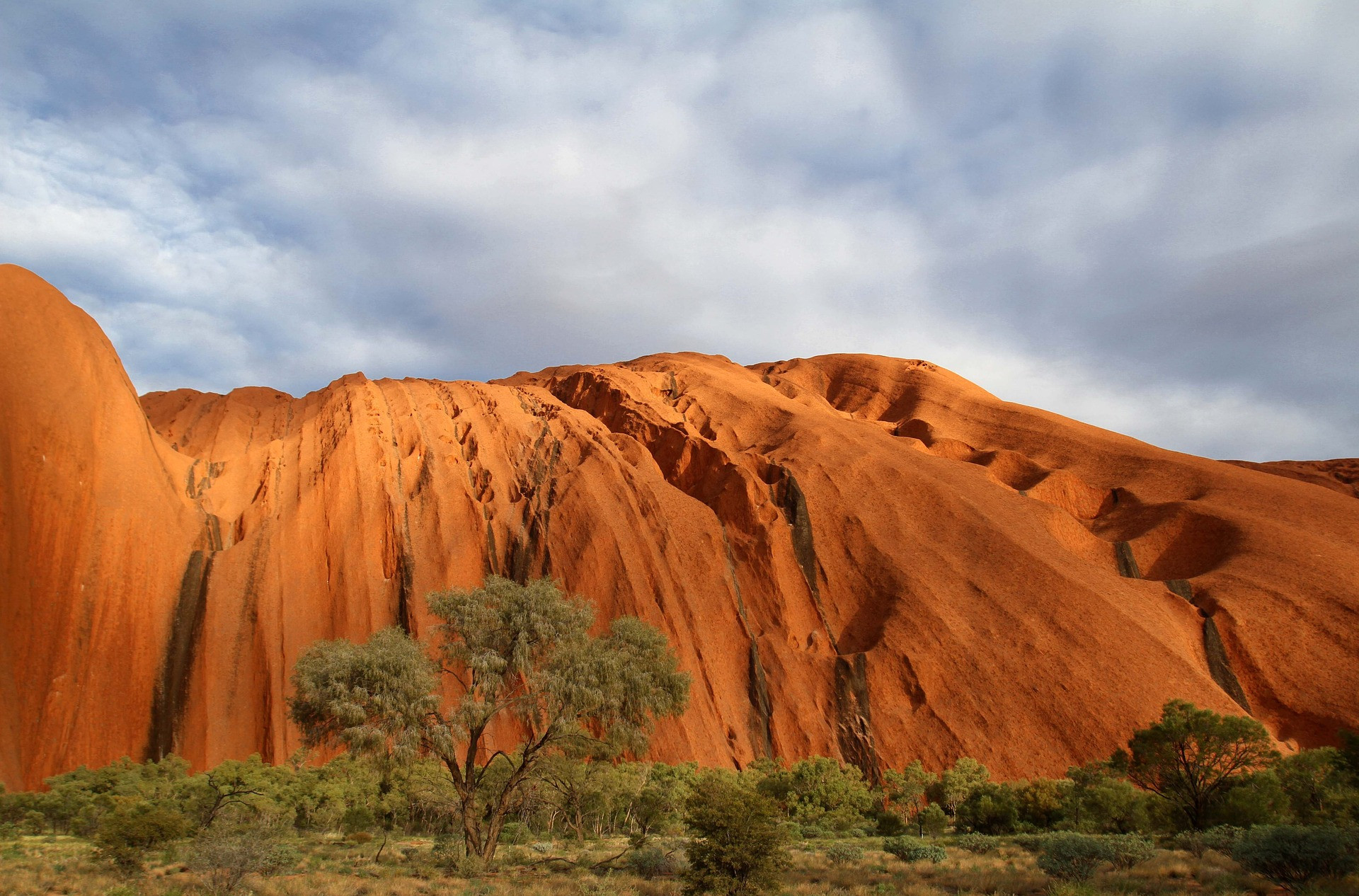
Standing 348 meters above the surrounding plain and measuring 9.4 kilometers around its base, the rock's scale is deceptive from a distance, flattened by the emptiness of the desert around it. Up close, its surface reveals deep ridges, caves, and folds carved by millions of years of wind and flash flooding, along with waterholes that have sustained both wildlife and human communities through the harshest stretches of the surrounding Central Australian desert.
For the Aṉangu, the Pitjantjatjara and Yankunytjatjara Aboriginal people who are the traditional owners of the land, the rock is not simply a geological curiosity but a living record of Tjukurpa, the ancestral law and creation stories that shape Aṉangu culture. Caves around its base contain ancient rock art, and specific sites carry deep spiritual significance tied to the journeys of ancestral beings. Much of this knowledge is restricted, shared only within Aṉangu community and law, which is why visitors are asked to photograph and explore only in designated areas.
Ownership of the surrounding national park was formally handed back to the traditional owners on 26 October 1985, under an agreement that saw the land leased back to the Australian government for joint management, a arrangement that continues today. The site was inscribed as a UNESCO World Heritage property for both its natural and cultural values, one of a small number of places recognized for both.
For decades, climbing the rock was a popular, if controversial, visitor activity, despite Aṉangu requests that people refrain out of respect for its sacred status and the safety risks of the steep, exposed ascent — at least 37 people died climbing before the practice ended. In November 2017, the park's board voted unanimously to close the climb permanently, with the ban taking effect on 26 October 2019, exactly 34 years after the land handback. The chain handholds once bolted into the rock's northeastern face were subsequently removed, formally closing the chapter and shifting the visitor experience toward walking, viewing, and cultural interpretation around the base instead.
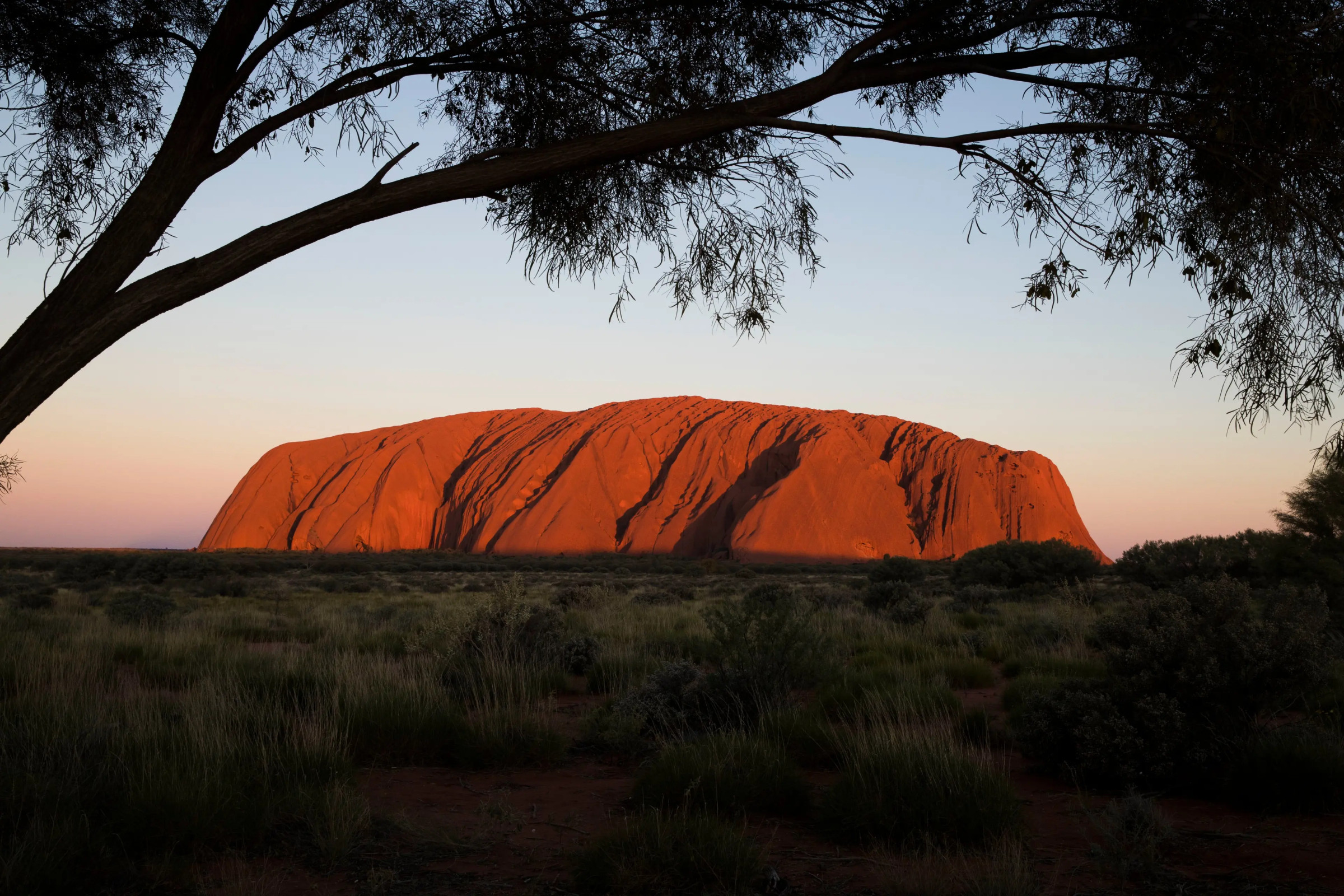
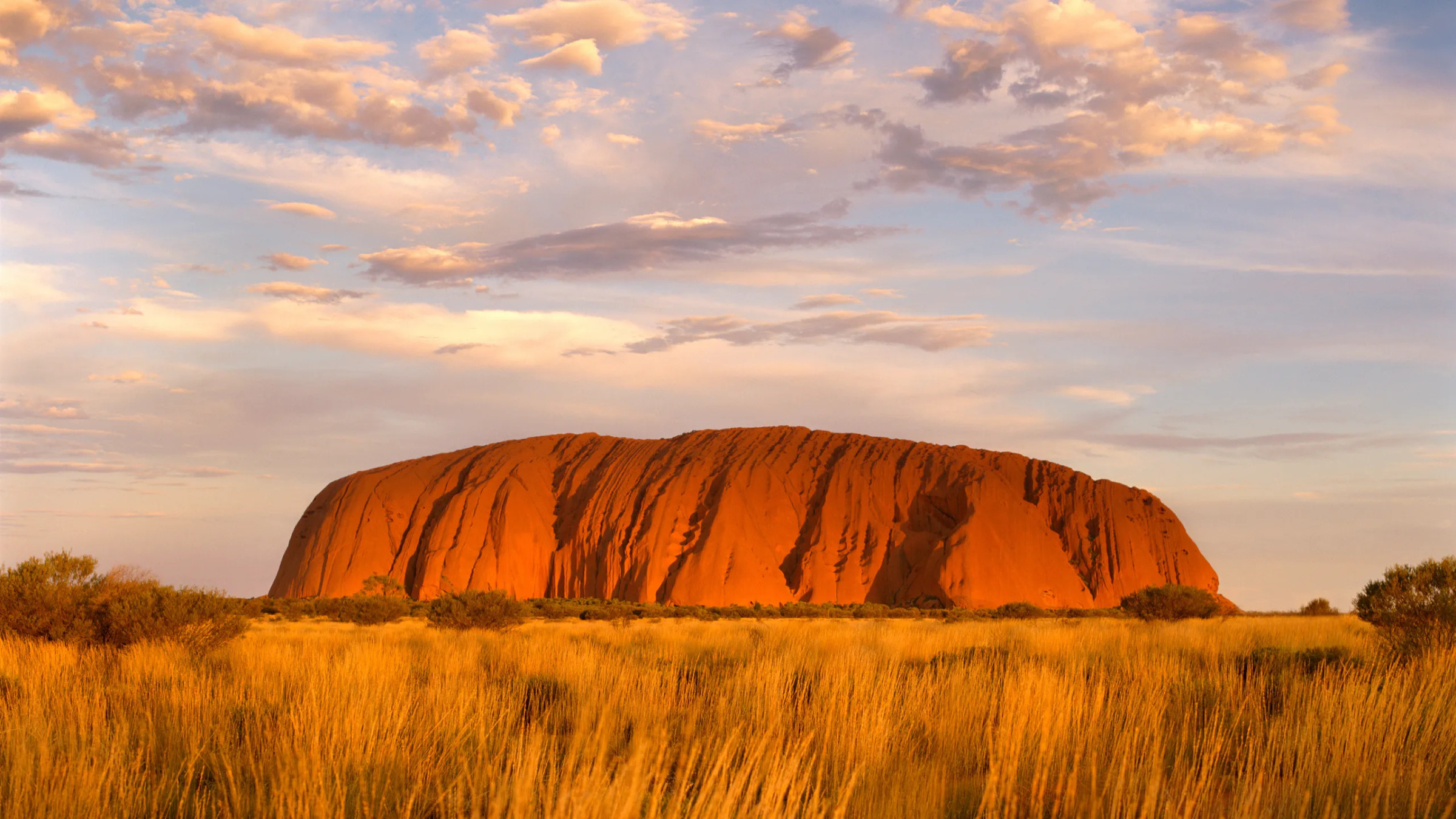
One of the most photographed qualities of the formation is its shifting color through the day. Freshly exposed arkose sandstone is actually grey, but iron minerals within the rock oxidize on contact with air and moisture, forming a thin rust-colored surface layer responsible for the deep red visitors associate with it. That red intensifies dramatically at sunrise and sunset, when low-angle light amplifies the iron oxide's glow, sometimes shifting the rock through shades of orange, deep red, and even purple within a matter of minutes — a phenomenon that draws crowds to dedicated viewing areas at both ends of the day.
Today the surrounding national park offers a network of walking trails circling the base, cultural centers explaining Aṉangu history and law, and viewing platforms positioned for sunrise and sunset, giving visitors a way to experience the site's scale and significance without setting foot on the rock itself.
No reviews yet. Be the first to share your experience!
Share your experience and help other travelers