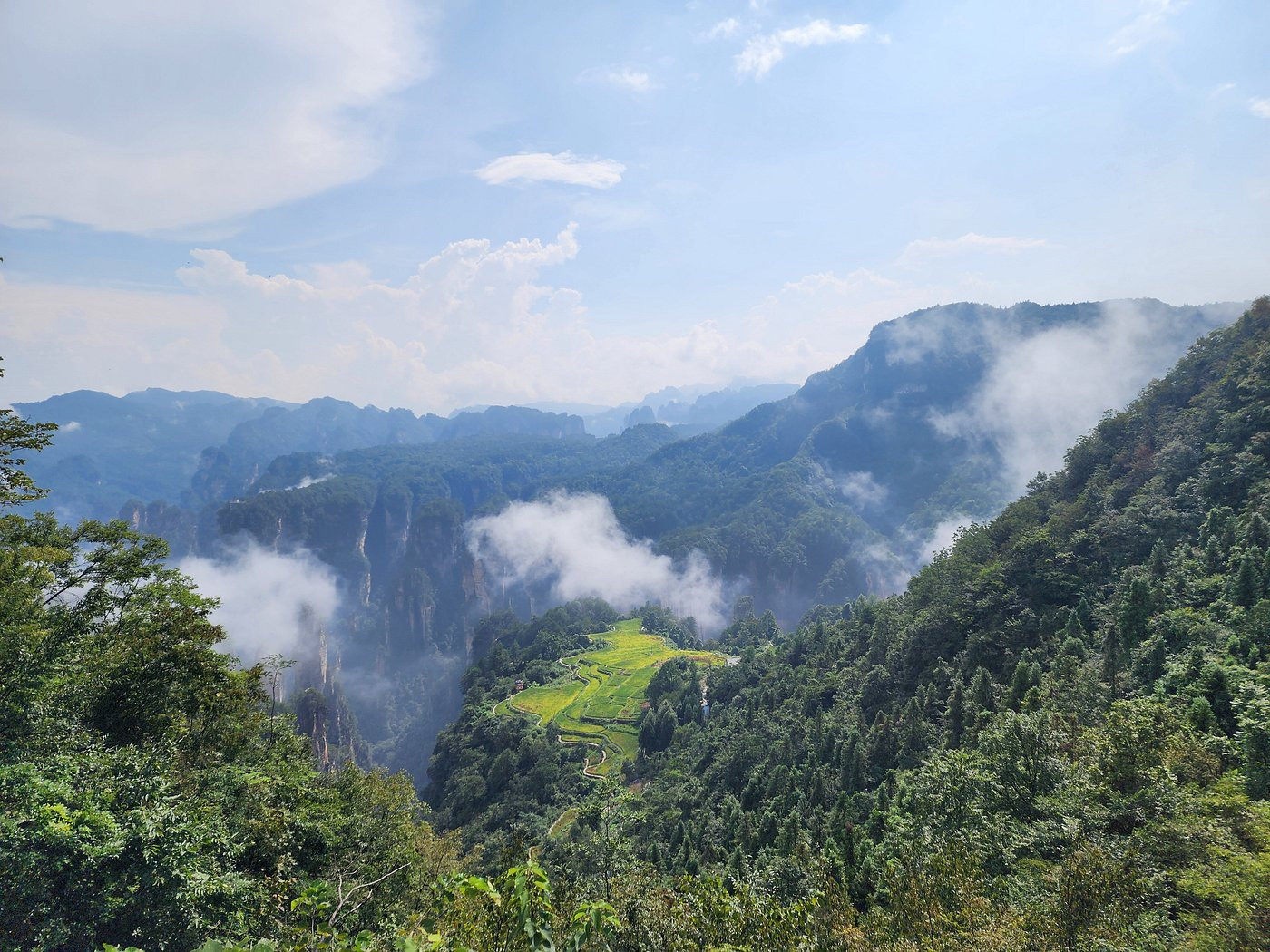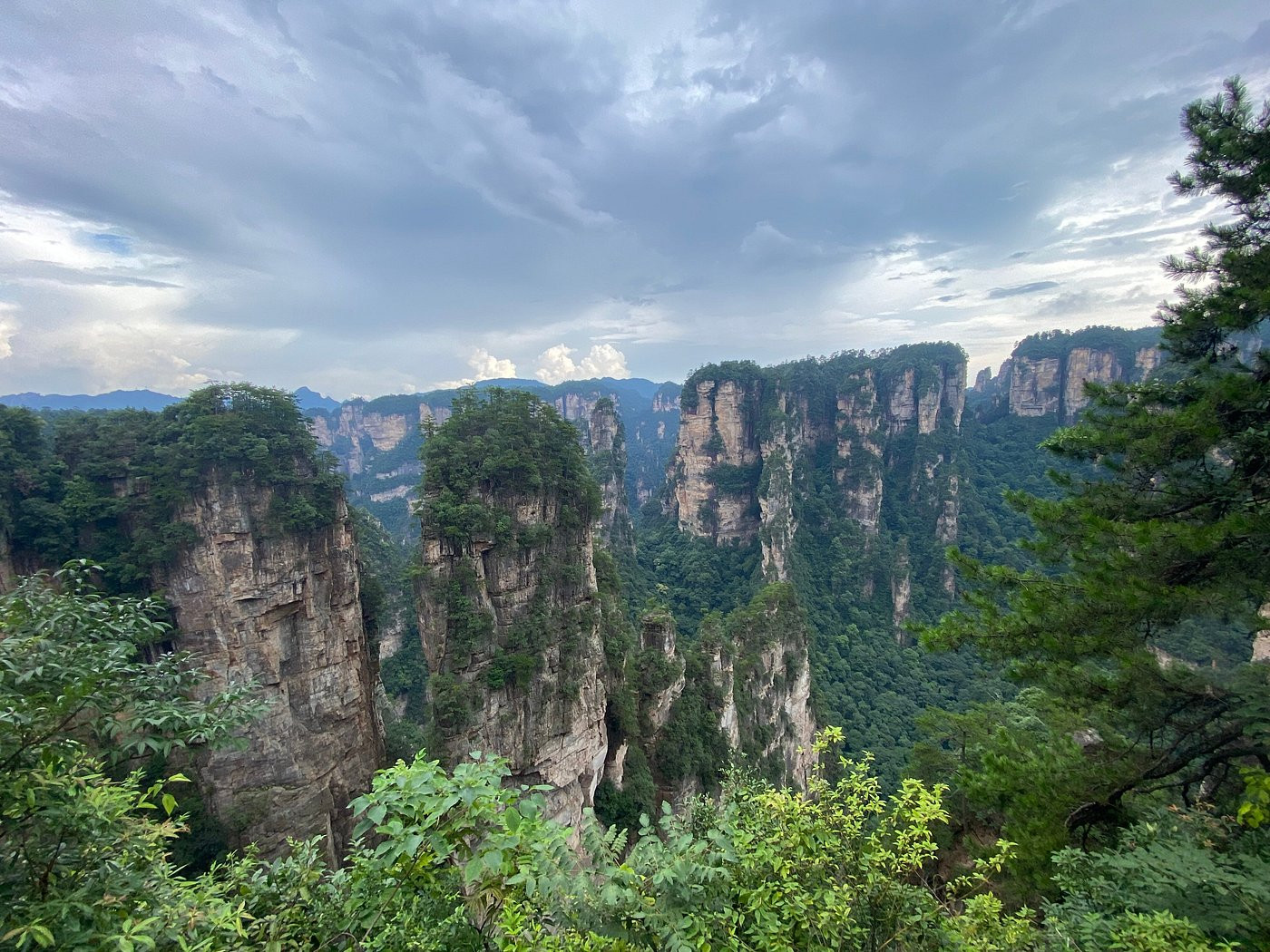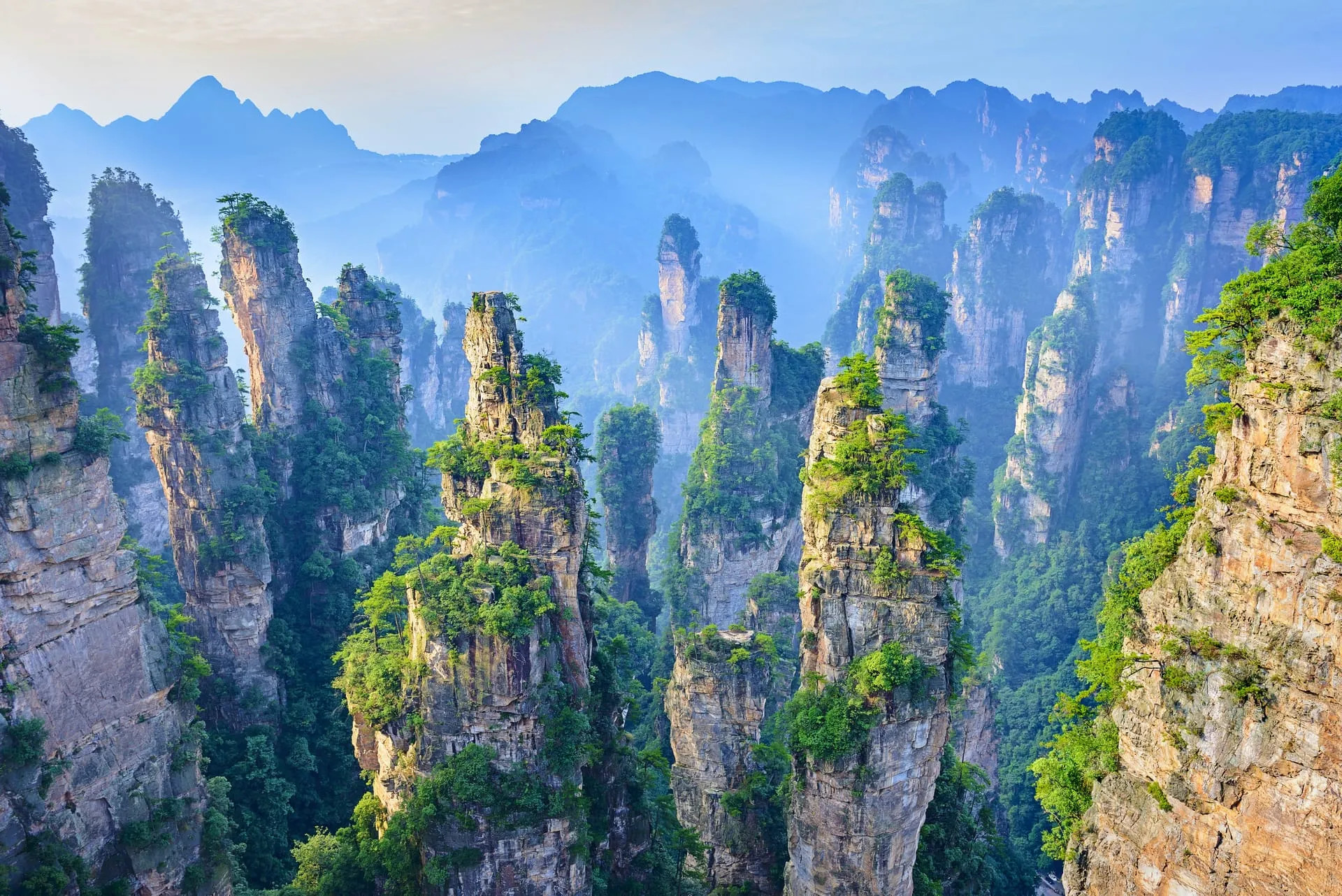
Zhangjiajie National Forest Park, in the mountains of northwestern Hunan Province, is home to one of the most improbable landscapes in China: thousands of narrow, vertical sandstone pillars, some rising more than 200 meters straight from the forest floor, packed together across a valley in numbers dense enough that early foreign visitors sometimes assumed the formations must be artificial. The park covers roughly 4,810 hectares and forms the core of the much larger Wulingyuan Scenic Area, a 397.5 square kilometer region of karst-adjacent peaks, ravines, caves, and rivers in which Zhangjiajie's pillar forest is only the most famous section. Established in 1982, it holds the distinction of being China's first officially designated national forest park, a status that predates the tourism boom the region has since experienced by more than a decade and that reflects an early recognition of just how unusual this terrain is, even by the standards of a country with no shortage of dramatic mountain scenery.
Despite a landscape that superficially resembles karst limestone country, Zhangjiajie's formations are the product of an entirely different process. The rock here is quartz sandstone, and rather than dissolving chemically the way limestone karst does, the pillars have been shaped primarily through physical weathering: water repeatedly freezing and expanding within cracks in the rock, combined with the slow, persistent pressure of plant roots forcing their way into fissures over hundreds of thousands of years. This mechanism gradually isolated individual columns of resistant rock from the surrounding cliff face, leaving behind the forest of separate spires that gives the park its most striking visual signature. Geologists consider the formations, technically referred to as a type of quartzite sandstone peak forest, distinctive enough on a global scale that the wider area was designated a UNESCO Global Geopark in 2004, a category specifically intended to recognize sites of exceptional geological significance alongside their natural beauty.
In 1992, a decade after the forest park's founding, UNESCO inscribed the broader Wulingyuan Scenic and Historic Interest Area as a World Heritage Site, citing the sheer density and scale of the sandstone pillar formations as without parallel elsewhere in the world, alongside the region's rich subtropical forest and the deep ravines cut between the peaks. The listing covers not only Zhangjiajie National Forest Park itself but neighboring nature reserves that together preserve a wider stretch of this quartzite peak terrain, along with habitat for numerous rare and endemic plant and animal species that have persisted in the region's steep, difficult-to-access ravines. This combination of geological rarity and biological richness is unusual even among World Heritage sites, and it has made Zhangjiajie a significant destination for both tourism and ongoing scientific research into a landform type found in only a handful of comparable locations on Earth.
Zhangjiajie's profile rose sharply on the international stage after the 2009 release of the film Avatar, whose visual effects team drew inspiration for the movie's floating Hallelujah Mountains from a combination of Chinese landscapes, most prominently Zhangjiajie alongside Huangshan and the limestone hills around Guilin. In a deliberate piece of tourism marketing, Chinese authorities officially renamed the park's 1,080-meter Southern Sky Column to Avatar Hallelujah Mountain in January 2010, cementing the connection in the public imagination even though the film's floating peaks were a fictional exaggeration rather than a direct depiction of any single formation. The renaming drew both enthusiastic visitors eager to see the "real Avatar mountains" and criticism from some who felt an ancient Chinese landscape had been rebranded around a foreign film, a tension that persists in how the site is marketed today even as the association has undeniably brought the park considerably more global attention than it previously had.
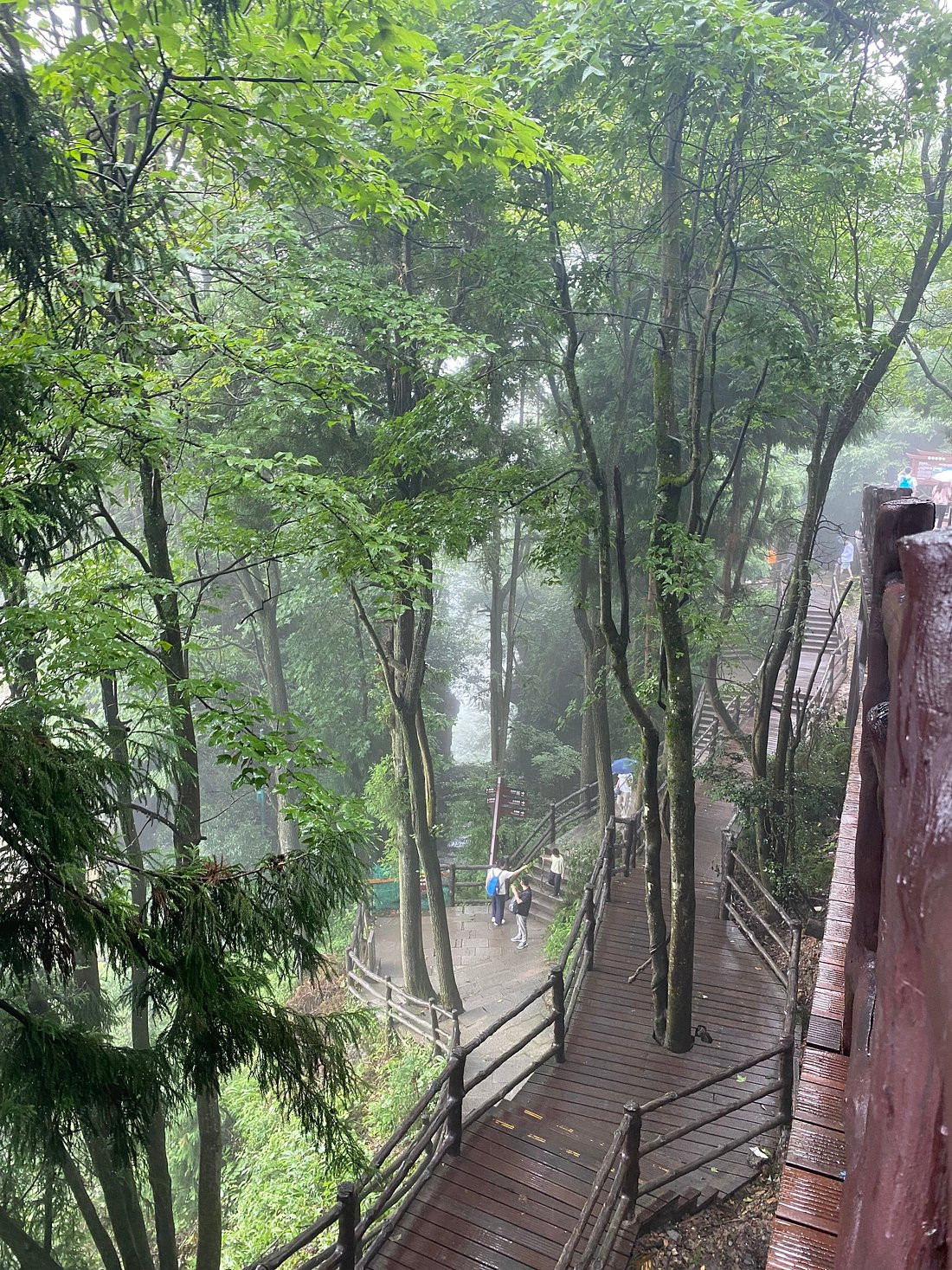
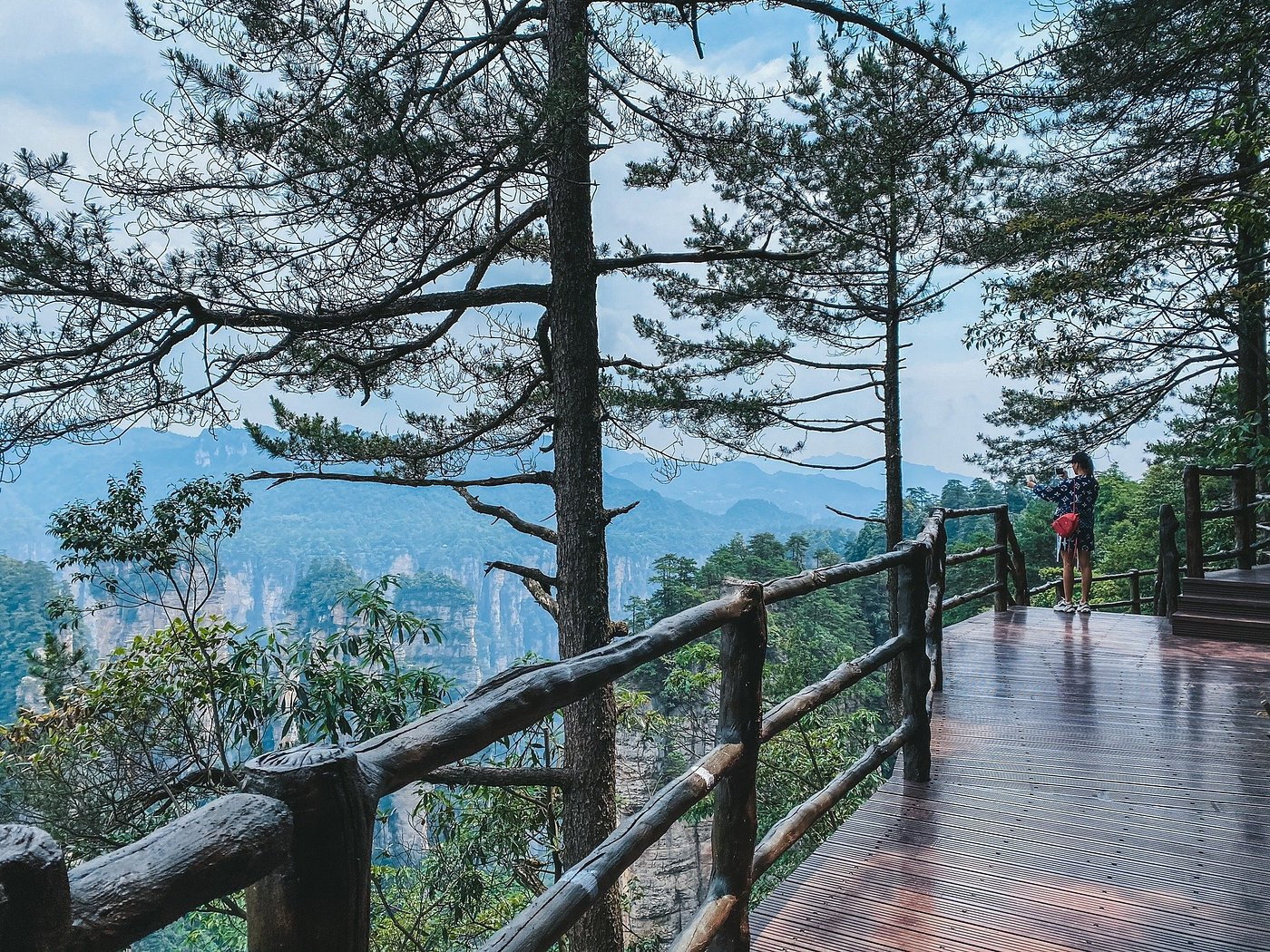
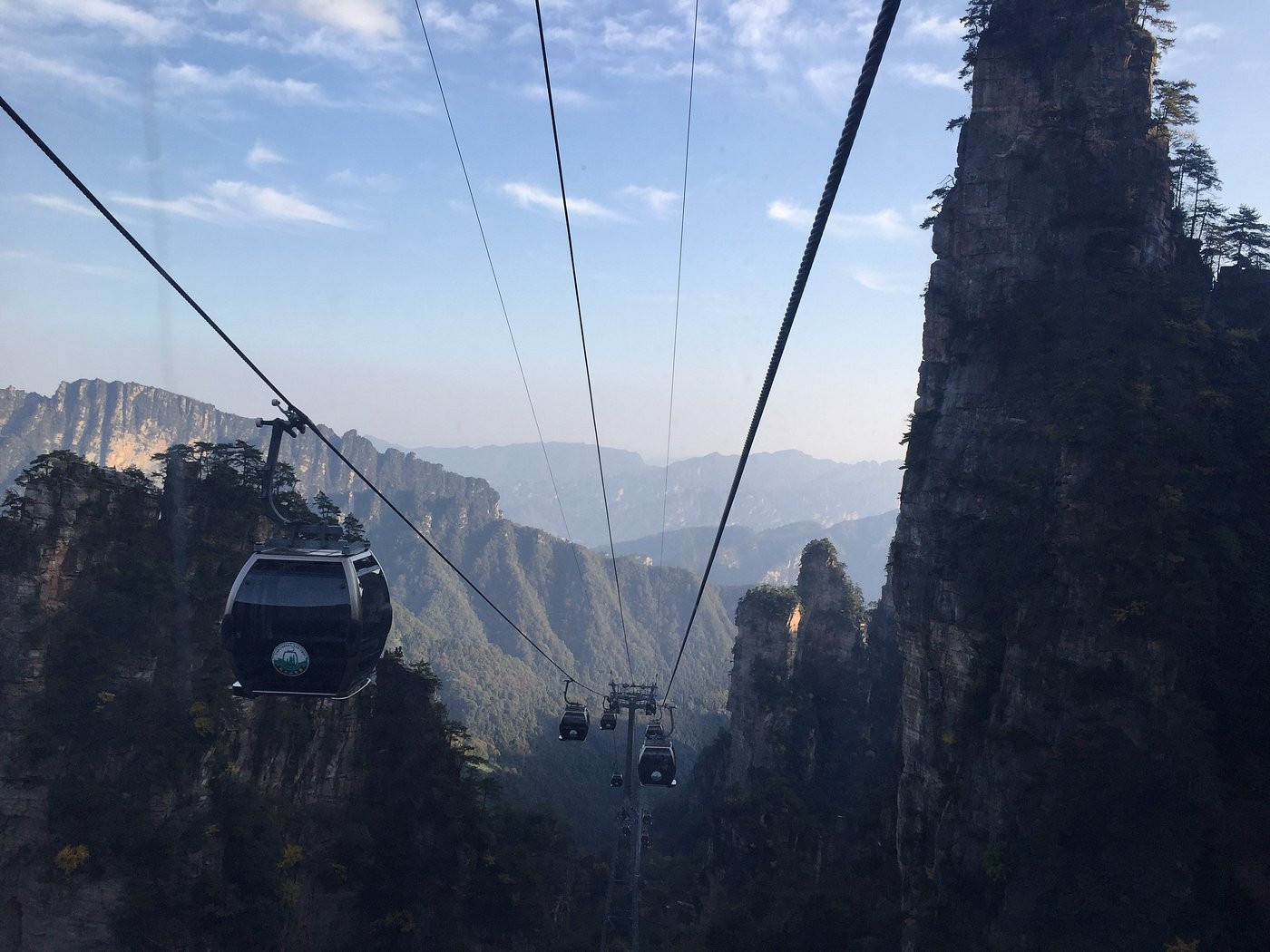
Getting visitors up into and around this vertical landscape has required some of the more ambitious tourist infrastructure anywhere in China. The Bailong Elevator, a glass-walled outdoor lift built directly into the cliff face and opened in 2002, rises 326 meters and holds the record as the tallest outdoor elevator in the world, carrying passengers from the valley floor to the plateau above in under two minutes. A short distance away, the Zhangjiajie Glass Bridge, opened in August 2016 and suspended across a canyon in the wider scenic area, held records on its opening as both the longest, at 430 meters, and one of the highest pedestrian glass bridges anywhere, at roughly 300 meters above the canyon floor. Beyond these headline structures, a network of cable cars, a monorail along the scenic Ten-Mile Gallery, and extensive walkways and viewing platforms have been built throughout the park, reflecting a broader Chinese approach to mountain tourism that prioritizes dramatic engineered access alongside the preserved natural scenery.
The nearest airport, Zhangjiajie Hehua International Airport, connects to major Chinese cities and sits close enough to the park that most visitors base themselves in Zhangjiajie City or the smaller town of Wulingyuan just outside the park gates. Park entrance tickets are typically sold as multi-day passes, commonly valid for several consecutive days, since the scenic area is large enough that seeing its major sights, from the pillar forest to the glass bridge and surrounding reserves, comfortably takes more than a single day. Spring and autumn are generally considered the best seasons to visit, offering milder temperatures and, in autumn particularly, clearer air and better visibility across the peaks than the humid haze that can settle over the valleys in summer. Because the park's most photogenic viewpoints depend heavily on weather and the presence or absence of low cloud drifting between the pillars, a phenomenon that can either obscure the view entirely or produce the ethereal, mist-wrapped scenes the park is famous for, many repeat visitors recommend building at least two full days into a visit to improve the odds of favorable conditions.
Beyond its geology and its cinematic fame, Zhangjiajie's forested ravines support a surprising density of plant and animal life for a landscape so visually defined by bare rock, including subtropical evergreen forest in the lower valleys that gives way to more sparse vegetation on the exposed upper pillars, where only the hardiest species can take root in the shallow soil trapped in rock crevices. The park's biodiversity, combined with its geological rarity, is part of why conservation authorities have worked to balance the site's enormous tourism draw against the pressure that millions of annual visitors place on a landscape of narrow trails and fragile rock formations. For visitors willing to walk beyond the busiest viewing platforms near the glass bridge and elevator, quieter trails through the Golden Whip Stream valley and other less crowded corners of the park offer a way to experience the pillar forest at closer range and with considerably fewer other tourists in the frame.
Before the park's tourism infrastructure transformed the local economy, the valleys around Zhangjiajie were home to Tujia, Bai, and Miao ethnic communities who farmed the narrow arable land between the pillars and maintained a way of life shaped by the terrain's isolation as much as by its scenery. Many local families have since shifted from farming toward tourism-related work, running guesthouses, restaurants, and transport services in Wulingyuan town and the surrounding villages, a transition that has brought considerable economic benefit alongside the more familiar pressures of rapid, tourism-driven development. Traditional Tujia architecture and customs are still visible in parts of the wider region outside the most heavily visited core of the park, and some tour operators now offer visits that combine the natural scenery with a look at this cultural layer, though the geological spectacle of the pillar forest remains, for the vast majority of visitors, the primary draw that brings them to this corner of Hunan Province in the first place.
No reviews yet. Be the first to share your experience!
Share your experience and help other travelers