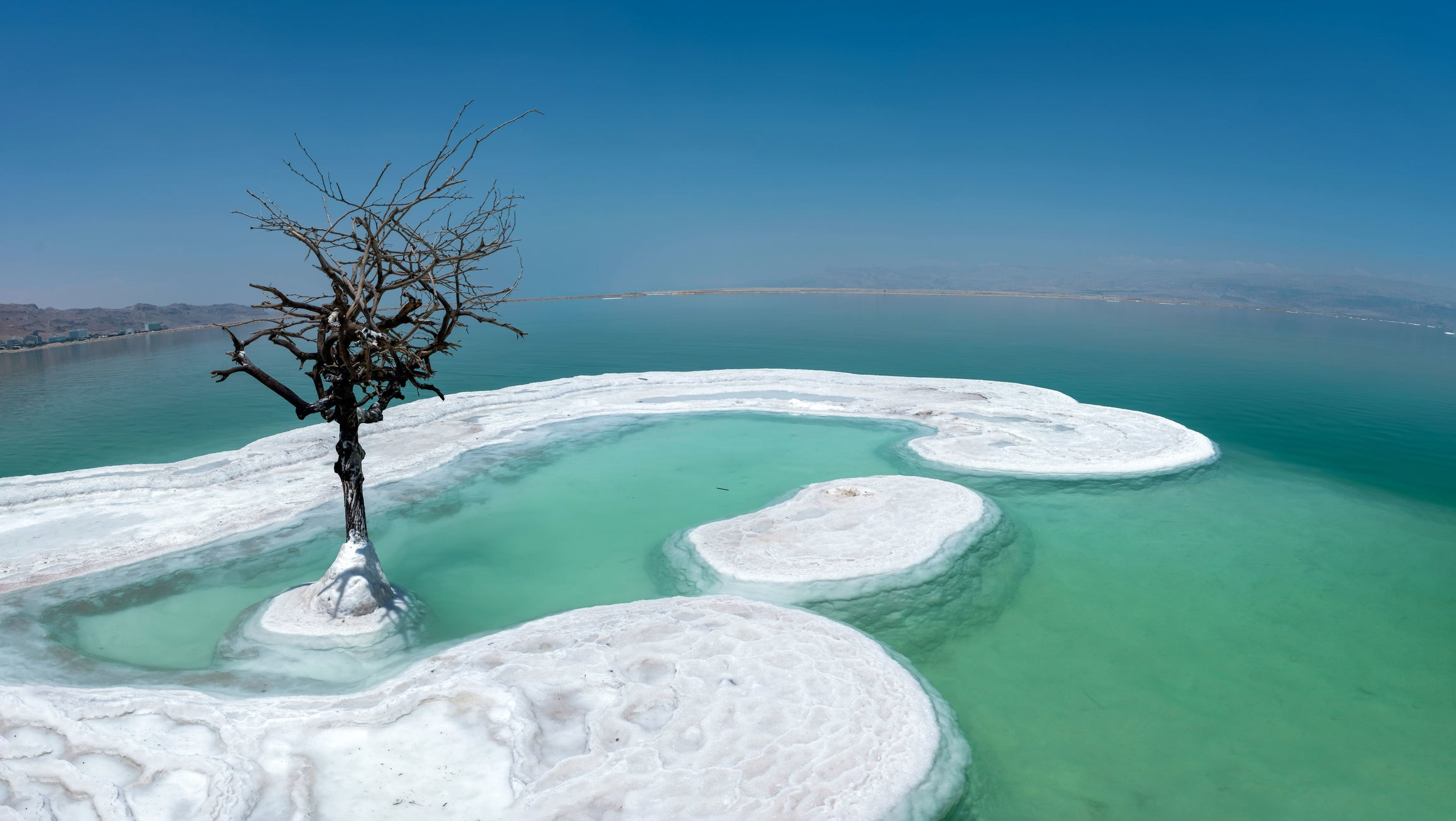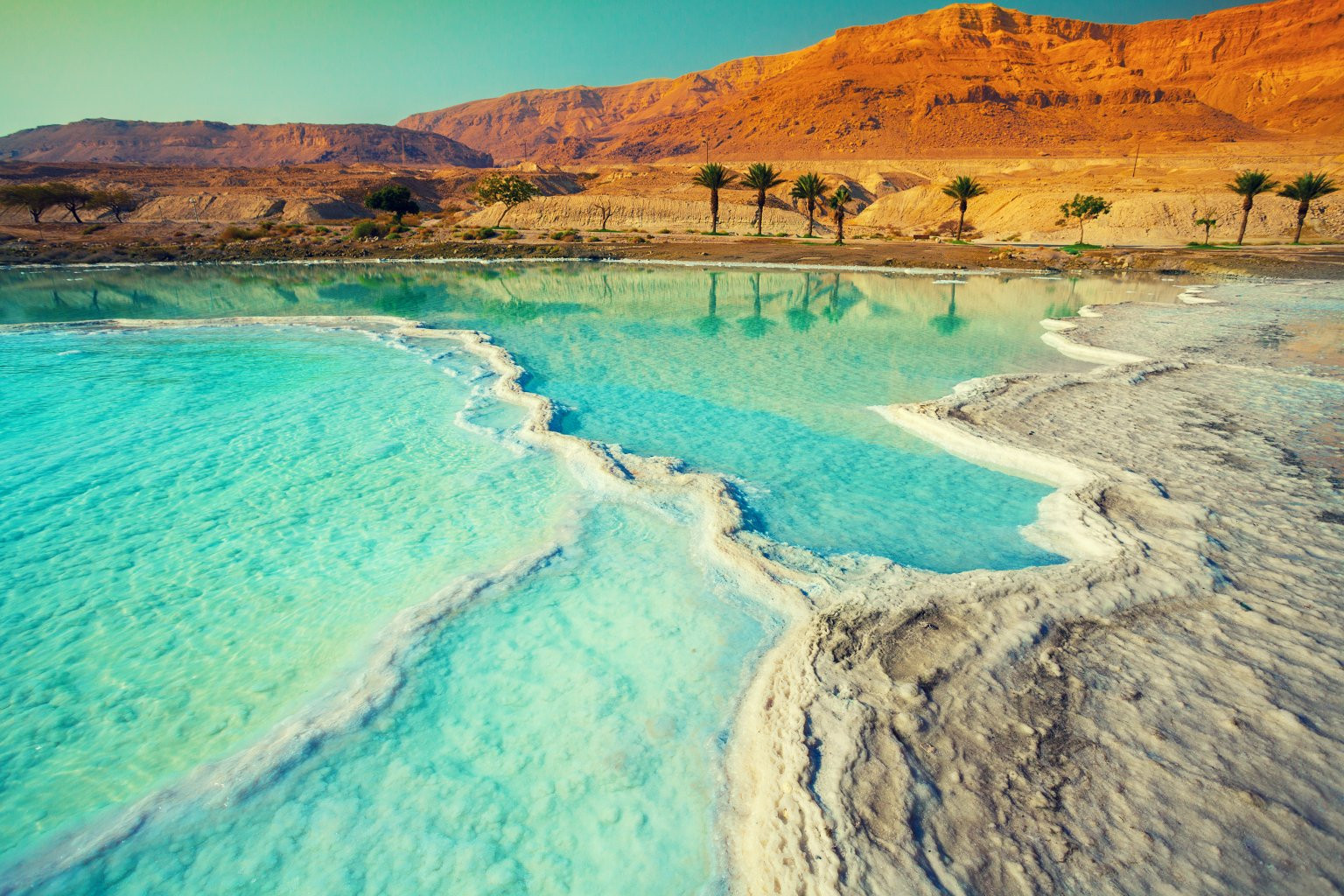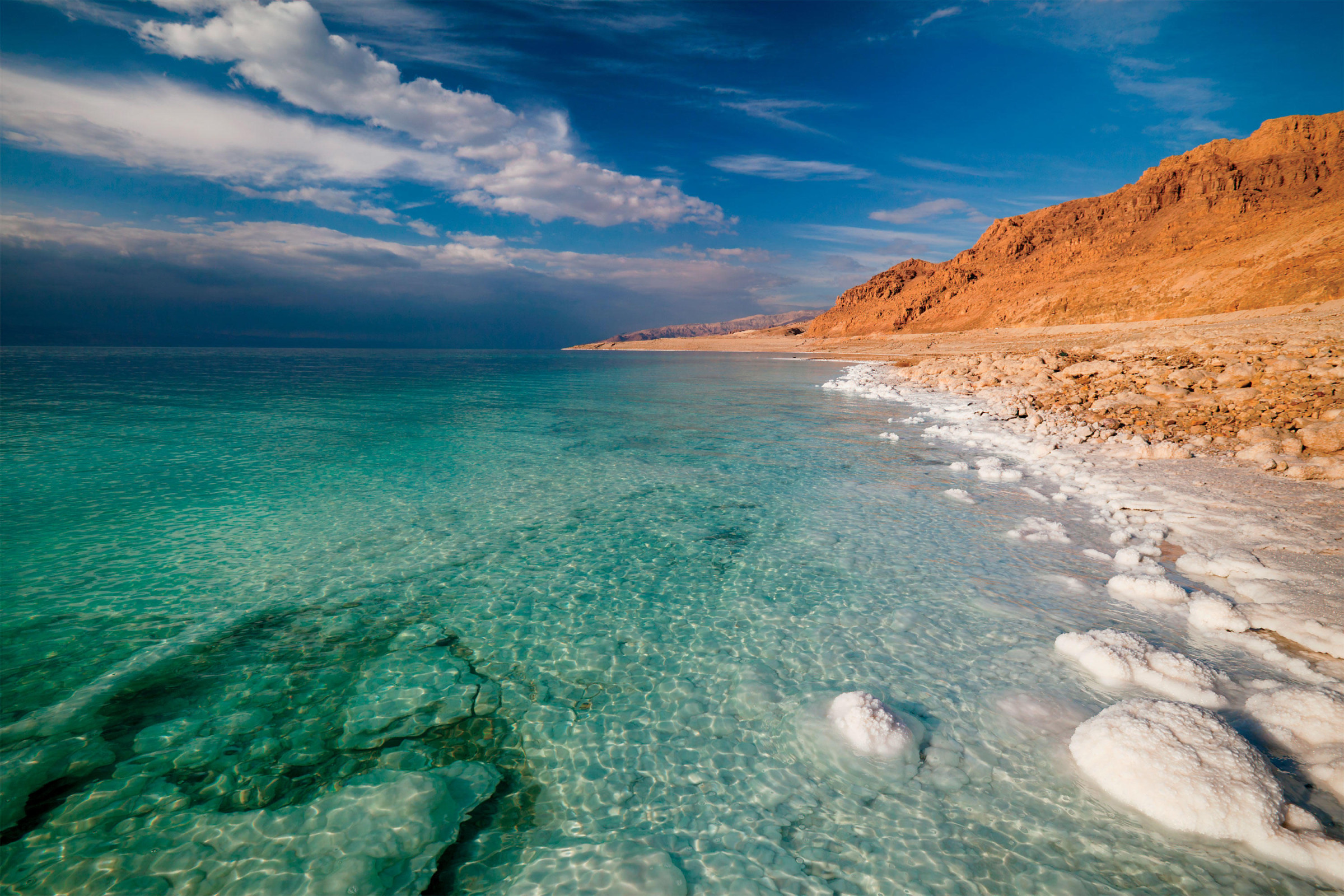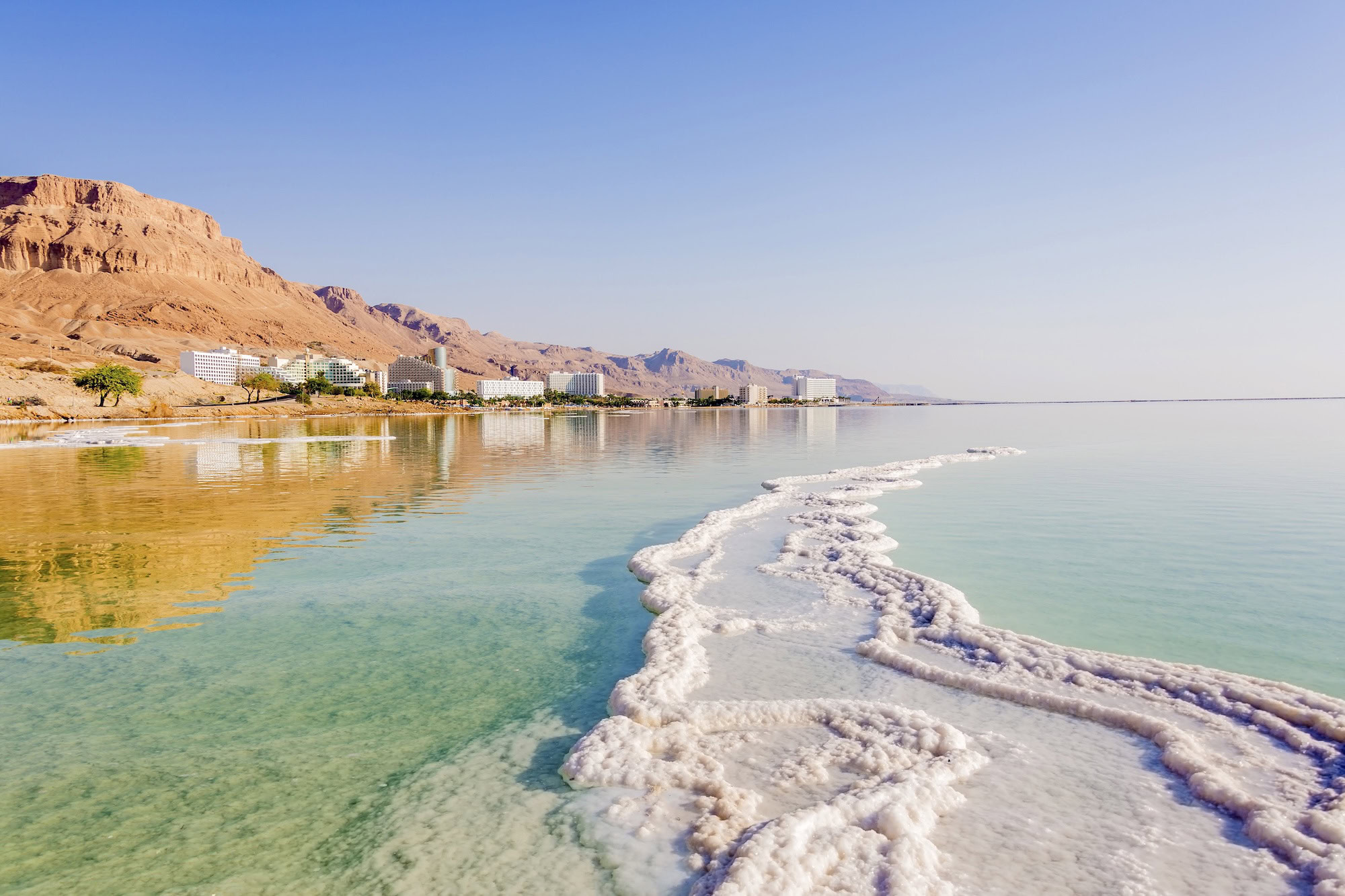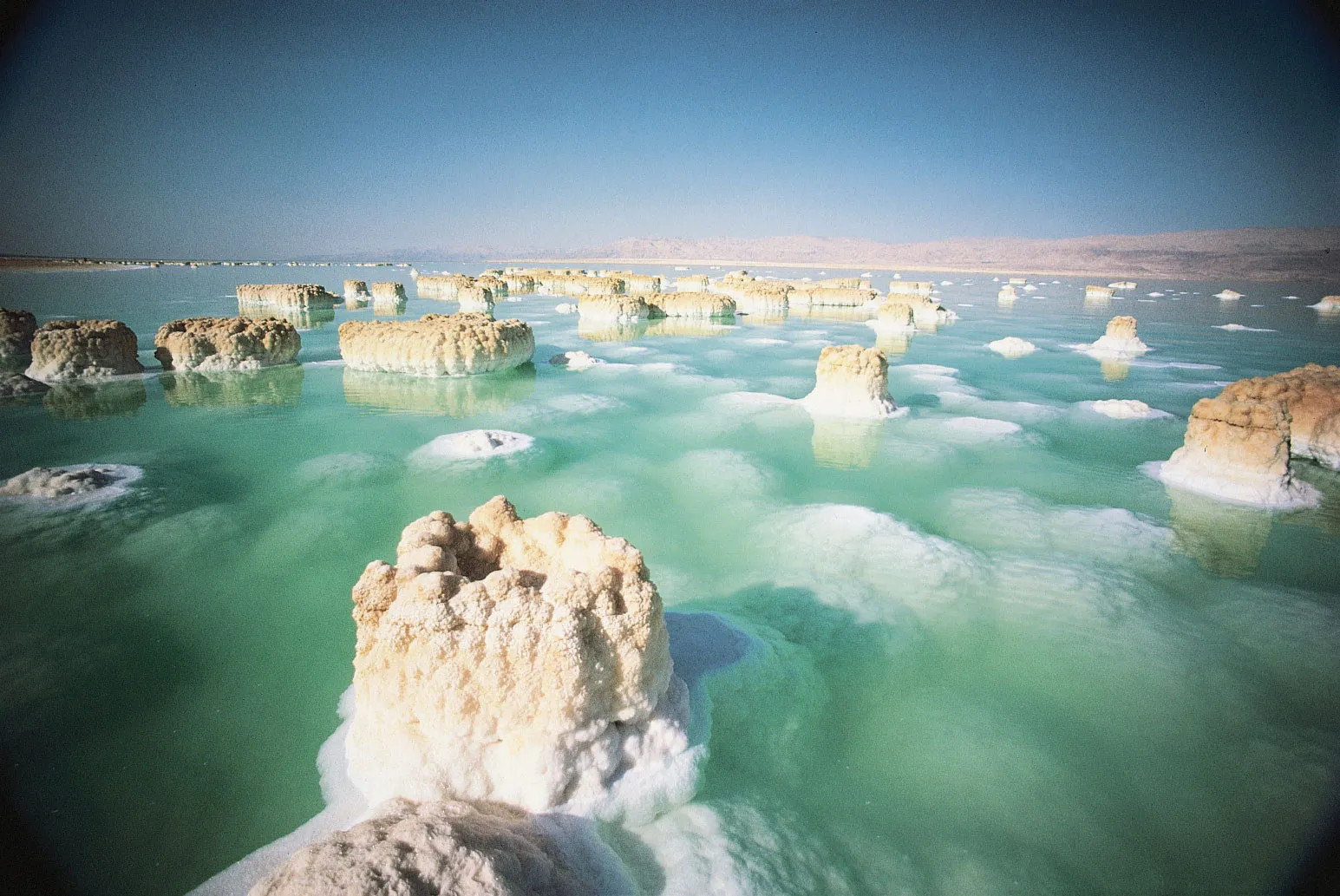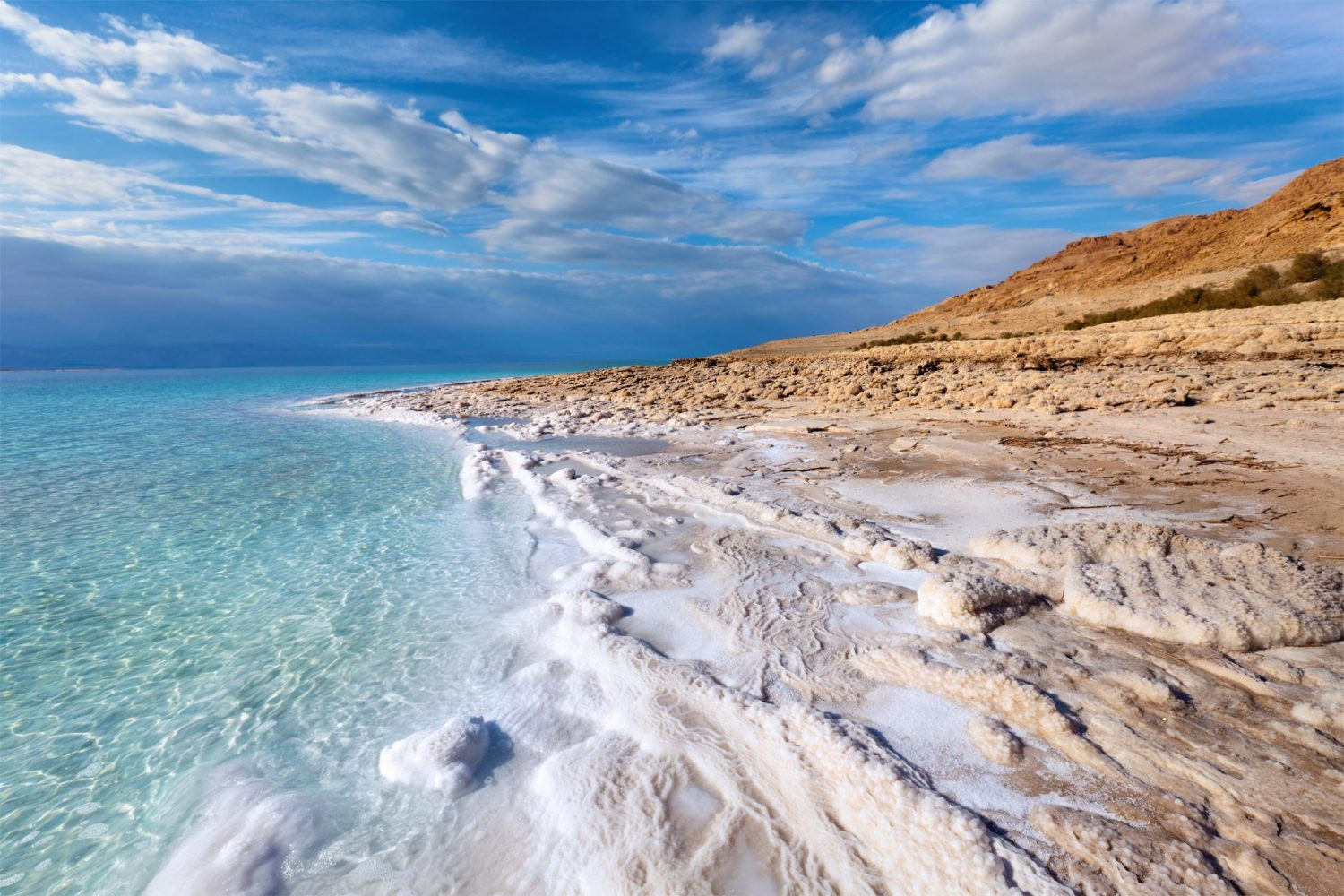
The Dead Sea sits at the bottom of the Jordan Rift Valley, its shoreline resting roughly 440 meters below sea level as of recent measurements, making it, and the land immediately around it, the lowest point on the surface of the Earth not covered by ocean water. This landlocked salt lake, bordered by Jordan to the east and Israel and the West Bank to the west, has no outlet, its water arriving primarily via the Jordan River and leaving only through evaporation in the region's intensely hot, dry desert climate, a one-way hydrological system that over millennia has concentrated dissolved minerals to an extraordinary degree. The surrounding landscape, a stark desert basin flanked by dramatic cliffs and canyons on both the Israeli and Jordanian sides, has drawn visitors for thousands of years, from ancient traders harvesting bitumen from the lake's surface to modern tourists seeking out its famously buoyant, mineral-rich water.
The Dead Sea's defining characteristic is its extreme salinity, measured at roughly 34.2 percent, or 342 grams of dissolved salt per kilogram of water, making it one of the saltiest bodies of water anywhere on Earth and roughly 9.6 times saltier than the open ocean. This mineral concentration gives the water a density of about 1.24 kilograms per liter, dense enough that human bodies float on the surface with almost no effort, an experience that has become the lake's signature tourist attraction, with countless photographs over the decades showing visitors reclining on the water's surface reading newspapers or books as if seated in a chair. The mineral composition differs meaningfully from ordinary seawater as well, containing unusually high concentrations of magnesium, potassium, and bromide alongside sodium chloride, a chemistry that has made the lake and its shoreline mud a long-standing destination for visitors seeking therapeutic benefits, whether or not the more ambitious medical claims made about Dead Sea minerals hold up to rigorous scientific scrutiny.
The Dead Sea occupies a segment of the Jordan Rift Valley, part of the larger Dead Sea Transform fault system marking the boundary between the African and Arabian tectonic plates, a geologically active zone where the plates have been sliding past and pulling away from one another for millions of years. This tectonic activity created the deep basin the lake now occupies, and the same fault system extends both north through the Sea of Galilee and the Jordan River valley and south into the Gulf of Aqaba, forming a continuous rift structure that is part of the broader East African Rift system extending thousands of kilometers from the Middle East down through eastern Africa. Ongoing tectonic movement along this fault continues to make the wider region seismically active, and the same geological forces that created the Dead Sea's dramatic depth also produced the steep escarpments and canyons that frame the lake on both its Israeli and Jordanian shores.
The Dead Sea has been shrinking dramatically for decades, its surface area declining from roughly 1,050 square kilometers in 1930 to around 554 square kilometers by 2025, a loss driven primarily by upstream diversion of the Jordan River's water for agricultural and municipal use in Israel, Jordan, and Syria, which has sharply reduced the lake's main natural water source. This retreat has produced visible, sometimes dangerous consequences along the shoreline, including thousands of sinkholes that have opened up in areas where the water table has dropped and underground salt deposits have dissolved, collapsing the ground above them and forcing the closure of some beaches and roads that once sat safely near the water's edge. Israeli, Jordanian, and international organizations have proposed various interventions over the years to address the shrinking, including a long-discussed Red Sea-Dead Sea conveyance project intended to pump seawater from the Gulf of Aqaba to help stabilize water levels, though such large-scale engineering proposals remain complicated by cost, environmental concerns, and the geopolitical complexity of a resource shared across contested borders.
Beyond floating in the water itself, the Dead Sea region has built a substantial wellness tourism industry around its distinctive black mineral mud, harvested from the lakebed and marketed both in spa treatments at lakeside resorts and in cosmetic products sold internationally, with claims ranging from skin conditioning to more specific therapeutic benefits for conditions such as psoriasis and osteoarthritis. The region's unusual atmospheric conditions add to this reputation: sitting so far below sea level means the air over the Dead Sea carries higher atmospheric pressure and a thicker filtering layer that reduces certain types of ultraviolet radiation, conditions some patients with skin and respiratory conditions have sought out specifically, sometimes under medical supervision, at specialized clinics built around the lake's shoreline in both Israel and Jordan. Whatever the precise scientific merit of individual therapeutic claims, this combination of buoyant water, mineral mud, and distinctive atmosphere has sustained a dedicated health tourism sector at the Dead Sea for well over a century.
Visitors can access Dead Sea beaches from resorts and public beach areas along both the Israeli and Jordanian coastlines, as well as a smaller number of access points along the West Bank shore, with each side offering a somewhat different mix of large hotel resorts, more basic public beach facilities, and, on the Jordanian side particularly, easier access to nearby historical and desert attractions such as Wadi Rum and the ancient site of Petra. Because the Dead Sea sits within a politically sensitive and, in parts, contested region, visitors should check current travel advisories and border crossing requirements carefully when planning an itinerary that spans both the Israeli and Jordanian shorelines, since crossing between the two typically requires a formal land border crossing rather than simple movement around the lake's perimeter. Basic safety precautions matter here more than at an ordinary beach: the extreme salinity makes the water genuinely harmful if it gets in the eyes or an open cut, and visitors are generally advised to avoid submerging their heads, shave or exfoliate before swimming, and limit the total time spent in the water on a given visit.
The Dead Sea sits in a desert climate with extremely hot summers, with temperatures regularly reaching close to 39 degrees Celsius, conditions that many visitors find uncomfortably intense for extended time outdoors despite the lake's popularity as a summer destination for Israeli and Jordanian residents seeking relief through swimming and floating. Winter, by contrast, offers markedly more comfortable daytime temperatures for sightseeing and beach visits while the lake's unusually high salt content keeps the water itself relatively mild even in cooler months, making the winter season, roughly November through March, generally regarded as the more pleasant window for visitors prioritizing comfort over the peak-season atmosphere of a busy summer beach day.
Interest in the Dead Sea's unusual properties is nothing new: ancient Egyptians are believed to have valued bitumen that naturally seeps up from the lakebed and floats to the surface, using it in the mummification process, while historical accounts describe Cleopatra establishing cosmetic and medicinal production facilities near the lake's shores to take advantage of its minerals. The lake and its surrounding desert also carry deep significance in Jewish, Christian, and Islamic tradition, with nearby sites including Masada, the ancient clifftop fortress overlooking the lake from the Israeli side, and Qumran, where the Dead Sea Scrolls were discovered in nearby caves in the mid-twentieth century, adding substantial historical and archaeological weight to a region already notable for its extreme natural geography. This layering of ancient history, religious significance, and unusual geology gives a Dead Sea visit a depth well beyond the novelty of floating in salty water, situating the lake within a landscape that has drawn human attention for thousands of years for reasons only partly related to its buoyancy.
Summers are extremely hot, often near 39 C; winter is more comfortable for visits.
See weather details
No reviews yet. Be the first to share your experience!
Share your experience and help other travelers