Long before it became one of the most photographed ruins on Earth, this valley in southern Jordan was the beating heart of a trading empire. The Nabataeans, a nomadic Arab people who mastered the caravan routes of the Arabian desert, began settling the site in the 4th century BC, drawn by a narrow sandstone gorge that offered natural defense and, crucially, water. By the 2nd century BC it had become the capital of the Nabataean Kingdom, a city the Nabataeans called Raqmu, though the world would later know it by its Greek name, meaning "rock."
The city's wealth came from incense and spice: frankincense from southern Arabia, silk from the East, and myrrh from the Horn of Africa all passed through Nabataean hands on the way to Mediterranean ports, and Raqmu sat at the crossroads. At its height in the 1st century AD, the city held an estimated 20,000 people, a population dense enough to require the sophisticated infrastructure the Nabataeans are still remembered for today.
What sets this city apart from other ancient ruins is not just its rock-cut facades but the hydraulic engineering hidden behind them. The Nabataeans built dams, cisterns, and a network of ceramic pipes and channels that captured flash floods and seasonal rain, turning a hostile desert canyon into a city that could support tens of thousands of residents and their livestock year-round. Water, not just stone, made the city possible.
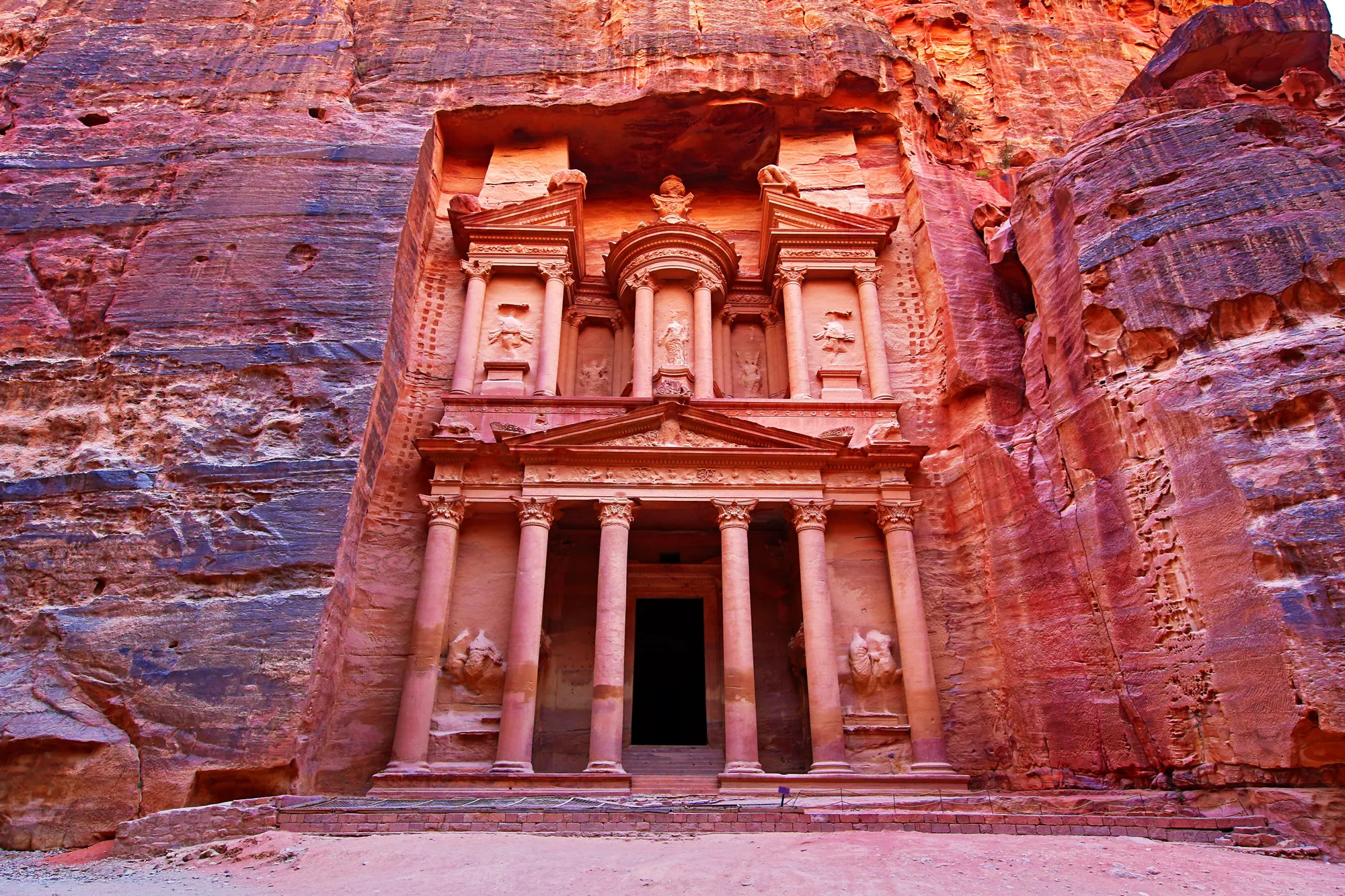
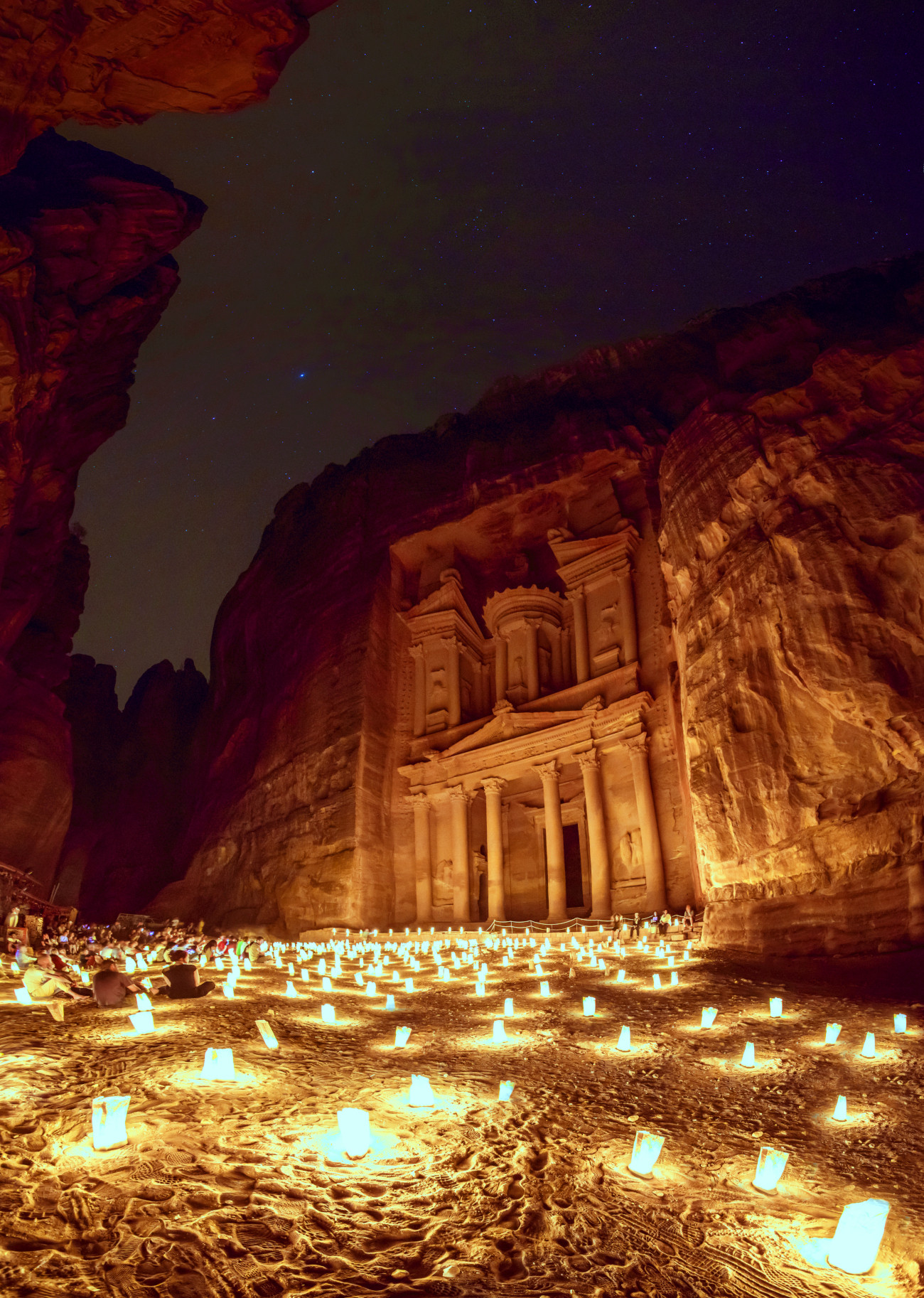
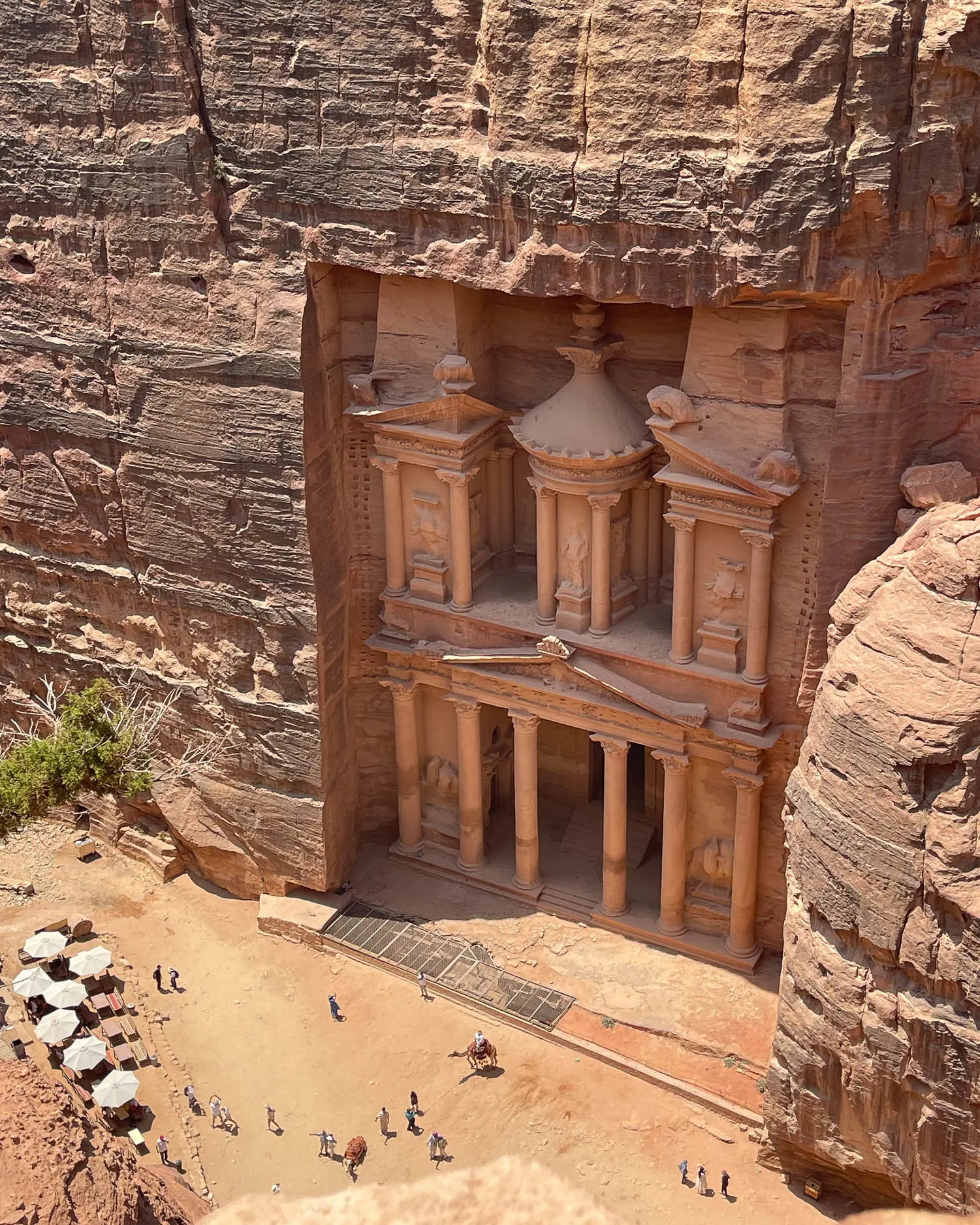
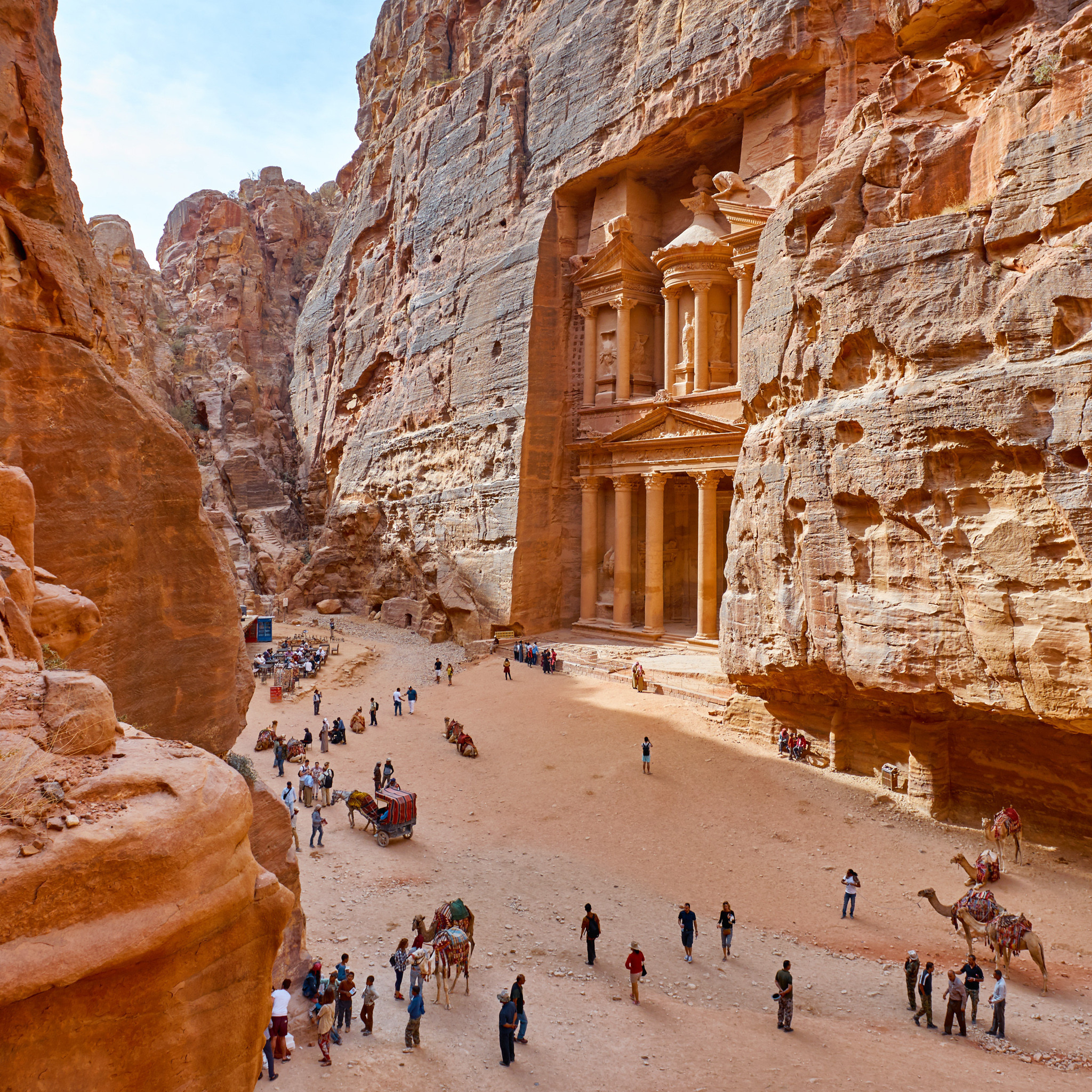
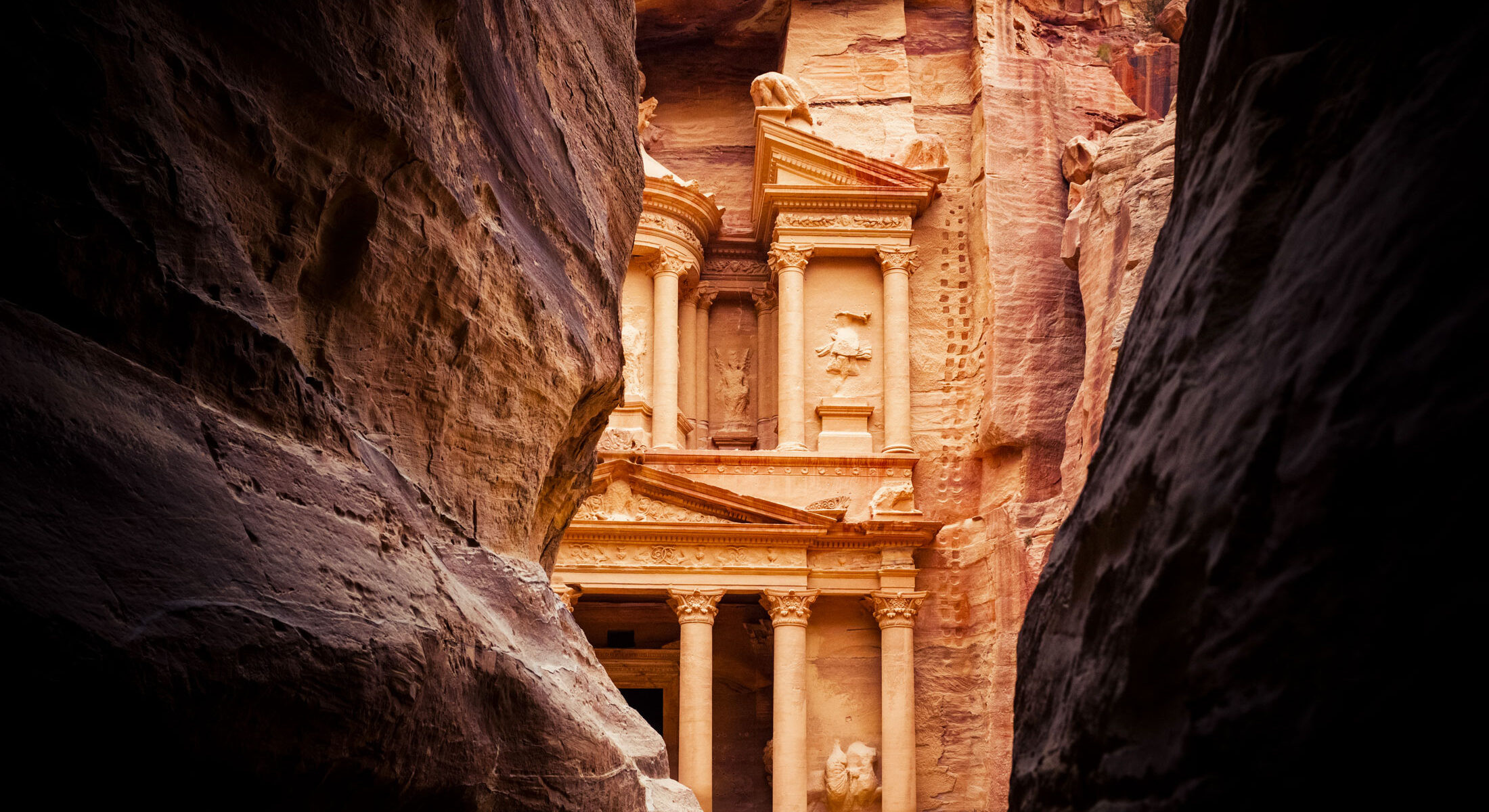
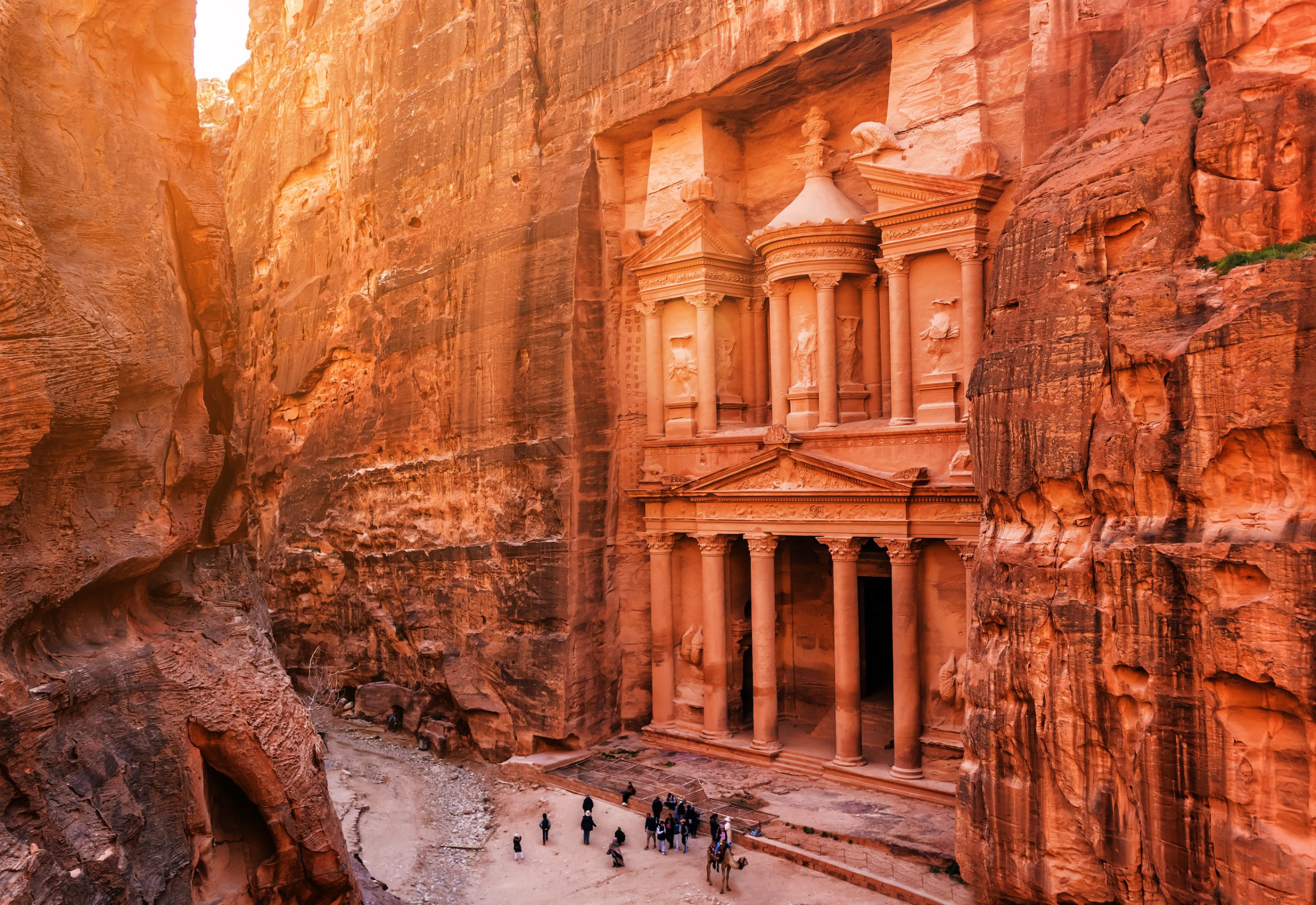
The architecture itself borrows freely from Hellenistic, Egyptian, and Mesopotamian traditions, filtered through a distinctly Nabataean sensibility of carving directly into the rose-colored sandstone cliffs rather than building freestanding structures. The most famous result, Al-Khazneh, "the Treasury," rises 37 meters into a narrow cliff face at the end of the siq, the winding gorge that forms the city's dramatic natural entrance. Built in the 1st century AD, likely as a royal tomb for King Aretas IV, its facade combines columns, pediments, and urns in a style unlike anything else from the period. Deeper into the site, the Monastery, or Ad Deir, is even larger at 45 meters wide, while a Roman-style theatre carved from the rock could seat around 8,500 spectators.
The city's fortunes shifted when Rome annexed the Nabataean Kingdom in 106 AD, folding it into the province of Arabia Petraea. Trade routes gradually moved toward sea lanes, and a major earthquake in 363 AD damaged much of the city's infrastructure, including its water systems. By the early Islamic period the population had dwindled to a small remnant, and for centuries the site was known only to local Bedouin, who kept its location largely secret from outsiders.
That secrecy ended in 1812, when Swiss explorer Johann Ludwig Burckhardt, traveling in disguise as a Muslim scholar, persuaded a local guide to lead him into the gorge, becoming the first Westerner in centuries to see the Treasury's facade. The city was declared a UNESCO World Heritage Site on December 6, 1985, cited for its unique blend of Eastern architectural traditions with Hellenistic influence, and in 2007 it was voted one of the New 7 Wonders of the World, cementing its place as one of the most recognizable ancient sites on the planet.
Today the site draws well over a million visitors a year, most entering the same way ancient traders once did: on foot through the kilometer-long siq, its walls narrowing to just a few meters in places before opening suddenly onto the Treasury. Beyond the famous first view, the site sprawls across 264 square kilometers of tombs, temples, and dwellings carved into the surrounding cliffs, meaning most visitors see only a fraction of it in a single day. The full climb to the Monastery, up hundreds of rock-cut steps, rewards those who make the trek with one of the quietest and most striking views in the entire valley.
Because the site is almost entirely without shade and involves significant walking on uneven stone, timing and pacing matter as much as the sights themselves. Locals and repeat visitors generally agree that the cooler months and the early hours of the day are when the sandstone, and the experience, are at their best.

No reviews yet. Be the first to share your experience!
Share your experience and help other travelers