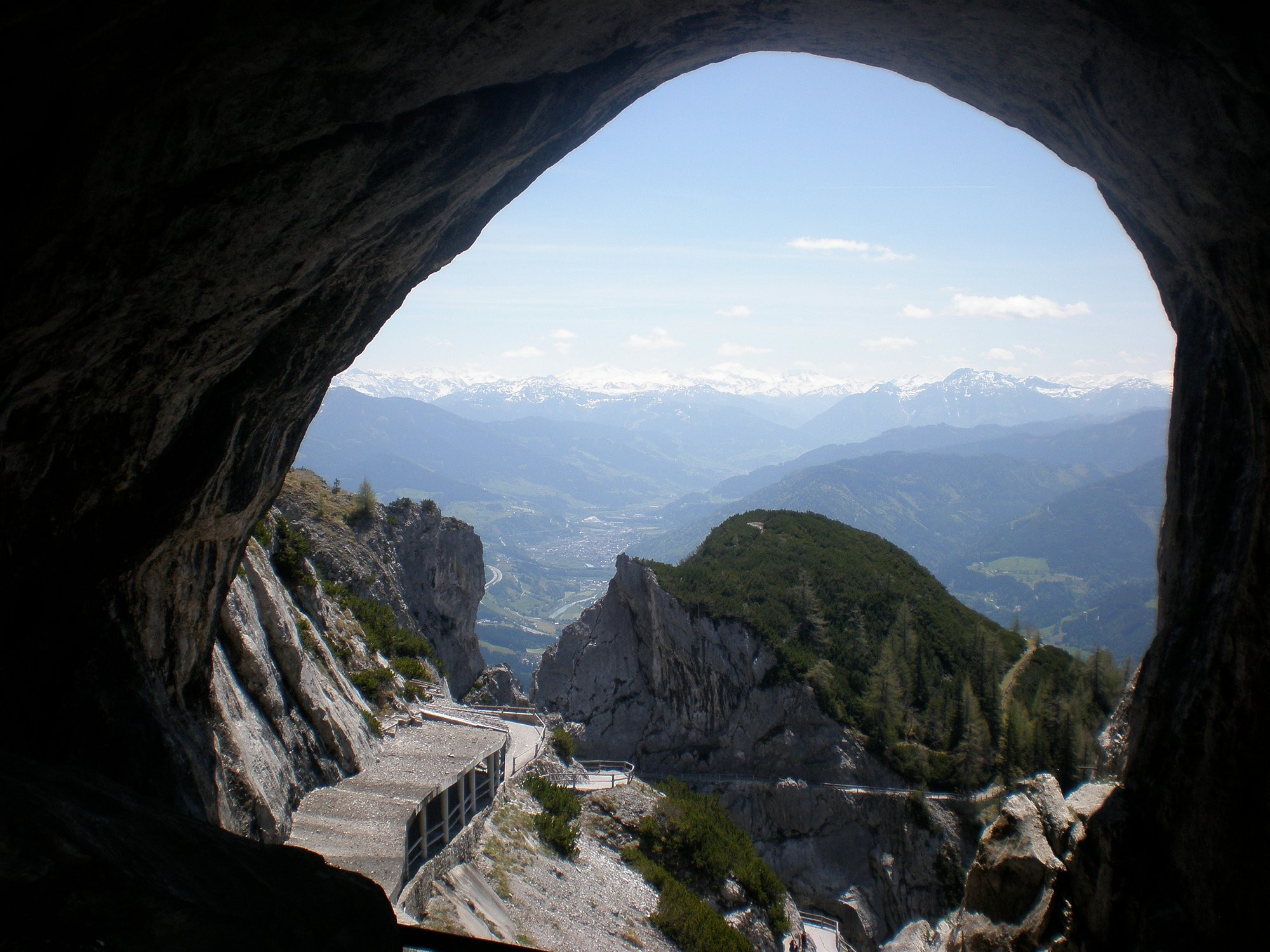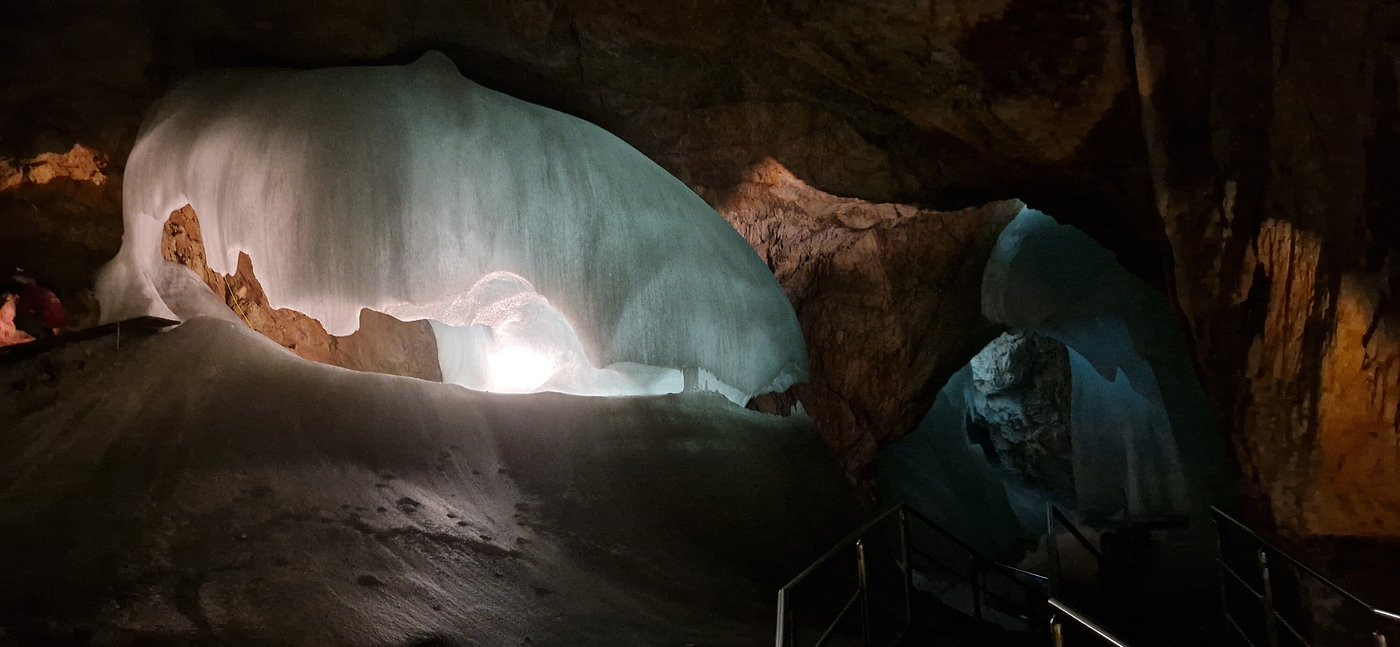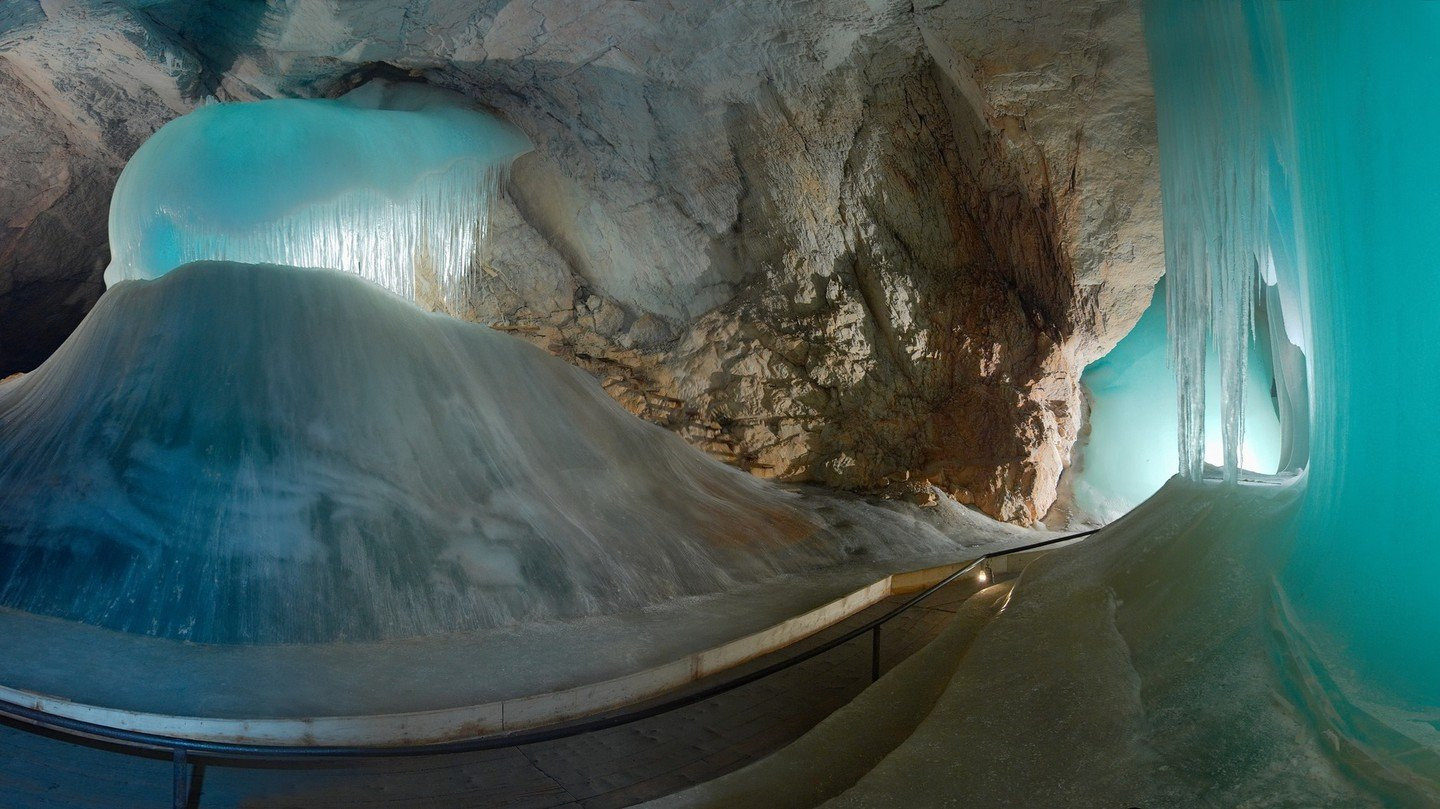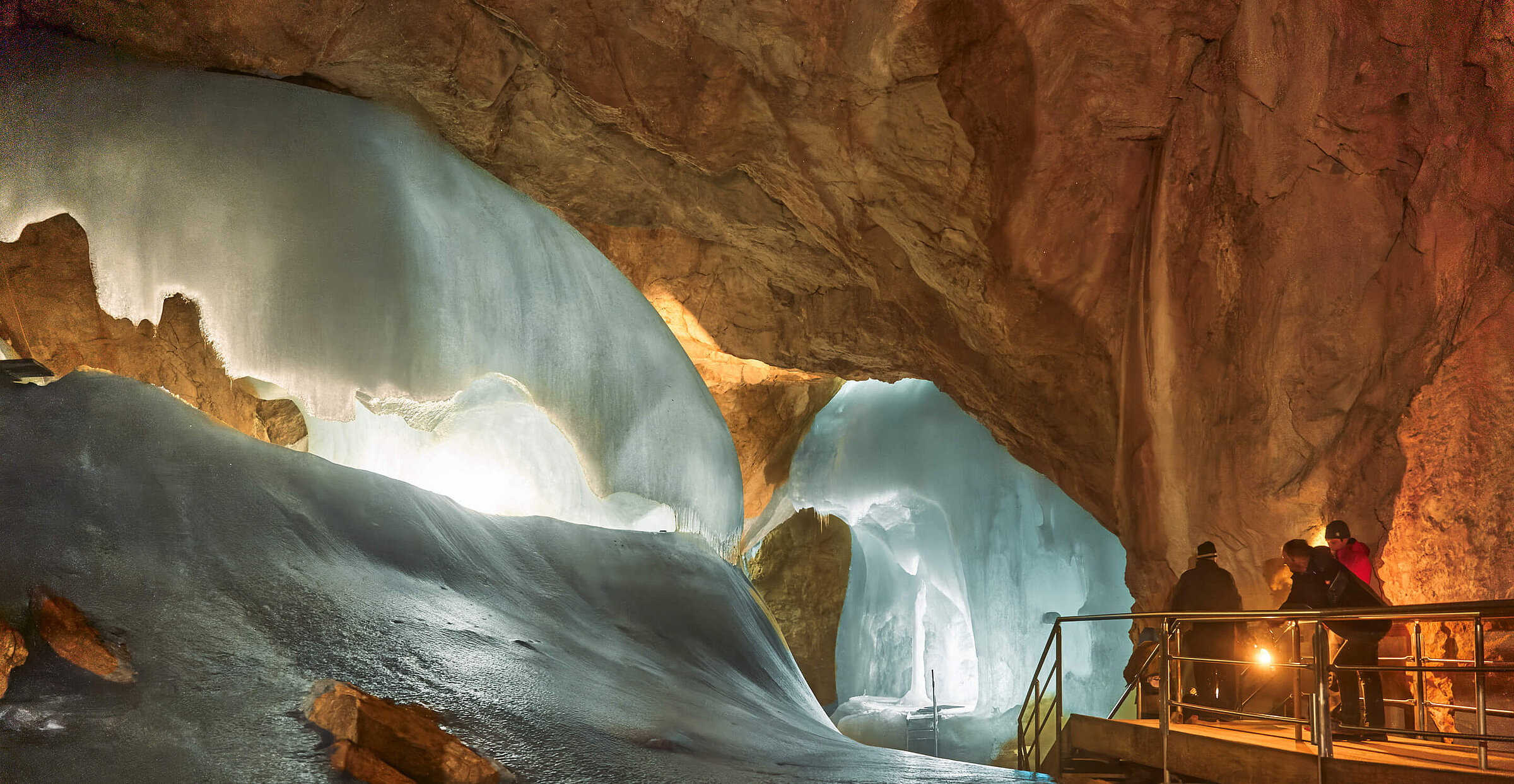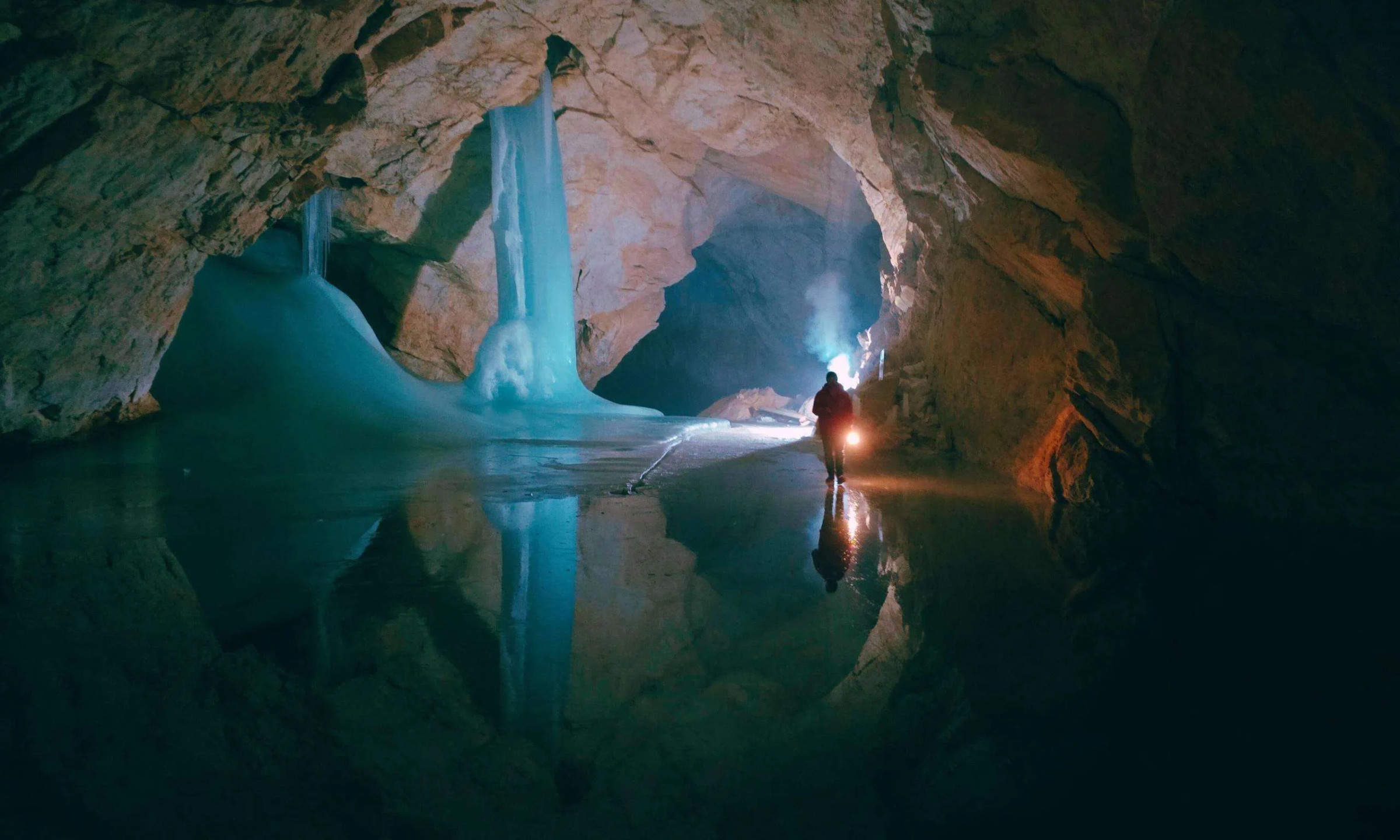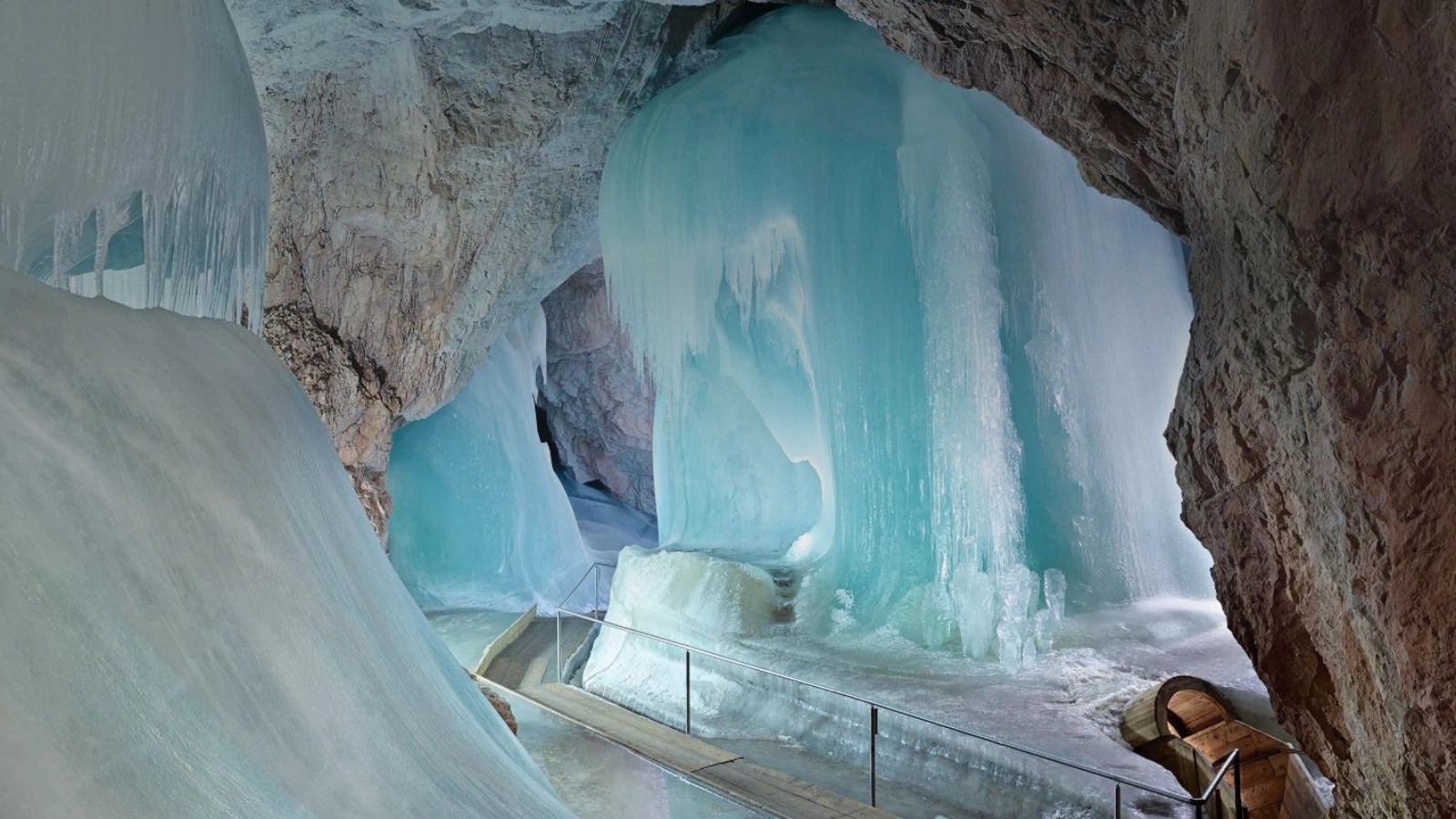
Eisriesenwelt, "World of the Ice Giants," is the largest ice cave on Earth, a labyrinth of limestone tunnels in the Tennengebirge mountains above the market town of Werfen, south of Salzburg. The cave system stretches for roughly 42 kilometres, but only the first kilometre or so is coated in ice, and it is this frozen section that visitors come to see. Inside, ice formations that took centuries to build fill chambers the size of cathedrals, glowing under the flame of a guide's lamp. Outside, the cave mouth gapes from a cliff face at about 1,641 metres above sea level, a dark opening that gives little hint of the frozen architecture waiting beyond the first turn.
It is one of Austria's most distinctive natural attractions, equal parts alpine hike, geology lesson, and old-fashioned adventure. A mountain cable car and a short climb on a stone path bring visitors to the entrance, and from there the descent into the ice begins.
Eisriesenwelt is not a glacier cave, and its ice does not come from slowly compacted snow. It is a limestone cave carved long ago by water from the Salzach river system, and its ice is built by air. In winter, cold, dense air sinks into the lower entrance and pushes warmer air up and out through higher passages, a chimney effect that chills the whole cave far below freezing. When snowmelt and rainwater seep through the rock in spring, they meet this stored cold, and the water freezes in place, layer on layer, into pillars, curtains, and glazed walls.
Because the cave breathes with the seasons, the ice grows and retreats on a yearly rhythm. In summer, warm air outside is lighter than the cold air inside, so the cave seals itself like a refrigerator, and the frozen zone stays intact even when the valley below is hot. This delicate balance between rock, water, and airflow is what makes the cave possible, and also what makes it vulnerable.
Locals had known about the dark opening high on the mountain for generations, but they treated it as a place of danger and superstition rather than curiosity. The first recorded exploration was in 1879, when the naturalist Anton Posselt from Salzburg pushed a short way into the cave and reported its ice formations. His account drew little attention at the time, and the cave was largely forgotten again for more than three decades.
The real exploration began in 1912, when Alexander von Mörk, a speleologist from Salzburg, started to map the cave systematically with a small team. Working by carbide and magnesium light, they climbed frozen walls and followed passages deep into the mountain, and in only a few seasons they documented the main halls and galleries that visitors see today. Von Mörk was killed in the First World War, and a memorial plaque inside the cave remembers him. The Alpine club later built paths and huts, and the cave opened to the public in the early 1920s.
The guided route leads through a succession of enormous chambers, each with its own name and character. Near the entrance, the Posselt Tower rises as a wide opening in the rock, named for the first explorer. Further on, Hymir Hall opens into a vault where ice cascades down the walls in rippling sheets. The Great Ice Wall, a frozen cliff that fills a cleft in the rock, is one of the cave's most dramatic sights, while the Ice Palace and Frigga's Veil show how thin curtains and fluted columns can take shape from seeping water.
Guides carry bright lamps and, at certain points, burn a short length of magnesium ribbon that floods a chamber with brilliant white light for a few seconds. The effect is striking, revealing the full scale of the ice and its subtle blues, and it recalls the way early explorers saw the cave. Photography is permitted in most places, although the damp cold and low light make it a challenge for ordinary phone cameras.
A visit is a small expedition in its own right. From the valley station near Werfen, a cable car climbs the mountainside, and from the upper station a path of around twenty to thirty minutes leads to the cave entrance, depending on pace. Inside, the guided tour takes roughly seventy minutes and involves more than 700 steps, most of them on wooden stairs and walkways that follow the natural contours of the cave. The temperature hovers around freezing even on hot summer days, so warm layers, gloves, and sturdy shoes with good grip are essential.
Tours run in groups, led by guides who explain the geology, the history, and the local legends. The cave does not have electric lighting along the main route, which preserves the sense of exploration and keeps the ice from being warmed by lamps. Anyone with heart or breathing problems, or difficulty with stairs, should think carefully before booking.
Like many ice caves, Eisriesenwelt is a sensitive record of the climate around it. Cave managers have monitored the extent and thickness of the ice for decades, and in some areas it has changed noticeably. Warmer winters reduce the amount of cold air stored in the cave, and wetter or warmer springs can alter how much water freezes. Careful management of visitor numbers, lighting, and entrance structures helps protect the ice, and researchers use the cave as a natural laboratory for studying how alpine environments respond to change.
Because the ice formations take so long to form and can be damaged by heat or contact, visitors are asked to stay on marked paths and avoid touching the walls. The cave is a living system, and part of the experience is understanding that the frozen halls are not guaranteed to look exactly the same for the next generation of visitors.
The cave is easy to combine with other sights in the area. The town of Werfen, at the base of the mountain, sits beneath Hohenwerfen Fortress, a medieval castle on a rocky spur that dominates the valley and hosts falconry demonstrations. The Salzach river valley offers cycling routes, thermal baths, and further caves, and Salzburg itself is less than an hour away by road or rail, making the cave a popular day trip from the city.
For hikers, the Tennengebirge plateau above the cave offers longer routes across high limestone karst, with views of the Hochkönig massif and the Dachstein range. Mountain huts provide basic food and lodging, and the area is quiet compared with Austria's busiest alpine resorts.
The cave is open only in the warmer part of the year, typically from early May to late October, when access roads and paths are clear and the ice is stable. Weather matters, as heavy rain, snow, or high winds can close the cable car, so it is wise to check operating times before setting out. Book tickets in advance during peak summer months and on weekends, since tour groups are limited in size and can sell out.
Wear layers rather than a single heavy coat, because the climb to the entrance can feel warm while the cave itself is cold. Bring gloves, a hat, and shoes with non-slip soles. Allow at least three to four hours for the full experience, including the cable car, the walk to the entrance, the tour, and the descent. Even in midsummer, the stillness and blue glow of the ice make it feel like stepping into another season.
Beyond its beauty, Eisriesenwelt is an important site for cave science. Researchers measure air flow, temperature, and ice thickness to understand how ice caves respond to warming, and the cave's long record helps place modern changes in context. Its story is also tied to the early days of Austrian alpinism, when volunteers carried supplies up the mountain, built simple huts, and treated exploration as a shared adventure. Today the cave stands as a reminder of how much of the Alps still lies hidden underground, and why places like this deserve both curiosity and care.
The cave is open roughly May to October. July and August are warmest outside, but the cave stays at freezing year-round, so any open month works.
See weather details
No reviews yet. Be the first to share your experience!
Share your experience and help other travelers