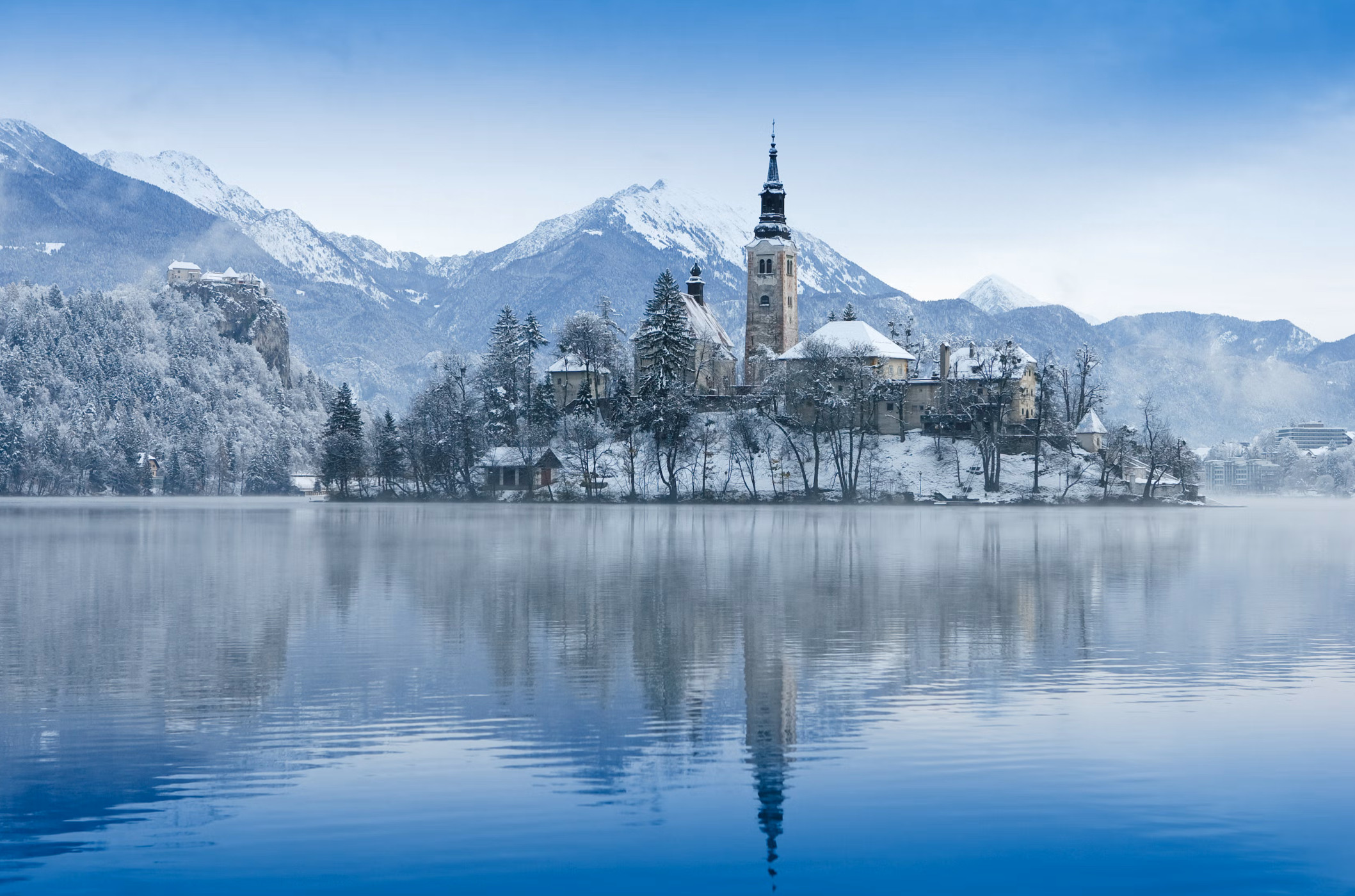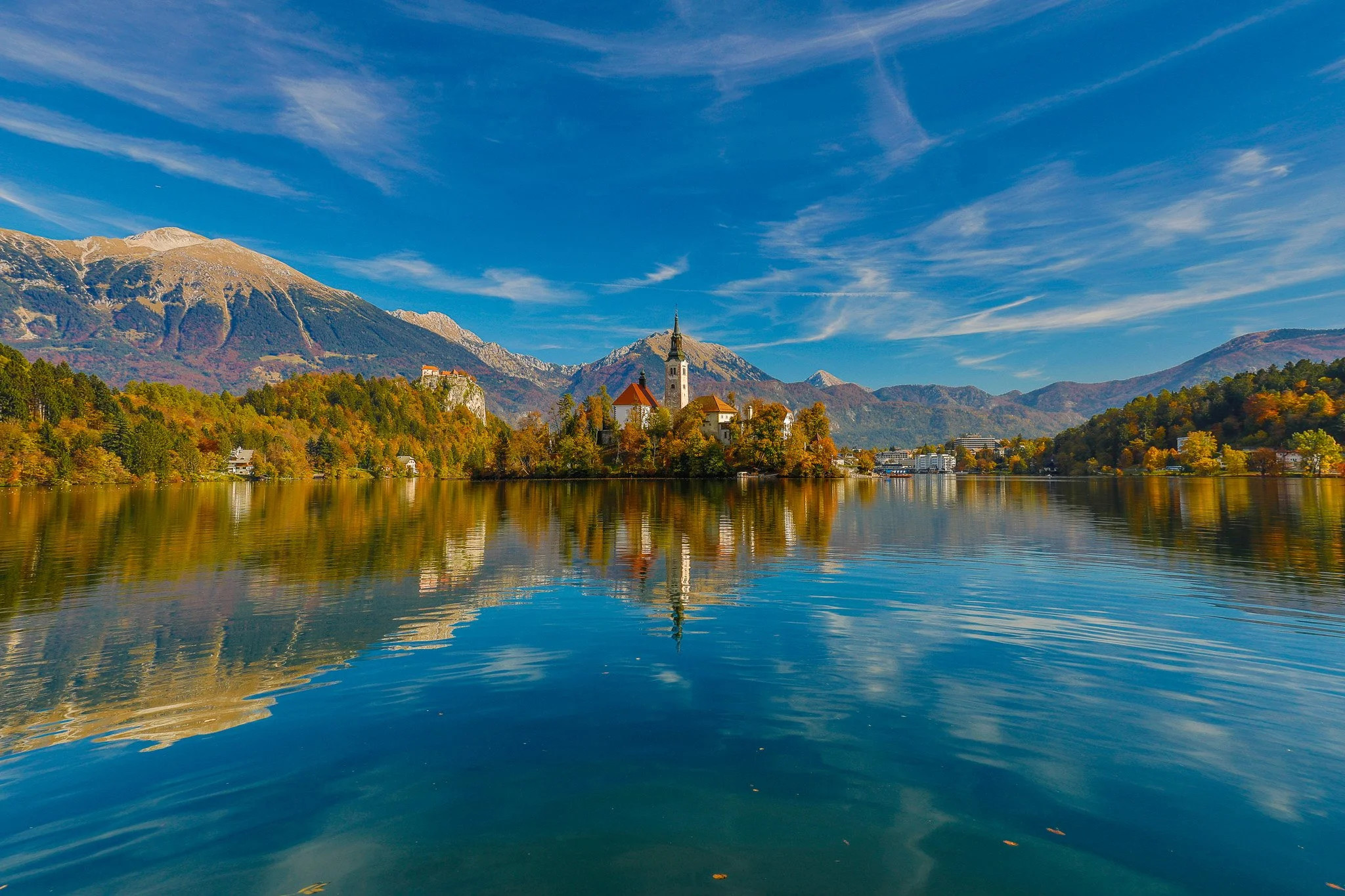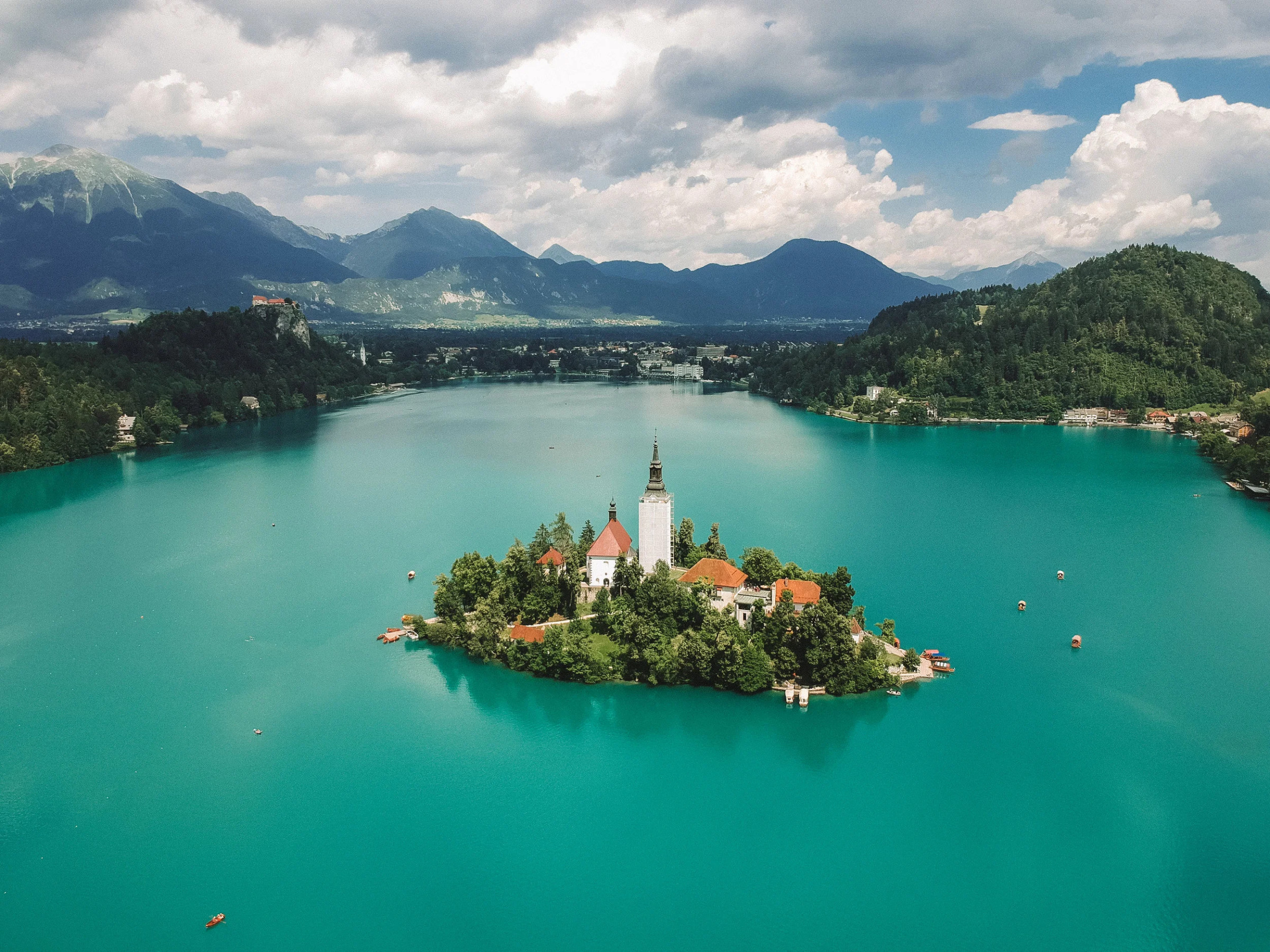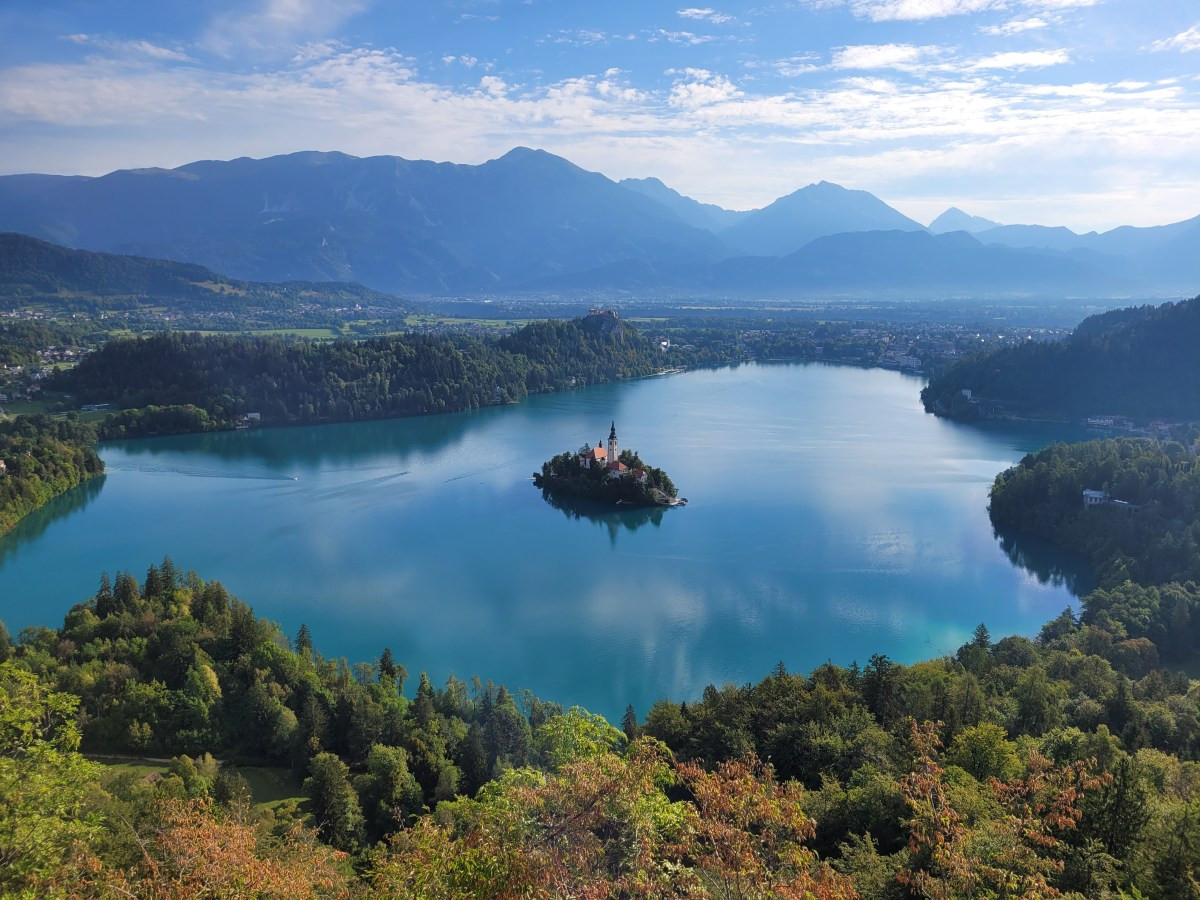
Lake Bled sits in Slovenia's Julian Alps, near the town of Bled in the Upper Carniola region, a modestly sized lake measuring 2,120 meters long and 1,380 meters wide with a maximum depth of 29.5 meters, yet punching well above its physical dimensions in international recognition thanks to a single distinctive feature: a small island near its center holding a pilgrimage church, the entire scene framed by a medieval castle perched on a cliff above the northern shore. This combination of water, island, church, and castle, all visible together from numerous points around the lake's short 6-kilometer walking perimeter, has made Bled one of the most photographed lakes in Europe, its image reproduced across Slovenian tourism marketing so consistently that the lake functions as something close to a national visual symbol.
Lake Bled owes its formation to a combination of glacial and tectonic processes, a mixed origin less common than the purely glacial formation of many other alpine lakes in the region. Glaciers during past ice ages carved and deepened the basin the lake now occupies, while tectonic activity in the surrounding Julian Alps contributed to the specific shape and depth of the resulting depression, a geological history that helps explain why Bled's basin, though modest in overall size, reaches a meaningful depth relative to its surface area. The lake is fed partly by warm springs rising from its bed, an unusual feature that keeps portions of Bled notably warmer than many other alpine lakes at comparable elevation and latitude, contributing to water temperatures mild enough to support recreational swimming through a longer stretch of the year than colder, purely glacially-fed lakes nearby typically allow.
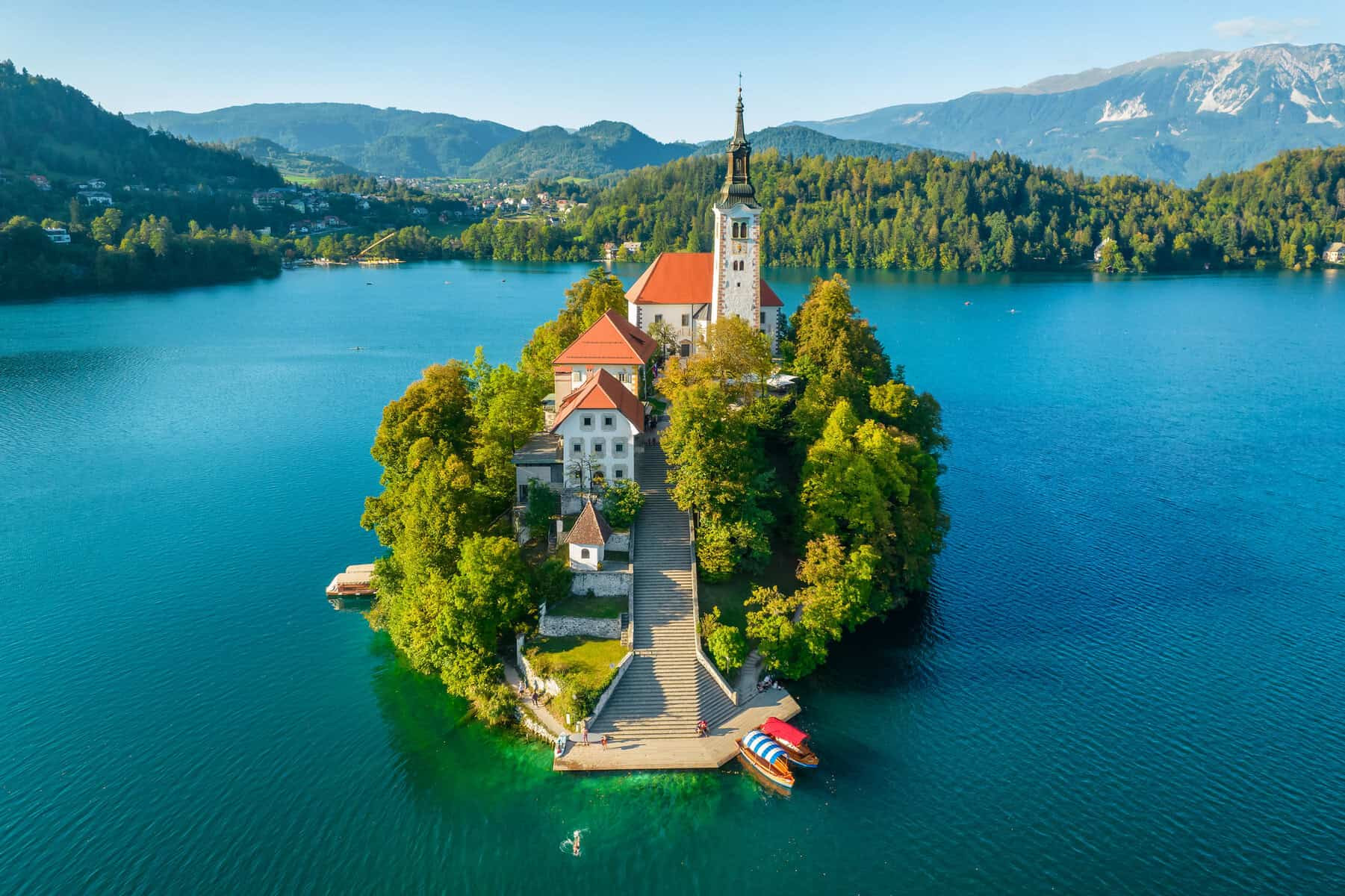
Bled Island, the lake's only island and Slovenia's sole natural island, holds a pilgrimage church dedicated to the Assumption of Mary, rebuilt in its current form in the seventeenth century atop the foundations of earlier religious structures on the same small landmass, with Gothic frescoes dating to around 1470 surviving inside alongside more elaborate later Baroque furnishings added during subsequent renovations. Reaching the church requires climbing a stone staircase of 99 steps, built in 1655, and local wedding tradition holds that a groom should carry his bride up this full staircase before the couple rings the church's bell, said to grant wishes to those who ring it, a custom that has made the island a popular wedding destination for couples from across Slovenia and increasingly from abroad. The island's church and surrounding grounds remain an active pilgrimage and wedding site today, giving Bled Island a living religious and cultural function beyond its role as a scenic centerpiece for photographs taken from the lakeshore.
Visitors reach Bled Island primarily aboard pletna boats, distinctive wooden vessels with colorful fringed awnings that have ferried passengers across the lake since at least 1590, making them one of the oldest continuously operated forms of tourist transport in Europe. Pletna oarsmen use a distinctive standing rowing technique, propelling boats that typically seat around twenty passengers using a pair of oars worked from a standing position at the stern, a skill traditionally passed down within a small number of families granted exclusive rights to operate the boats. This exclusivity dates back to 1740, when Empress Maria Theresa of Austria granted twenty-two specific local families the sole right to ferry passengers to the island, a privilege that has been passed down through succeeding generations and remains, remarkably, still in effect today, meaning the pletna boats crossing Bled's water in the twenty-first century operate under a licensing arrangement with roots in eighteenth-century Habsburg administration.
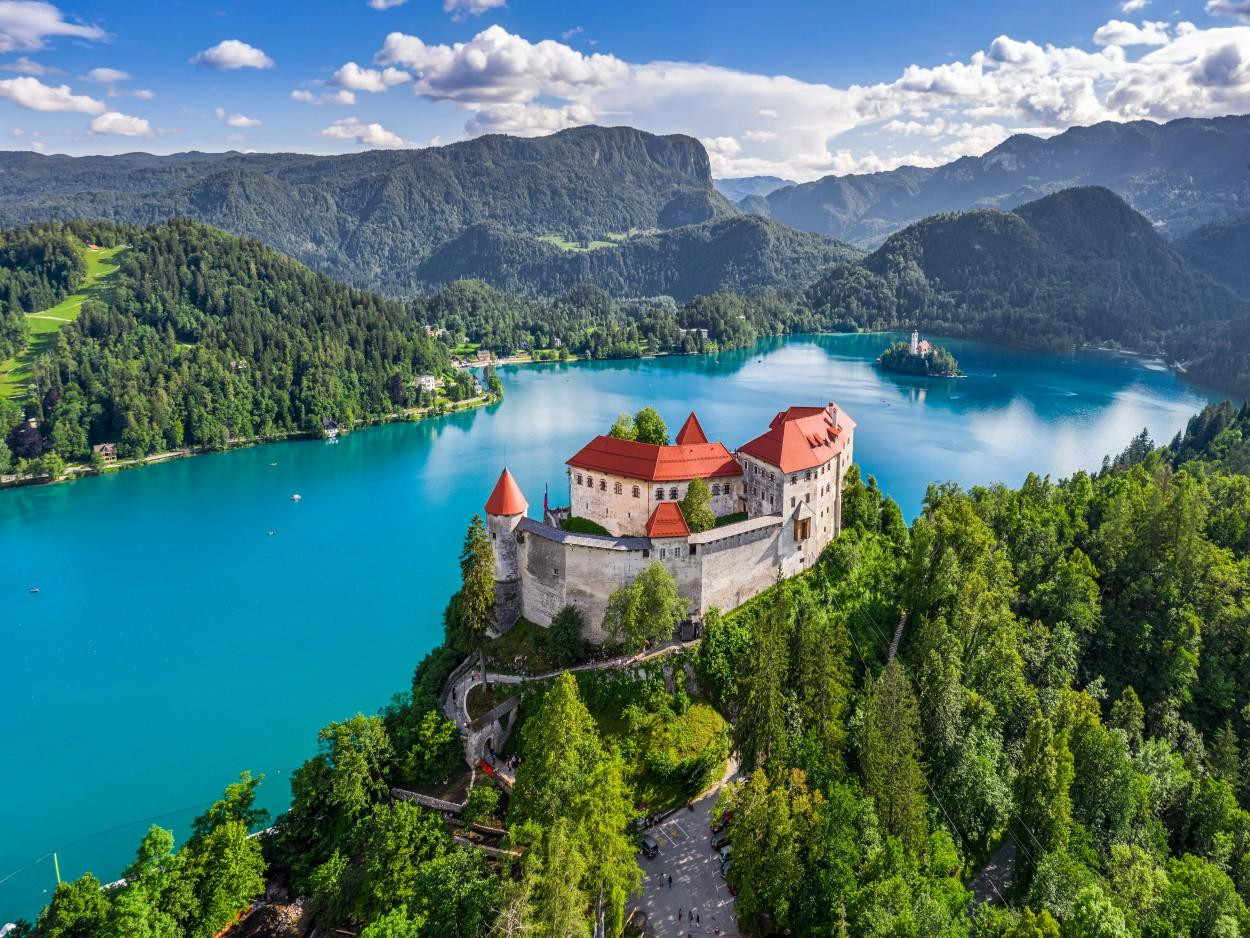
Bled Castle, a medieval fortress overlooking the lake from a rocky cliff on the northern shore, traces its origins to 1004, when Holy Roman Emperor Henry II granted the site to the Bishop of Brixen as part of a substantial land endowment, making it one of the oldest documented castles in Slovenia. The castle's elevated position gives visitors sweeping views down over the entire lake, the island, and the surrounding Julian Alps, and the complex today houses a museum covering the region's history alongside a working printing press and wine cellar demonstrating traditional crafts, functioning as both a historical monument and an active cultural attraction rather than a purely preserved ruin. Together, the castle's medieval history and the island church's religious significance give Lake Bled a depth of cultural and historical content that extends well beyond its undeniable scenic appeal, a combination that has helped sustain tourist interest in the site across many centuries of changing travel fashions.
Bled has cultivated its own distinct culinary tradition around kremsnita, a cream cake consisting of layers of puff pastry, vanilla custard, and whipped cream, a dish so closely associated with the town that its recipe received official protected designation of origin status in 2016. The Hotel Park's patisserie is credited with developing what has become considered the definitive version of the cake in 1953, and sampling a slice of kremsnita at a lakeside cafe overlooking the water has become something close to an obligatory ritual for visitors, a small but genuinely distinctive piece of local food culture layered onto the lake's better-known scenic and architectural attractions. This combination of a dessert tradition tied to a specific origin story, protected under formal designation rules similar to those governing regional foods elsewhere in Europe, adds an additional, more everyday dimension to a destination otherwise dominated by castle and church photography.
Ljubljana Jože Pučnik Airport, Slovenia's main international gateway, sits roughly 35 kilometers from Lake Bled, making the lake an easily reachable day trip or short stay from the capital, with the Lesce-Bled train station providing a rail connection roughly 4.2 kilometers from the lake itself for travelers preferring not to drive. Bled draws visitors across all four seasons, with summer bringing warm enough water for swimming and the busiest crowds, autumn offering rich foliage color around the lake's forested shores, winter occasionally allowing the lake to freeze solid enough for ice skating in particularly cold years, and spring bringing a quieter, greener version of the same scenery, meaning the choice of season depends more on a visitor's preferred activities and tolerance for crowds than on any single dramatically superior time to see the lake. The town has hosted World Rowing Championships on multiple occasions, in 1966, 1979, 1989, and 2011, a reflection of the lake's calm, sheltered water and consistent conditions well suited to competitive rowing beyond its more famous role as a scenic backdrop.
Given Slovenia's modest size as a country, Lake Bled has come to carry a disproportionate share of the nation's international tourism identity, appearing on postcards, government tourism campaigns, and international media coverage of Slovenia far more often than the country's larger natural features or its capital city. This concentration of attention has brought real benefits to the local economy, with hotels, restaurants, and boat operators around the lake sustaining a tourism industry that supports the wider Bled municipality, but it has also meant the lake experiences visitor volumes considerably higher, relative to its size, than most comparably picturesque alpine lakes elsewhere in Europe. Slovenian tourism authorities have responded with measures including limits on private boat traffic and encouragement of the traditional pletna system over motorized alternatives, an approach aimed at preserving the lake's quiet, unhurried character even as visitor numbers climb, a balancing act not unlike that facing other small, extraordinarily photogenic natural sites that have become disproportionately central to how their home countries are perceived abroad.
Late spring through early autumn brings warm enough water for swimming and the greenest views; the lake can freeze entirely in cold winters.
See weather details
No reviews yet. Be the first to share your experience!
Share your experience and help other travelers