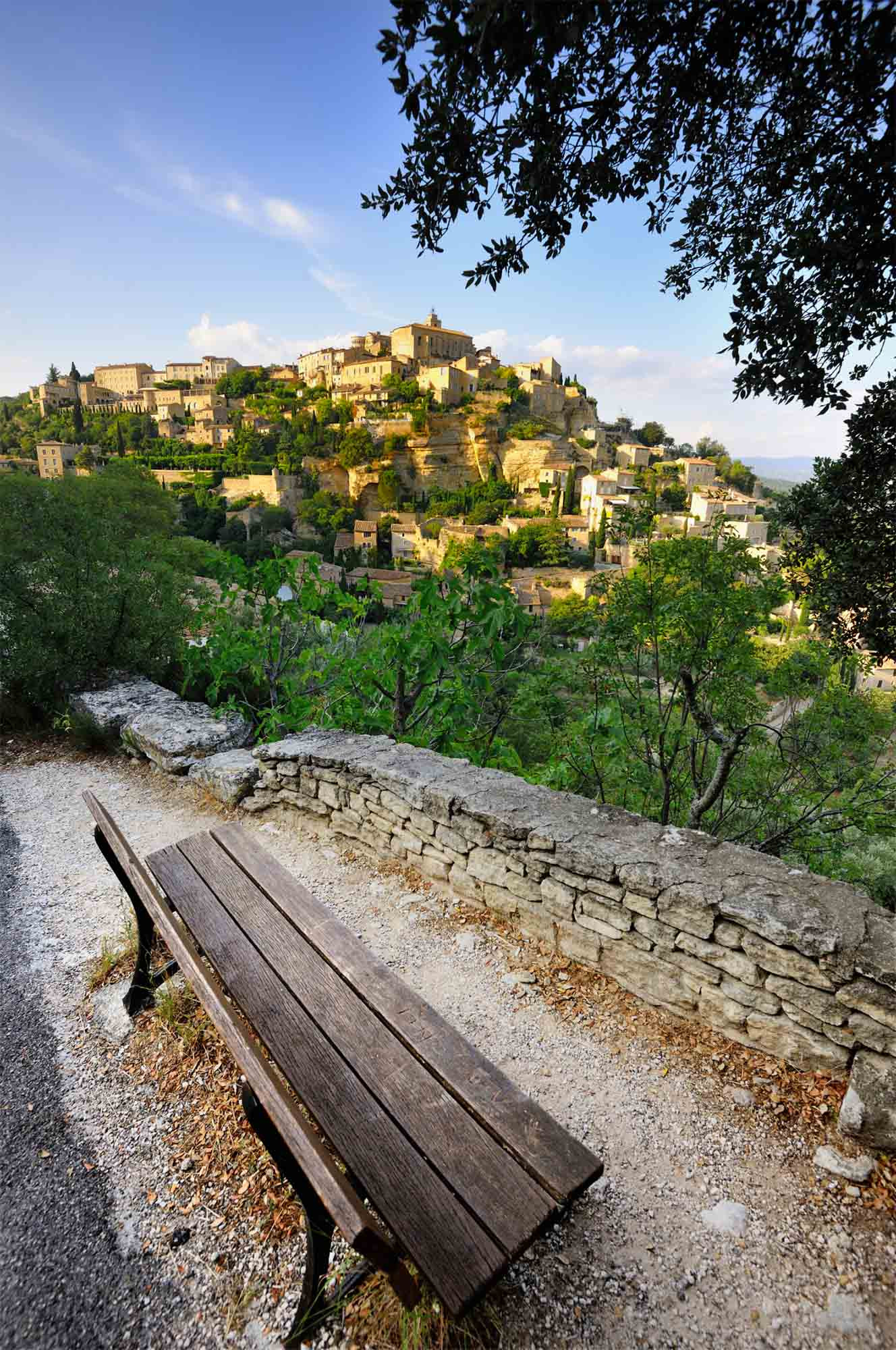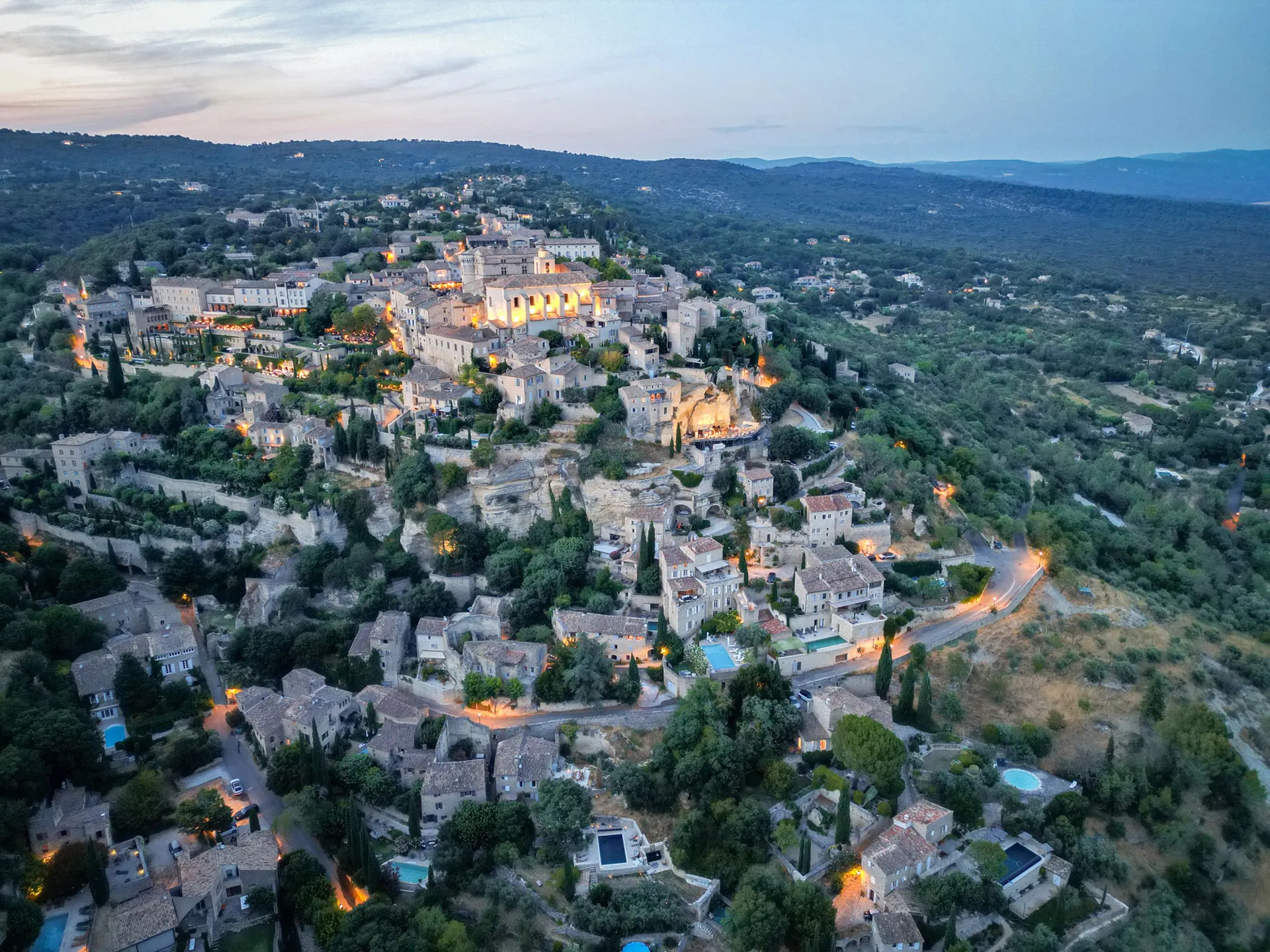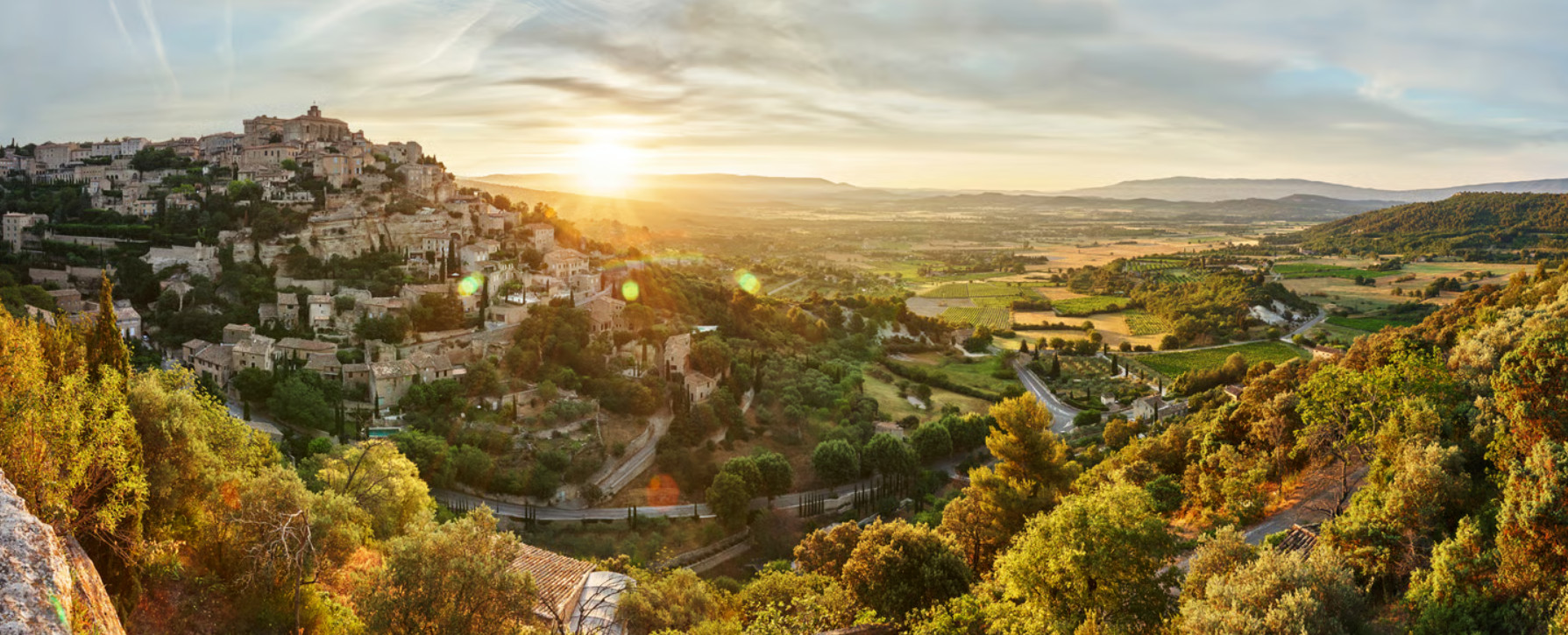
Long before Gordes became one of the most photographed villages in France, it was a defensive position first. A castle went up on this rocky spur above the Luberon valley in 1031, reinforced roughly a century later in 1123, its walls chosen less for beauty than for the sheer drop that surrounds three sides of the outcrop. The Romans had already left traces in the surrounding countryside, and the name Gordes itself is thought to descend from a Celtic word, Vordense, tied to the same high ground.
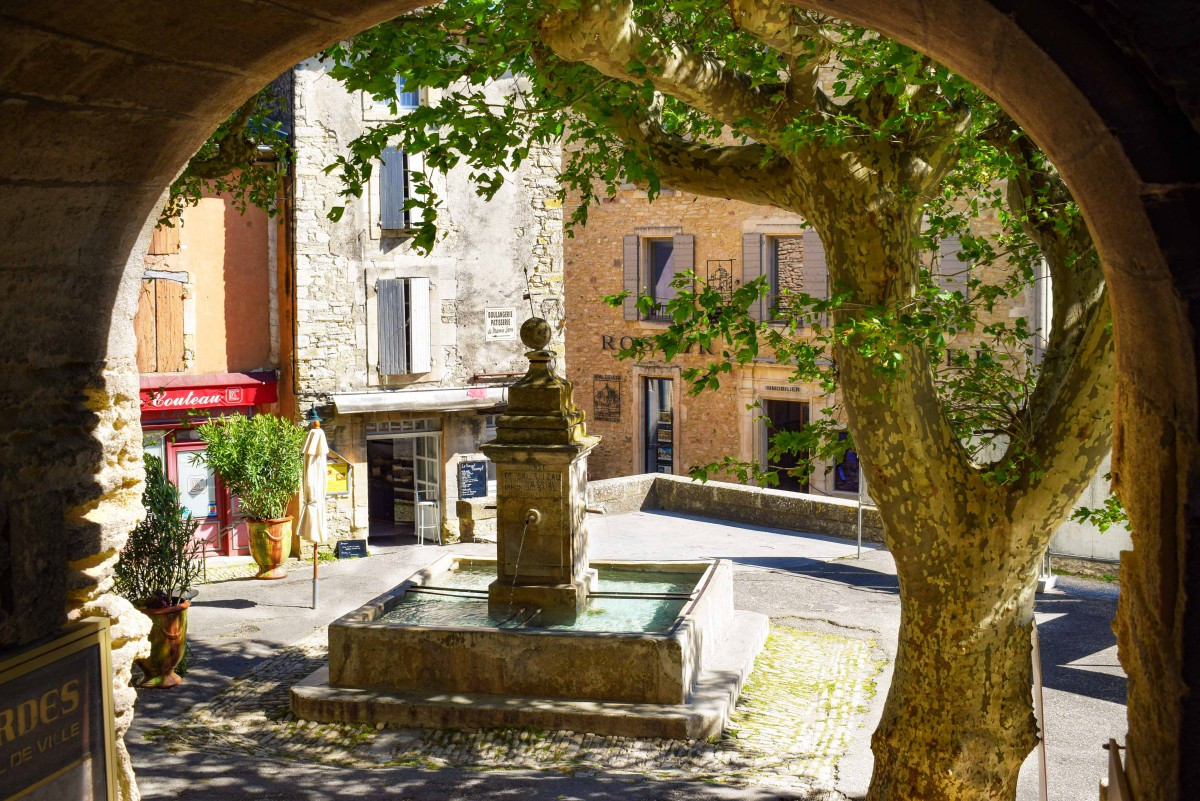
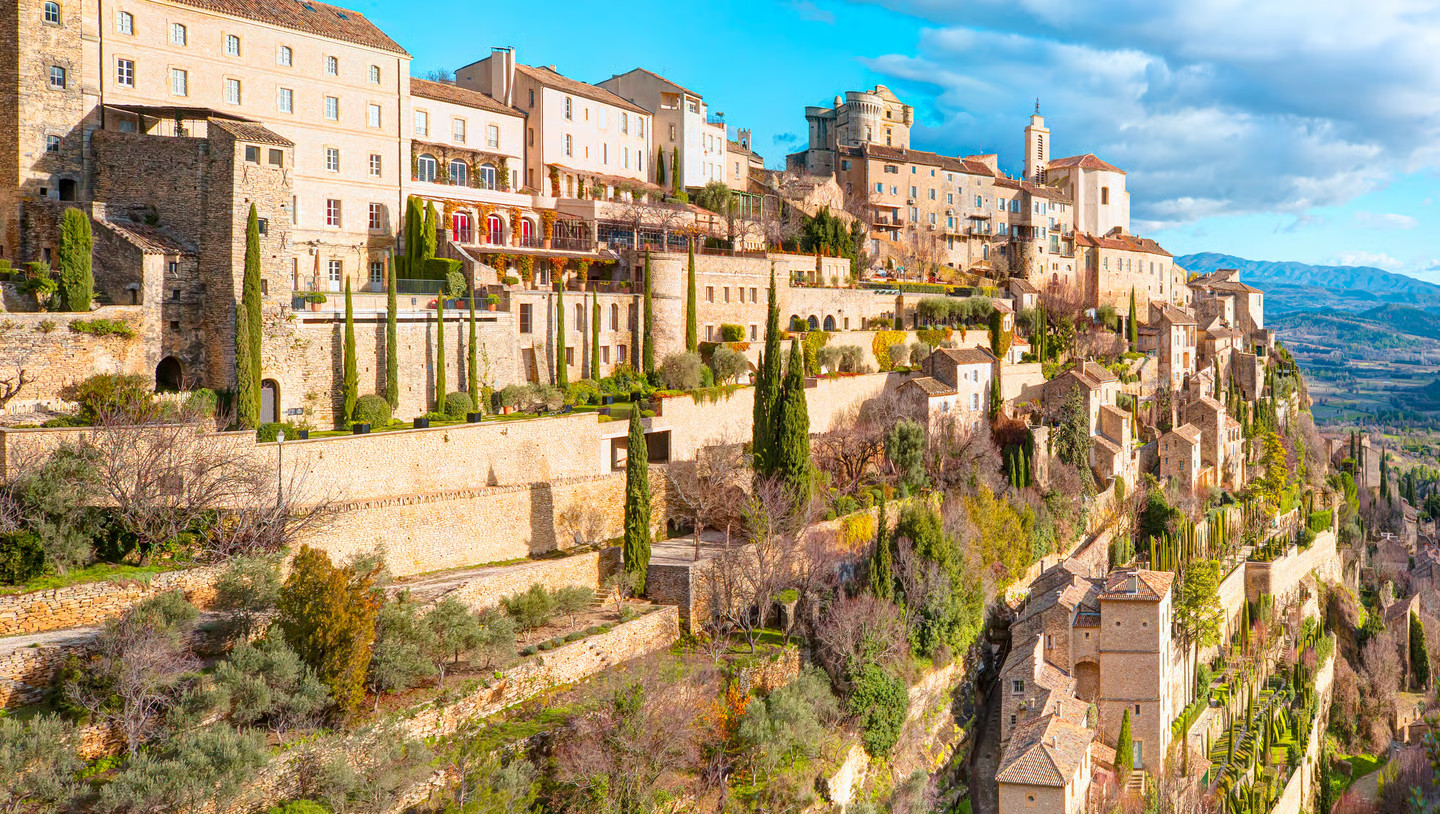
The village that grew up around the fortress kept its defensive shape for centuries: narrow, stacked streets built from pale local limestone, houses set almost into the rock itself. When France absorbed the region in 1481, Gordes pushed back against centralized rule harder than most of its neighbors, a streak of independence that shows up again and again in its later history.
Two structures outside the village walls do as much to define Gordes as the castle at its center. Scattered across the surrounding countryside are several hundred bories — small, beehive-shaped huts built from dry stone, no mortar, stacked and corbelled into shape by generations of local farmers and shepherds. A cluster of them has been preserved as the open-air Village des Bories, a working record of a building technique that predates the village by centuries and nearly vanished with it.
A few kilometers away stands Sénanque Abbey, a Cistercian monastery founded in 1148 and still home to a small community of monks. Its Romanesque stone walls, austere by design, sit in a narrow valley that turns violet each summer when the surrounding lavender fields bloom — an image that now circulates as one of the most reproduced in Provence.
The castle itself was rebuilt in a Renaissance style in 1525, softening its military lines into something closer to a residence, and it stayed at the center of the village's identity through the centuries that followed. During the Second World War, Gordes and the surrounding Luberon hills sheltered Resistance activity, and the village was later awarded the Croix de guerre 1939–1945 in recognition.
The postwar decades brought a different kind of transformation. Artists and writers, drawn by the light and the ruins of a village that had emptied out through the 19th and early 20th centuries, began settling in Gordes and restoring its abandoned houses. Marc Chagall spent time here, and a large sculpture by Victor Vasarely — who lived in Gordes and later opened a museum in the castle — still stands as a landmark of that era. What had been a fading hill town became, gradually, an address.
That transformation reached something like its peak on February 12, 2023, when Travel + Leisure named Gordes the most beautiful village in the world — a title that, however subjective, matched decades of accumulating recognition, including membership in the official Les Plus Beaux Villages de France network. Today the village counts roughly 1,660 residents, a fraction of the visitors who now walk its calades — the steep, cobbled lanes that thread between honey-colored houses — every summer.
The castle now houses the Pol Mara museum, the 18th-century Saint-Firmin church anchors the main square, and the village remains a working base for exploring the wider Luberon: the bories, the abbey, an old olive mill at Moulin des Bouillons, and hiking routes through the nearby Gorges of Véroncle. What draws people back, more than any single monument, is the view from below — a village built almost entirely from the rock it sits on, still holding the shape it was given a thousand years ago for reasons that had nothing to do with how it would eventually look.
Late June-July for nearby lavender blooms; early morning or evening in summer to avoid crowds.
See weather details
No reviews yet. Be the first to share your experience!
Share your experience and help other travelers