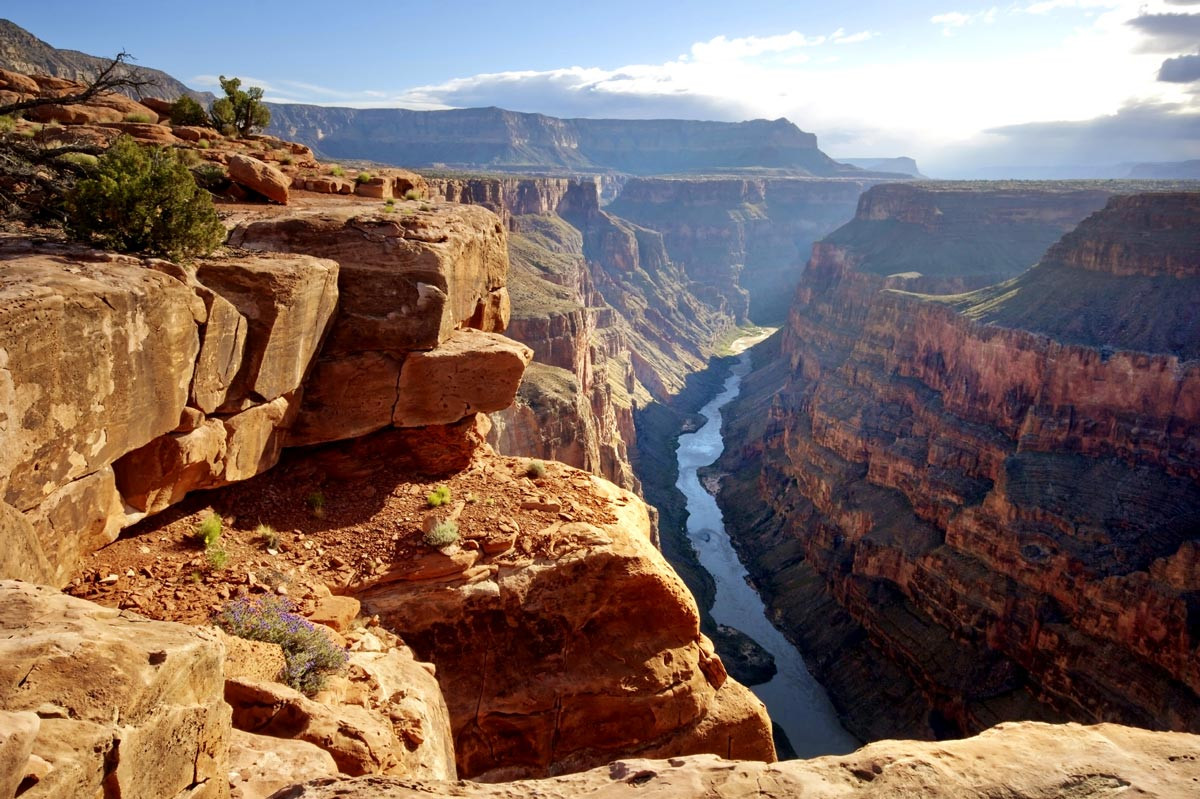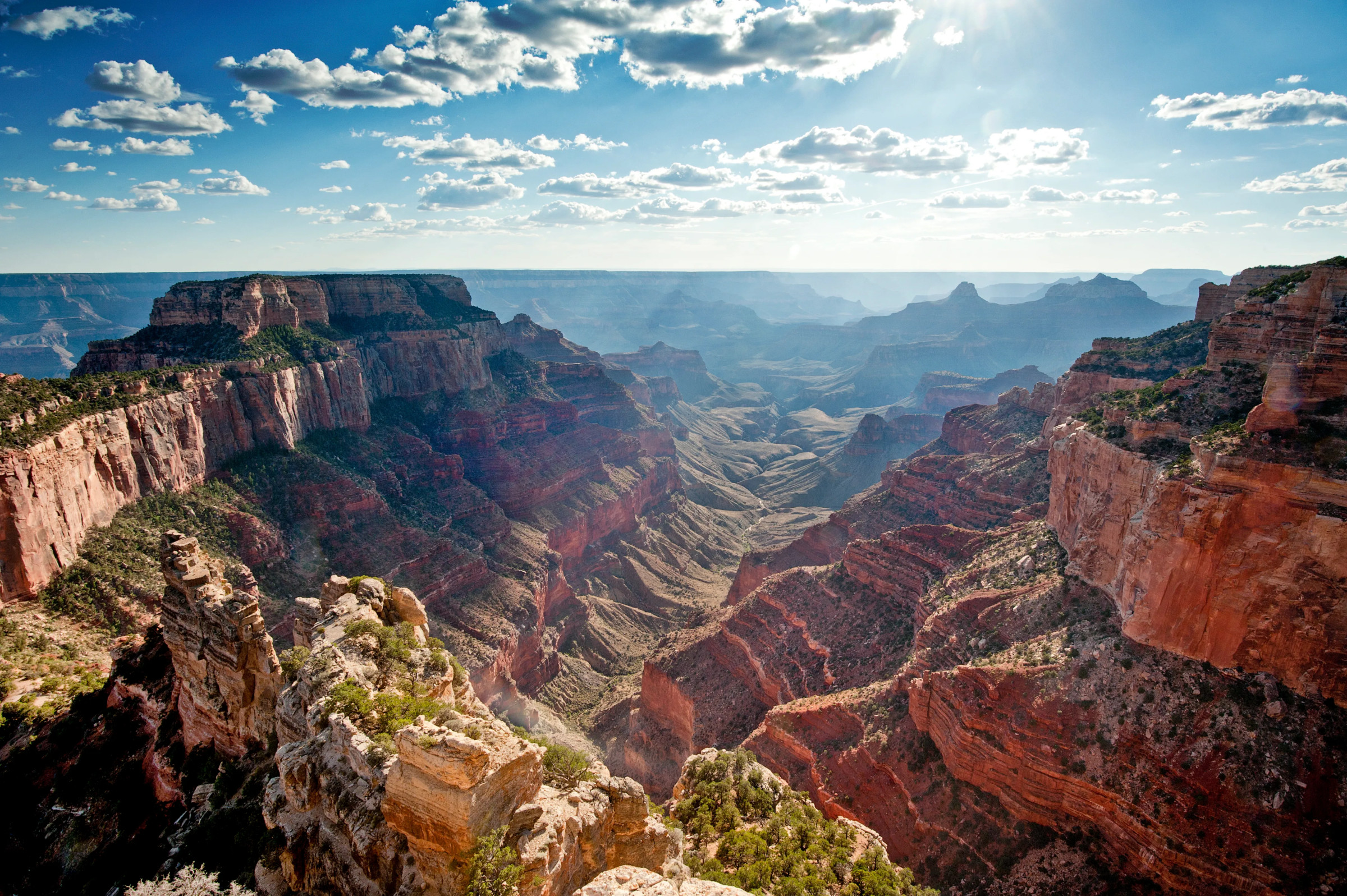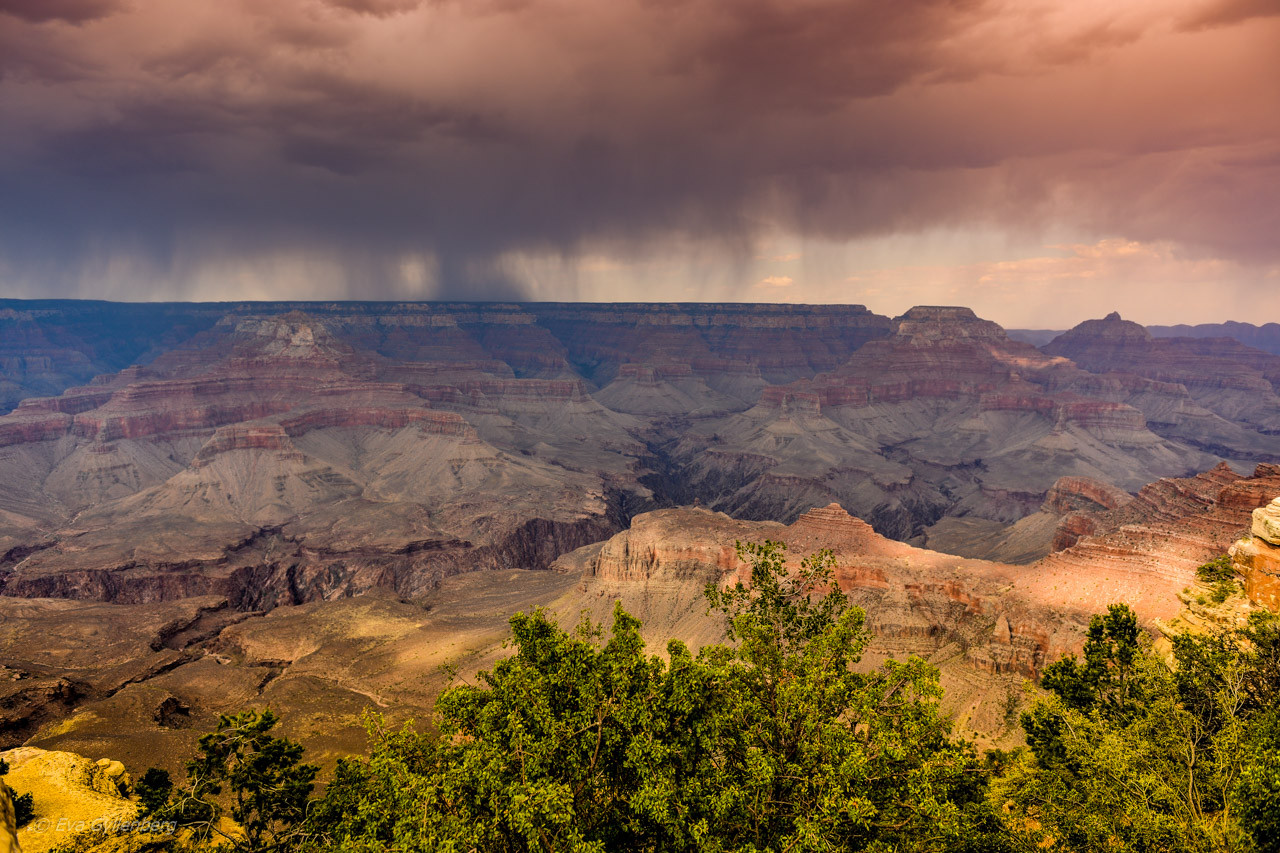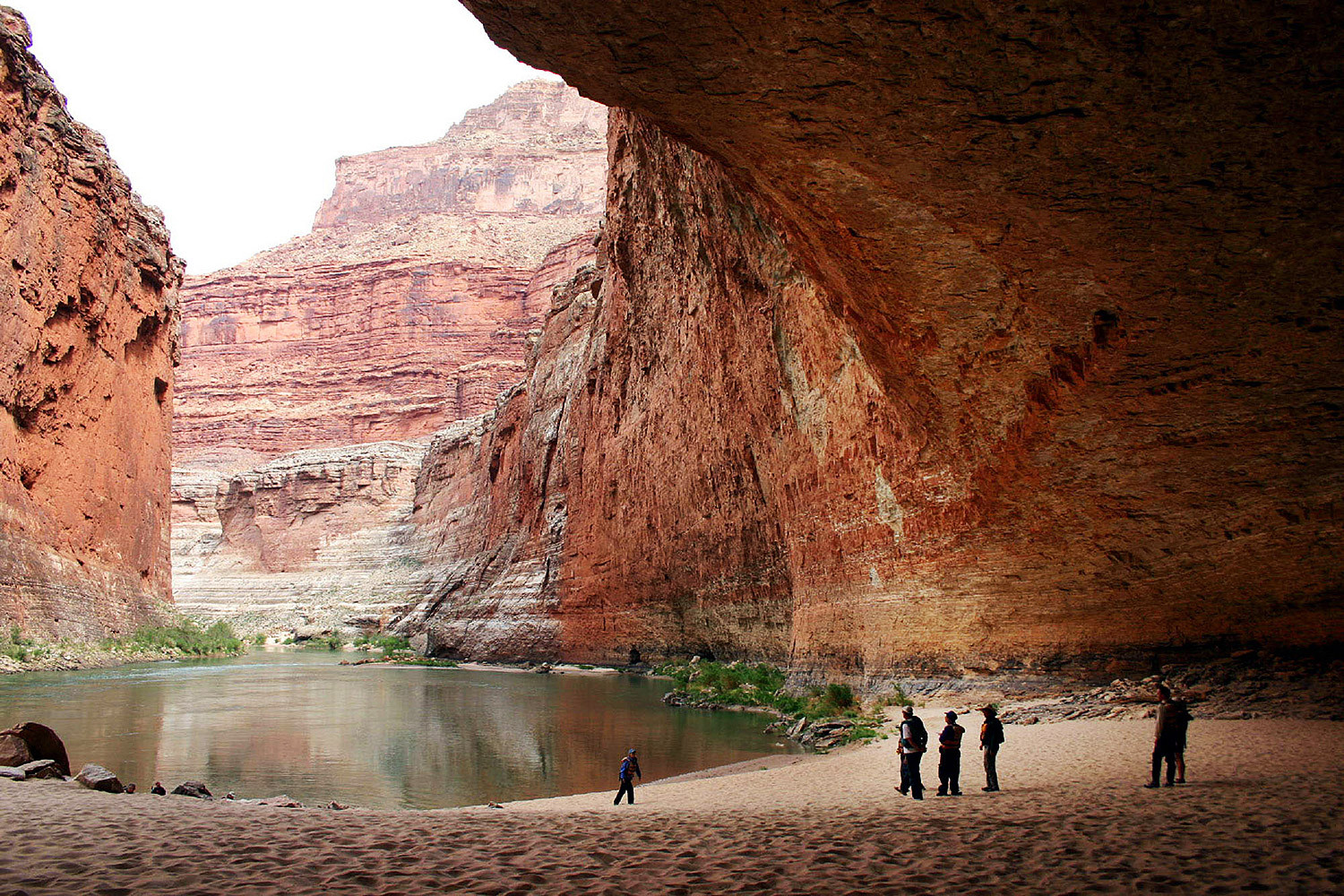
Few places on the planet let you look directly at two billion years of Earth's history in a single glance. The layered walls of this canyon in northern Arizona expose rock from the two-billion-year-old Vishnu Schist at the bottom of the Inner Gorge up to the 270-million-year-old Kaibab Limestone along the rim, an almost unbroken geological record stacked one era on top of the next. Each band of color marks a different chapter: ancient seabeds, deserts, river deltas, and shallow oceans that rose and fell over spans of time the human mind struggles to hold onto.
The canyon itself is younger than the rock it cuts through. Geologists still debate exactly how and when the Colorado River established the course that carved it, with recent research suggesting the canyon formed in segments at very different times: parts near the eastern end may have been shaped 15 to 25 million years ago, while much of the canyon's western and central sections were carved more recently, in roughly the last 5 to 6 million years, as the river cut down through rock faster than erosion could wear the walls back.
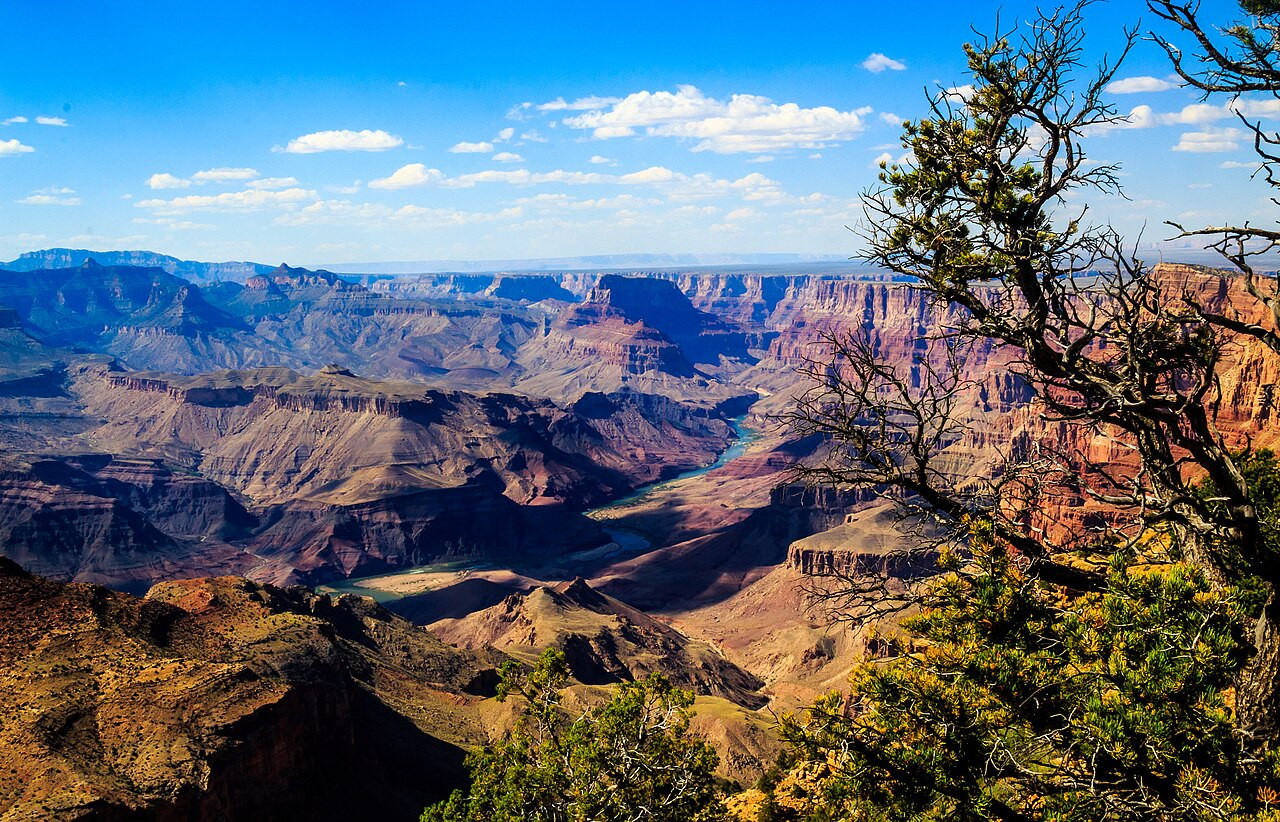
The Colorado River is the tool, but time and persistence are what actually built the canyon. Carrying sediment picked up from the Rocky Mountains and the Colorado Plateau, the river acted like liquid sandpaper, grinding through rock layer by layer over millions of years while tectonic uplift slowly raised the surrounding plateau, steepening the river's gradient and speeding up the cutting. Side canyons, flash floods, and freeze-thaw cycles widened what the river started, eventually producing a chasm that stretches 277 miles long, up to 18 miles wide, and over a mile deep in places — more than 6,000 feet from rim to river at its most dramatic points.
Long before European settlers arrived, the canyon and its side canyons were home to Ancestral Puebloan communities dating back roughly 3,000 years, who left behind granaries, dwellings, and rock art still visible today. Their descendants and other tribes, including the Havasupai, Hualapai, and members of the Navajo Nation, continue to live in and around the canyon, with the Havasupai maintaining a village inside the canyon itself near the turquoise waters of Havasu Creek.
American recognition of the canyon's significance came in stages. President Theodore Roosevelt, an early advocate for its protection, helped establish it as a national monument on January 11, 1908, calling it a natural wonder that every American should see at least once. Full national park status followed on February 26, 1919, when President Woodrow Wilson signed the act making it the country's 17th national park, a designation that opened the door to the visitor infrastructure — lodges, rim trails, and viewpoints — that millions now use each year.
The canyon's two developed rims offer very different experiences. The South Rim stays open year-round, sits at roughly 7,000 feet, and carries the bulk of park visitation and services. The North Rim, over 1,000 feet higher and considerably more remote, closes seasonally and draws a small fraction of the crowds, rewarding the extra effort to reach it with a quieter, cooler perspective on the same vast gorge.
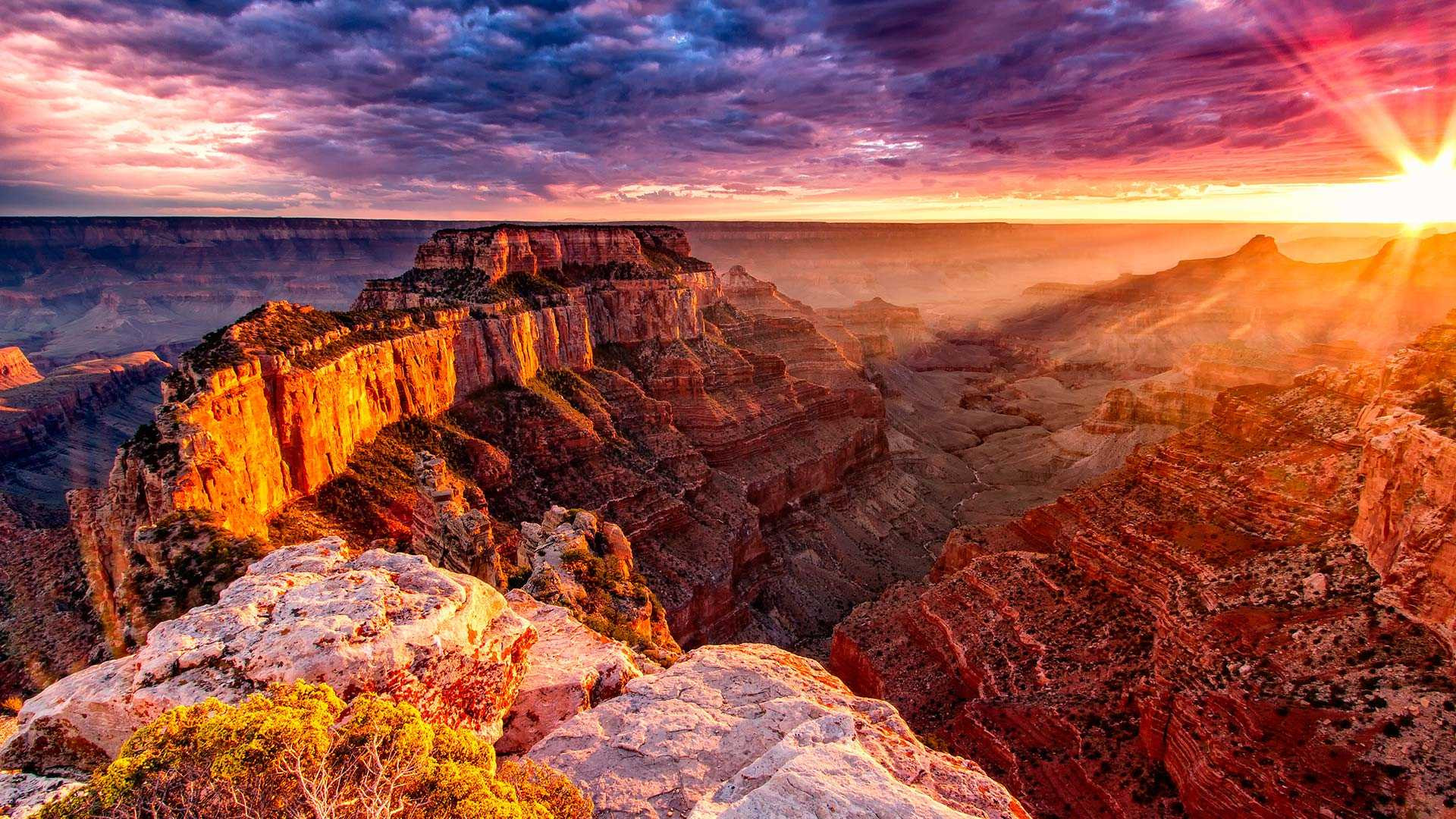
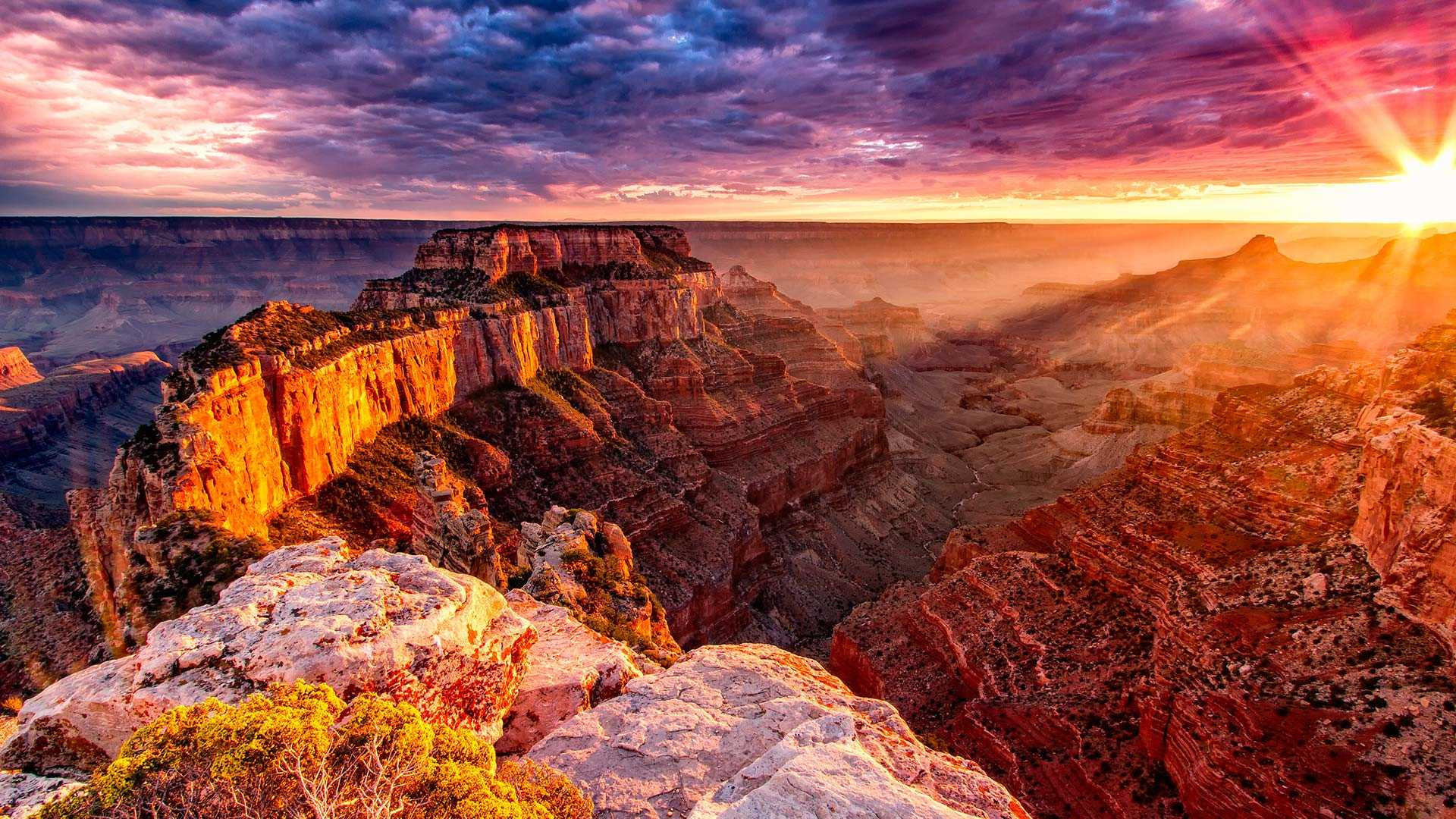
Nothing quite prepares first-time visitors for the scale of the opening below the rim trail — a gap so wide that the far side can seem hazy or indistinct depending on the light, and so deep that the river at the bottom, itself hundreds of feet wide, looks like a thin green ribbon. Sunrise and sunset are when the canyon performs best, as low-angle light rakes across the layered rock and shifts its colors from pale gold to deep red within the space of an hour.
Hiking below the rim is a serious undertaking rather than a casual stroll: trails that feel manageable heading down become far more demanding on the return climb, especially once summer temperatures at the canyon floor climb past 100°F. For most visitors, the canyon is best experienced the way it has drawn people for over a century — standing at the edge, taking in a view that keeps rewriting itself as the sun moves across the sky.

No reviews yet. Be the first to share your experience!
Share your experience and help other travelers